How to Study for Exams Step-by-Step: The Proven Science-Backed Guide

Phase 1: The Setup – Organizing Your Mental and Physical Space
You can optimize your exam performance by creating a physical and digital environment that minimizes cognitive load and maximizes "flow" states. Effective preparation starts long before you open a textbook; it begins with the architecture of your surroundings. If your desk is a graveyard of old coffee cups and unrelated paperwork, your brain will struggle to filter out those visual distractions.
Research from Princeton University suggests that visual clutter competes for your attention, leading to decreased performance and increased stress. Choose a location with consistent lighting and a comfortable chair that supports your posture. Whether it is a quiet corner of a university library or a specific desk in your home, this space should be reserved strictly for academic work to build a psychological association between the location and productivity.
Perform an "Inventory Check" before you begin. Gather your textbooks, printed lecture slides, and digital folders into one accessible place. Disrupting your focus to search for a specific syllabus or a missing notebook breaks your mental momentum. Once your physical materials are ready, transition to "digital hygiene."
Smartphones are the primary enemy of deep work. Implement a "No-Phone Zone" by placing your device in another room or using app blockers like Forest or Freedom. If you are studying complex subjects like chemistry, you might realize you need to sharpen specific skills, such as mastering easy pKa and pKb practice questions, without the constant ping of social media notifications interrupting your calculations.
Phase 2: Strategic Planning – Building Your Study Schedule

To master how to study for exams step-by-step, you must replace chaotic "cramming" with a prioritized triage system that accounts for your brain's natural limitations. Most students fail because they treat every chapter with equal importance. Instead, use a "Triage Method" to categorize topics into three buckets: Red (I don't understand this at all), Yellow (I understand it but can't apply it), and Green (I could teach this to a peer).
Focus 70% of your initial energy on Red and Yellow topics. This prevents the "familiarity trap," where students spend hours reviewing what they already know because it feels comfortable. When building your timetable, use a calendar—not just a task list. A task list is a wish list; a calendar is a commitment of time. Document exactly when you will tackle a topic such as easy Ka and Kb calculations practice questions versus when you will take a necessary break.
The "Forgetting Curve" is a scientific reality you cannot ignore. Harvard Medical School researchers emphasize that spaced learning is far superior to massed practice for long-term retention. By distributing your study sessions over weeks instead of hours, you give your brain time to physically encode memories. You can read more about this phenomenon in our guide on The Forgetting Curve: Why We Forget and 5 Secrets to Stop It.
Schedule at least one full "Buffer Day" per week. Life is unpredictable; a surprise illness or an unexpectedly difficult chapter can derail a rigid schedule. A buffer day acts as a safety net, allowing you to catch up without the panic that usually triggers a total abandonment of the plan.
Phase 3: Active Learning Techniques – Moving Beyond Passive Reading

High-performance studying requires active recall and spaced repetition rather than the passive (and largely ineffective) habit of re-reading and highlighting. Passive reading creates an "illusion of competence." You recognize the words on the page, so your brain tricks you into thinking you know the material. True mastery only comes when you force your brain to retrieve information from scratch.
Active Recall is the gold standard of learning science. Instead of reading a chapter on chemical equilibrium, try solving easy Equilibrium Constant (Kc) practice questions without looking at your notes. If you struggle, that "struggle" is exactly where the learning happens. It signals to your brain that this information is vital and needs to be stored more securely.
The Feynman Technique is another powerful tool for deep comprehension. Pick a concept, for example, Le Chatelier’s Principle, and try to explain it in plain English to an imaginary ten-year-old. If you use jargon or get stuck, you have found a gap in your knowledge. Use mind mapping to visualize how these concepts connect. Does the concentration change in a reaction quotient relate back to enthalpy? Draw the lines and see the "big picture."
Flashcard systems like AIflashcard.net, Anki or Quizlet utilize Spaced Repetition Systems (SRS). These algorithms show you difficult cards more frequently and easy cards less often. This efficiency ensures you are always working at the edge of your ability. For those tackling more quantitative subjects, applying these methods to easy ICE table practice questions ensures the foundational steps become second nature before the exam.
Phase 4: Deep Work and Focus Optimization

You can achieve more in two hours of uninterrupted "Deep Work" than in eight hours of distracted, "Shallow Work" spent switching between tabs and textbooks. The Pomodoro Technique, working for 25 minutes followed by a 5-minute break, is a classic for a reason. It prevents cognitive fatigue and keeps the finish line in sight. However, for complex problem-solving, consider extending these blocks to 50 or 90 minutes to allow for deeper immersion.
Your brain is a biological machine that requires specific fuel to function. Complex carbohydrates provide a steady stream of glucose, avoiding the "sugar crash" associated with candy or soda. Hydration is equally critical; even mild dehydration can impair concentration and short-term memory. Keep a water bottle on your desk and treat it as a mandatory study tool.
Never sacrifice sleep for study time. Sleep is not "down time"—it is the period when your hippocampus move memories into long-term storage. According to the National Institutes of Health, sleep deprivation significantly hinders your ability to solve problems and control emotions. If you are choosing between one more hour of reviewing easy Hess’s Law practice questions and an extra hour of sleep, choose the sleep. You will perform better on the material you already know.
Phase 5: Practice Under Pressure – Simulating the Exam Environment
The most effective way to learn how to study for exams step-by-step involves mimicking the exact conditions you will face in the testing hall. Many students feel confident at home but "blank" during the test because they haven't practiced under pressure. Use past papers to bridge this gap. Set a timer, sit in a quiet room, and do not allow yourself to glance at your notes or a search engine.
Once you finish a mock exam, the real work begins with the "Reverse Outline." Don't just check if you got an answer right or wrong. Analyze the marking scheme to understand why the correct answer earned points. If you missed a question on thermodynamics, head back to specific resources like Bond Energy Practice Questions with Answers to reinforce that specific weakness.
Simulating the environment also means practicing the specific types of math or logic required. If your exam involves complex chemical calculations, don't just read the theory. Dive into medium Equilibrium Constant (Kc) practice questions and medium Reaction Quotient (Q) practice questions. The more you normalize the "test feel," the lower your cortisol levels will be on the actual day.
Stop guessing and start mastering. Our library of science-backed practice questions and active recall tools is designed to help you ace your next big test with confidence.
Get Started FreePhase 6: The Final 48 Hours – Pre-Exam Maintenance
The final two days before an exam should be dedicated to high-level synthesis and logistical preparation rather than learning new, complex concepts. Attempting to learn a brand-new topic like medium Kp calculations practice questions 12 hours before the test will likely result in "interference," where new info jumbles up what you already know.
Focus on your "Power Review." Go through your summary sheets, mind maps, and the flashcards you consistently struggled with. Practice "Box Breathing"—inhaling for four seconds, holding for four, exhaling for four, and holding for four. This physiological technique tells your nervous system that you are safe, lowering the heart rate and clearing the "brain fog" caused by adrenaline.
End the night with a physical checklist. Is your calculator allowed? Do you have extra pens? Do you know the exact route to the exam hall? Pack your bag before you go to sleep so you don't waste precious mental energy on "Where are my keys?" in the morning. A calm morning leads to a focused exam.
Phase 7: Test-Day Strategies – Executing the Plan
When you first open the exam booklet, do not immediately start writing the first answer. Spend two to three minutes scanning the entire paper. This allows your subconscious to start processing the harder questions while you work on the easy ones. It also helps you allocate your time; use the "Minute-per-Mark" rule to ensure you don't spend 20 minutes on a 5-mark question.
Perform a "Brain Dump" immediately. If there are formulas for medium Henderson-Hasselbalch Equation practice questions or medium pH calculation practice questions that you are afraid of forgetting, scribble them in the margins of your scratch paper as soon as the timer starts. This offloads the information from your working memory, freeing up cognitive space for problem-solving.
If you hit a "blank," move on. Mark the question and come back to it. Often, a later question will provide a clue or trigger a dormant memory that helps you solve the earlier roadblock. Stay focused on your own paper; the speed at which others are writing has no correlation with their accuracy. You have a plan, stick to it.
Frequently Asked Questions
How many hours a day should I study for exams?
Quality matters more than quantity, but most experts suggest 3 to 5 hours of "Deep Work" per day. Beyond this, cognitive returns diminish significantly. Break this time into 50-minute blocks with 10-minute breaks to maintain focus.
What is the most effective study technique for long-term retention?
Successive relearning, which combines active recall (testing yourself) and spaced repetition (spreading study sessions over time), is the most scientifically proven method for moving information into long-term memory.
How can I stop procrastinating and start studying?
Lower the "activation energy" by committing to just five minutes of work. Often, the hardest part is starting; once you begin a simple task like organizing your notes for easy acid-base titration practice questions, the momentum will carry you forward.
Is it better to study at night or in the morning?
This depends on your chronotype (circadian rhythm). However, retain-heavy subjects are often better studied in the evening followed by a full night's sleep to consolidate the memory, while logic-heavy problem solving is often best during your peak alertness in the morning.
How do I study for an exam in a very short amount of time?
Focus exclusively on high-yield topics and past papers. Skip the textbook reading and go straight to active recall. Use the 80/20 rule to identify the 20% of the material that will likely account for 80% of the marks.
How can I reduce exam anxiety during the test?
Use grounding techniques like the 5-4-3-2-1 method or box breathing to calm your nervous system. Remember that some anxiety is actually helpful for performance; reframe the "nervousness" as "excitement" or "readiness."
Enjoyed this article?
Share it with others who might find it helpful.
Related Articles

How to Solve Molarity Problems: Step-by-Step Mastery
Learn how to solve molarity problems step-by-step with formulas, unit tips, and worked examples so you can calculate concentration with confidence.
Mar 26, 2026
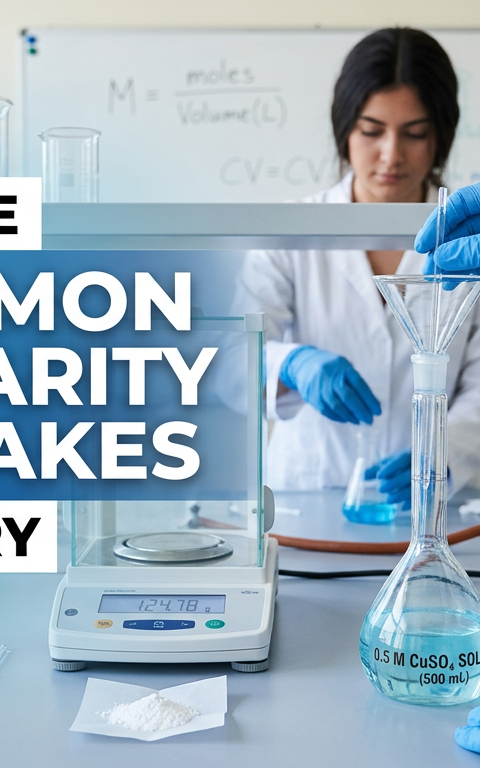
Avoid These 7 Common Molarity Mistakes in Chemistry
Master chemistry calculations! Avoid common molarity mistakes with our expert guide on unit conversions, dilution errors, and proper lab techniques.
Mar 26, 2026
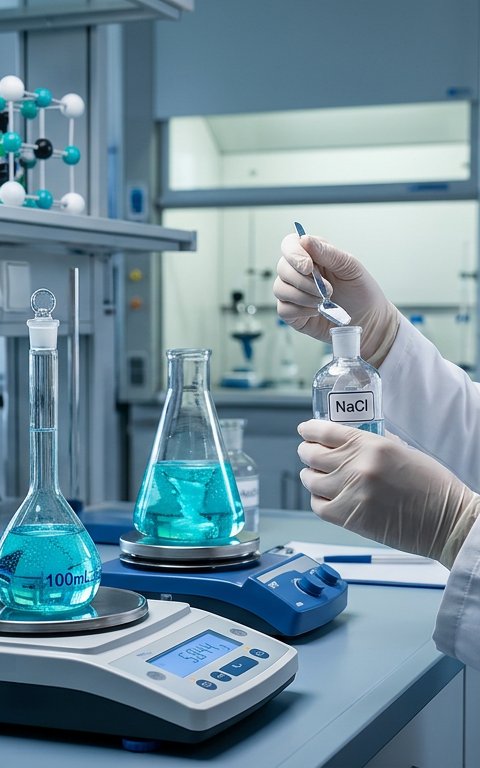
What Is Molarity? The Complete Guide to Molar Concentration
Master molarity with our complete guide. Learn the formula, step-by-step calculations, and the critical differences between molarity and molality.
Mar 26, 2026
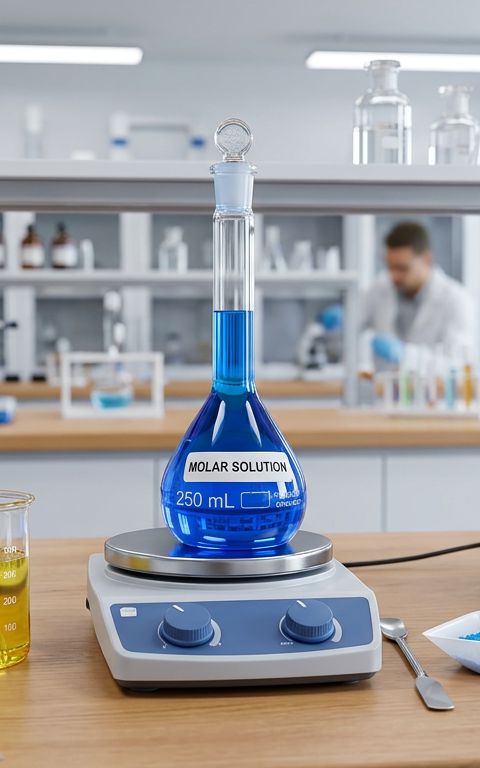
Why Molarity Matters: Converting Mass to Moles for Lab Solutions
Master chemistry with our guide to the molarity formula. Learn how to calculate concentration with step-by-step examples, units, and practical lab tips.
Mar 26, 2026
Molarity vs Molality: The Essential Difference Explained
Master the difference between molarity vs molality. Learn the formulas, key differences, and when to use each in this comprehensive chemistry guide.
Mar 26, 2026