Crush Your Exams: The Ultimate Guide to Stopping Procrastination

Exam season often feels like a race against the clock, yet for many, it becomes a battle against themselves. That nagging feeling of knowing you should be studying, followed by the irresistible urge to do anything but, defines procrastination. Learning how to stop procrastinating for exams isn't just about willpower; it's about understanding the deep-rooted psychological triggers and implementing strategic, actionable changes. This guide provides a comprehensive roadmap to help you break free from the procrastination cycle and approach your exams feeling prepared and confident.
Understanding the Procrastination Puzzle: Why We Delay Studying
Procrastination isn't a character flaw; it's a complex psychological phenomenon. Many students delay studying not because they're lazy, but because of underlying fears, self-doubt, or simply feeling overwhelmed.
The Psychology Behind Procrastination: Fear, Perfectionism, and Self-Sabotage
Often, a fear of failure paralyses us. We might think, "If I don't try my hardest, then my eventual poor performance isn't truly my fault; it's just because I didn't study enough." This allows us to protect our ego, even if it harms our grades. Others struggle with perfectionism, where the pressure to perform flawlessly becomes so immense, starting feels impossible.
Then there's the less obvious self-sabotage, where comfort or immediate gratification trumps long-term goals. Understanding these internal battles is the first step toward effective change.
Identifying Your Procrastination Triggers: What Sets You Off?
Recognizing what specifically makes you delay studying can reveal patterns. Perhaps you always put off studying subjects you find boring, or maybe large, complex assignments trigger immediate avoidance. Some students procrastinate when they're unsure where to begin, feeling a lack of clear direction.
Pay attention to the specific thoughts, feelings, or external cues that precede your decision to delay. Is it the sight of your textbook, a notification on your phone, or the thought of a particularly difficult chapter?
The Vicious Cycle: How Procrastination Leads to More Procrastination
When you put off studying, the task doesn't disappear; it grows. The looming deadline coupled with the untouched material creates stress and anxiety. This increased pressure often makes the task feel even more unpleasant, reinforcing the desire to avoid it, thus perpetuating the cycle.
This negative feedback loop only intensifies feelings of guilt and inadequacy, making the next study session even harder to initiate. Breaking this cycle requires intentional effort and new strategies.
Setting the Stage for Success: Environment and Mindset

Your external surroundings significantly influence your internal state. Optimizing your study environment and shifting your mindset creates a powerful foundation for productive work.
Crafting Your Ideal Study Environment: Minimizing Distractions
A dedicated, distraction-free study space is non-negotiable for effective exam preparation. This means tidying your desk, ensuring good lighting, and having all necessary materials within reach. Research consistently shows that a cluttered environment can clutter the mind, making focus more challenging.
Consider the noise level; some prefer absolute silence, while others thrive with instrumental music or ambient sounds. Experiment to find what works best for you, but generally, a quiet space away from high-traffic areas is ideal. For more tips on setting up your space, explore the best way to study for exams.
Feeling Overwhelmed by Exam Prep?
Our toolkit simplifies complex concepts and makes studying less daunting, helping you beat procrastination.
Get Started FreeCultivating a Productive Mindset: Embracing 'Done is Better Than Perfect'
Perfectionism fuels procrastination. When you embrace the mindset that 'done is better than perfect,' you reduce the intimidating pressure. Your initial draft of notes or attempt at a practice problem doesn't need to be flawless; it just needs to exist.
Focus on making consistent progress rather than achieving immediate perfection. The act of starting, even imperfectly, builds momentum and makes subsequent steps easier.
The Power of Smaller Steps: Breaking Down Overwhelming Tasks
Large tasks feel insurmountable. This often contributes to a feeling of being overwhelmed, a core reason many students find themselves asking how to study for exams when overwhelmed. Break down your study goals into tiny, manageable steps. Instead of "Study for Biology final," try "Read Chapter 4 summary," or "Complete 5 multiple-choice questions on photosynthesis."
The Pomodoro Technique, for instance, advocates for 25-minute focused work intervals followed by 5-minute breaks, making even intimidating tasks seem less daunting. This method makes it significantly easier to just start.
Strategic Planning: Your Anti-Procrastination Arsenal
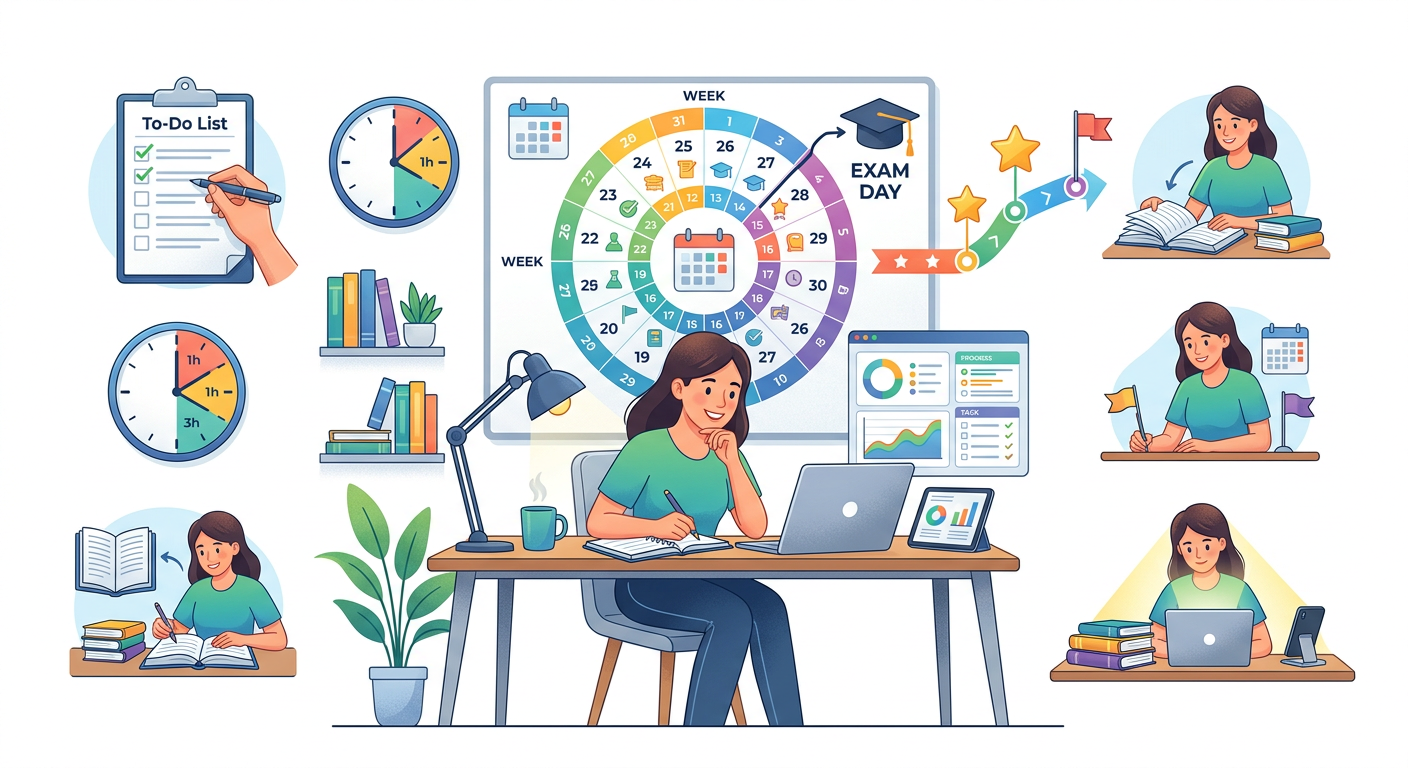
Effective planning transforms abstract study goals into concrete, actionable steps. It provides structure, reduces uncertainty, and helps you allocate your valuable time wisely.
Mastering Time Management: Calendars, Planners, and Digital Tools
Visualizing your time helps you understand where it goes and how you can reclaim it for studying. Utilize digital calendars like Google Calendar or physical planners. Block out specific times for classes, meals, extracurriculars, and, crucially, study sessions.
Tools like Trello or Asana can help manage larger projects and break them into subtasks. The key is finding a system you'll actually use consistently. Creating a study timetable for exams is a fantastic first step.
The Art of Prioritization: Identifying High-Impact Study Tasks
Not all study tasks carry equal weight. Employ prioritization strategies to focus your energy where it matters most. The Eisenhower Matrix, which categorizes tasks into Urgent/Important, Important/Not Urgent, Urgent/Not Important, and Not Urgent/Not Important, can be highly effective.
For exam preparation, focus heavily on the "Important" tasks. This might mean tackling topics you struggle with first, or reviewing material that will comprise a large portion of the exam grade. Knowing how to prioritize is a crucial component of how to create a study plan for exams.
Building a Realistic Study Schedule: Avoiding Burnout and Overwhelm
An overly ambitious study schedule is a recipe for frustration and abandonment. Be realistic about how much focused study time you can sustain. Incorporate short breaks every hour (e.g., 5-10 minutes) and longer breaks (30-60 minutes) after a few study blocks.
Include time for sleep, exercise, and social activities. A balanced schedule is sustainable and psychologically healthier than a grueling, unrealistic one. For a deeper dive into effective scheduling, check out our guide on weekly study plans.
Struggling with Study Motivation?
Discover proven techniques to ignite your drive and easily overcome study procrastination.
Explore SolutionsBoosting Motivation and Banishing Distractions
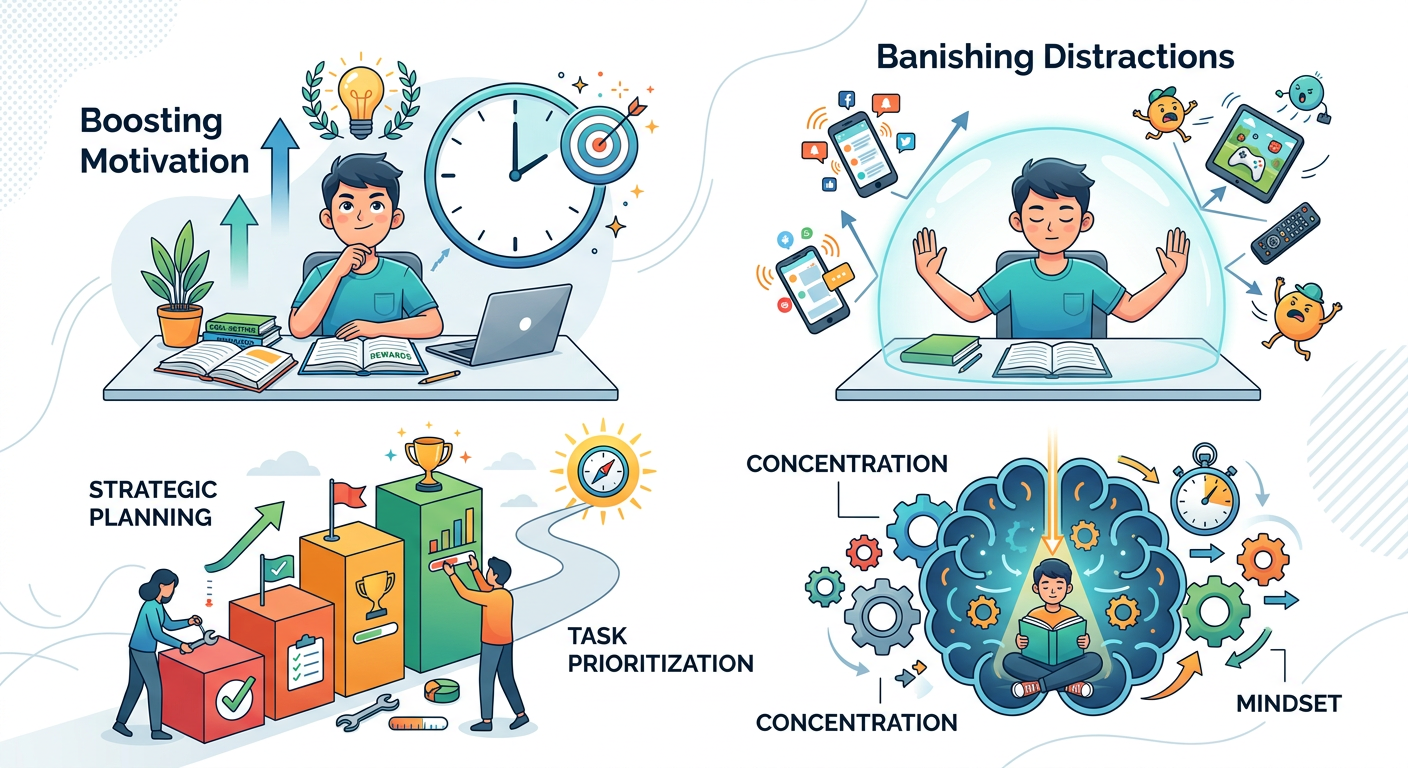
Motivation acts as fuel, while distractions are energy drainers. Actively cultivating motivation and strategically eliminating distractions are twin pillars of overcoming exam procrastination.
Finding Your 'Why': Connecting Study to Your Goals
Why are you studying this material? What are your academic, career, and personal aspirations? Connecting your current study tasks to these larger goals provides intrinsic motivation. Remind yourself that this exam isn't just a hurdle; it's a step towards your degree, your dream job, or mastering a subject you love.
Write your long-term goals down and place them where you'll see them during study sessions. This can be a powerful antidote to the feeling of how to study for exams without motivation.
Reward Systems That Actually Work: Positive Reinforcement for Studying
Psychologically, we're wired for rewards. Implement small, immediate rewards for completing study milestones. This could be a 10-minute break to scroll social media, a favorite snack, or watching an episode of a show.
For larger achievements, like finishing a difficult chapter or completing a mock exam, plan a bigger treat – perhaps a dinner with friends, a new book, or an hour of gaming. The key is to make rewards proportional to the effort and something you genuinely look forward to.
Digital Detox Strategies: Taming Your Phone and the Internet
Smartphones and the internet are perhaps the biggest culprits in exam procrastination. Implement strict digital detox strategies during study periods. Put your phone in another room or use "Do Not Disturb" mode.
Install website blockers (like Freedom or Cold Turkey) on your computer during designated study times. Consider using apps that track your screen time, giving you objective data on how much time you're losing to digital distractions. The human brain can only effectively focus for around 20-30 minutes at a time, according to some research (Harvard Business Review). Break up study time to accommodate this.
Effective Study Techniques to Keep Procrastination at Bay
The way you study profoundly impacts your engagement and effectiveness. Shifting from passive to active learning strategies makes studying less tedious and more productive.
Active Learning vs. Passive Review: Making Study Engaging
Mindlessly rereading notes is a common, yet inefficient, study method that often leads to procrastination because it feels boring and yields little retention. Instead, engage in active learning. This includes summarizing concepts in your own words, creating mind maps, teaching the material to an imaginary listener or a friend, or generating questions from your notes.
Active engagement makes the process more dynamic and less like a chore. Check out how to study for exams effectively for more ideas.
Spaced Repetition and Active Recall: Boosting Memory Retention
Two highly effective, science-backed study methods are spaced repetition and active recall. Spaced repetition involves revisiting information at increasing intervals over time, strengthening memory consolidation. Tools like Anki utilize this algorithm for flashcards.
Active recall means testing yourself on knowledge without looking at your notes. This could involve trying to list all the key terms from a chapter, explaining a complex process from memory, or doing practice questions. Both techniques force your brain to retrieve information, making it stick better. Learn more about how to study for exams using active recall.
Practicing Under Pressure: Mock Exams and Self-Testing
Simulating exam conditions is vital for reducing anxiety and identifying knowledge gaps. Take full-length mock exams under timed conditions, without notes, and in an environment similar to your actual exam. This builds confidence and provides valuable feedback on areas requiring more attention.
Self-testing doesn't just mean mock exams; it could also involve quizzing yourself regularly, creating your own questions, or using online practice tests. This is a critical component of how to study for exams using practice testing, helping you prepare for the real deal.
Overcoming Roadblocks: When Procrastination Strikes Back
Even with the best strategies, you'll encounter challenges. Knowing how to navigate these bumps in the road is essential for long-term success against procrastination.
Dealing with Study Fatigue and Burnout: When to Rest
Pushing yourself relentlessly without adequate rest leads to fatigue, burnout, and exponentially increases the likelihood of procrastination. Recognize the signs: chronic tiredness, irritability, difficulty concentrating, and a general lack of enthusiasm for studying. When these appear, it's a clear signal to step back.
Prioritize sleep, even during exam crunch time. Take proper breaks, engage in physical activity, and spend time on hobbies that recharge you. A well-rested brain performs far better than an exhausted one. The National Sleep Foundation recommends 7-9 hours of sleep for most adults to function optimally (SleepFoundation.org).
The Role of Self-Compassion: Bouncing Back from Setbacks
You will procrastinate at some point; it's part of being human. Instead of succumbing to self-criticism and guilt, practice self-compassion. Acknowledge your struggle without judgment, just as you would a friend.
Understand that a setback doesn't erase your progress. Forgive yourself, learn from what triggered the procrastination, and gently redirect yourself back to your study plan. Excessive self-criticism only serves to demotivate and push you further into avoidance.
Seeking Support: Knowing When to Ask for Help
If procrastination becomes a persistent, debilitating problem affecting your academic performance and well-being, don't hesitate to seek support. This could mean talking to a trusted friend, a family member, a tutor, or an academic advisor.
Universities often have counseling services or study skills centers that can offer tailored strategies and support. Sometimes, an external perspective or professional guidance is exactly what you need to break free from long-standing patterns. StudentAid.gov provides resources on academic support services available to students.
Ready to Finally Master Your Exams?
Stop wishing you studied more and start achieving it. Our tools are designed to streamline your study process, making it easier to start, stay focused, and excel.
Get Started FreeFrequently Asked Questions
Why do I keep procrastinating even when I know exams are important?
Procrastination often stems from underlying factors like fear of failure (or success), perfectionism, feeling overwhelmed by the task's size, or finding the material boring. It's rarely about lacking knowledge of the exam's importance but rather an emotional coping mechanism.
What are some immediate steps I can take to stop procrastinating for my upcoming exam?
Start with a tiny, easy task (e.g., "read one paragraph"), use the Pomodoro Technique (25 minutes on, 5 minutes off), put your phone away in another room, and immediately identify the very next action you need to take. Don't plan; just do.
How can I stay motivated to study when the material is difficult or boring?
Connect the material to your larger goals, even if indirectly. Break it into ultra-small chunks, use active learning techniques like teaching the material to someone else, and implement small, immediate rewards for completing study segments. Sometimes, just focusing for 15 minutes is enough to build momentum.
Is it ever too late to stop procrastinating and start studying effectively for an exam?
It's almost never too late to start doing *something*. Even a few hours of focused, strategic studying using active recall and practice questions can make a significant difference. Don't let past procrastination prevent you from taking action now. Every minute counts. For quick but effective strategies, consider our guide on how to study for exams fast.
What's the best way to deal with distractions like my phone and social media while studying?
Physically remove your phone from your study space or put it on "Do Not Disturb." Use website blockers for social media on your computer. Schedule specific times for checking notifications and stick to them. Make accessing distractions inconvenient.
How can I manage exam anxiety that contributes to my procrastination?
Recognize that anxiety often fuels avoidance. Break down tasks into smaller, less intimidating steps. Practice mindfulness or deep breathing exercises before studying. Focus on controllable actions rather than overwhelming outcomes. Simulating exam conditions through mock tests can also significantly reduce anxiety about the unknown.
Enjoyed this article?
Share it with others who might find it helpful.
Related Articles

How to Solve Molarity Problems: Step-by-Step Mastery
Learn how to solve molarity problems step-by-step with formulas, unit tips, and worked examples so you can calculate concentration with confidence.
Mar 26, 2026

Avoid These 7 Common Molarity Mistakes in Chemistry
Master chemistry calculations! Avoid common molarity mistakes with our expert guide on unit conversions, dilution errors, and proper lab techniques.
Mar 26, 2026

What Is Molarity? The Complete Guide to Molar Concentration
Master molarity with our complete guide. Learn the formula, step-by-step calculations, and the critical differences between molarity and molality.
Mar 26, 2026
Why Molarity Matters: Converting Mass to Moles for Lab Solutions
Master chemistry with our guide to the molarity formula. Learn how to calculate concentration with step-by-step examples, units, and practical lab tips.
Mar 26, 2026

Molarity vs Molality: The Essential Difference Explained
Master the difference between molarity vs molality. Learn the formulas, key differences, and when to use each in this comprehensive chemistry guide.
Mar 26, 2026