How to Study for Exams When Overwhelmed: A Realistic Guide

The feeling is suffocating. A mountain of textbooks, a cascade of lecture notes, and a looming exam schedule create a paralysis that’s hard to describe. You know you need to study, but the sheer volume of work makes it impossible to even start. This guide breaks down exactly how to study for exams when overwhelmed, not with empty platitudes, but with a realistic, step-by-step plan to regain control.
This isn't just about feeling stressed; it's about being trapped in a vicious cycle. The overwhelm leads to procrastination, which then multiplies the stress and makes the task seem even more monumental. You're not lazy or incapable; you’re experiencing a completely normal physiological response to immense pressure. The goal right now isn't to become a perfect, stress-free student overnight. The goal is simply to start.
First, Acknowledge the Overwhelm (and Breathe)
The first step is to stop fighting the feeling and validate it. Your brain is essentially in fight-or-flight mode, making higher-level cognitive functions like analysis and memory recall incredibly difficult. Trying to force yourself to "just study" is like trying to run a marathon with a sprained ankle. You must address the injury first. Often, just naming the emotion, "I feel completely overwhelmed", can reduce its power.
Recognize that this state is temporary. You won't feel this way forever, and there is a clear path out. The secret is to shift your focus from the entire mountain to the single, small stone right in front of your feet. Many students find themselves in this exact position, often because the very act of studying feels impossible, a common reason people find themselves struggling to study for exams in the first place.
The 5-Minute Reset
Before you even think about a textbook, perform a 5-minute reset. Find a quiet space, close your eyes, and focus only on your breath. Inhale slowly for four counts, hold for four, and exhale for six. This isn't a magic cure, but it signals to your nervous system that you are safe, helping to pull your brain out of its panicked state. According to the Mayo Clinic, even brief moments of meditation can restore calm and inner peace.
Step 1: Create a Triage Plan to Calm the Chaos

To start studying when you're behind, you must first clear the mental clutter by creating an organized triage plan. This process moves the overwhelming list of tasks from your head onto paper, where you can manage it objectively. It’s about transforming a chaotic feeling into a concrete, actionable list.
The 'Everything' List: Get It All Out of Your Head
Grab a piece of paper or open a blank document. Without filtering or organizing, write down every single thing you need to study for every single exam. List every chapter, every topic, every formula sheet, every practice quiz, and every deadline. Don't worry about order. This "brain dump" is crucial for externalizing your anxiety and seeing the full scope of what needs to be done.
Prioritize Ruthlessly: What Absolutely Needs to Be Done?
Now, look at your list with the eyes of a surgeon in an emergency room. You can't save everything at once. You must prioritize. For each exam, identify the most critical topics. A good method is to consider two factors: the weight of the topic on the exam (e.g., is it 40% of the test or 5%?) and your current level of understanding. Focus your initial energy on high-weight topics you feel weakest on. This approach ensures you're spending your limited time where it will have the biggest impact.
Break It Down into Micro-Tasks
A task like "Study Chapter 5" is too big and intimidating. It invites procrastination. You need to break it down into absurdly small "micro-tasks." For example, "Study Chapter 5" becomes:
Read pages 80-85 and highlight key terms. (15 mins)
Create 5 flashcards for the key terms on pages 80-85. (10 mins)
Watch a 7-minute Khan Academy video on the core concept. (7 mins)
Attempt 3 practice problems related to that concept. (15 mins)
Each micro-task feels achievable, which helps build momentum. If you need more structure, you can learn how to create a study plan for exams that integrates this micro-task approach systematically.
Assign Just One Task to Start
From your prioritized list of micro-tasks, choose just one. Not five, not three. Just one. Your only goal for the next 30 minutes is to complete that single, tiny task. This is the key to breaking the cycle of overwhelm and inaction. Once you finish it, you'll feel a small but powerful sense of accomplishment, making it easier to pick the next task.
Feeling Overwhelmed is a Sign to Change Your Strategy
Don’t just push through the stress. Use Bevinzey’s interactive tools to build a smart study plan that actually works for your brain.
Try Our Tools FreeStep 2: Effective Study Techniques for Overwhelm and a Stressed Brain

Once you have a plan, you need to use study methods that work with a fatigued brain, not against it. Passive techniques like re-reading notes are inefficient and draining. Instead, opt for active, engaging methods that are done in short, manageable bursts. These techniques are some of the most science-backed strategies for effective learning.
The Pomodoro Technique: Study in 25-Minute Sprints
The Pomodoro Technique is one of the best study tips for stressed students. Set a timer for 25 minutes and commit to working on one micro-task with zero distractions. When the timer goes off, you must take a 5-minute break. After four "Pomodoros," take a longer break of 15-30 minutes. This method helps in managing exam anxiety by making the work feel less endless and providing frequent rewards (breaks), which keeps motivation from plummeting.
Active Recall: Test Yourself Without the Pressure
Active recall is the process of actively retrieving information from your brain, rather than passively reviewing it. This strengthens neural pathways and dramatically improves memory. When you're overwhelmed, high-pressure self-testing is counterproductive. A better approach is low-stakes active recall. Before reading a chapter section, ask yourself: "What do I already know about this?" After reading it, close the book and try to summarize the main points out loud. This simple switch from input to output makes a massive difference, and you can learn exactly how to study for exams using active recall for maximum effect.
The 'Blurting' Method: See What You Really Know
The blurting method is a powerful form of active recall. Take a blank piece of paper, write a topic at the top (e.g., "Photosynthesis"), and spend 10 minutes writing down everything you can remember about it. Don't worry about structure or accuracy. Just blurt it all out. When you're done, review your notes or textbook to see what you missed or got wrong. This quickly and effectively reveals the gaps in your knowledge without the pressure of a formal quiz.
Focus on Core Concepts, Not Every Single Detail
When you're trying to figure out how to start studying when you're behind, perfectionism is your enemy. You don't have time to memorize every sentence in the textbook. Apply the 80/20 principle: 20% of the concepts will likely account for 80% of the exam questions. Identify those foundational principles and master them first. A solid understanding of the core ideas is far more valuable than a shaky grasp of a thousand minor details. For a broader framework, consider adopting a comprehensive step-by-step guide to studying.
Step 3: Aggressively Protect Your Health When Learning How to Study for Exams When Overwhelmed
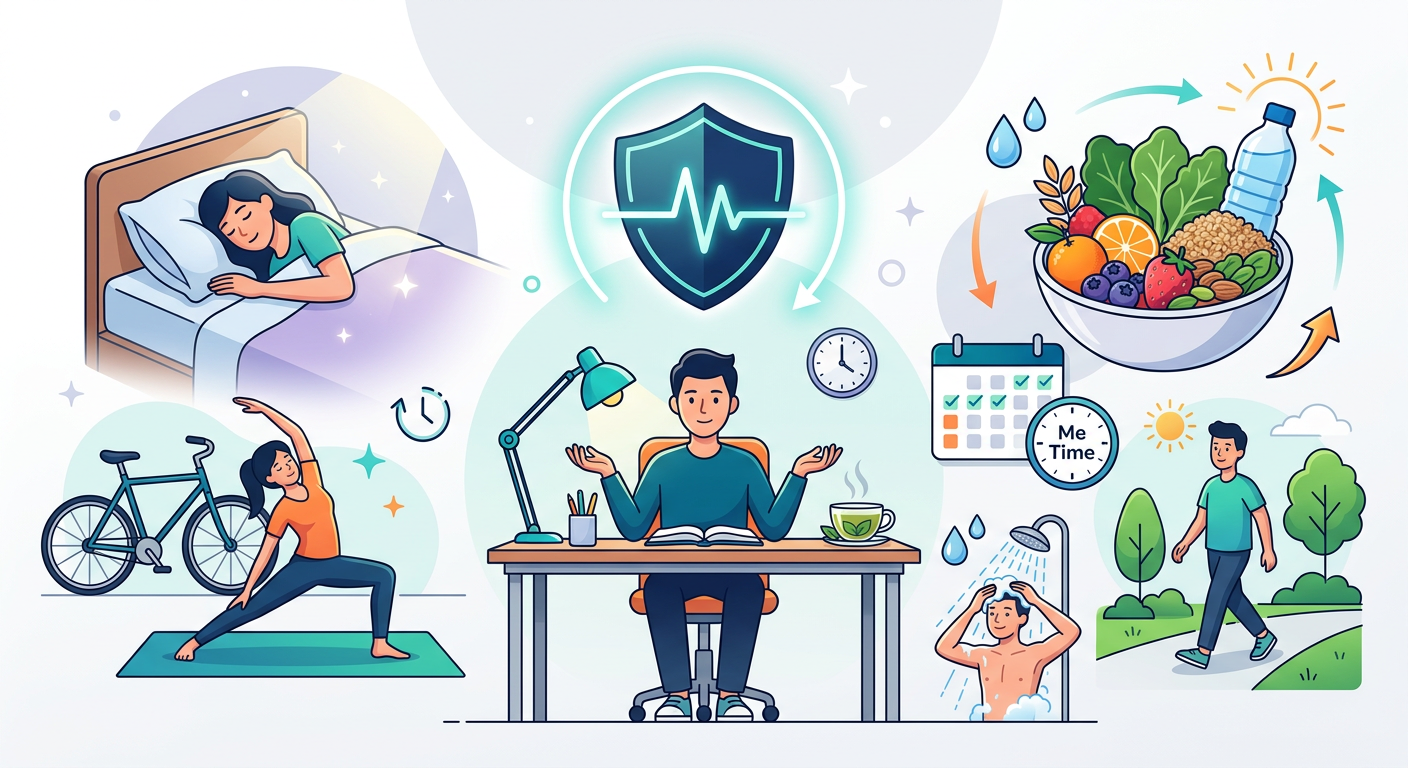
Your brain is a physical organ, and its performance depends entirely on your physical health. During high-stress periods, self-care isn't an indulgence; it's a critical component of your study strategy. Neglecting sleep, nutrition, and breaks is the fastest way to experience student burnout.
The Non-Negotiable: Prioritizing Sleep for Memory
Pulling an all-nighter is the single worst thing you can do for memory formation. Sleep is when your brain consolidates what you've learned, moving information from short-term to long-term memory. According to the CDC, adolescents and young adults need 8-10 hours of sleep per night for optimal health and cognitive function. Sacrificing even a few hours can impair your attention, critical thinking, and recall ability the next day. If you find yourself exhausted, it's better to learn how to study when tired with smart techniques than to skip sleep altogether.
Strategic Breaks That Actually Recharge You
Not all breaks are created equal. Mindlessly scrolling through social media can often increase anxiety and leave you feeling more drained. A strategic break should allow your mind to rest and reset. Try one of these:
Take a 10-minute walk outside.
Listen to a few of your favorite songs.
Do some light stretching.
Chat with a friend or family member (about anything but exams).
Simply sit in silence and do nothing.
The key is to step away from all screens and engage in an activity that is genuinely low-effort and restorative.
Fuel Your Brain: Simple Nutrition and Hydration Tips
Your brain consumes about 20% of your body's calories. When you're studying intensely, you need to fuel it properly. Avoid sugary snacks that lead to energy crashes. Opt for brain-boosting foods like nuts, berries, dark chocolate, and eggs. Most importantly, stay hydrated. Dehydration can cause headaches, fatigue, and brain fog, making it impossible to focus.
Schedule a 'Done for the Day' Time
One of the main causes of student burnout is the feeling that you should be studying 24/7. This is unsustainable and ineffective. To prevent this, schedule a hard stop time each day—for example, 9:00 PM. No matter what, when that time comes, you are done studying for the day. This creates a boundary that allows your brain to fully switch off and recharge, making your study sessions the next day far more productive.
Turn Overwhelm into a Concrete Action Plan
Stop staring at the mountain of work. Bevinzey's suite of smart study tools helps you triage topics, create micro-tasks, and use evidence-based techniques to study effectively, even under pressure.
Get Started FreeFrequently Asked Questions
What is the first thing to do when feeling overwhelmed with studying?
The first thing is to perform a 5-minute reset. Step away from your books, close your eyes, and focus on slow, deep breathing. This calms your nervous system and stops the panic spiral, allowing you to think more clearly and tackle the next step: creating a triage plan.
How can I study for an exam if I have no time?
When time is short, focus on high-impact activities. Prioritize topics that carry the most weight on the exam. Use active recall methods like blurting or flashcards instead of passive re-reading. Study in focused 25-minute sprints (the Pomodoro Technique) to maximize every minute you have.
Is it better to pull an all-nighter or get some sleep before an exam?
It is always better to get some sleep. Sleep is essential for memory consolidation, the process where your brain converts what you've learned into long-term memories. An all-nighter severely impairs cognitive function, attention, and recall, meaning you'll struggle to access the information you tried to cram.
How do I stop procrastinating because of academic anxiety?
Break the task down into incredibly small, non-intimidating "micro-tasks." Instead of "study for my history final," your first task might be "read two pages of the textbook." The goal is to make the first step so easy that you can't say no. Completing a small task builds momentum and reduces the anxiety associated with the larger goal.
How can I focus on studying when I feel stressed and anxious?
Acknowledge the stress instead of fighting it. Use the Pomodoro Technique to work in short, manageable bursts with built-in breaks to prevent burnout. Practice low-stakes active recall to engage with the material without adding pressure. And finally, ensure your physical needs, sleep, hydration, and nutrition, are met, as they are the foundation of your ability to focus.
Enjoyed this article?
Share it with others who might find it helpful.
Related Articles

How to Solve Molarity Problems: Step-by-Step Mastery
Learn how to solve molarity problems step-by-step with formulas, unit tips, and worked examples so you can calculate concentration with confidence.
Mar 26, 2026

Avoid These 7 Common Molarity Mistakes in Chemistry
Master chemistry calculations! Avoid common molarity mistakes with our expert guide on unit conversions, dilution errors, and proper lab techniques.
Mar 26, 2026

What Is Molarity? The Complete Guide to Molar Concentration
Master molarity with our complete guide. Learn the formula, step-by-step calculations, and the critical differences between molarity and molality.
Mar 26, 2026
Why Molarity Matters: Converting Mass to Moles for Lab Solutions
Master chemistry with our guide to the molarity formula. Learn how to calculate concentration with step-by-step examples, units, and practical lab tips.
Mar 26, 2026

Molarity vs Molality: The Essential Difference Explained
Master the difference between molarity vs molality. Learn the formulas, key differences, and when to use each in this comprehensive chemistry guide.
Mar 26, 2026