The Best Way to Study for Exams: Science-Backed Strategies

Most students approach their finals with a stack of highlighters and a sense of impending doom, yet research consistently shows that traditional methods like rereading notes are the least effective. The best way to study for exams isn't about the number of hours you log at your desk; it is about how you engage your brain during those hours. High-achievers don't necessarily work harder, they work in alignment with how the human brain encodes and retrieves information.
When you sit down to tackle a massive syllabus, the temptation to cram is overwhelming. However, cognitive science suggests that our brains are not digital hard drives that can simply "download" a textbook overnight. To truly master material, you must transition from being a passive consumer of information to an active architect of your own knowledge. This involves leveraging science-backed study tips that prioritize long-term retention over short-term recognition.
The Science of Learning: Why Cramming Fails
Cramming fails because it ignores the biological limits of memory consolidation, leading to a phenomenon known as "illusions of competence." The best way to study for exams starts with understanding the principles of cognitive psychology rather than relying on brute force. When you cram, you might recognize the information on a page, but your brain hasn't built the neural pathways required to retrieve that data under the stress of an exam.
The Ebbinghaus Forgetting Curve demonstrates that without intervention, we forget approximately 70% of new information within 24 hours. This decline is steepest immediately after learning. To combat this, you must engage in spaced repetition, which essentially "re-boots" the memory before it fades, flattening the curve over time. Each review session strengthens the synaptic connections in your brain, a process known as neuroplasticity.
Passive learning, such as highlighting or rereading, is deceptive because it feels easy. Because the text looks familiar, you trick yourself into thinking you know it. True learning requires "desirable difficulty." Your brain needs to struggle slightly to recall information, as this effort signals to your hippocampus that the data is important enough to store permanently. Furthermore, late-night cram sessions sacrifice sleep, which is the exact time your brain moves information from short-term to long-term storage.
Foundational Study Strategies That Actually Work
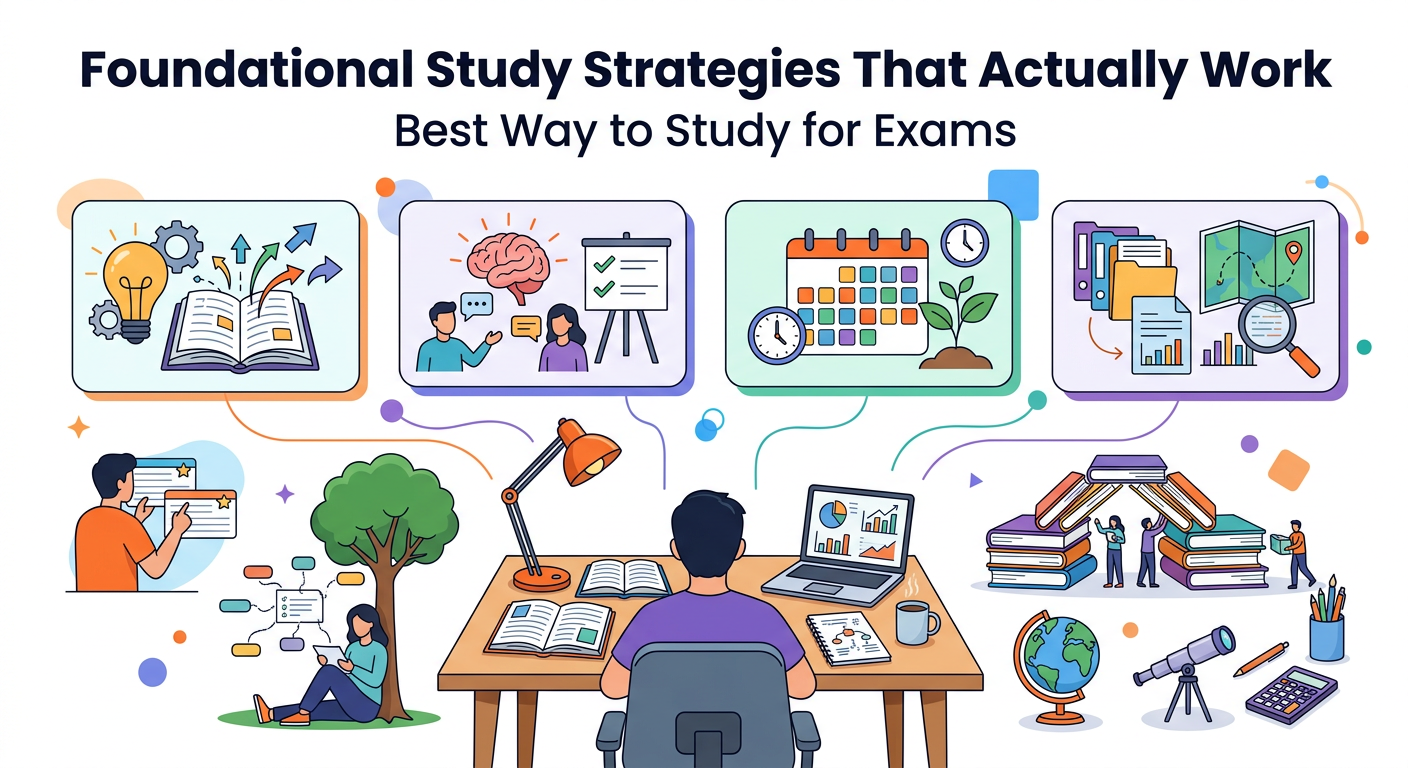
Active recall and spaced repetition are the most powerful tools in a student's arsenal for long-term mastery. While reading a chapter feels productive, it is a poor substitute for forcing your brain to produce an answer from scratch. This mental "retrieval effort" is the best way to study for exams because it mimics the actual conditions of the test.
To implement active recall, close your book and write down everything you remember about a topic, or use flashcards to test your knowledge. For complex subjects like chemistry, practicing specific problems is essential. For instance, if you are preparing for a chemistry final, testing yourself with ICE table practice questions is far more effective than just reading the formula. You want to identify gaps in your knowledge early, rather than discovering them halfway through the exam.
Another elite strategy is the Feynman Technique, named after physicist Richard Feynman. It involves four simple steps:
Pick a concept you want to learn.
Explain it out loud as if you were teaching it to a sixth-grader.
Identify the gaps in your explanation where you got stuck.
Review the source material to fill those gaps and simplify your language.
If you cannot explain a concept simply, you do not understand it deeply enough. This technique is particularly useful for mastering Le Chatelier’s Principle or other abstract scientific theories.
Stop guessing and start using science-backed practice tools designed to help you retain information faster and more effectively.
Get Started FreeStructuring Your Study Schedule for Success
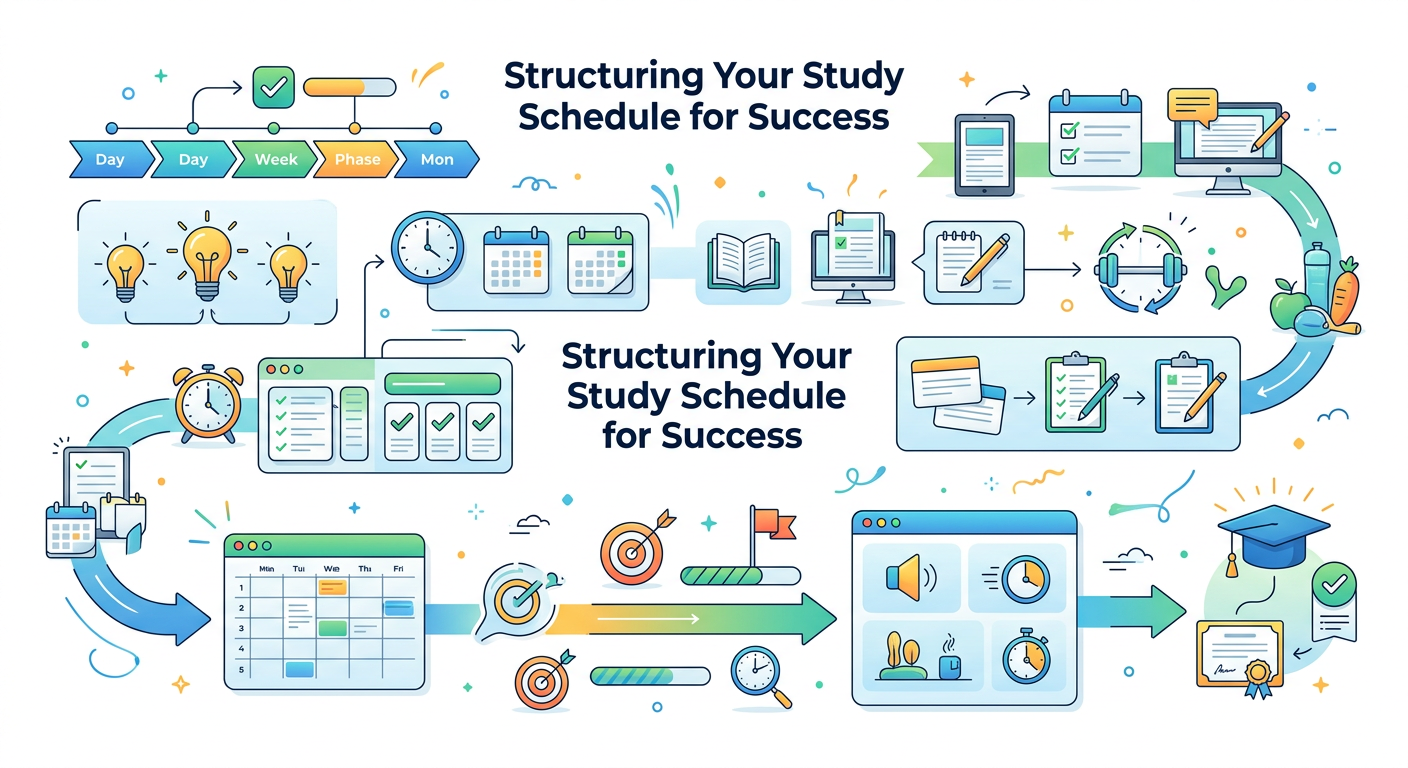
Effective scheduling requires managing your energy and cognitive load rather than just tracking minutes on a clock. Many students find that the best way to study for exams involves using the Pomodoro Technique: 25 minutes of intense, focused work followed by a 5-minute break. This rhythm prevents burnout and keeps your brain alert for longer periods.
Creating a "Deep Work" environment is equally critical. This means eliminating all distractions, put your phone in another room and turn off desktop notifications. According to research from Georgetown University professor Cal Newport, deep work is the ability to focus without distraction on a cognitively demanding task. This state of flow allows you to learn difficult concepts in a fraction of the time it would take during a distracted "shallow work" session.
To keep your daily goals manageable, try the 1-3-5 rule. Commit to accomplishing one big task, three medium tasks, and five small tasks each day. For example, your "big task" might be mastering Hess’s law practice questions, while your small tasks could involve reviewing vocabulary or organizing your desk. Prioritizing tasks using the Eisenhower Matrix, categorizing them by urgency and importance, ensures you aren't just busy, but productive.
Note-Taking Systems for Better Recall
The Cornell Method and mind mapping are superior to linear note-taking because they force you to organize and summarize information in real-time. The best way to study for exams includes building notes that serve as active study tools later, rather than just transcripts of a lecture. A well-organized set of notes acts as a roadmap for your brain during the revision process.
In the Cornell Method, you divide your paper into three sections: a narrow left column for cues/questions, a large right column for notes, and a bottom summary section. After class, you use the left column to quiz yourself. This naturally incorporates active recall techniques into your review cycle. If you prefer a more visual approach, mind mapping helps you see the "big picture" and how different subtopics relate to one another, which is essential for subjects like history or biology.
Science suggests that handwriting notes is often better for conceptual understanding than typing. Typing is too fast; students often transcribe lectures verbatim without processing the meaning. Writing by hand forces you to paraphrase and synthesize, which is the first step of learning. If you are following a step-by-step study guide, make sure "interrogating your notes", asking why and how things work, is a daily habit.
Optimizing Your Physical and Mental State
Your brain is a biological organ that requires specific conditions to function at peak capacity, meaning your lifestyle habits are just as important as your study methods. The best way to study for exams must include a strategy for nutrition, hydration, and sleep. Dehydration of even 2% can significantly impair your attention and memory functions.
Nutrition for peak cognitive function includes omega-3 fatty acids found in fish and walnuts, as well as complex carbohydrates that provide a steady stream of glucose to the brain. Avoid the "sugar crash" associated with energy drinks and candy. Furthermore, physical exercise stimulates the release of brain-derived neurotrophic factor (BDNF), a protein that supports the survival of existing neurons and encourages the growth of new ones. A simple 20-minute walk before a study session can sharpen your focus.
Managing exam stress is the final piece of the puzzle. High levels of cortisol (the stress hormone) can actually inhibit the hippocampus, making it harder to recall information you definitely know. Practice square breathing or mindfulness for five minutes daily to lower your baseline anxiety. This prevents the dreaded "blanking out" during a high-stakes test. Remember, a rested brain will always outperform a caffeinated, sleep-deprived brain.
Subject-Specific Study Tactics
Different disciplines require different cognitive approaches, so your strategy should shift based on whether you are tackling quantitative problems or qualitative analysis. For math and science, the best way to study for exams is through high-volume practice. You cannot "read" your way to an A in chemistry; you must work through challenging practice questions until the methodology becomes instinctual.
If you are struggling with specific calculations, dive into specialized resources. For instance, solving Kp calculations practice questions repeatedly will help you internalize the relationship between pressure and equilibrium constant. In contrast, humanities subjects like English or Philosophy require thematic analysis and essay planning. Instead of memorizing dates, focus on the "why" behind historical events and create outlines for potential essay prompts.
For language learning, immersion and repetition are the only paths to fluency. Use spaced repetition for vocabulary and try to listen to podcasts or news in your target language. The key is to engage with the material in multiple formats, visual, auditory, and kinesthetic, to build a robust web of associations in your memory.
The Final Countdown: 24-48 Hours Before the Exam
The final two days before an exam should be reserved for high-level review and mental preservation, not for learning brand-new material. The best way to study for exams in the final hours is to consolidate what you already know and ensure your body is ready for the "performance" of the test. If you don't know a concept by 8:00 PM the night before, you likely won't master it by 2:00 AM, and the lack of sleep will only hurt your performance on the topics you do know.
The night before, prioritize a full eight hours of sleep. This is when your brain performs "synaptic pruning" and stabilizes the memories you've built over the past weeks. On the morning of the exam, eat a light, protein-rich breakfast and avoid talking to stressed-out classmates whose anxiety might be contagious. Stick to your own routine and trust the work you've put in.
A great tactical tip for the start of the exam is the "dump sheet." As soon as the timer starts, spend two minutes writing down all the difficult-to-remember formulas, dates, or mnemonics on your scratch paper. This clears your "working memory" and reduces the fear that you’ll forget a crucial piece of information while navigating a complex question later in the test.
Get access to thousands of practice questions and expert guides designed to help you ace your most difficult courses.
Get Started FreeFrequently Asked Questions
How many hours should I study for an exam?
Focus on quality over quantity. Research suggests that 2–4 hours of "deep work" with total focus is more effective than 8 hours of distracted studying. Break your sessions into 25-50 minute blocks to maintain cognitive stamina.
Is it better to study at night or in the morning?
It depends on your circadian rhythm, but most people have higher cognitive alertness in the morning. However, reviewing difficult concepts shortly before sleep can sometimes aid in memory consolidation, provided you still get enough rest.
What is the best way to memorize things quickly?
The fastest way to memorize is through active recall techniques and mnemonics. Instead of reading a list, quiz yourself repeatedly and create vivid, even funny, mental stories to link disparate pieces of information together.
Should I listen to music while studying?
For highly complex tasks, silence is best. If you prefer background noise, choose instrumental music (like lo-fi or classical) without lyrics, as the language processing parts of your brain will be distracted by singing.
How can I stop procrastinating and start studying?
Use the "5-Minute Rule": commit to studying for just five minutes. Often, the hardest part is starting. Once you break the barrier of inertia, it is much easier to continue working.
What is the most effective study method supported by science?
The most effective method is a combination of active recall and spaced repetition. Testing yourself on the material at increasing intervals over time is the most robust way to build long-term memory and understanding.
Enjoyed this article?
Share it with others who might find it helpful.
Related Articles

How to Solve Molarity Problems: Step-by-Step Mastery
Learn how to solve molarity problems step-by-step with formulas, unit tips, and worked examples so you can calculate concentration with confidence.
Mar 26, 2026

Avoid These 7 Common Molarity Mistakes in Chemistry
Master chemistry calculations! Avoid common molarity mistakes with our expert guide on unit conversions, dilution errors, and proper lab techniques.
Mar 26, 2026

What Is Molarity? The Complete Guide to Molar Concentration
Master molarity with our complete guide. Learn the formula, step-by-step calculations, and the critical differences between molarity and molality.
Mar 26, 2026
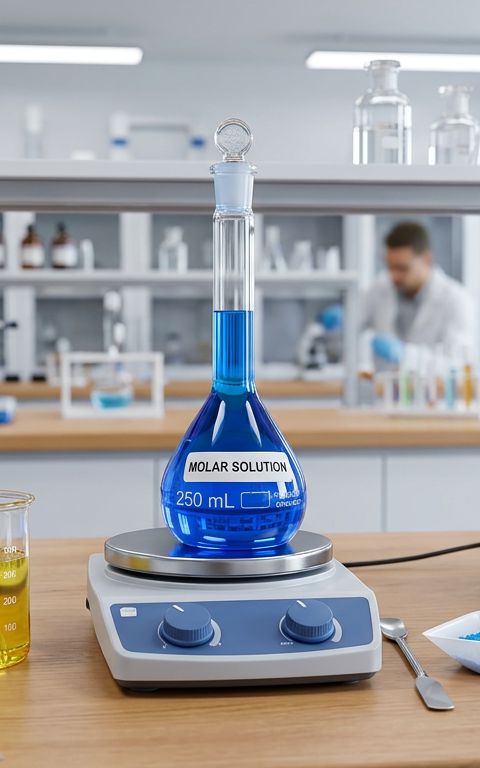
Why Molarity Matters: Converting Mass to Moles for Lab Solutions
Master chemistry with our guide to the molarity formula. Learn how to calculate concentration with step-by-step examples, units, and practical lab tips.
Mar 26, 2026
Molarity vs Molality: The Essential Difference Explained
Master the difference between molarity vs molality. Learn the formulas, key differences, and when to use each in this comprehensive chemistry guide.
Mar 26, 2026