Ace Your Exams: The Ultimate Guide on How to Study for Exams Fast

Facing down an exam with limited time feels like staring at a mountain you need to climb in an hour. We’ve all been there, notebook open, clock ticking. The good news? While a magic wand doesn't exist, strategic preparation can dramatically improve your chances. This guide will show you how to study for exams fast, transforming panic into productive action and helping you improve exam scores even when time is scarce.
You might be wondering if it's truly possible to absorb weeks of material in a few days. It's a valid question, and the answer lies in understanding how to approach this compressed timeframe. We're not talking about miracles, but highly effective study techniques and razor-sharp prioritization.
Understanding the 'Fast' in Fast Exam Study: Is It Possible?
Defining 'fast' in exam study means setting realistic expectations, not wishing for superpowers. When we talk about studying fast, we're typically looking at a timeframe of a few days to a week, not merely a few hours before the test. While an all-nighter might seem like the only option in a pinch, sustained, focused effort over even a couple of days yields far superior results than a single marathon session. The goal is to study smarter not harder, leveraging cognitive principles.
The psychology of last-minute learning presents both strengths and weaknesses. The intense pressure can sharpen your focus, almost like a spotlight concentrating your mental energy. You become incredibly motivated to identify and absorb only the most critical information.
However, this hurried approach often leads to superficial understanding rather than deep learning. Your brain might prioritize short-term memorization for immediate recall, neglecting the neural pathways needed for long-term retention and true comprehension. This can be particularly problematic for subjects requiring complex problem-solving, such as chemistry with its equilibrium calculations or reaction quotients. Instead, a balanced approach combining intense focus with proven effective study techniques is key.
Common pitfalls of rushed study include burnout, anxiety, and a false sense of security. Students often try to read every single page, leading to information overload and exhaustion. Avoid this by accepting that you won't master everything; instead, focus on the big picture and high-yield topics.
Another trap is neglecting physical needs like sleep and nutrition, which severely impair cognitive function. Remember, your brain needs fuel and rest to perform, especially under stress.
Phase 1: Rapid Assessment & Prioritization (The First 30 Minutes)
The critical first step in organizing your study materials involves a quick but thorough data-gathering mission. Grab your textbook, lecture notes, handouts, any old quizzes or assignments, and, most importantly, the course syllabus.
The power of the syllabus cannot be overstated; it's your exam's blueprint. Scan it to identify key topics explicitly mentioned, learning objectives, and any sections indicating weighting (e.g., "Chapter 5 will account for 30% of the exam grade"). This immediately tells you where to direct most of your energy. Often, instructors will highlight areas of particular importance, giving you direct clues about what to focus on.
Next, perform a quick content scan to separate what you know from what you don't. Flip through your notes and textbooks, pausing briefly on each major heading. Can you explain the concept in a sentence or two? If not, flag it as an area needing attention. Don't spend too long here; this is a diagnostic sweep, not a deep dive.
Finally, armed with this information, create a 'battle plan' – your urgent study schedule. This isn't a vague someday list. This is a meticulously planned, hour-by-hour breakdown for the next few days. Allocate more time to high-weight, low-familiarity topics. For instance, if a chemistry exam is looming and you're struggling with ICE table practice questions, that gets a higher priority than concepts you've already aced. Be brutal with your time allocation; every minute counts.
Phase 2: High-Impact Study Techniques for Maximum Retention (The Core of Fast Learning)
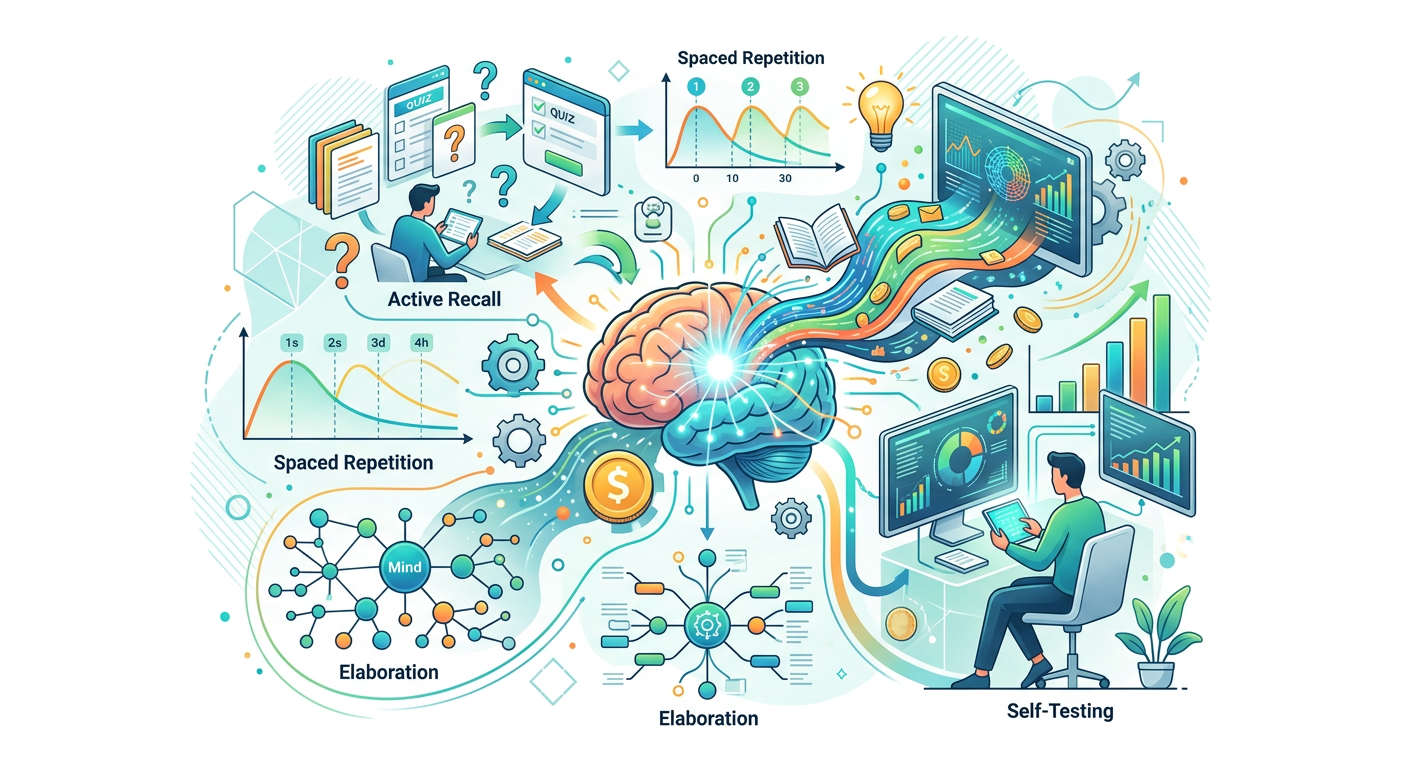
To maximize memory and comprehension in a short timeframe, focus on active and efficient methods rather than passive reading. Active recall stands as one of the most effective study techniques for last-minute exam preparation: instead of just re-reading your notes, quiz yourself constantly. Turn headings into questions ("What is the capital of France?"), cover answers, and try to retrieve the information.
Even in a rush, you can simulate spaced repetition. After actively recalling a concept, revisit it a few hours later, then again the next day. This short burst of repetition, though not as comprehensive as traditional spaced repetition, significantly strengthens memory compared to a single exposure. Think of it as rapid-fire review sessions.
The Feynman Technique simplifies complex concepts by forcing you to explain them. Pick a topic, then pretend you're teaching it to a child. Write down your explanation in simple terms. If you get stuck, that's where your knowledge gap lies; go back to your notes specifically on that point. This method works wonders for understanding, not just memorizing, like grasping the nuances of Le Chatelier's Principle.
Mind mapping and visual aids connect ideas quickly. On a large sheet of paper, put the central theme in the middle. Branch out with main topics, then sub-topics, using keywords, symbols, and colors. This visually represents relationships and hierarchies, making complex information more digestible and easier to recall. Try this for understanding the interconnectedness of concepts in a historical period or scientific process.
Selective note-taking means focusing on high-yield information. Resist the urge to rewrite everything. Instead, distill information into bullet points, keywords, and mnemonic devices. If you've identified key concepts from the syllabus, only take notes on *those* specific areas during your quick reviews.
Practice questions and past papers are the ultimate diagnostic tool. They show you exactly how information is tested and reveal your weak spots. Don't just answer them; analyze why you got questions wrong. Did you misunderstand a concept? Fall for a trick? This feedback loop is crucial for targeted cramming effectively.
For subjects like chemistry or math, work through hard ICE table practice questions or Reaction Quotient (Q) practice questions. The act of solving problems reinforces theoretical knowledge better than mere passive reading. Even if you only have time for a few, make them count.
Phase 3: Optimizing Your Study Environment and Mindset (Support Systems for Success)

An ideal, distraction-free study space is paramount when time is short. Find a quiet spot away from potential interruptions – turn off notifications, close unnecessary tabs, and let housemates know you're unavailable. A clean, organized desk can reduce mental clutter and help you focus immediately.
Fueling your brain correctly with nutrition and hydration strategies significantly impacts cognitive function. Avoid sugary snacks that lead to a crash and opt for complex carbohydrates, lean protein, and healthy fats. Think nuts, fruits, whole-grain toast, or a small yogurt. And most importantly, stay hydrated; even mild dehydration can impair concentration and memory. Keep a water bottle within reach throughout your study sessions.
Short bursts and breaks, adapted from the Pomodoro Technique, are incredibly effective for intense, focused study. Instead of one long, draining session, work for 25-30 minutes with absolute concentration, then take a 5-minute break. After four sessions, take a longer 15-30 minute break. This method keeps your mind fresh, prevents burnout, and helps maintain high productivity when time is tight.
Managing exam anxiety and stress is crucial for clear thinking. Quick calming methods include deep breathing exercises: inhale slowly for four counts, hold for seven, exhale for eight. Repeat this a few times. Visualization, where you imagine yourself calmly and successfully completing the exam, can also temper nerves. These techniques take mere minutes but can significantly lower stress levels, allowing your brain to function optimally. The American Psychological Association offers excellent resources on stress management.
The role of sleep is non-negotiable, even when time is short. Sacrificing sleep for "more study time" is often counterproductive. Sleep consolidates memories, helping you retain what you've learned. Aim for at least 6-7 hours, even if it feels like you're losing valuable study time. Your brain processes and locks in information during sleep, making those hours far more beneficial than groggily attempting to absorb new material. A CDC study highlighted the importance of adequate sleep for overall well-being and cognitive performance.
Phase 4: The Day Before and Day of the Exam (Final Polish & Performance)
On the day before the exam, resist the urge to learn new, major topics. Your focus should shift to last-minute review, specifically targeting areas you've identified as weak or high-priority. Skim your condensed notes, review flashcards, and quickly re-do challenging practice problems you previously struggled with. This reiteration helps solidify precarious memories, making it easier to recall specifics during the actual test. A light review ensures that the information is fresh without causing overload or panic.
Preparation for exam day involves more than just mental readiness; logistics are key. Gather everything you'll need the night before: pens, pencils, erasers, a calculator (with fresh batteries!), any permitted notes or equation sheets, and your ID. Lay out your clothes. Check the exam location and time one last time. This simple act reduces morning stress, allowing you to focus purely on the exam itself. Thinking about what you need now frees your mental capacity later.
Pre-exam routines can significantly calm nerves and boost confidence. Wake up early enough to have a relaxed breakfast with some protein and complex carbs – avoid sugary cereals that can lead to an energy crash. Do a few minutes of light stretching or deep breathing. Listen to calming music. Arrive at the exam venue a little early to avoid rushing, but not so early that you have hours to stew in anxiety. A brief walk can help clear your head.
During the exam, effective strategies for time management and answering techniques directly impact your score. Quickly skim the entire exam first to gauge the number and type of questions; this allows you to allocate time strategically. Start with questions you know well to build confidence and secure easy points. For multiple-choice, eliminate obviously wrong answers. For essay questions, quickly outline your points before writing to ensure coherence and completeness. If you get stuck, move on and come back later if time permits. Don't dwell too long on any single problem.
Beyond the Exam: Learning from Your 'Fast Study' Experience
After the exam, engage in post-exam reflection to assess what truly worked and what didn't. Did active recall help you remember specific facts? Was the Feynman Technique truly effective for understanding complex ideas? Did neglecting sleep severely impair your performance despite your efforts? Honest self-assessment provides invaluable insights for refining your future study methods. Reflect on your approach to studying for exams effectively.
Integrate these effective habits for future success. If creating a rapid-fire study schedule proved helpful, consider maintaining a more relaxed version for regular coursework. If practice questions were your savior, make them a standard part of your learning process, not just a last-minute tactic. These small changes, applied consistently, build a stronger foundation for knowledge acquisition.
The long-term benefits of 'studying smarter, not just faster' extend far beyond individual exam scores. By understanding how your brain learns best and applying efficient strategies, you develop robust academic skills. This transition from reactive, fast cramming to proactive, sustainable study practices prepares you for lifelong learning. Ultimately, the goal is to consistently improve exam scores and reduce stress by being prepared.
Transform your study sessions from panic to peak performance. Bevinzey provides advanced tools and resources that help you apply these fast study techniques with precision, ensuring you ace your exams.
Get Started FreeFrequently Asked Questions
Is it actually possible to study for an exam in one night and pass?
While possible in rare cases for exams requiring minimal factual recall, it's highly improbable for complex subjects. Your brain primarily focuses on short-term memorization during an all-nighter, leading to poor retention and understanding. It's a high-risk strategy that often results in lower scores and increased stress.
What are the absolute best study techniques for last-minute exam preparation?
Active recall (quizzing yourself), the Feynman Technique (explaining concepts simply), and focusing heavily on practice questions and past papers are paramount. These methods force engagement and quickly identify knowledge gaps, making your limited study time incredibly efficient.
How can I remember a large amount of information quickly for an exam?
Prioritize understanding core concepts over memorizing every detail. Use mnemonic devices, create mind maps for visual connections, and practice active recall extensively. Focus on "high-yield" information – topics most likely to appear on the exam based on your syllabus and instructor hints.
What should I prioritize if I only have a few hours to study for an exam?
In a few hours, prioritize scanning your syllabus for high-weight topics, quickly reviewing your best notes for those topics, and immediately tackling a few practice questions to pinpoint your weakest areas. Then, spend the majority of your remaining time on those weak, high-priority topics. Don't try to learn anything completely new.
Are there any foods or drinks that can help me focus better while cramming?
Opt for complex carbohydrates (whole grains), lean proteins, and healthy fats (nuts, avocados) for sustained energy. Stay well-hydrated with water. Limit excessive caffeine, which can lead to jitters and a crash. Avoid sugary snacks and heavily processed foods which often cause energy spikes followed by dips in concentration.
How do I manage anxiety when studying for exams fast?
Employ quick calming techniques like deep breathing exercises or short meditation. Break down your study time into very small, manageable chunks (e.g., 25 minutes of focused work). Remind yourself that you're doing your best with the time you have, and a calm mind performs better than a panicked one. Acknowledge the anxiety, but don't let it paralyze your study efforts.
Enjoyed this article?
Share it with others who might find it helpful.
Related Articles

How to Solve Molarity Problems: Step-by-Step Mastery
Learn how to solve molarity problems step-by-step with formulas, unit tips, and worked examples so you can calculate concentration with confidence.
Mar 26, 2026
Avoid These 7 Common Molarity Mistakes in Chemistry
Master chemistry calculations! Avoid common molarity mistakes with our expert guide on unit conversions, dilution errors, and proper lab techniques.
Mar 26, 2026
What Is Molarity? The Complete Guide to Molar Concentration
Master molarity with our complete guide. Learn the formula, step-by-step calculations, and the critical differences between molarity and molality.
Mar 26, 2026
Why Molarity Matters: Converting Mass to Moles for Lab Solutions
Master chemistry with our guide to the molarity formula. Learn how to calculate concentration with step-by-step examples, units, and practical lab tips.
Mar 26, 2026
Molarity vs Molality: The Essential Difference Explained
Master the difference between molarity vs molality. Learn the formulas, key differences, and when to use each in this comprehensive chemistry guide.
Mar 26, 2026