Why Studying for Exams Feels Hard: Proven Causes & Fixes

Why studying for exams feels hard: the short answer
Studying feels hard because your brain, emotions, and environment are working under pressure at the same time. That’s the real reason why studying for exams feels hard, not a character flaw or laziness.
Multiple forces pile up: limited working memory, high cognitive load, test anxiety, procrastination, weak strategies, digital distractions, poor time management for students, and basic health gaps. You’ll learn to reduce the load, calm your system, switch to retrieval practice, and design a plan you can sustain.
Here’s the truth in plain language: difficulty comes from predictable brain, emotion, and environment factors you can change. You’ll see fixes in five big buckets, cognitive load, emotions/anxiety, habits/strategies, health, environment, plus planning tweaks that explain why studying for exams feels hard today and how to make it feel easier tomorrow.
For deeper strategy across the board, keep this as your main reference: smart studying for exams. It’s the pillar you can return to each week.
The brain and cognitive load: what “hard” means to your mind

Studying feels hard when your working memory gets overloaded, so your mind stalls and drifts. That single sentence explains a surprising amount of why studying for exams feels hard during dense chapters or problem sets.
Working memory can hold only about 3–5 meaningful chunks at once. When notes are messy, slides are dense, or the topic is abstract, cognitive load spikes and you get stuck. The APA’s definition of working memory captures this limit, your brain just can’t juggle everything at once.
Cognitive load theory breaks the load into three types you can manage. Intrinsic load is the inherent difficulty of the material (e.g., multistep chemistry problems). Extraneous load is junk you can remove (distractions, cluttered slides, unclear instructions). Germane load is the productive effort you want more of: explaining in your own words, connecting ideas, and doing retrieval practice.
Mental energy isn’t infinite, and the myth of constant willpower hurts students. Attention drops after 25–50 minutes for many people; pushing through with low-quality rereading wastes time. Short, strategic rests and switching task types reduce fatigue and, ironically, help you study more overall.
Finally, aim for the middle of the stress curve. The Yerkes–Dodson law shows performance peaks at moderate arousal; too little leads to boredom, too much causes panic. A quick pre-study ritual, a timer, and a clear first task nudge you into that middle zone. For a plain-English overview, see the Britannica entry on the Yerkes–Dodson law.
If memory slippage is a recurring issue, this explainer helps: why you forget what you study and what to do. It pairs well with the load-reduction steps above.
Emotions, anxiety, and perfectionism: why feelings block studying

Studying feels hard when anxiety narrows your attention and perfectionism freezes your start. That’s a huge part of why studying for exams feels hard even when you care and want to do well.
Test anxiety has clear symptoms: racing thoughts, tense muscles, trouble recalling what you know, and avoidance behaviors. Many students report decent understanding during practice but blank under pressure, this is the anxiety talking. The Mayo Clinic’s overview of test anxiety explains common patterns and treatment options.
Fear of failure creates a short-term relief loop: you avoid the task, your anxiety drops for a moment, and your brain learns that avoidance “works.” The bill comes due later with higher stress and less preparation. Naming the loop early helps you break it.
Perfectionism pushes you toward all-or-nothing thinking. You wait for the “perfect” block of time, the ideal plan, or the 100% confidence that never arrives. Try “good enough to move forward” goals: create five practice questions, complete two problems without notes, or do a 25-minute focused block.
Evidence-based calmers lower arousal and widen attention. Use cognitive reappraisal (rename “nerves” as “readiness”), 5–10 minutes of expressive writing before a study session, and diaphragmatic breathing (4–6 seconds in, 6–8 out) to reduce physiological load. A simple pre-test routine, pack your bag, visualize steps, breathe twice, pays off on exam day.
Procrastination and motivation mechanics (and how to start)
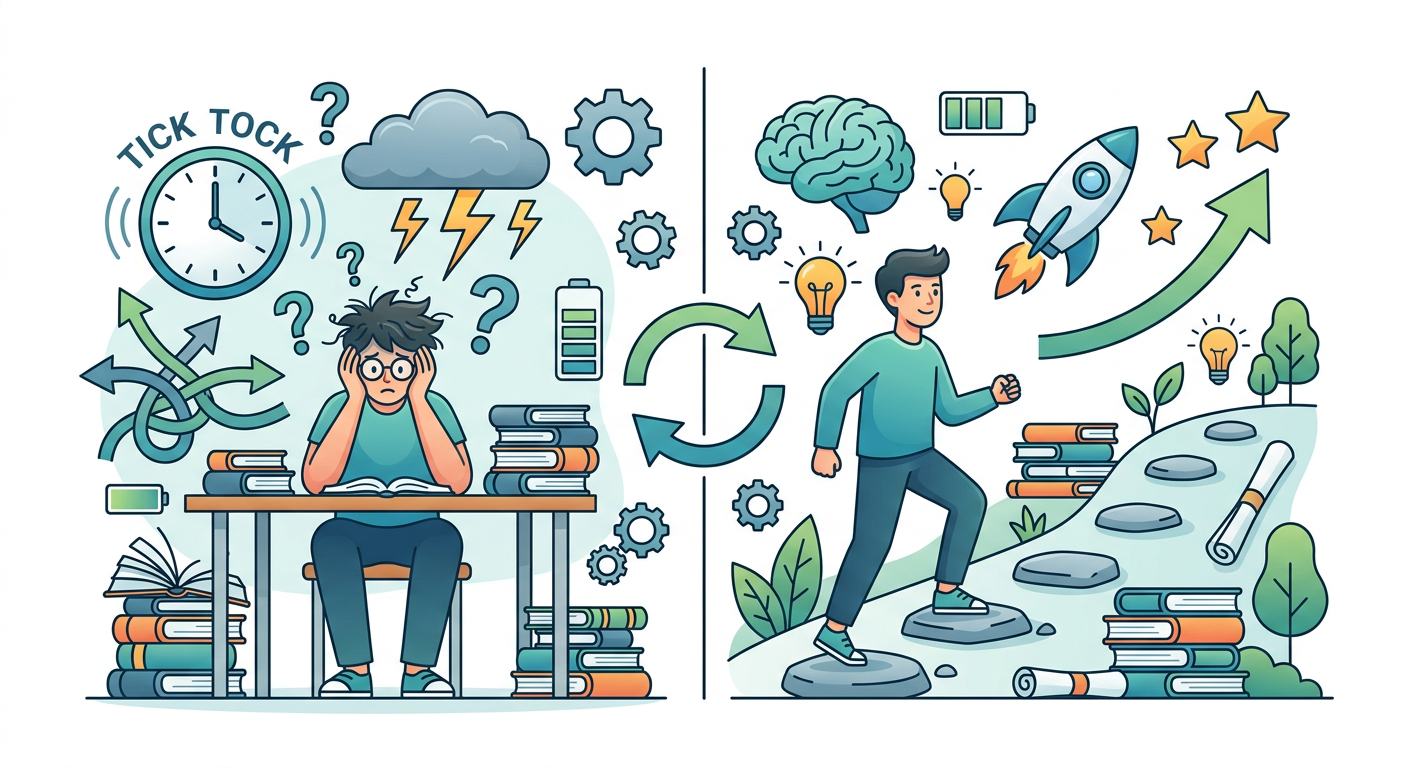
Studying feels hard because your brain avoids tasks that seem confusing, boring, or threatening, so you delay until the pain outweighs the fear. That aversion explains why studying for exams feels hard on days when motivation to study dips.
We discount future rewards (a good grade) versus immediate discomfort (effort now). Clarify the next physical action to cut confusion: “Open chapter 6, list key formulas, and solve problem 1.” Keep the first step under five minutes to lower activation energy.
Use implementation intentions to pre-decide starts. If it’s 7:30 p.m., then I sit at the campus library’s second floor, open my error log, and do two problems. Externalize executive function with body doubling, a co-study partner, or a public “I’ll text you a photo when done” check-in.
Make starting feel better than not starting. Pair study with mild, non-distracting rewards: a favorite café table, a lyric-free playlist, or your best pens. Temptation bundling like this turns friction into a nudge.
If procrastination keeps winning, use this playbook: stop procrastinating for exams. It gives you scripts, micro-starts, and high-friction fixes that stick.
Turn “this feels hard” into a plan you trust
Build spaced sessions, retrieval practice, and distraction-proof timers in one place—so studying finally feels lighter and more consistent.
Get Started FreeIneffective study habits that make it feel harder than it is
Studying feels hard when you use high-effort, low-yield methods like cramming and rereading. That mismatch is a big reason why studying for exams feels hard even for diligent students.
Cramming boosts short-term familiarity but collapses within days. Spacing, reviewing material across multiple sessions, creates durable memory with less total time. Carnegie Mellon’s Eberly Center summarizes the research well: space your learning for better results.
Rereading and highlighting feel smooth, but that fluency is an illusion. Retrieval practice: pulling information from memory builds recall and quickly reveals what you don’t know. A simple switch from “read, read, read” to “quiz, then read” can cut study time by hours in a week.
Overlong marathon sessions drain motivation and lead to study burnout. Short, focused blocks (25–50 minutes) with specific goals outperform four-hour grinds filled with digital distractions. If you want an upgrade path, try this explainer on studying effectively without rereading.
Evidence-based study techniques that feel easier over time
Studying feels easier when you switch from passive review to active methods and let spacing do the heavy lifting. That’s why studying for exams feels hard until you adopt retrieval practice, interleaving, and elaboration.
Use retrieval practice every session: make or borrow practice questions, or cover your notes and explain a concept aloud. Simulate exam conditions once a week to calibrate timing and pressure. If you’re new to this, start here: how to study for exams using retrieval practice.
Layer in spaced repetition with simple tools. Anki, Quizlet, or even calendar reminders cue reviews right before you’d forget, which is where learning sticks. Keep cards atomic (one fact or idea) and tie decks to learning objectives.
Interleave problem types and chapters to build flexible knowledge. Mix new and old topics in a single session, and rotate formats: multiple choice, short answer, and worked problems. Add elaboration (explain in your own words) and dual coding (pair text with diagrams) to deepen understanding.
Finally, keep an error log. Write down the problem, your mistake, and the correction, then tag it by concept. Review that list 2–3 times a week; it’s your fastest path to closing gaps. For a science-backed menu of methods, bookmark evidence-based study methods for exams.
Designing a distraction-resistant study environment
Studying feels hard when your phone and tabs compete with your goals, attention gets taxed every few minutes. That immediate tug is a big driver of why studying for exams feels hard in a world of digital distractions.
Put your phone out of reach and out of sight. Batch notifications, enable Do Not Disturb, and use app blockers in study windows. A simple rule works: the phone lives in another room for the next 50 minutes.
Create a 2-minute physical setup routine: clear the desk, place needed materials, fill water, and write the first three tasks on a visible card. Sit upright, adjust lighting to avoid squinting, and pick one playlist without lyrics. You’ve just cut your start friction in half.
Go digital-minimal. Pre-set block lists in tools like Freedom or Focus; try Forest or a Pomodoro timer for short sprints. Choose locations by focus signal strength: quiet library floors, reserved rooms, or a consistent home nook with a “studying now” sign.
To translate setup into rhythm, use a structured day: see the daily study routine for exam success so your environment and actions reinforce each other.
Time management that reduces stress (not adds it)
Studying feels hard when you plan reactively and run out of time; a simple reverse plan turns that around. Better time management for students replaces panic with clarity, which is why studying for exams feels hard only until the plan clicks.
Start with an exam map. List topics, point weights, formats, and your weak areas. Translate each into tasks: “10 practice problems from chapter 7,” “20 flashcards on key enzymes,” “one 40-minute mock test”, then plot them backward from the exam date.
Time block by task type and match to your energy peaks. Put problem solving in your brain’s prime hours, batch administrative tasks in low-energy slots, and leave 15–25% of your week as buffer. A quick Sunday preview and a Daily Big 3 keep you out of busywork.
Plug review days to reconsolidate learning and handle life happens. On heavy weeks, schedule a catch-up day rather than cramming at midnight. For templates and examples, use the ultimate weekly study plan for exams and this step-by-step on creating a study plan.
Health foundations that make studying feel easier
Studying feels hard when sleep, nutrition, hydration, and movement are off, even strong strategy can’t cover those gaps. Fixing the basics is often the fastest relief for why studying for exams feels hard right now.
Protect sleep, 7 to 9 hours for most adults, and especially the two nights before an exam. Sleep consolidates memory, improves attention, and lowers anxiety the next day. Review the CDC’s guidance on how much sleep you need for your age.
Use caffeine thoughtfully. Small, regular doses early in the day help focus; big jolts late spike anxiety and wreck sleep. Eat steady-energy foods (protein plus complex carbs), and hydrate every couple of hours to prevent brain fog.
Insert micro-movement. A brisk 5-minute walk, a set of stretches, or light mobility breaks restore attention. On heavy days, a short workout does more for your next two hours of focus than an extra reread.
Neurodiversity and mental health: tailoring your approach
Studying feels hard for different reasons if you have ADHD, anxiety, or depression, so adapt the system to fit your brain. Personalization is a major unlock for why studying for exams feels hard despite good intentions.
For ADHD, externalize control: visual timers, single-task checklists, body doubling, and pre-committed blockers. Keep instructions visible and steps tiny; design your environment to do the reminding for you. Medication questions belong with your clinician.
For anxiety or depression, use energy budgeting. Match low-friction tasks to low-energy windows, celebrate small wins, and reduce decision points with start scripts. Gentle structure outperforms heroics.
Know your academic accommodations under ADA/504: extended time, quiet rooms, note-taking support, or flexible deadlines. Start the documentation process early with your campus disability services office, and protect your privacy while advocating for what you need.
Life constraints and equity: when studying competes with everything
Studying feels hard when you’re working, caregiving, commuting, or returning to school after a break; your bandwidth is simply tighter. That context explains why studying for exams feels hard even with strong motivation to study.
Use micro-sessions of 10–20 minutes. Batch errands, coordinate support at home, and pre-download materials for offline study. Turn commute time into review with audio notes or flashcards, and claim campus gaps between classes for quick retrieval practice.
Build flexible weekly anchors instead of rigid daily schedules. Advocate for clarity with instructors when logistics get complex. Keep a pocket list of 10-minute tasks, plus a go-bag with core materials.
Build a sustainable study system you can trust
Studying feels easier when starts, stops, and reviews run on cues instead of willpower. That automation reduces the daily fight that makes why studying for exams feels hard such a common refrain.
Attach studying to existing habits: after lunch, same desk, same playlist. Use a start script, timer on, open error log, answer one practice question, to dodge dithering. End with a 3-minute shutdown: log what you did, set the next first step, and pack your bag.
Track the right metrics weekly, not hourly. Leading indicators: sessions completed, retrieval reps, and spaced reviews. Lagging indicators: quiz scores and mock-test performance. Run a short weekly retro: what worked, what didn’t, and one tweak for next week.
Troubleshooting common scenarios (quick fixes)
Studying feels hard for different reasons in common situations, so use targeted fixes. These scripts address why studying for exams feels hard in the moment.
I understand in class but blank on tests: shift to retrieval under time limits; simulate exam conditions twice weekly; review only after answering from memory.
I can’t get started: use the 5-minute rule, text a friend your tiny task, open materials, and write one question you’ll answer.
I study but forget the next day: schedule a spaced review within 24 hours and again in 2–3 days; keep an error log.
I panic on exam day: build a 24-hour routine: light review, pack bag, sleep, 2 minutes of breathing, and arrive early.
I have too many exams in one week: triage by weight and difficulty; set minimum viable passes for lower-weight exams; protect sleep at all costs.
Myths vs facts: beliefs that secretly make studying harder
Studying feels hard when you believe myths that sabotage strategy. Change the belief, and you’ll often fix why studying for exams feels hard without extra time.
Myth: Some people just aren’t good at studying. Skill is built. Strategy, feedback, and iteration drive results.
Myth: Multitasking covers more ground. Task switching costs 20–40% productivity; single-tasking is faster and calmer.
Myth: All-nighters are necessary. They impair memory and spike anxiety; spacing plus sleep wins, especially 48 hours pre-exam.
Myth: You must study for hours straight. Short, deep sessions with breaks beat marathons for performance and morale.
Quick wins you can try today (30–60 minutes)
Studying feels less overwhelming when you score a few fast wins. These moves address why studying for exams feels hard right now and buy you momentum.
Make a one-page exam map: list topics, weights, formats, and weak areas; choose the next three high-impact tasks.
Write 10 practice questions: generate likely exam questions and answer from memory; mark gaps to review.
Run a 50-minute focus block: timer on, one task, no notifications; end with a 5-minute recap note for future you.
Put your phone in another room: protect one session with Do Not Disturb and app blockers.
Email one professor or tutor: ask a clarifying question or request a resource; early outreach reduces stress later.
Tools, apps, and templates that lighten the lift
Studying feels easier when tools remove friction and enforce smart habits. The right stack shrinks why studying for exams feels hard into a series of easy starts.
Focus and blocking tools: Forest, Freedom, iOS/Android Focus modes with pre-made block lists. Add Pomodoro timers and a minimalist playlist.
Study platforms for retrieval/spacing: Anki, Quizlet, or RemNote with simple decks tied to your course objectives. Review right before forgetting.
Planning tools and templates: Google Calendar, Notion/OneNote pages for exam maps, weekly previews, and Daily Big 3. Keep templates short and repeatable.
Printable checklists: exam map, error log, spaced review tracker, and a shutdown routine card. Post them where you study.
Support from others: getting help without losing control
Studying feels hard alone; the right kind of support multiplies your effort. When the load is shared, why studying for exams feels hard starts to fade.
Schedule quiet co-working with a friend; agree on agendas and timers. Ask for specific, time-bound check-ins, “Text me at 8:20 to confirm I did two problems”, instead of open-ended pressure.
Create a study-friendly home. Negotiate quiet hours, shared spaces, and chore swaps during exam weeks. A small agreement can save hours of conflict and distraction.
When to seek more help (and who to ask)
Studying feels hard beyond self-help when insomnia persists, panic stops you from functioning, or you’re failing despite sustained effort. Those are red flags to act now, not later.
Start with academic resources: office hours, tutoring, writing/math centers, academic advising, and disability services. In the US, campus counseling centers, community clinics, and telehealth can support anxiety and depression. In a crisis, call or text 988 for immediate help.
You’re not broken, your system needs tweaks
Studying feels hard because cognitive load, emotions, weak strategies, poor environments, and health gaps pile up. Each one has a practical, learnable fix, which is why studying for exams feels hard today but can feel manageable next week.
Try a 7-day reset: map your exam, block realistic sessions, switch to retrieval practice, start an error log, remove one digital distraction, target 7–9 hours of sleep, and run a Sunday retro. Progress beats perfection every single time.
When you want next steps, grab targeted playbooks like studying when overwhelmed and the daily exam routine. If memory is your sticking point, revisit why you forget what you study and plug in the fixes.
Turn “this feels hard” into a plan you trust
Build spaced sessions, retrieval practice, and distraction-proof timers in one place—so studying finally feels lighter and more consistent.
Get Started FreeFrequently Asked Questions
Why does studying feel so hard even when I’m motivated?
Because motivation can’t override cognitive limits, anxiety, and environmental friction. When working memory is overloaded, test anxiety narrows attention, and your phone pings every 6 minutes, effort alone won’t cut it. Reduce cognitive load, switch to retrieval practice, and design a phone-free 25–50 minute block; the work will feel lighter.
How can I stop procrastinating when studying for exams?
Lower the start cost and pre-commit to tiny actions. Use “If it’s 7 p.m., then I sit at the library, open chapter 5, and write 3 practice questions,” plus a 5-minute timer to get moving. For more, follow the scripts in our procrastination guide for exams.
Is it better to cram or study a little every day?
Spacing beats cramming for retention and long-term performance, period. Even 20–30 minutes of spaced retrieval practice most days outperforms hours of last-minute rereading. The CMU Eberly Center’s summary on spaced learning lays out why.
How many hours should I study per day for exams?
Most students do well with 2–4 focused hours on weekdays and 3–6 on weekends during peak exam periods, but quality beats quantity. Aim for 3–5 focused blocks of 25–50 minutes with clear retrieval goals and short breaks. Use the weekly study plan to match tasks to your actual capacity.
What are the best study methods to remember more in less time?
Retrieval practice, spaced repetition, interleaving, and elaboration deliver the highest return. Start each session with 5–10 minutes of self-quizzing, then review only what you missed. If you’re new to retrieval, begin with this retrieval practice walkthrough.
What if I have ADHD or anxiety, how should I adjust my study plan?
Externalize structure and lower friction. Use visual timers, single-task checklists, body doubling, and a two-step start script; for anxiety, add brief breathing and expressive writing to lower arousal before retrieval. Consider accommodations through campus disability services if eligible, and protect sleep as a top-line rule.
Turn “this feels hard” into a plan you trust
Build spaced sessions, retrieval practice, and distraction-proof timers in one place—so studying finally feels lighter and more consistent.
Get Started FreeEnjoyed this article?
Share it with others who might find it helpful.
Related Articles

How to Solve Molarity Problems: Step-by-Step Mastery
Learn how to solve molarity problems step-by-step with formulas, unit tips, and worked examples so you can calculate concentration with confidence.
Mar 26, 2026

Avoid These 7 Common Molarity Mistakes in Chemistry
Master chemistry calculations! Avoid common molarity mistakes with our expert guide on unit conversions, dilution errors, and proper lab techniques.
Mar 26, 2026

What Is Molarity? The Complete Guide to Molar Concentration
Master molarity with our complete guide. Learn the formula, step-by-step calculations, and the critical differences between molarity and molality.
Mar 26, 2026
Why Molarity Matters: Converting Mass to Moles for Lab Solutions
Master chemistry with our guide to the molarity formula. Learn how to calculate concentration with step-by-step examples, units, and practical lab tips.
Mar 26, 2026

Molarity vs Molality: The Essential Difference Explained
Master the difference between molarity vs molality. Learn the formulas, key differences, and when to use each in this comprehensive chemistry guide.
Mar 26, 2026