Ace Your Tests: The Ultimate Weekly Study Plan for Exams
Ace Your Tests: The Ultimate Weekly Study Plan for Exams
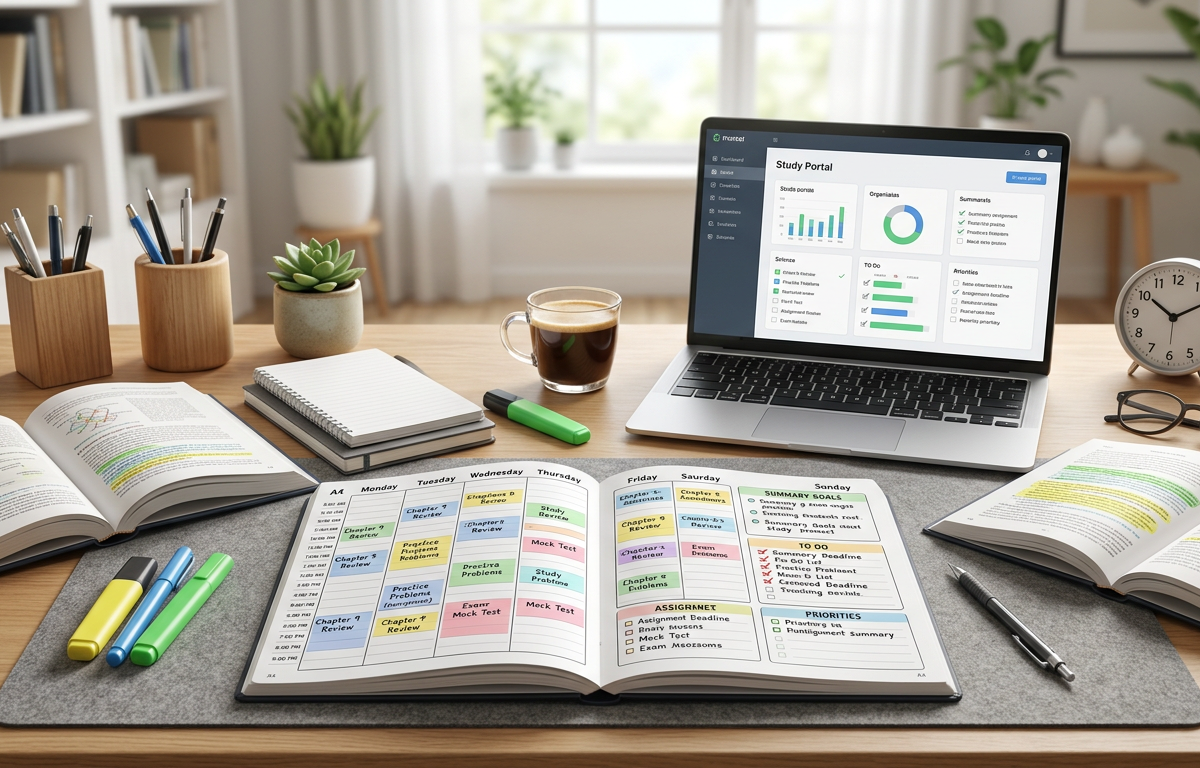
A well-structured weekly study plan for exams doesn't just promise better grades; it fundamentally transforms your entire exam preparation experience. It's the difference between feeling overwhelmed and stepping into the examination hall with quiet confidence. This isn't merely about organizing your time; it's about optimizing your learning, reducing stress, and ultimately, mastering your material.
Why a Weekly Study Plan is Your Exam Success Secret Weapon
Creating an effective study plan fundamentally changes your approach to learning. It moves you from haphazard glances at textbooks to a deliberate, strategic assault on your course material. This proactive stance is your secret weapon.
Beyond Cramming: The Downfalls of Last-Minute Studying
Cramming, the frantic last-minute attempt to absorb information, proves largely ineffective for long-term learning. While you might remember enough to pass a multiple-choice quiz the next day, that information rarely sticks. Research consistently shows that information learned under intense pressure with little sleep often fades quickly, leading to poor retention and recall. You might feel productive, but your brain can only process so much before hitting a wall.
The Psychological Edge: Reducing Stress and Building Confidence
A structured weekly study plan offers a profound psychological advantage. It minimizes the debilitating anxiety that often accompanies exam periods. When you know precisely what you need to study and when, you gain a sense of control over the daunting task ahead. This organized approach builds confidence, replacing panic with calm, strategic work.
Maximizing Retention: How Spaced Repetition Works for You
Spaced repetition is a powerful technique baked into any good weekly study plan. Instead of reviewing material once and never looking at it again, you revisit topics at increasing intervals. This method leverages how our memory works, forcing your brain to retrieve information just as it's about to forget it, thereby strengthening the memory trace. Imagine reviewing a concept today, then again in three days, then a week later, mimicking the brain's natural learning curve. This dramatically improves long-term retention.
Setting the Foundation: Pre-Planning Your Exam Schedule
Before you even think about cracking open a textbook, you need to lay the groundwork for your weekly study plan. This foundational step ensures your plan aligns with your resources and realities.
Gathering Your Resources: Syllabi, Notes, and Past Papers
Collecting all necessary study materials stands as your first task. Dig out every syllabus, lecture note, textbook, and handout associated with your upcoming exams. Don't forget past papers or practice problems, which often reveal the types of questions instructors favor. Knowing exactly what you *need* to study is half the battle won.
Mapping It Out: Identifying Key Exam Dates and Deadlines
You must note all exam dates and assignment deadlines on a calendar. Visualizing these critical junctures helps you prioritize subjects. A history exam next Tuesday deserves more immediate attention than a biology paper due in three weeks, for instance. This panoramic view prevents nasty surprises and allows for strategic allocation of your precious study hours.
Realistic Time Allocation: Assessing Your Availability and Commitments
Honestly evaluate your free time and daily commitments. Be realistic; cramming 10 hours of study into an already packed day with classes, work, and family obligations simply isn't sustainable. Block out non-negotiable activities first, then identify the genuine windows available for study. Attempting to over-schedule yourself guarantees burnout and frustration, derailing your entire effort.
Crafting Your Weekly Study Plan: A Step-by-Step Guide
Building a robust weekly study plan requires careful consideration, but it's not rocket science. It's about smart organization and strategic learning. For more detailed guidance, check out our insights on creating a study timetable.
The Power of Prioritization: Deciding What to Study First
Prioritizing subjects and topics based on difficulty and their weight in the overall grade is crucial. Identify your weakest areas or subjects that account for a larger percentage of your final score. These areas demand more early attention, even if they're not your favorite. Tackle the most challenging concepts when your energy levels are highest, allowing for deeper focus.
Breaking Down Big Topics: The Art of Chunking
Divide large topics into manageable, smaller study sessions – this is often called "chunking." Instead of trying to master an entire textbook chapter in one sitting, break it down into sub-sections or specific concepts. This prevents cognitive overload and makes the material less intimidating. For example, a chapter on photosynthesis could become "Light-Dependent Reactions," then "Light-Independent Reactions (Calvin Cycle)," and finally, "Factors Affecting Photosynthesis."
Integrating Active Learning: Beyond Passive Reading
Passive reading offers minimal educational value. Instead, integrate active learning techniques into every study session. This includes summarizing lectures in your own words, creating practice questions, explaining concepts aloud to an imaginary audience, or even teaching a topic to a peer. Active engagement forces your brain to process and organize information, leading to deeper understanding and better retention. Think about how you would explain "Easy ICE Table Practice Questions" to a friend.
Scheduling in Breaks and Rewards: Preventing Burnout
Regular breaks and planned rewards are not luxuries; they are essential for preventing burnout. Schedule short breaks, say 5-10 minutes every hour, to stretch, grab a snack, or listen to a song. Longer rewards after significant milestones, like mastering a tough chapter, keep your motivation high. This could be watching an episode of your favorite show or taking a walk. Your brain needs downtime to consolidate new information and recharge for the next session.
Effective Study Techniques to Supercharge Your Plan
Knowing what to study is one thing; knowing *how* to study it effectively is another. Incorporate these techniques into your weekly study plan for exams to maximize their impact.
Active Recall: How to Truly Test Your Knowledge
Active recall involves retrieving information directly from memory rather than just passively re-reading or reviewing notes. This technique dramatically improves retention. Methods like using flashcards (digital or physical), answering practice questions from memory, or explaining concepts aloud without referring to notes are all forms of active recall. Retrieval practice strengthens neural pathways and helps you identify knowledge gaps immediately.
Mind Mapping and Visual Aids: Making Connections
Visual aids like mind maps, diagrams, and flowcharts can significantly aid comprehension and memory. Mind maps, in particular, allow you to see the relationships between different concepts, connecting disparate pieces of information into a coherent whole. Start with a central theme and branch out with key ideas, using colors and images to make it engaging. These visual tools tap into different parts of your brain, making recall easier.
The Feynman Technique: Simplify and Understand
The Feynman Technique pushes you towards deep understanding by challenging you to explain complex topics simply. Pick a concept, then pretend you're teaching it to someone with no prior knowledge, like a fifth grader. If you stumble, it reveals gaps in your understanding. Review the original material, then try explaining it again until your explanation is crystal clear and uses simple language. This process forces you to identify the core components of an idea. For more on this, check out an approach from Farnam Street.
Group Study vs. Individual Study: Finding Your Balance
Both group and individual study have their merits, and a balanced weekly study plan incorporates both. Individual study provides focused time for deep concentration, active recall, and tackling personal weaknesses without distraction. Group study, on the other hand, excels for discussing complex concepts, challenging each other, filling in knowledge gaps, and practicing explanations. Use group sessions for reciprocal teaching and problem-solving, and individual sessions for foundational learning and memorization. A Harvard blog post highlights the benefits of group study.
Maintaining Momentum: Adjusting and Adapting Your Plan
Even the best-laid plans go awry sometimes. The key to success isn't rigid adherence, but intelligent adaptation.
Flexibility is Key: When Life Happens
Build flexibility directly into your weekly study plan for exams. Unexpected appointments, sudden deadlines, or even a bad day can throw off your schedule. Don't view these as failures. Instead, have buffer times or an "overflow" day built in. A resilient plan can absorb minor disruptions without completely collapsing. This approach reduces stress and keeps you on track.
Tracking Your Progress: Staying Accountable
Tracking your progress injects a powerful dose of accountability into your study routine. Use a checklist, a habit tracker, or even a simple spreadsheet. Mark off completed tasks, sections, or study hours. Seeing your accomplishments accumulate provides a visible measure of progress and fuels motivation. It also helps you identify if certain subjects consistently take longer than expected, indicating a need for adjustment.
Review and Refine: Learning from Each Week
Treat your study plan as a living document, not a rigid decree. At the end of each week, take 15-30 minutes to review its effectiveness. Did you allocate enough time for specific topics? Were certain study techniques more productive than others? Did you consistently underestimate the time needed for particular tasks? Use these insights to refine your approach for the following week, continuously optimizing your exam preparation schedule.
Mind and Body: Essential Support for Exam Preparation
Your brain cannot function optimally on an empty tank or without proper maintenance. Nurturing your physical and mental well-being is as crucial as opening a textbook.
Fueling Your Brain: Nutrition and Hydration
Think of your brain as a high-performance engine; it needs quality fuel. Prioritize nutrient-dense foods like fruits, vegetables, whole grains, and lean proteins. Avoid excessive sugar and highly processed foods, which can lead to energy crashes and impaired concentration. Staying adequately hydrated by drinking plenty of water throughout the day is equally vital, as even mild dehydration can impair cognitive function. The CDC offers extensive resources on healthy eating habits.
The Restorative Power of Sleep: Don't Skimp!
Adequate, quality sleep stands as the bedrock of memory consolidation and cognitive function. During sleep, your brain processes and stores the information you learned during the day. Skimping on sleep, especially during exam periods, is counterproductive; it impairs your ability to focus, recall, and think critically. Aim for 7-9 hours of consistent sleep each night. It's not wasted time; it's an investment in your learning.
Managing Exam Anxiety: Techniques for Staying Calm
Exam stress management involves proactive strategies to keep your nerves in check. Regular physical activity, even a brisk 30-minute walk, can significantly reduce stress hormones. Mindfulness exercises, deep breathing techniques, or short meditation sessions can calm your nervous system. If anxiety feels overwhelming, consider reaching out to a school counselor or mental health professional for support. A study by the National Center for Education Statistics (NCES) highlights the prevalence of student anxiety and identifies resources.
Transform Your Study Habits Today!
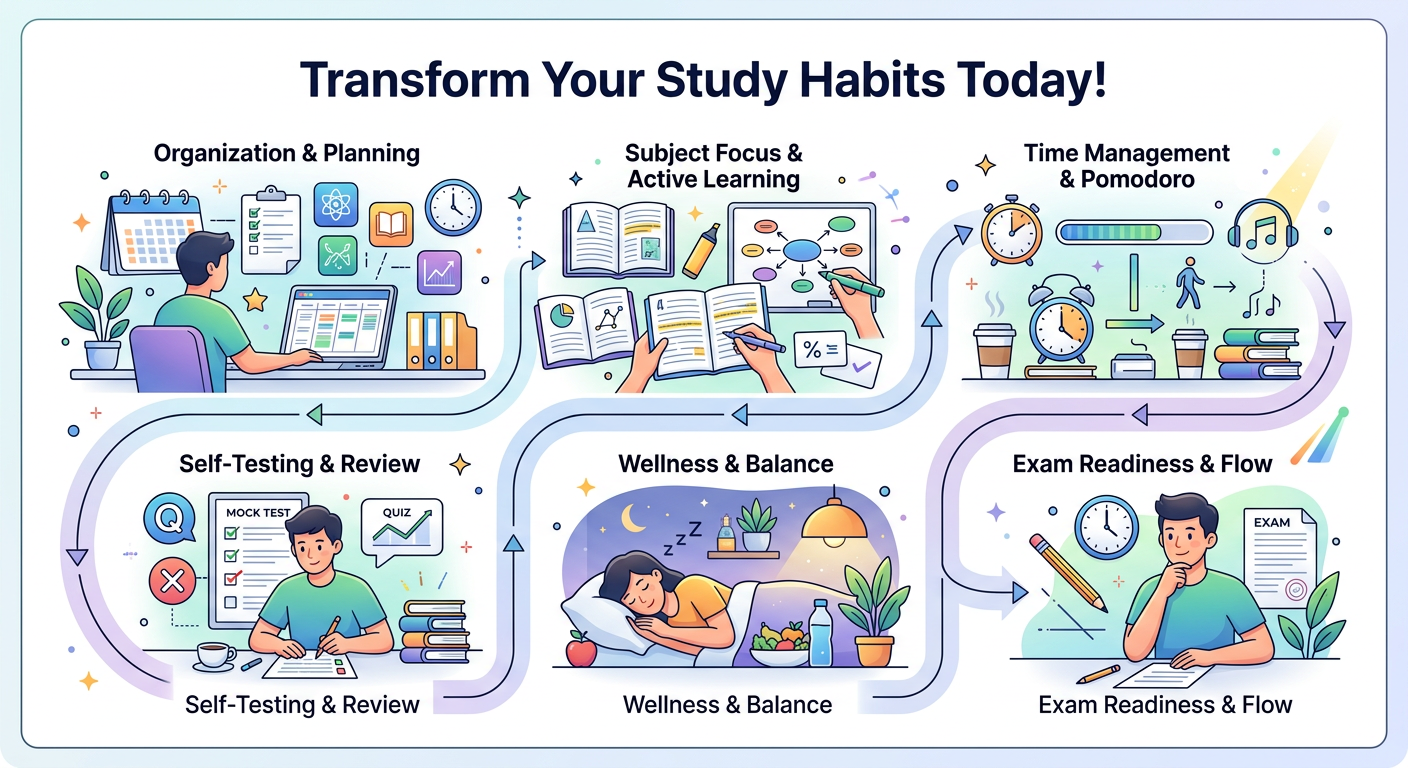
Ready to create an ultimate weekly study plan for exams that guarantees success and reduces stress? Bevinzey's tools streamline your exam preparation, making smart studying effortless.
Get Started FreeFrequently Asked Questions
How much time should I dedicate to studying each week for exams?
The optimal study time varies significantly by individual and course load, but a general guideline is 1-2 hours of study per week for every credit hour you're taking. For a 15-credit semester, this could mean 15-30 hours per week, ramping up closer to exams.
Is it better to study one subject intensely or switch between multiple subjects?
Switching between multiple subjects (interleaving) is generally more effective for long-term retention than studying one subject intensely for extended periods. This technique, explained in more detail in our article on interleaving, helps your brain differentiate and consolidate information.
What are the best methods to memorize large amounts of information for exams?
Effective memorization techniques for students include active recall (flashcards, self-quizzing), spaced repetition, mind mapping, and the Feynman Technique. Avoid passive re-reading; actively engaging with the material significantly boosts memory.
How can I stay motivated to stick to my weekly study plan?
Stay motivated by setting clear, achievable goals, scheduling regular breaks and rewards, tracking your progress, and reminding yourself of your long-term academic objectives. Regularly reviewing and adjusting your plan helps maintain commitment.
What should I do if I fall behind on my study plan?
If you fall behind, don't panic. Quickly assess the missed material, adjust your schedule by reallocating time from less critical tasks or utilizing buffer periods if you built them in. Focus on the most important topics first, and don't be afraid to streamline less crucial study blocks. For immediate recovery, consult our guide on how to study for exams fast.
How far in advance should I start creating a weekly study plan for exams?
Ideally, you should start creating your weekly study plan as soon as you have your syllabus and exam dates at the beginning of the semester. This allows for a steady, manageable pace. However, even a few weeks before exams can make a significant positive impact.
Enjoyed this article?
Share it with others who might find it helpful.
Related Articles

How to Solve Molarity Problems: Step-by-Step Mastery
Learn how to solve molarity problems step-by-step with formulas, unit tips, and worked examples so you can calculate concentration with confidence.
Mar 26, 2026

Avoid These 7 Common Molarity Mistakes in Chemistry
Master chemistry calculations! Avoid common molarity mistakes with our expert guide on unit conversions, dilution errors, and proper lab techniques.
Mar 26, 2026

What Is Molarity? The Complete Guide to Molar Concentration
Master molarity with our complete guide. Learn the formula, step-by-step calculations, and the critical differences between molarity and molality.
Mar 26, 2026

Why Molarity Matters: Converting Mass to Moles for Lab Solutions
Master chemistry with our guide to the molarity formula. Learn how to calculate concentration with step-by-step examples, units, and practical lab tips.
Mar 26, 2026

Molarity vs Molality: The Essential Difference Explained
Master the difference between molarity vs molality. Learn the formulas, key differences, and when to use each in this comprehensive chemistry guide.
Mar 26, 2026