Evidence-Based Study Methods: 8 Science-Backed Ways to Ace Exams

To excel in academia, you must stop fighting against your brain’s biology and start working with it. Evidence-Based Study Methods for Exams rely on cognitive science to move information from short-term memory into long-term storage, ensuring you can retrieve it under the pressure of a ticking clock. Most students rely on "passive" habits like rereading or highlighting, yet research from The American Psychological Association consistently shows these methods provide a false sense of security without building actual mastery.
This phenomenon, known as the "Illusion of Competence," occurs because our brains confuse familiarity with knowledge. When you reread a page six times, your brain recognizes the text, making you feel like you know it. However, recognition is not retrieval. If you want to stop feeling like you've forgotten everything the moment you see the exam paper, you must shift your focus toward active, effortful engagement with the material.
Ready To Transform The Way You Learn
Use our AI-powered tools to transform your notes into active recall practice instantly.
Understanding the Science of Learning: Why Evidence-Based Methods Matter
Evidence-Based Study Methods for Exams matter because they respect the "Cognitive Load Theory," which suggests our working memory has a finite capacity. If you overwhelm your brain with unstructured information, it simply won't stick. The gap between how we think we learn and how we actually learn is vast.
Most students prefer methods that feel easy, but "desirable difficulty" is the hallmark of real progress. Neuroplasticity, the brain's ability to form new neural pathways, requires the stress of effort to trigger growth. When you engage in how to study for exams effectively, you are essentially strengthening the "retrieval paths" to a piece of information. Think of your memory like a forest: rereading is like looking at a map of the forest, while active retrieval is like physically walking through the brush to create a clear trail.
The Gold Standard: Mastery Through Active Recall

Active recall for exams is the process of forcing your brain to retrieve information without looking at your notes or textbook. It is the single most effective way to consolidate memory because it signals to the brain that the information is actually useful for survival.
Testing yourself is not just an assessment to see what you know; it is a learning event in itself. When you struggle to remember a concept, you are creating a stronger neural connection than if you simply read the answer. For students tackling complex chemistry, using ICE Table Practice Questions without looking at the solutions first is a prime example of this in action.
You can implement active recall using the "Blank Sheet Method." At the end of a study session, take a blank piece of paper and write down everything you can remember about the topic from scratch. Only after you have exhausted your memory should you open your notes to see what you missed in red ink. Flashcards are another pillar of active recall, especially when using software like Anki or Quizlet.
However, avoid "shallow" cards; instead of simple definitions, try to include "why" and "how" questions on your cards. If you feel like your current methods are failing, you might need to learn how to study without rereading to break the habit of passive scanning.
Spaced Repetition: Beating the Forgetting Curve

A spaced repetition schedule works by timing your review sessions at the exact moment you are about to forget the information. This combats the Ebbinghaus Forgetting Curve, which shows that humans lose about 50% of new information within 24 hours if it is not reinforced. The "Spacing Effect" proves that distributed practice, studying for one hour every day for five days, is exponentially more effective than a five-hour cram session. By increasing the intervals between reviews (e.g., 1 day, 3 days, 1 week, 1 month), you force the brain to work harder to retrieve the data, cementing it further into long-term memory. You can use the Leitner System, a low-tech version of this involving physical boxes. Box 1 contains new or difficult cards you review daily. Once you get a card right, it moves to Box 2, reviewed every three days. If you miss a card in Box 5, it goes all the way back to Box 1. This ensures you spend the most time on your weakest areas.
Interleaving: The Secret to High-Level Problem Solving

An interleaved practice vs blocked practice strategy involves mixing different topics or types of problems within a single study session. While "blocked practice" (studying all of Topic A, then all of Topic B) feels more organized, it actually prevents you from learning how to choose the right strategy for a particular problem.
In the real exam, questions aren't labeled by chapter. Interleaving forces you to constantly discern which "tool" to pull from your mental toolbox. For instance, instead of doing 50 Le Chatelier's Principle practice questions in a row, mix them with Equilibrium Constant Kc questions. This variety builds mental agility. It feels harder because your brain can't fall into a repetitive rhythm. However, that difficulty is exactly what leads to higher scores on final exams, where the ability to distinguish between similar formulas is the difference between an A and a B.
The Feynman Technique: Learning by Teaching
The Feynman Technique involves four steps: Choose a concept, teach it to a toddler (or a layperson), identify your knowledge gaps, and simplify the explanation. It is based on the idea that if you cannot explain something simply, you don't understand it well enough. When you try to explain a concept like "Enthalpy Change" without using jargon, you quickly realize where your understanding is fuzzy.
You can practice this by looking at Enthalpy Change Practice Questions and explaining the "why" behind each step of the calculation out loud. Analogies act as mental anchors. For example, comparing an electrical circuit to water flowing through pipes helps bridge the gap between an abstract concept and a concrete reality. This technique is one of the most powerful Evidence-Based Study Methods for Exams because it converts rote memorization into conceptual understanding.
Dual Coding: Combining Words and Visuals
Dual coding in learning utilizes the brain's separate channels for processing verbal and visual information. When you combine text with diagrams, you create two distinct "memory traces" for the same information, making it twice as likely to be recalled later. Drawing a mind map of a complex system, like the Krebs cycle or the branches of government, is far more effective than just writing a list.
You don't need to be an artist. Crude sketches, arrows, and spatial layouts help the brain organize "chunks" of information. Research from Harvard University suggests that students who use visual organizers see a significant boost in comprehension of difficult texts. This is why infographics and sketch-noting have become such popular study tools in medical and law schools.
Metacognition: Thinking About Your Thinking
Metacognition in education refers to your ability to monitor and control your own learning process. It is the "manager" of your brain. Instead of just studying, a metacognitive student asks: "Do I actually know this, or do I just like this topic?" or "Why did I get this practice question wrong?"
Elaborative interrogation is a key metacognitive tool. While you read, constantly ask "Why is this true?" or "How does this relate to what I learned last week?" This forces your brain to integrate new facts into your existing web of knowledge. A post-exam review is another vital part of how to study for exams step-by-step. Don't just look at your grade; look at your errors. Were they "silly" mistakes, or did you fundamentally misunderstand the concept? Adjust your future study sessions based on this raw data.
Biological Foundations: Optimizing the Brain for Study
Evidence-Based Study Methods for Exams are useless if your brain is too exhausted to function. Sleep is the final, non-negotiable step of every study session. During REM and deep sleep, your brain physically moves information from the hippocampus to the neocortex for long-term storage.
Furthermore, managing cortisol is essential. High stress levels act like a "blocker" for the retrieval of information. This is why students often "blank" during exams. Regular aerobic exercise increases levels of BDNF (Brain-Derived Neurotrophic Factor), which acts like fertilizer for new neurons. Hydration and nutrition are equally critical. Your brain is about 75% water, and even mild dehydration can impair concentration and memory. For a deep dive into how memory works, check out our guide on The Forgetting Curve: Why We Forget.
Creating a High-Performance Study Environment
Your environment dictates your focus. The Pomodoro Technique (25 minutes of work followed by a 5-minute break) is famous because it respects the limits of our attention span. However, for complex topics, you may need "Deep Work" that is uninterrupted blocks of 60-90 minutes.
The myth of multitasking must be debunked: every time you check a text message, you pay a "switching cost." It can take up to 20 minutes to regain full focus after a single distraction. Digital minimalism is the solution. Put your phone in another room or use apps that block social media during study hours. To truly study smart for exams, design a "flow" state environment. This might involve low-level white noise, a clean desk, and specific lighting. Small environmental cues tell your brain it’s time to work, reducing the friction of starting.
Frequently Asked Questions
What is the most effective evidence-based study method?
Active recall combined with spaced repetition is widely considered the "gold standard." These methods force the brain to retrieve information and reinforce it over time, which are the two most critical factors for long-term retention.
Is highlighting an effective way to study?
Science says no. Highlighting is a passive activity that often leads to the "illusion of competence." It focuses on identifying information rather than processing or retrieving it, making it one of the least effective methods for exam preparation.
How many hours should I study each day for maximum retention?
Quality matters more than quantity, but the "sweet spot" for most students is 3-5 hours of deep, focused work. Beyond this, cognitive fatigue sets in, and the ROI of your study time drops significantly.
Can I use the Pomodoro technique with active recall?
Yes, they are a perfect pairing. Use your 25-minute "sprints" to engage in active recall exercises (like flashcards or practice questions) and use the 5-minute breaks to let your brain rest before the next retrieval session.
What does science say about cramming before an exam?
Cramming might help you pass a test tomorrow, but the information will be gone within days. It creates "fluency" without "mastery" and leads to higher stress levels, which can actually cause you to freeze during the exam itself.
Enjoyed this article?
Share it with others who might find it helpful.
Related Articles

Retrieval Practice: The Science-Backed Way to Master Any Subject
Unlock the power of retrieval practice. Learn how this evidence-based study method boosts long-term memory and doubles learning efficiency compared to re-reading.
Apr 30, 2026

The Ultimate Evidence-Based Guide to Effective Studying
Dec 13, 2025

Why Molarity Matters: Converting Mass to Moles for Lab Solutions
Master chemistry with our guide to the molarity formula. Learn how to calculate concentration with step-by-step examples, units, and practical lab tips.
Mar 26, 2026

Avoid These 7 Common Molarity Mistakes in Chemistry
Master chemistry calculations! Avoid common molarity mistakes with our expert guide on unit conversions, dilution errors, and proper lab techniques.
Mar 26, 2026

Why Molarity Ratios Fail: Solving the Moles per Liter Logic Gap
Master molarity with ease. Discover why chemistry students struggle with concentration units and learn proven strategies to solve molarity problems fast.
Mar 26, 2026
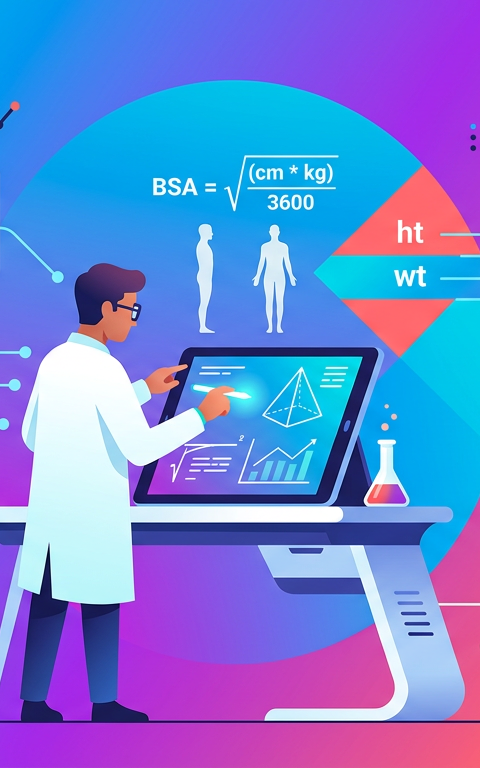
Calculating High-Stakes Meds: BSA Mosteller Formula Practice
Master hard body surface area-based dosage calculations with our comprehensive guide, solved examples, and practice questions for healthcare students.
May 17, 2026

Solving High-Stakes IV Titrations and Weight-Based Infusions
Master advanced IV flow rate calculations with these hard practice questions. Covers weight-based dosing, titrations, and dimensional analysis for nurses.
May 17, 2026

Solving Weight-Based Dosing: The 2.2 Conversion and Rounding Logic
Weight-Based Dosage Calculations Practice Questions with Answers
May 17, 2026