The Ultimate 30-Day Study Plan for Exams: Ace Your Tests

A structured Study Plan for Exams (30-Day Plan) provides the perfect runway to transform overwhelming syllabi into manageable daily tasks. Thirty days is not just a random number; it is a scientifically backed window that allows for deep neural encoding without the high-stress cortisol spikes of a last-minute cram session. By following a deliberate roadmap, you move from passive reading to active mastery, ensuring you walk into the exam room with clinical confidence.
The Fundamentals of a 30-Day Exam Strategy
The Study Plan for Exams (30-Day Plan) succeeds because it hits the "Goldilocks" zone of memory retention. According to research on the Ebbinghaus Forgetting Curve, memory decays over time unless it is reinforced through specific intervals. A 30-day window is long enough to utilize evidence-based study methods but short enough that the information remains fresh in your working memory.
Before you crack open a textbook, you must establish a baseline. Are you starting from zero, or do you have a foundation? Take an ungraded diagnostic test or review your previous quiz scores to identify your starting point. Use SMART goals (Specific, Measurable, Achievable, Relevant, Time-bound) for each subject; for instance, instead of saying "I will learn Chemistry," aim to "Master 15 organic reaction mechanisms by Day 10."
Inventory your resources immediately. Gather every textbook, syllabus, and lecture note you own. This isn't just about tidiness; it’s about reducing "activation energy." If you have to hunt for a PDF on Day 14, you’ve already lost the battle against procrastination. Establishing a clear 30-day revision schedule requires knowing exactly how many chapters you must cover before the clock runs out.
Personalize Your 30-Day Journey
Use Bevinzey's specialized tools to organize your materials and track your progress effortlessly.
Explore Student ToolsWeek 1: The Deep Dive and Concept Mapping

The first week of your Study Plan for Exams (30-Day Plan) is about structural integrity. Direct your energy toward building a framework of understanding rather than memorizing isolated facts. If you don't understand the "why" behind a concept now, you will struggle to apply it during the exam when questions are phrased differently than in your notes.
Use the Traffic Light System to audit your topics: Mark them Green (fully understand), Yellow (understand but need execution practice), or Red (totally lost). Spend 70% of Week 1 on "Red" topics. Apply the Pareto Principle (80/20 rule) by identifying the 20% of the curriculum that historically accounts for 80% of the exam points. Focus on these high-yield areas first to maximize your potential ROI.
Visual aids are your best friends during this phase. Creating mind maps and flowcharts allows you to see the connections between different modules. This is a form of smart studying because it forces your brain to categorize information hierarchically. By the end of Day 7, you should have a "Bird’s Eye View" of your entire subject matter.
Week 2: Active Learning and Integration

Week 2 shifts from organization to active recall techniques. Passive reading is the enemy of retention; it creates an "illusion of competence" where you think you know the material because you recognize it on the page. To break this, implement the Feynman Technique: try to explain a complex concept in simple terms to an imaginary middle-school student. If you stumble, you’ve found a gap in your knowledge.
Start integrating interleaving into your schedule. Instead of studying Biology for six hours, switch between Biology, Math, and History in 90-minute blocks. This forces the brain to "re-load" information, which strengthens neural pathways. Scientific studies featured by the American Psychological Association suggest that mixing related subjects improves long-term problem-solving skills compared to blocked practice.
During this phase of your exam preparation strategy, begin low-stakes self-testing. Use spaced repetition learning by reviewing the mind maps you made in Week 1. This ensures that the foundation you built doesn't crumble as you add new, more complex layers of information. Check out how to optimize your active recall to make this week more productive.
Week 3: Intensive Practice and Retrieval
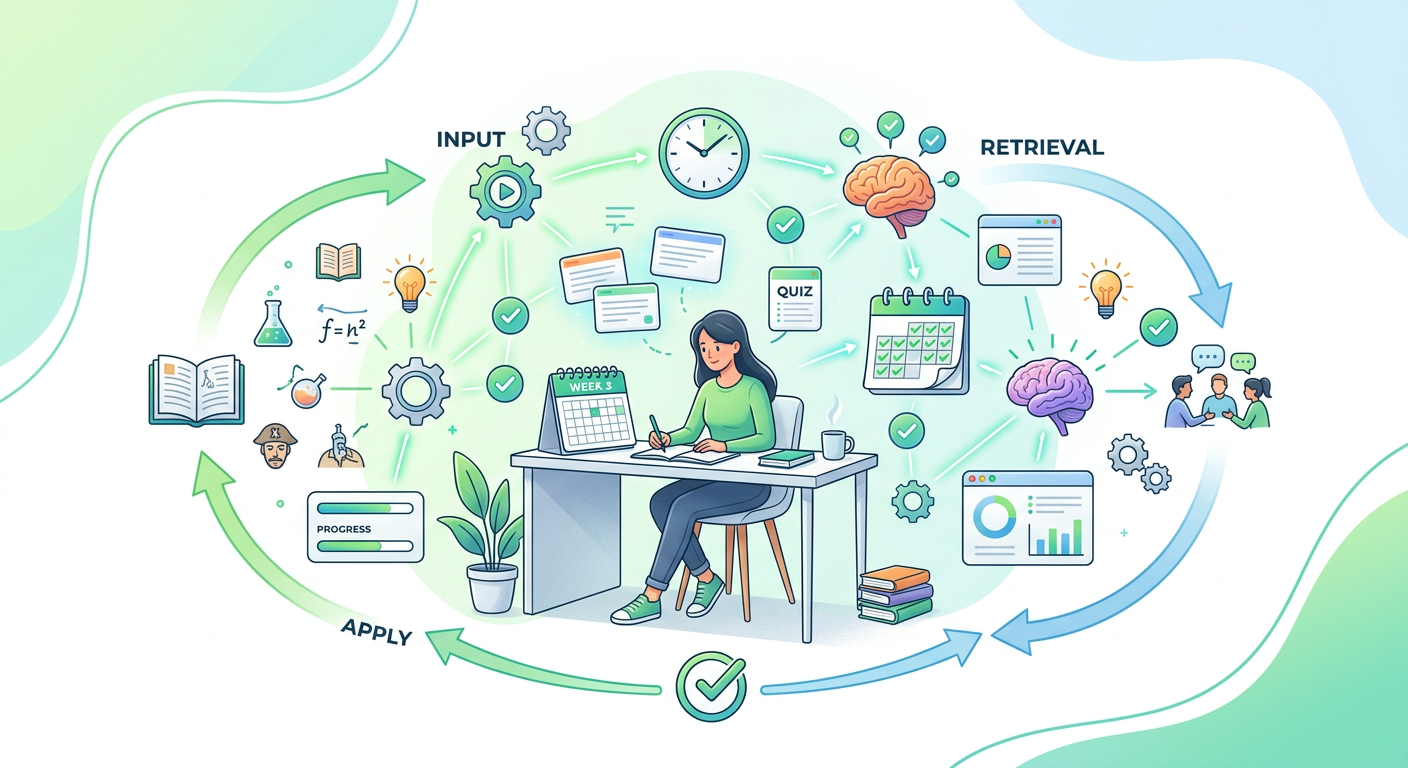
In Week 3, you move from "learning the material" to "performing the material." This is the core of any successful Study Plan for Exams (30-Day Plan). You must simulate exam conditions by taking full-length practice tests under the same time constraints you will face on the big day. No music, no snacks, and definitely no phone.
The most important part of this week isn't the score on your practice test; it’s the Error Analysis. Maintain a "Mistake Log" where you categorize every wrong answer. Did you make a "silly" calculation error, or did you fundamentally misunderstand the concept? Use practice testing strategies to drill down into your weaknesses until they become strengths.
Expand your library of retrieval tools. For subjects like Chemistry, practice specific problem types like hard ICE table questions or Hess’s Law calculations. The goal is to reach a state of automaticity where the "process" of solving a problem requires zero cognitive load, leaving your brain free to handle the "nuance" of difficult questions.
Week 4: The Final Polish and Revision Phase
The final seven days are dedicated to the last minute exam tips that separate a good grade from a great one. This is not the time to learn new topics. Instead, focus on condensing your notes into "cheat sheets" or summary posters. Review these daily to keep the most high-weightage sections at the forefront of your mind.
Manage "the wall" carefully. Burnout usually hits around Day 25. To combat this, lean into visualization and stress management. Spend 10 minutes each morning visualizing yourself calmly navigating the exam paper. This reduces the physiological "fight or flight" response when you actually sit down in the exam hall. For a more accelerated version of this phase, you might look at a 7-day intensive guide if you need to double-down on specific areas.
Establish a 48-hour pre-exam lockdown. During this time, your only job is to stay physically and mentally "greased." Do light reviews of your mistake log to ensure you don't repeat old errors. Eat brain-boosting foods and avoid the temptation to pull an all-nighter; a rested brain is far more effective than a tired, over-stuffed one.
The Science of Study: Maximizing Cognitive Performance
Success in a Study Plan for Exams (30-Day Plan) depends as much on your biology as your books. The Pomodoro Technique (25 minutes of work followed by 5 minutes of rest) is excellent for maintaining focus, but for how to pass exams in one month, "Deep Work" sessions of 90 minutes are often more effective for complex subjects. These longer windows allow your brain to enter a "flow state" where problem-solving becomes more intuitive.
Never underestimate the role of sleep hygiene. During sleep, your brain performs synaptic pruning and memory consolidation. If you cut sleep to study more, you are literally preventing your brain from "saving" the information you just learned. Aim for 7-9 hours of quality sleep to ensure that your time management for students doesn't come at the cost of cognitive function.
Ready to Crush Your Next Exam?
Don't leave your grades to chance. Bevinzey provides the science-backed practice problems and study tools you need to master your syllabus in 30 days or less.
Get Started FreeFrequently Asked Questions
How many hours should I study each day for a 30-day plan?
Aim for 3-5 hours on weekdays and 6-8 hours on weekends. Quality is more important than quantity; focus on deep work and active recall rather than just sitting at a desk for long periods.
Is 30 days enough time to prepare for a major exam?
Yes, 30 days is an ideal timeframe for most standardized or university exams. It allows for a full cycle of learning, practicing, and revising without the cognitive fatigue of longer study periods.
Can I use this 30-day study plan for competitive exams like the SAT or GRE?
Absolutely. For competitive exams, simply increase the emphasis on timed practice tests and error analysis in Weeks 3 and 4 to adjust to the specific formatting and pressure of those tests.
How do I handle burnout during a month-long study session?
Schedule one full day off per week where you do not look at your notes. This "reset" prevents the mental saturation that leads to burnout and keeps your motivation levels high for the remaining six days.
What is the best time of day to study for maximum retention?
Research suggests that the "best" time varies by individual (chronotype), but many find that tackling the most difficult "Red" topics in the morning when the brain is fresh yields the best results.
How should I manage my 30-day plan if I have a full-time job or school?
Utilize "micro-study" sessions during commutes or lunch breaks for flashcards and reserve 2 hours of deep work for the evenings. Maximize your weekend sessions to handle the heavy conceptual lifting.
Enjoyed this article?
Share it with others who might find it helpful.
Related Articles

How to Solve Molarity Problems: Step-by-Step Mastery
Learn how to solve molarity problems step-by-step with formulas, unit tips, and worked examples so you can calculate concentration with confidence.
Mar 26, 2026

Avoid These 7 Common Molarity Mistakes in Chemistry
Master chemistry calculations! Avoid common molarity mistakes with our expert guide on unit conversions, dilution errors, and proper lab techniques.
Mar 26, 2026

What Is Molarity? The Complete Guide to Molar Concentration
Master molarity with our complete guide. Learn the formula, step-by-step calculations, and the critical differences between molarity and molality.
Mar 26, 2026
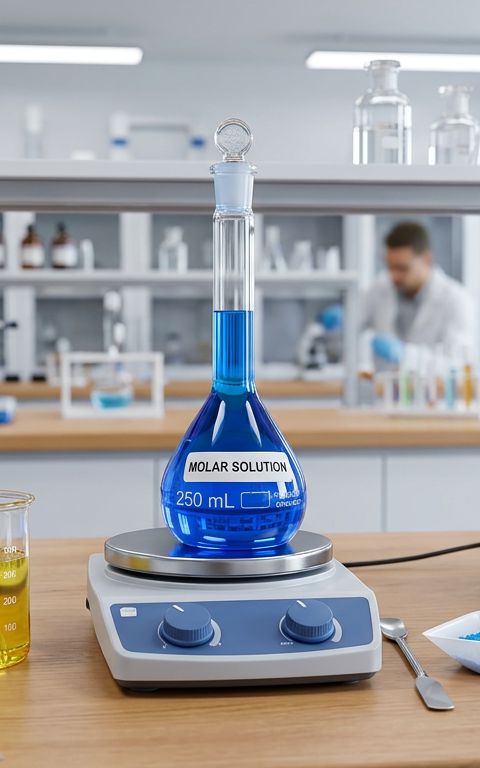
Why Molarity Matters: Converting Mass to Moles for Lab Solutions
Master chemistry with our guide to the molarity formula. Learn how to calculate concentration with step-by-step examples, units, and practical lab tips.
Mar 26, 2026

Molarity vs Molality: The Essential Difference Explained
Master the difference between molarity vs molality. Learn the formulas, key differences, and when to use each in this comprehensive chemistry guide.
Mar 26, 2026