NAPLEX Compounding Calculations Practice Questions with Answers
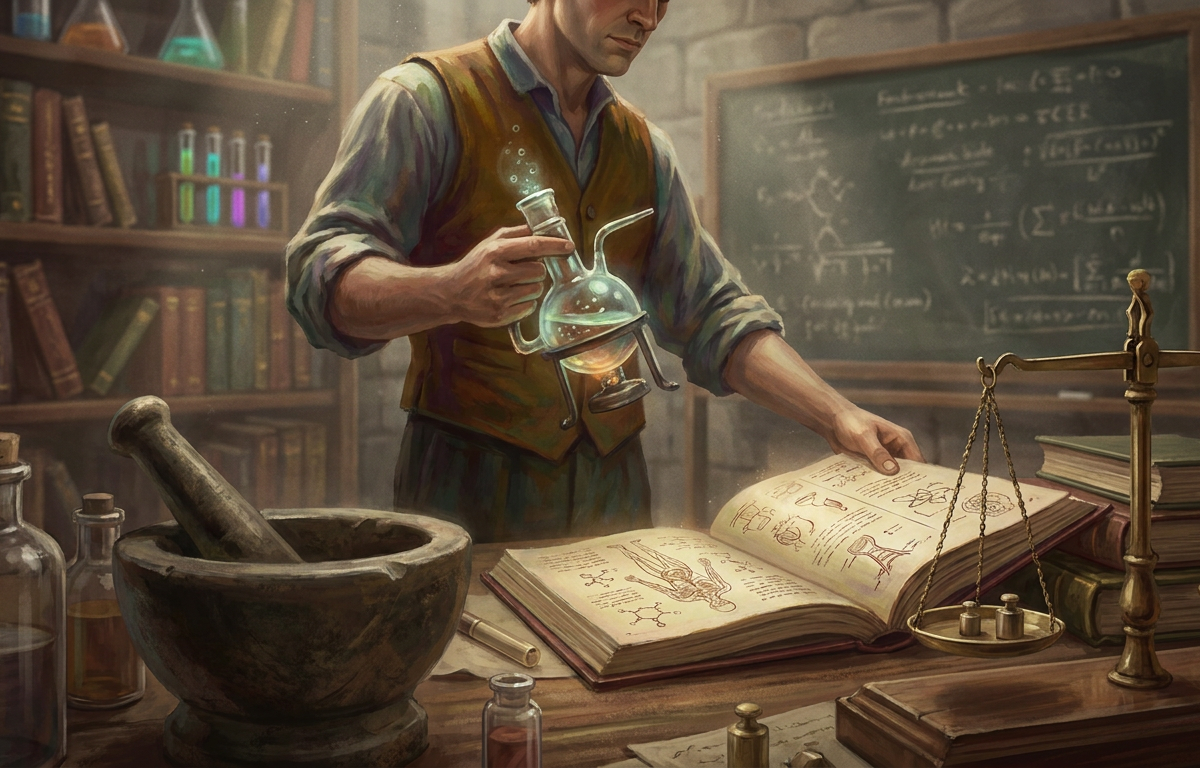
NAPLEX Compounding Calculations Practice Questions with Answers
Mastering NAPLEX compounding calculations is essential for ensuring patient safety and meeting the rigorous standards of the North American Pharmacist Licensure Examination. Compounding involves the preparation, mixing, assembling, altering, packaging, and labeling of a drug or device, often requiring precise mathematical conversions and concentrations. Whether you are preparing for clinical rotations or the board exam, understanding how to manipulate ratios, percentages, and milliequivalents is a core competency for every pharmacist.
Concept Explanation
NAPLEX compounding calculations are mathematical processes used to determine the exact quantities of active pharmaceutical ingredients and vehicles needed to create a customized medication. These calculations encompass a wide range of topics, including percentage strength (w/w, w/v, v/v), ratio strength, alligation, displacement values, and isotonicity. Accurate calculations are governed by standards such as the United States Pharmacopeia (USP) General Chapters <795> and <797>, which oversee non-sterile and sterile compounding respectively. To succeed, students must be proficient in converting between units and using the alligation alternate method to mix two different concentrations to reach a target strength. For comprehensive preparation, many students utilize a NAPLEX Prep hub to organize their study of these diverse mathematical requirements.
Solved Examples
Percentage Strength Calculation: How many grams of dextrose are required to prepare 500 mL of a 5% (w/v) solution?
Identify the meaning of 5% (w/v): It means 5 grams of solute in 100 mL of solution.
Set up a proportion:
Solve for : .
Alligation Method: A pharmacist needs to prepare 1 liter of a 70% alcohol solution using 95% alcohol and 40% alcohol. How many mL of the 95% alcohol are needed?
Set up the alligation grid: High (95), Low (40), Target (70).
Calculate parts: ( 70 - 40 = 30 parts of 95%) and ( 95 - 70 = 25 parts of 40%).
Total parts: .
Calculate mL for 95%: .
Milliequivalents (mEq): How many mEq of potassium chloride (KCl, MW = 74.5) are in 10 mL of a 10% (w/v) KCl solution?
Find grams of KCl: 10% means 10 g/100 mL. In 10 mL, there is 1 gram.
Convert grams to milligrams: .
Use the mEq formula:
Solve: .
Practice Questions
1. A prescription calls for 120 g of a 2% hydrocortisone cream. The pharmacy has 1% and 5% hydrocortisone creams in stock. How many grams of the 5% cream are required to fill this order?
2. A patient is prescribed a 250 mL infusion of 0.9% NaCl containing 40 mEq of Potassium Chloride. If the pharmacy uses a 2 mEq/mL stock vial of KCl, how many mL of KCl must be added to the bag?
3. Calculate the E-value (sodium chloride equivalent) of a drug with a molecular weight of 200 and a dissociation factor (i) of 1.8. Use the formula:
Train like it’s exam day.
Build confidence with timed NAPLEX practice questions, mock exams, and performance analytics.
Start Timed Practice4. How many grams of sodium chloride are needed to make 60 mL of a 2% cocaine HCl solution isotonic? (E-value of cocaine HCl = 0.16).
5. A pharmacist receives a prescription for 30 capsules, each containing 5 mg of a drug. The drug is available as a 1:10 trituration with lactose. How many total milligrams of the trituration are needed?
6. Convert a 1:2500 (w/v) solution to a percentage strength.
7. A 500 mL IV bag of D5W is running at 75 mL/hr. How many grams of dextrose is the patient receiving per hour?
8. What is the concentration in mg/mL of a 0.05% (w/v) solution?
9. A technician is asked to prepare 200 mL of a 15% solution. They only have a 40% solution and distilled water. How much water is needed?
10. How many grams of a 10% (w/w) ammonia solution can be made from 150 g of a 28% (w/w) strong ammonia solution?
Answers & Explanations
30 grams. Using alligation: (5 - 2) = 3 parts of 1%; (2 - 1) = 1 part of 5%. Total parts = 4. Grams of 5% = (1/4) * 120 g = 30 g.
20 mL. The order is for 40 mEq. The stock is 2 mEq/mL. .
0.29. Plug into formula: . Rounding to 0.29.
0.348 g.
Step 1: NaCl needed for 60 mL 0.9% = .
Step 2: Amount of drug = .
Step 3: NaCl equivalent of drug = .
Step 4: NaCl to add = .
1500 mg. Total drug needed = . A 1:10 trituration means 1 part drug in 10 parts total. of trituration.
0.04%. . To get percentage: .
3.75 g/hr. D5W is 5 g / 100 mL. In 75 mL: .
0.5 mg/mL. 0.05% = 0.05 g / 100 mL = 50 mg / 100 mL = 0.5 mg/mL.
125 mL. Use . . of 40% solution. Water needed = .
420 g. Use . . .
1. Which formula is used to calculate the amount of sodium chloride needed to make a solution isotonic?
Frequently Asked Questions
What is the difference between w/v and w/w in compounding?
Weight-in-volume (w/v) expresses grams of solute in 100 mL of liquid, whereas weight-in-weight (w/w) expresses grams of solute in 100 grams of the total mixture. Choosing the correct one depends on whether the final product is measured by volume or weight.
How do I calculate the dissociation factor (i) for isotonicity?
The dissociation factor is calculated based on the number of ions a substance produces in solution; for example, a non-electrolyte has an i-value of 1.0, while a substance that dissociates into two ions like NaCl has an i-value of approximately 1.8.
When should I use the alligation method on the NAPLEX?
Use the alligation alternate method when you are asked to mix two different concentrations of the same active ingredient to obtain a specific intermediate concentration. It is particularly helpful for mixing ointments, creams, or alcohol solutions.
What is a trituration in pharmacy compounding?
A trituration is a dilution of a potent drug powder with an inert diluent, usually lactose, in a specific ratio like 1:10 or 1:100. This process makes it easier to accurately weigh very small doses of a drug on a standard prescription balance.
How do I convert millimoles to milliequivalents?
To convert millimoles (mmol) to milliequivalents (mEq), multiply the number of millimoles by the valence of the ion. For instance, 1 mmol of provides 2 mEq of Calcium because the valence of is 2.
For more specialized practice, you may want to review NAPLEX Renal Therapeutics Practice Questions with Answers or explore NAPLEX Anticoagulation Practice Questions with Answers. If you find calculations particularly challenging, the Bevinzey AI Question Generator can provide unlimited practice sets. Students managing complex patient cases should also check out Hard NAPLEX Diabetes Case Practice Questions for integrated clinical and math scenarios. Finally, for those focusing on hospital practice, NAPLEX Antimicrobial Stewardship Practice Questions with Answers covers critical sterile compounding contexts.
Train like it’s exam day.
Build confidence with timed NAPLEX practice questions, mock exams, and performance analytics.
Start Timed Practice
Train like it’s exam day.
Build confidence with timed NAPLEX practice questions, mock exams, and performance analytics.
Start Timed PracticeTags
Enjoyed this article?
Share it with others who might find it helpful.
Related Articles
Hard NAPLEX Compounding Calculations Practice Questions
Hard NAPLEX Compounding Calculations Practice Questions
May 31, 2026
Medium NAPLEX Compounding Calculations Practice Questions
Master medium-level NAPLEX compounding calculations with this guide featuring alligation, mEq formulas, isotonicity problems, and 10 detailed practice questions.
May 31, 2026

Easy NAPLEX Compounding Calculations Practice Questions
Easy NAPLEX Compounding Calculations Practice Questions
May 31, 2026
Medium NAPLEX Sterile Compounding Practice Questions
Medium NAPLEX Sterile Compounding Practice Questions
May 31, 2026

Hard NAPLEX Nonsterile Compounding Practice Questions
Hard NAPLEX Nonsterile Compounding Practice Questions
May 31, 2026

Hard NAPLEX Sterile Compounding Practice Questions
Hard NAPLEX Sterile Compounding Practice Questions
May 31, 2026

Medium NAPLEX Nonsterile Compounding Practice Questions
Medium NAPLEX Nonsterile Compounding Practice Questions
May 31, 2026

Applying USP 797 Standards: Solving Sterile Compounding Scenarios
Easy NAPLEX Sterile Compounding Practice Questions
May 31, 2026