Mastering USP 795 BUDs and Nonsterile Formulation Math

A student encounters a prescription for a 2% hydrocortisone ointment and a 1% coal tar suspension. If they assign a 14-day refrigerated beyond-use date to both simply because they are compounded, they have already failed the USP <795> portion of the NAPLEX. The distinction rests entirely on water activity and the intended route of administration. A non-aqueous ointment base like white petrolatum allows for a 180-day shelf life, while the introduction of even a small amount of purified water into an oral liquid triggers a strict 14-day limit.
Success on these questions requires more than memorizing the difference between simple and complex compounding categories. You must be able to execute a geometric dilution mentally, ensuring that a potent active ingredient is uniformly distributed by doubling the mixture volume at each step. Missing a decimal point during a levigation calculation or selecting a porous wedge-wood mortar for a volatile liquid are the types of technical errors that lead to lost points. This guide focuses on the specific stability timelines and mixing mechanics that frequently appear on the board exam.
USP 795 Standards and Mixing Mechanics
Nonsterile compounding is the process of combining, admixing, diluting, pooling, or otherwise altering a drug or bulk drug substance to create a medication tailored to the needs of an individual patient in a nonsterile environment. This practice is governed primarily by USP Chapter <795>, which sets the standards for ensuring the quality, strength, and purity of compounded nonsterile preparations (CNSPs). Unlike sterile compounding, which requires strict aseptic techniques to prevent microbial contamination in injectables or ophthalmic products, nonsterile compounding focuses on preparations like capsules, creams, oral liquids, and suppositories. Mastery of these fundamentals is a core component of NAPLEX Prep, as pharmacists must ensure patient safety through proper beyond-use date (BUD) assignment, ingredient selection, and documentation.
Key concepts include the selection of high-quality ingredients (preferably USP-NF grade), the use of appropriate equipment like mortars and pestles, and the calculation of required quantities. Pharmacists must also be familiar with the three categories of nonsterile compounding: Simple (following a USP monograph), Moderate (requiring special calculations or stability data), and Complex (requiring specialized facilities or equipment). Safety is further reinforced by OSHA guidelines regarding the handling of hazardous chemicals. For students looking to refine their calculation skills, using an AI Question Generator can provide targeted drills on powder displacement and percentage strength.
Solved Examples
- Example: Beyond-Use Date (BUD) for Water-Containing Oral Formulations
A pharmacist is compounding an oral suspension of amoxicillin using purified water. According to USP <795>, what is the maximum BUD if stored in a refrigerator?
Solution:- Identify the formulation type: Water-containing oral liquid.
- Consult USP <795> standards for non-preserved aqueous dosage forms.
- For water-containing oral formulations, the BUD is not more than 14 days when stored at controlled cold temperatures.
- Answer: 14 days.
- Example: Percentage Strength Calculation
How many grams of hydrocortisone powder are needed to prepare 60 grams of a 2.5% hydrocortisone cream?
Solution:- Set up the equation using the percentage formula: .
- Convert 2.5% to a decimal: .
- Calculate: .
- Answer: 1.5 grams.
- Example: Geometric Dilution Technique
A pharmacist needs to mix 500 mg of a potent active ingredient with 10 g of an ointment base. Describe the first step of geometric dilution.
Solution:- Place the 500 mg of active ingredient in the mortar.
- Add an approximately equal amount (500 mg) of the ointment base to the mortar.
- Triturate until uniform.
- Continue adding the base in portions that roughly match the volume of the mixture already in the mortar.
Practice Questions
- Which USP chapter provides the standards for nonsterile compounding?
- What is the standard BUD for a non-aqueous topical formulation (such as a drug in white petrolatum) that does not contain water?
- A prescription calls for 30 g of a 1% coal tar ointment. If you only have a 5% coal tar ointment and plain petrolatum, how many grams of the 5% ointment do you need?
Train like it’s exam day.
Build confidence with timed NAPLEX practice questions, mock exams, and performance analytics.
Start Timed Practice- Which mortar and pestle type is best suited for mixing liquids or semi-soft dosage forms due to its non-porous surface?
- Define "levigation" and name a common levigating agent for an oil-based ointment.
- A pharmacist is preparing a CNSP for a pediatric patient. The master formulation record is not available, but a peer-reviewed journal article suggests the prep is stable for 30 days. If the pharmacist follows USP <795> for a water-containing topical cream, what is the default BUD?
- What is the purpose of a "Master Formulation Record" in nonsterile compounding?
- Calculate the amount of 70% alcohol and 30% alcohol needed to make 500 mL of 50% alcohol using the alligation method.
- Which type of balance is required by law in most pharmacies for weighing small quantities of powders, typically having a sensitivity requirement of 6 mg?
- How many milliliters of a 10% (w/v) stock solution are required to make 120 mL of a 2% (w/v) solution?
Answers & Explanations
- USP Chapter <795>. This chapter specifically addresses nonsterile compounding practices, while <797> covers sterile and <800> covers hazardous drugs.
- 6 months (180 days). For non-aqueous formulations, the BUD is no later than the time remaining until the earliest expiration date of any ingredient, or 6 months, whichever is earlier.
- 6 grams. Using the formula : . Solving for : .
- Glass mortar and pestle. Glass is ideal for liquids and chemicals that stain, as it is non-porous and easy to clean. Wedgwood is better for grinding hard crystals.
- Levigation is the process of reducing particle size of a solid by triturating it with a small amount of liquid (levigating agent) in which the solid is not soluble. For oil-based ointments, mineral oil is a common levigating agent.
- 30 days. For water-containing topical semi-solid formulations (like creams or gels), USP <795> assigns a maximum BUD of 30 days when stored at room temperature.
- The Master Formulation Record serves as the "recipe" or instructions for a specific compounded preparation, ensuring consistency and quality every time the preparation is made.
- 250 mL of each. Using alligation: parts of 70%; parts of 30%. Total parts = 40. Since the parts are equal (20:20), you need 250 mL of 70% and 250 mL of 30%.
- Class A Prescription Balance (Class III). These balances are used for weighing medicinal substances and often require the use of weights. Many modern pharmacies now use electronic analytical balances.
- 24 mL. Using : . .
1. Which of the following is considered a "Simple" compounding category?
Frequently Asked Questions
What is the difference between USP <795> and USP <797>?
USP <795> provides standards for nonsterile compounding, such as oral liquids and topical creams, while USP <797> governs sterile compounding for injectables and ophthalmics. The primary difference lies in the environmental controls and aseptic techniques required to prevent microbial contamination.
Can I use a kitchen scale for nonsterile compounding?
No, nonsterile compounding requires calibrated equipment that meets USP standards for accuracy, such as a Class III prescription balance or a high-precision electronic analytical balance. Kitchen scales lack the sensitivity required to measure small, potent doses of active pharmaceutical ingredients.
What is the BUD for a compounded cream containing water?
According to USP <795>, water-containing topical semi-solid formulations like creams or gels have a maximum beyond-use date of 30 days. This applies when the preparation is stored at controlled room temperature and protected from light.
When should I use a Wedgwood mortar and pestle?
A Wedgwood mortar and pestle is best used for the reduction of particle size of hard crystals and large granules. Its porous and rough surface provides the friction necessary for effective trituration, unlike the smooth surface of glass.
How do I handle hazardous drugs in nonsterile compounding?
Handling hazardous drugs requires compliance with USP Chapter <800>, which includes using a dedicated containment primary engineering control (C-PEC). Personal protective equipment (PPE) such as double gloves and respiratory protection may also be necessary depending on the risk assessment.
Train like it’s exam day.
Build confidence with timed NAPLEX practice questions, mock exams, and performance analytics.
Start Timed PracticeTags
Enjoyed this article?
Share it with others who might find it helpful.
Related Articles

Hard NAPLEX Odds Ratio Practice Questions
Hard NAPLEX Odds Ratio Practice Questions
Jun 1, 2026

Hard NAPLEX Nonsterile Compounding Practice Questions
Hard NAPLEX Nonsterile Compounding Practice Questions
May 31, 2026

Medium NAPLEX Nonsterile Compounding Practice Questions
Medium NAPLEX Nonsterile Compounding Practice Questions
May 31, 2026

Mastering USP 800: Handling HD Air Changes and PPE Requirements
Easy NAPLEX Hazardous Drug Practice Questions
May 31, 2026

Mastering USP 800: Handling Hazardous Drugs for the NAPLEX
NAPLEX USP 800 Practice Questions with Answers
May 31, 2026
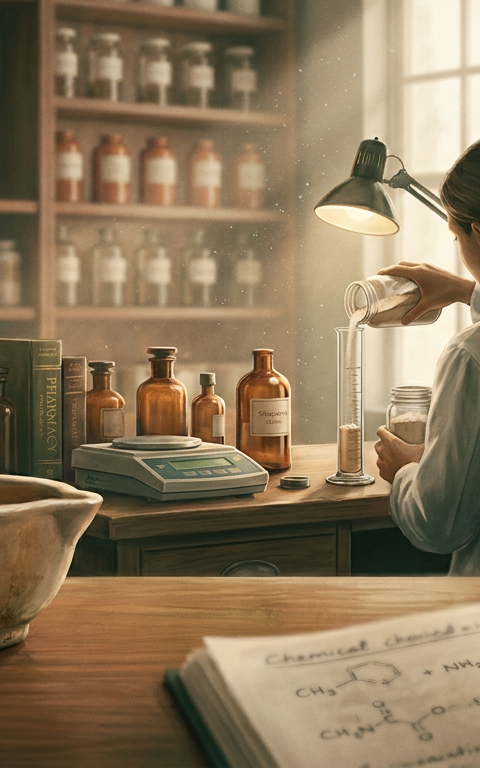
NAPLEX Nonsterile Compounding Practice Questions with Answers
Master NAPLEX Nonsterile Compounding with this guide on USP <795> standards, BUD calculations, and compounding techniques including practice questions and answers.
May 31, 2026
CrCl Calculations: Navigating Obese and Underweight Dosing Traps
Master complex renal dosing with these hard NAPLEX creatinine clearance practice questions, featuring obese, elderly, and underweight patient cases.
Jun 1, 2026

Hard NAPLEX Absolute Risk Reduction Practice Questions
Master Absolute Risk Reduction (ARR) for the NAPLEX with our hard practice questions, step-by-step solutions, and clear concept explanations.
Jun 1, 2026