Applying USP 797 Standards: Solving Sterile Compounding Scenarios
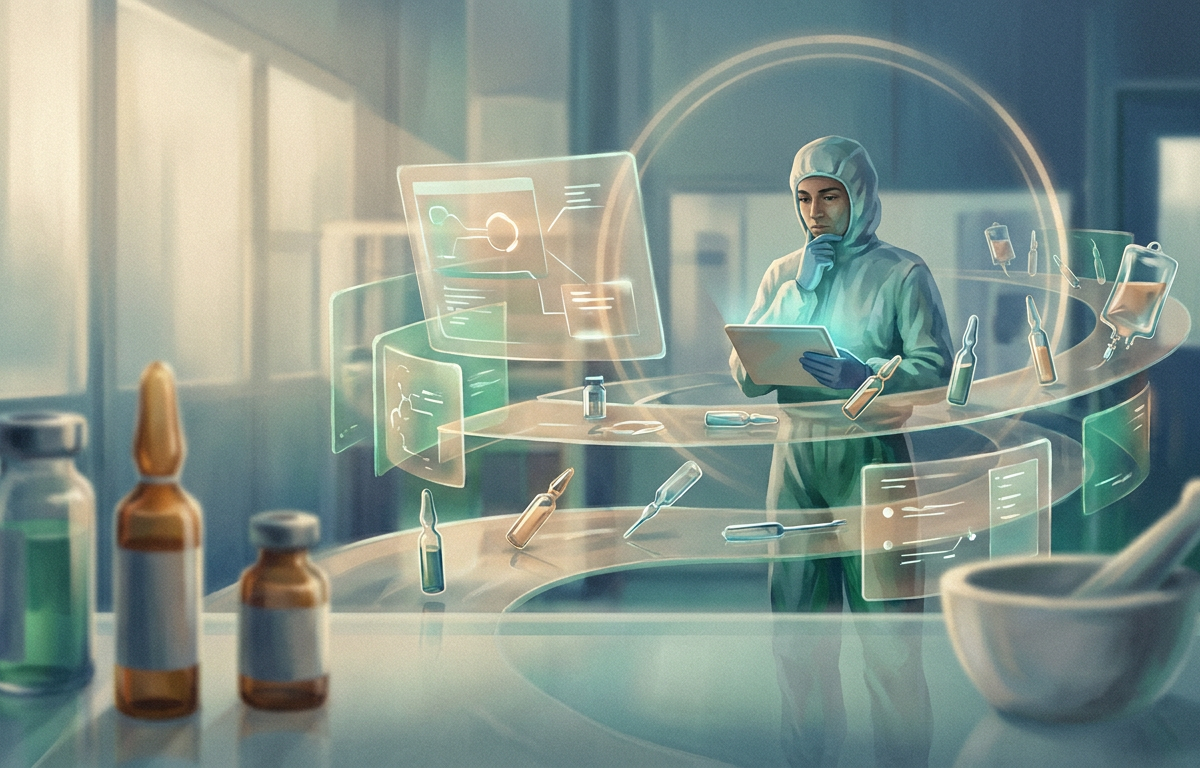
Imagine you are standing at the line of demarcation in the ante-room. You have your shoe covers on, but you realize your watch is still on your wrist. In the high stakes environment of the NAPLEX, forgetting to remove jewelry before the first scrub is a mistake that costs points and, in a pharmacy, risks patient safety. Sterile compounding is not just about memorizing USP Chapter 797; it is about visualizing the physical movement from the dirty side of the ante-room to the ISO Class 5 critical zone without breaking the chain of asepsis.
Many students struggle with the 2023 updates regarding Category 1, 2, and 3 CSPs, often confusing the beyond-use dates of a single-dose vial punctured in a cleanroom versus one punctured in a segregated compounding area. These practice questions focus on those specific distinctions, such as the six-inch rule within a laminar airflow workbench and the exact 70 percent concentration of sterile isopropyl alcohol needed to penetrate bacterial cell walls. By working through these scenarios, you will transition from simple rote memorization to the practical application required for the board exam.
Easy NAPLEX Sterile Compounding Practice Questions
Mastering sterile compounding is a critical component of the North American Pharmacist Licensure Examination® (NAPLEX). This guide provides Easy NAPLEX Sterile Compounding Practice Questions designed to build your foundational knowledge of USP Chapter <797> standards, aseptic technique, and environmental monitoring. Whether you are just starting your review or looking for a quick refresher, these questions and explanations will help you solidify your understanding of how to safely prepare parenteral medications.
Aseptic Technique and Environmental Standards
Sterile compounding is the process of combining, admixing, or altering a drug or bulk substance to create a sterile medication intended for administration by injection, infusion, or application to the eye. This practice is strictly governed by the United States Pharmacopeia (USP) Chapter <797>, which sets the standards for facilities, environmental monitoring, and personnel training to prevent patient harm from microbial contamination or incorrect dosages. Key concepts include the maintenance of an ISO Class 5 environment within a Primary Engineering Control (PEC), proper garbing sequences, and the determination of Beyond-Use Dates (BUDs) based on the risk of contamination. Achieving proficiency in these areas is essential for success in NAPLEX Prep and clinical practice.
The sterile compounding environment is structured in a gradient of cleanliness. The innermost area, the PEC (such as a laminar airflow workbench), must maintain ISO Class 5 air quality. This is located within a buffer room (ISO Class 7), which is preceded by an ante-room (ISO Class 7 or 8). Understanding the flow of materials and personnel through these zones is a common focus of exam questions. For those looking to customize their study experience, using an AI Question Generator can help create additional scenarios based on these specific environmental standards.
Solved Examples
Review these examples to understand the logic behind sterile compounding calculations and regulatory requirements.
- Example: Garbing Order
What is the correct order for donning Personal Protective Equipment (PPE) according to USP <797>?
- Start with the dirtiest items: Don shoe covers, head/facial hair covers, and face masks.
- Perform hand hygiene with soap and water for at least 30 seconds, cleaning under fingernails.
- Don a non-shedding gown that fits snugly around the wrists and neck.
- Enter the buffer area and apply alcohol-based surgical hand scrub.
- Don sterile, powder-free gloves and ensure they cover the gown cuffs.
- Example: Beyond-Use Date (BUD) Calculation
A pharmacist prepares a single-dose vial (SDV) of Vancomycin in an ISO Class 5 PEC located within an ISO Class 7 buffer room. If the preparation is stored at room temperature, what is the maximum BUD?
- Identify the risk level: This is a Category 2 CSP (Compounded Sterile Preparation) prepared in a cleanroom suite.
- Consult USP <797> tables for storage: For a CSP prepared from sterile starting components and sterilized by filtration or aseptic processing, the room temperature BUD is typically 4 days (96 hours).
- Note: USP <797> updated categories in 2023; always ensure you are using the most current standards for the exam.
- Example: Alcohol Concentration for Disinfection
What is the required concentration of isopropyl alcohol (IPA) used for disinfecting surfaces in sterile compounding?
- Sterile 70% Isopropyl Alcohol (IPA) is the standard.
- Why 70%? This concentration allows for better penetration of the bacterial cell wall compared to 100% IPA, which can cause instant protein coagulation that protects the rest of the cell.
Practice Questions
- Which ISO classification is required for the air inside a Primary Engineering Control (PEC)?
- How many inches inside the laminar airflow workbench (LAFW) must all compounding activities be performed to maintain a sterile environment?
- A multidose vial (MDV) is opened in an ISO Class 5 environment. According to USP <797>, what is the maximum beyond-use date for this vial?
Train like it’s exam day.
Build confidence with timed NAPLEX practice questions, mock exams, and performance analytics.
Start Timed Practice- Which of the following items of PPE can be reused during a shift if it remains in the ante-room and is not visibly soiled?
- If a laminar airflow workbench is turned off, how long must it run before it can be used for sterile compounding?
- In a horizontal laminar flow hood, in which direction does the air move?
- What is the minimum frequency for performing the media-fill test for personnel who compound Category 1 and Category 2 CSPs?
- Which solution is used for the "deactivation" step when cleaning a compounding area used for hazardous drugs?
- What is the minimum pressure differential required between a buffer room and an ante-room in a non-hazardous compounding suite?
- Which of the following is an example of a Primary Engineering Control (PEC)?
Answers & Explanations
- ISO Class 5: The PEC must maintain an ISO Class 5 environment, which allows no more than 3,520 particles (0.5 microns or larger) per cubic meter. This is much cleaner than the buffer room (ISO 7) or ante-room (ISO 8).
- 6 inches: Compounding must occur at least 6 inches inside the hood to prevent "washback" of contaminated room air into the sterile work zone.
- 28 days: USP <797> states that a multidose vial (MDV) contains preservatives and can be used for up to 28 days after the initial puncture, unless otherwise specified by the manufacturer.
- Gown: The gown is the only piece of PPE that may be reused during a single shift if it is not soiled and is kept in the ante-room. Gloves, masks, and hair covers must be replaced every time the compounding area is re-entered.
- 30 minutes: If the blower is turned off, the hood must be cleaned and allowed to run for at least 30 minutes to stabilize the airflow and clear the air of particulates before compounding begins.
- Toward the operator: In a horizontal flow hood, air travels through a HEPA filter at the back of the hood and moves forward toward the person compounding. This protects the preparation but not the operator (which is why hazardous drugs are never made in horizontal hoods).
- Every 6 months: For personnel compounding Category 1 and 2 CSPs, competency must be demonstrated via a media-fill test at least every 6 months. This ensures the technician's aseptic technique remains proficient.
- Sodium Hypochlorite (Bleach): While 70% IPA is used for disinfection, hazardous drug deactivation typically requires a strong oxidizer like sodium hypochlorite or a proprietary deactivating agent to break down drug residues.
- 0.02-inch water column: A positive pressure of at least 0.02 inches of water column is required to ensure that air flows from the cleaner buffer room into the less-clean ante-room, preventing contaminants from entering the sterile space.
- Laminar Airflow Workbench (LAFW): A PEC is the device that provides the ISO Class 5 environment. Other examples include Compounding Aseptic Isolators (CAIs) and Biological Safety Cabinets (BSCs).
For more practice with specialized clinical topics, check out our Easy NAPLEX Infectious Disease Practice Questions or explore Easy NAPLEX Antimicrobial Stewardship Practice Questions to see how sterile medications are applied in therapy.
1. Which ISO class is the minimum requirement for a buffer room used for non-hazardous sterile compounding?
Frequently Asked Questions
What is the difference between a PEC and a SEC?
A Primary Engineering Control (PEC) is the device providing the ISO Class 5 environment for compounding, while the Secondary Engineering Control (SEC) is the surrounding room, such as the buffer or ante-room. The PEC is where the actual sterile work happens, and the SEC provides the controlled environment to support it.
How often should work surfaces in the PEC be disinfected?
Work surfaces must be disinfected with sterile 70% IPA at the beginning of each shift, before each batch, every 30 minutes during continuous compounding, and after any spill or suspected contamination. This frequent cleaning maintains the low particulate count required for patient safety.
What is a "smoke test" in sterile compounding?
A smoke test, or airflow visualization study, uses a non-toxic smoke generator to confirm that the airflow in the PEC is unidirectional and free of turbulence. This test is required to ensure that the engineering controls are properly protecting the critical site from contamination.
Can you wear jewelry while sterile compounding?
No, all jewelry including rings, watches, and bracelets must be removed before performing hand hygiene and garbing. Jewelry can harbor microorganisms and may puncture gloves, compromising the sterile environment.
What is the "first air" principle?
First air is the undisturbed air exiting the HEPA filter that is free of contaminants. Compounding must be performed in a way that nothing (hands, vials, syringes) blocks this first air from reaching the critical sites, such as the needle or the open vial stopper.
What is the difference between Category 1 and Category 2 CSPs?
Category 1 CSPs have shorter beyond-use dates and can be prepared in an unclassified Segregated Compounding Area (SCA). Category 2 CSPs have longer BUDs but must be prepared in a full cleanroom suite with a buffer and ante-room.
Train like it’s exam day.
Build confidence with timed NAPLEX practice questions, mock exams, and performance analytics.
Start Timed PracticeTags
Enjoyed this article?
Share it with others who might find it helpful.
Related Articles

CrCl Calculations: Navigating Obese and Underweight Dosing Traps
Master complex renal dosing with these hard NAPLEX creatinine clearance practice questions, featuring obese, elderly, and underweight patient cases.
Jun 1, 2026
NAPLEX Therapeutic Drug Monitoring Practice Questions with Answers
NAPLEX Therapeutic Drug Monitoring Practice Questions with Answers
Jun 1, 2026

Easy NAPLEX Adverse Drug Reaction Practice Questions
Easy NAPLEX Adverse Drug Reaction Practice Questions
May 31, 2026

Easy NAPLEX Drug Interaction Case Practice Questions
Master basic drug interaction concepts for the NAPLEX with this guide featuring solved examples, practice questions, and detailed explanations for student success.
May 31, 2026
NAPLEX Medication Error Practice Questions with Answers
NAPLEX Medication Error Practice Questions with Answers
May 31, 2026

Mastering USP 800: Handling HD Air Changes and PPE Requirements
Easy NAPLEX Hazardous Drug Practice Questions
May 31, 2026

Solving Multi-Step Pharmacokinetics Problems for the NAPLEX
Hard NAPLEX Pharmacokinetics Calculation Practice Questions
Jun 1, 2026
Medium NAPLEX Sterile Compounding Practice Questions
Medium NAPLEX Sterile Compounding Practice Questions
May 31, 2026