Stop Guessing: How to Balance Redox Charges Without Losing Electrons
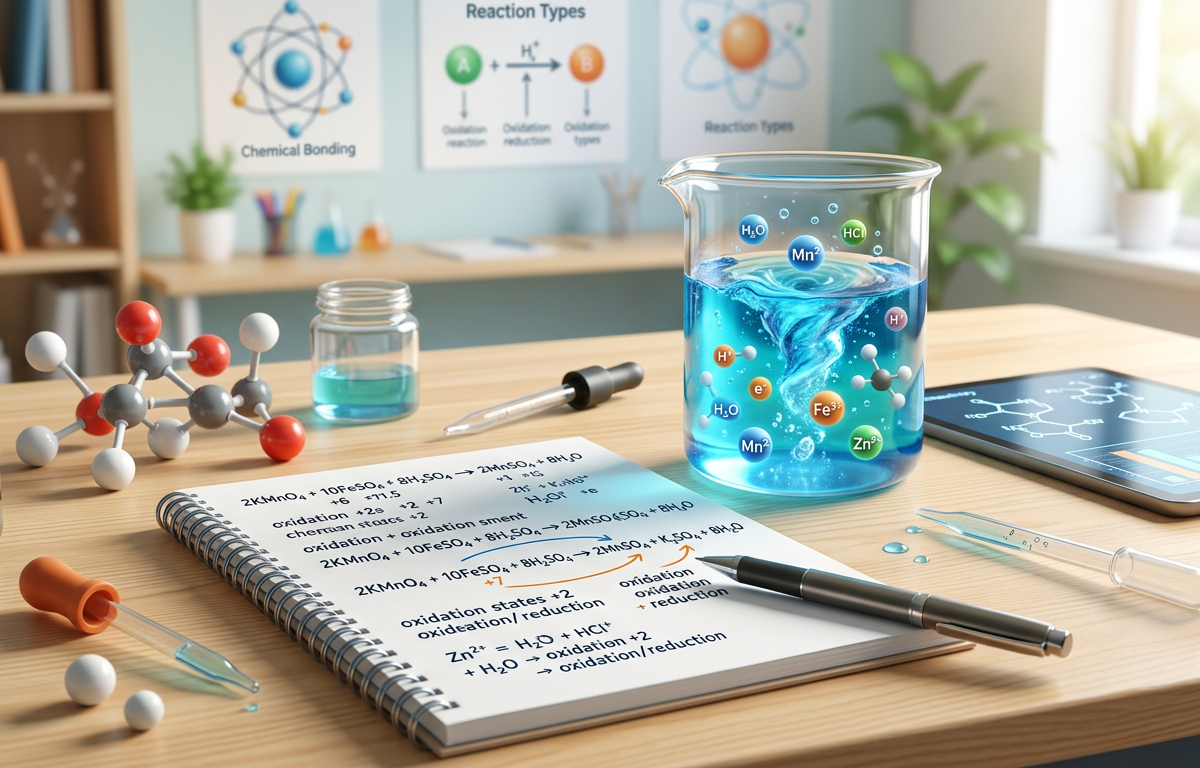
When you first look at the equation Sn2+ + Fe3+ → Sn4+ + Fe2+, it looks perfectly fine. The atoms are balanced, with one tin and one iron on each side. However, if you try to run this reaction in a lab, the math fails because the electrical charges are not equal. The left side has a total charge of +5, while the right side sits at +6. This discrepancy exists because a single tin atom loses two electrons, but an iron atom only accepts one. If you do not account for that missing electron, your entire stoichiometry will be wrong.
Most students struggle because they treat redox like basic algebra, trying to balance by inspection. The secret is isolating the electron transfer before you ever touch the coefficients. By splitting the reaction into two separate half-reactions, you can see exactly where the electrons are going. You will learn to multiply these halves until the electrons lost by the reducing agent perfectly match those gained by the oxidizing agent, ensuring that charge is conserved just as strictly as mass.
The Logic of Electron Transfer
Balancing redox reactions is the process of ensuring that both mass and electrical charge are conserved in a chemical equation where electrons are transferred between species.
A redox (reduction-oxidation) reaction involves two simultaneous processes: oxidation, where a substance loses electrons, and reduction, where a substance gains electrons. To balance these equations effectively, chemists often use the half-reaction method. This method breaks the overall reaction into two parts, allowing you to balance the atoms and charges separately before recombining them. This approach is essential because standard inspection methods often fail to account for the transfer of electrons. For those looking to master the basics, starting with balancing redox practice questions is a great way to build confidence.
According to the IUPAC definitions, oxidation states are used to track these electron movements. The fundamental rules for balancing in acidic solutions include:
Assigning oxidation numbers to identify what is oxidized and what is reduced.
Writing the separate half-reactions for oxidation and reduction.
Balancing all elements except Oxygen and Hydrogen.
Balancing Oxygen by adding H2O molecules.
Balancing Hydrogen by adding H+ ions.
Balancing the net charge by adding electrons (e-).
Multiplying the half-reactions so the number of electrons lost equals the number of electrons gained.
Solved Examples
To help you understand the process, here are three easy balancing redox practice questions with step-by-step solutions.
Example 1: Balancing Sn2+ + Fe3+ → Sn4+ + Fe2+
Identify the half-reactions:
Oxidation: Sn2+ → Sn4+
Reduction: Fe3+ → Fe2+
Balance the charges by adding electrons:
Oxidation: Sn2+ → Sn4+ + 2e-
Reduction: Fe3+ + e- → Fe2+
Equalize the electrons: Multiply the reduction half-reaction by 2.
2(Fe3+ + e- → Fe2+) = 2Fe3+ + 2e- → 2Fe2+
Combine and cancel: Sn2+ + 2Fe3+ → Sn4+ + 2Fe2+.
Example 2: Balancing Mg + Cu2+ → Mg2+ + Cu
Write the half-reactions:
Mg → Mg2+ (Oxidation)
Cu2+ → Cu (Reduction)
Balance the charges:
Mg → Mg2+ + 2e-
Cu2+ + 2e- → Cu
The electrons are already equal (2 each), so combine the reactions: Mg + Cu2+ → Mg2+ + Cu.
Example 3: Balancing Zn + Ag+ → Zn2+ + Ag
Split into half-reactions:
Zn → Zn2+ + 2e-
Ag+ + e- → Ag
Multiply the silver half-reaction by 2 to balance the electrons: 2Ag+ + 2e- → 2Ag.
Combine the results: Zn + 2Ag+ → Zn2+ + 2Ag.
Practice Questions
Test your skills with these easy balancing redox practice questions. Remember to check both mass and charge balance for every answer.
1. Balance the following reaction: Al(s) + Cu2+(aq) → Al3+(aq) + Cu(s)
2. Identify the oxidizing agent and balance: I- + Br2 → I2 + Br-
3. Balance the following in acidic solution: Fe2+ + MnO4- → Fe3+ + Mn2+
Want unlimited practice questions like these?
Generate AI-powered questions with step-by-step solutions on any topic.
Try Question Generator Free →4. Balance this simple redox reaction: Li(s) + H+(aq) → Li+(aq) + H2(g)
5. Balance the reaction between calcium and silver ions: Ca + Ag+ → Ca2+ + Ag
6. Balance the following: Cl2 + S2- → Cl- + S
7. Balance the reaction: Cr + Sn4+ → Cr3+ + Sn2+
8. Balance the following in acidic solution: H2O2 + Fe2+ → H2O + Fe3+
9. Balance the reaction: Na + Cl2 → Na+ + Cl-
10. Balance the following: MnO2 + Al → Mn + Al2O3
Answers & Explanations
2Al + 3Cu2+ → 2Al3+ + 3Cu: Al loses 3 electrons, while Cu gains 2. To equalize, multiply Al by 2 (6e- lost) and Cu by 3 (6e- gained).
2I- + Br2 → I2 + 2Br-: Br2 is the oxidizing agent because it gains electrons. Each Iodine loses one electron, and the Bromine molecule gains two.
5Fe2+ + MnO4- + 8H+ → 5Fe3+ + Mn2+ + 4H2O: Mn changes from +7 to +2 (gains 5e-). Fe changes from +2 to +3 (loses 1e-). Multiply Fe by 5. Add 4H2O to balance Oxygen and 8H+ for Hydrogen.
2Li + 2H+ → 2Li+ + H2: Li loses 1e-, while H+ gains 1e-. Since H2 has two atoms, we need 2H+ and therefore 2Li.
Ca + 2Ag+ → Ca2+ + 2Ag: Calcium loses 2 electrons. Silver gains 1. We need two silver ions to accept the electrons from one calcium atom.
Cl2 + S2- → 2Cl- + S: Chlorine molecule gains 2 electrons (one per atom). Sulfur ion loses 2 electrons. The charge is balanced with a coefficient of 2 for Cl-.
2Cr + 3Sn4+ → 2Cr3+ + 3Sn2+: Chromium loses 3e-. Tin gains 2e-. The least common multiple is 6. Multiply Cr by 2 and Sn by 3.
H2O2 + 2Fe2+ + 2H+ → 2H2O + 2Fe3+: Each Iron loses 1e-. The Oxygen in peroxide goes from -1 to -2 (gains 2e- total). We need 2 Iron atoms and 2 H+ to balance.
2Na + Cl2 → 2Na+ + 2Cl-: Sodium loses 1e-. Chlorine molecule gains 2e-. We need 2 Sodium atoms to balance the electron transfer.
3MnO2 + 4Al → 3Mn + 2Al2O3: manganese is reduced (+4 to 0, 4e-) and Aluminum is oxidized (0 to +3, 3e-). Using a multiple of 12e-, we reach the balanced state.
1. In a redox reaction, what happens during oxidation?
Frequently Asked Questions
What is the easiest way to balance redox reactions?
The half-reaction method is the most reliable way to balance redox reactions because it systematically addresses both atoms and charge. By splitting the reaction into oxidation and reduction components, you can ensure electrons are properly accounted for before recombining the equations. To see this in action with more complex data, you might explore cell potential calculations practice questions.
Why do I need to add H2O when balancing in acidic solutions?
Water molecules are added to balance Oxygen atoms because the reaction occurs in an aqueous environment where water is abundant. After adding water, you then use H+ ions to balance the resulting Hydrogen atoms, which is a standard procedure in Chemistry LibreTexts guides.
What is an oxidizing agent?
An oxidizing agent is a substance that gains electrons in a chemical reaction, thereby causing another substance to be oxidized. It is the species that undergoes reduction itself during the process. Understanding this is key when working through redox reaction practice questions.
Can redox reactions be balanced by inspection?
Simple redox reactions can sometimes be balanced by inspection, but this is risky because the total charge must also be balanced. If the number of electrons lost does not equal the number of electrons gained, the equation is chemically incorrect even if the atoms look balanced. For more advanced thermal chemistry, you can check easy Arrhenius equation practice questions.
What is the difference between balancing in acidic vs basic solutions?
In acidic solutions, you use H+ and H2O to balance Hydrogen and Oxygen; in basic solutions, you follow the same steps but then add OH- ions to neutralize the H+ ions. This neutralization forms water, and you must simplify the equation by canceling water molecules on both sides. For more help with complex calculations, visit the Khan Academy redox tutorials.
Want unlimited practice questions like these?
Generate AI-powered questions with step-by-step solutions on any topic.
Try Question Generator Free →
Want unlimited practice questions like these?
Generate AI-powered questions with step-by-step solutions on any topic.
Try Question Generator Free →Enjoyed this article?
Share it with others who might find it helpful.
Related Articles
Hard Balancing Redox Practice Questions
Master complex chemical equations with our hard balancing redox practice questions. Includes step-by-step solutions for acidic and basic media.
Apr 4, 2026
Hard Redox Reaction Practice Questions
Master complex chemistry with our Hard Redox Reaction Practice Questions. Learn to balance equations in acidic/basic media and calculate cell potentials.
Apr 4, 2026
Medium Balancing Redox Practice Questions
Master medium-level redox balancing with our comprehensive guide featuring solved examples, step-by-step methods for acidic/basic solutions, and practice questions.
Apr 4, 2026
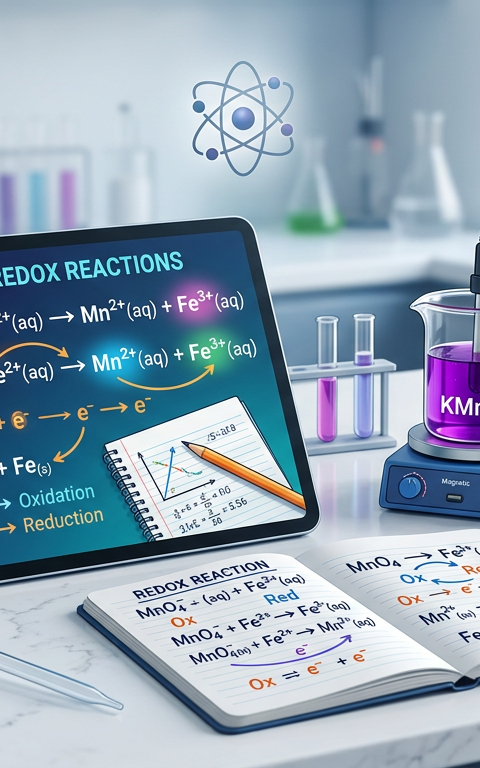
Medium Redox Reaction Practice Questions
Master medium-level redox reaction problems with our comprehensive guide featuring solved examples, balancing tips, and practice questions for students.
Apr 4, 2026
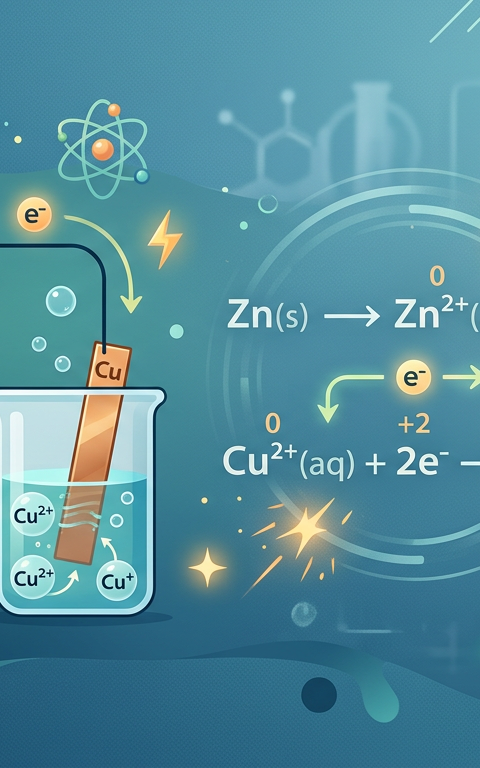
Easy Redox Reaction Practice Questions
Master the basics of electron transfer with these easy redox reaction practice questions, featuring step-by-step solutions and clear explanations.
Apr 4, 2026
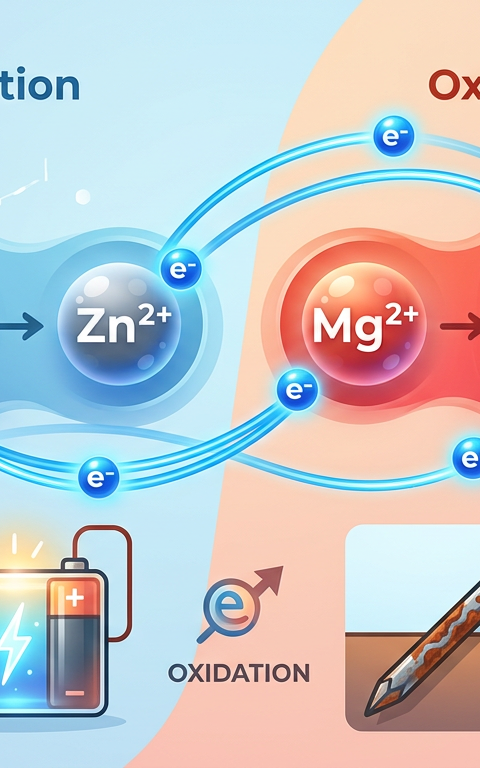
Redox Reaction Practice Questions with Answers
Master redox reactions with these practice questions and answers. Learn to identify oxidation, reduction, and balancing techniques for your chemistry exams.
Apr 3, 2026
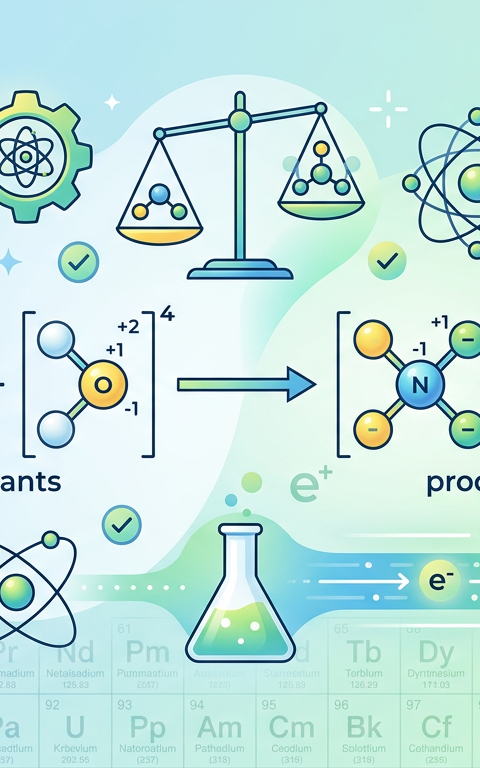
Balancing Redox Practice Questions with Answers
Master balancing redox reactions with our comprehensive guide featuring step-by-step solved examples, practice questions in acidic and basic solutions, and a quick quiz.
Apr 3, 2026
Solve Boyle's Law Problems Without Flipping the Pressure Ratio
Master Boyle’s Law with these easy practice questions and step-by-step solutions. Learn how pressure and volume interact at constant temperatures.
Apr 2, 2026