Balancing Redox Practice Questions with Answers
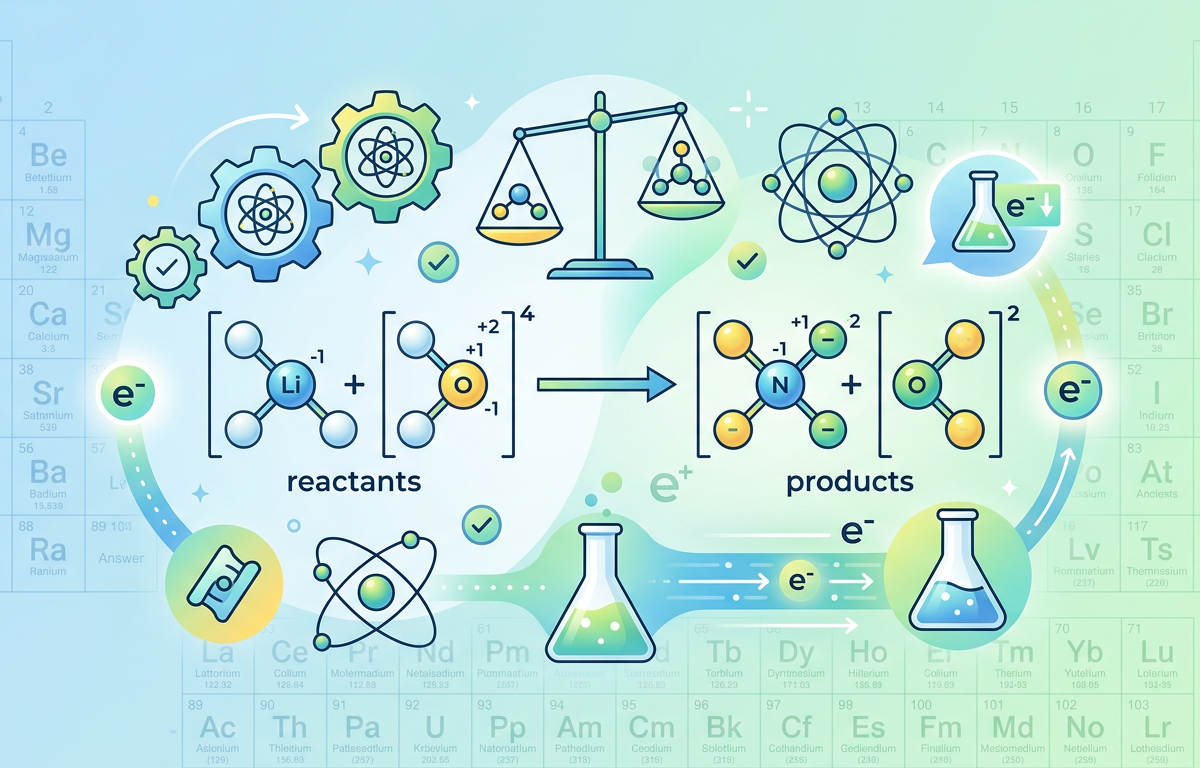
Balancing redox reactions is the process of ensuring that both the total number of atoms and the total electrical charge are equal on both sides of a chemical equation involving oxidation and reduction. Mastering Balancing Redox is a fundamental skill in chemistry, as these reactions power everything from the batteries in your smartphone to the metabolic processes in your body. Unlike simple acid-base reactions, redox equations require tracking the transfer of electrons between substances. This guide provides a deep dive into the half-reaction method, offering step-by-step tutorials and comprehensive practice to help you study for exams to get straight A’s in your chemistry courses.
Concept Explanation
Balancing redox reactions involves using the half-reaction method to separate the oxidation and reduction components, balancing their atoms and charges independently, and then recombining them so that the net electron transfer is zero. In any redox reaction, oxidation (loss of electrons) and reduction (gain of electrons) occur simultaneously. To balance these correctly, chemists typically follow a specific set of rules, often referred to as the Half-Reaction Method or the Ion-Electron Method.
The Half-Reaction Method Steps
Identify and separate: Determine which species are being oxidized and which are being reduced, then write the two half-reactions.
Balance non-O and non-H atoms: Balance all elements except for oxygen and hydrogen.
Balance Oxygen: Add water (H₂O) molecules to the side that is deficient in oxygen.
Balance Hydrogen: Add hydrogen ions (H⁺) to the side deficient in hydrogen.
Balance Charge: Add electrons (e⁻) to the more positive side so that the total charge on both sides of the half-reaction is equal.
Equalize Electrons: Multiply the half-reactions by integers so that the number of electrons lost in oxidation equals the number of electrons gained in reduction.
Combine and Simplify: Add the half-reactions together and cancel out species that appear on both sides.
Basic Solution Adjustment (if required): If the reaction occurs in a basic medium, add OH⁻ ions to both sides to neutralize H⁺ ions, forming water.
Understanding these steps is as critical as mastering the Ideal Gas Law when preparing for advanced chemistry examinations. For more detailed theoretical backgrounds, resources like the LibreTexts Chemistry or Khan Academy provide excellent visualizations of electron flow.
Solved Examples
Below are worked examples demonstrating how to apply the half-reaction method in different environments.
Example 1: Acidic Solution
Balance the following reaction in acidic solution: Fe²⁺ + MnO₄⁻ → Fe³⁺ + Mn²⁺
Half-reactions: Oxidation: Fe²⁺ → Fe³⁺; Reduction: MnO₄⁻ → Mn²⁺.
Balance Fe: Already balanced.
Balance Mn: Already balanced.
Balance O in MnO₄⁻: MnO₄⁻ → Mn²⁺ + 4H₂O.
Balance H: 8H⁺ + MnO₄⁻ → Mn²⁺ + 4H₂O.
Balance Charge: Oxidation: Fe²⁺ → Fe³⁺ + 1e⁻. Reduction: 5e⁻ + 8H⁺ + MnO₄⁻ → Mn²⁺ + 4H₂O.
Equalize e⁻: Multiply oxidation by 5: 5Fe²⁺ → 5Fe³⁺ + 5e⁻.
Combine: 5Fe²⁺ + 8H⁺ + MnO₄⁻ → 5Fe³⁺ + Mn²⁺ + 4H₂O.
Example 2: Basic Solution
Balance the following reaction in basic solution: Cl₂ → Cl⁻ + OCl⁻
Half-reactions: Oxidation: Cl₂ → OCl⁻; Reduction: Cl₂ → Cl⁻.
Balance Cl: Oxidation: Cl₂ → 2OCl⁻; Reduction: Cl₂ → 2Cl⁻.
Balance O: 2H₂O + Cl₂ → 2OCl⁻.
Balance H: 2H₂O + Cl₂ → 2OCl⁻ + 4H⁺.
Balance Charge: Oxidation: 2H₂O + Cl₂ → 2OCl⁻ + 4H⁺ + 2e⁻. Reduction: 2e⁻ + Cl₂ → 2Cl⁻.
Combine: 2H₂O + 2Cl₂ → 2OCl⁻ + 2Cl⁻ + 4H⁺.
Basic Adjustment: Add 4OH⁻ to both sides: 4OH⁻ + 2H₂O + 2Cl₂ → 2OCl⁻ + 2Cl⁻ + 4H₂O. Simplify: 4OH⁻ + 2Cl₂ → 2OCl⁻ + 2Cl⁻ + 2H₂O. Divide by 2: 2OH⁻ + Cl₂ → OCl⁻ + Cl⁻ + H₂O.
Example 3: Simple Acidic Transfer
Balance: Cu + NO₃⁻ → Cu²⁺ + NO₂
Oxidation: Cu → Cu²⁺ + 2e⁻.
Reduction: NO₃⁻ → NO₂. Balance O: NO₃⁻ → NO₂ + H₂O. Balance H: 2H⁺ + NO₃⁻ → NO₂ + H₂O. Balance Charge: 1e⁻ + 2H⁺ + NO₃⁻ → NO₂ + H₂O.
Equalize e⁻: Multiply reduction by 2: 2e⁻ + 4H⁺ + 2NO₃⁻ → 2NO₂ + 2H₂O.
Combine: Cu + 4H⁺ + 2NO₃⁻ → Cu²⁺ + 2NO₂ + 2H₂O.
Practice Questions
Test your skills with these balancing redox practice questions. Ensure you check the medium (acidic or basic) before starting.
1. Balance the following in acidic solution: Cr₂O₇²⁻ + I⁻ → Cr³⁺ + I₂
2. Balance the following in acidic solution: Zn + NO₃⁻ → Zn²⁺ + NH₄⁺
3. Balance the following in basic solution: Al + MnO₄⁻ → Al(OH)₄⁻ + MnO₂
Want unlimited practice questions like these?
Generate AI-powered questions with step-by-step solutions on any topic.
Try Question Generator Free →4. Balance the following in acidic solution: H₂O₂ + Fe²⁺ → Fe³⁺ + H₂O
5. Balance the following in basic solution: Br₂ → Br⁻ + BrO₃⁻
6. Balance the following in acidic solution: C₂O₄²⁻ + MnO₄⁻ → CO₂ + Mn²⁺
7. Balance the following in basic solution: Ni(OH)₂ + N₂H₄ → Ni + N₂
8. Balance the following in acidic solution: S₂O₃²⁻ + I₂ → S₄O₆²⁻ + I⁻
9. Balance the following in basic solution: MnO₄⁻ + CN⁻ → MnO₂ + CNO⁻
10. Balance the following in acidic solution: ClO₃⁻ + Cl⁻ → Cl₂ + H₂O
Answers & Explanations
1. Cr₂O₇²⁻ + 6I⁻ + 14H⁺ → 2Cr³⁺ + 3I₂ + 7H₂O
In the reduction half-reaction, Cr₂O₇²⁻ becomes 2Cr³⁺. To balance 7 oxygens, 7H₂O is added to the right, followed by 14H⁺ to the left. 6 electrons are needed to balance the charge. In the oxidation half-reaction, 2I⁻ becomes I₂ plus 2 electrons. Multiplying the oxidation by 3 equalizes the electrons to 6, allowing them to cancel when combined.
2. 4Zn + NO₃⁻ + 10H⁺ → 4Zn²⁺ + NH₄⁺ + 3H₂O
Zn is oxidized to Zn²⁺ (2e⁻ transfer). Nitrogen in NO₃⁻ (+5) is reduced to NH₄⁺ (-3), an 8-electron transfer. To balance the electrons, the Zn half-reaction must be multiplied by 4. Adding 10H⁺ balances the hydrogens after adding 3H₂O to balance the nitrate oxygens.
3. Al + MnO₄⁻ + 2H₂O → Al(OH)₄⁻ + MnO₂
In basic solution, Al is oxidized to Al(OH)₄⁻ (3e⁻ transfer). MnO₄⁻ is reduced to MnO₂ (3e⁻ transfer). Since electrons are already equal, we combine them. Balancing charges with OH⁻ and atoms with H₂O results in the final equation where the net charge is -1 on both sides.
4. H₂O₂ + 2Fe²⁺ + 2H⁺ → 2Fe³⁺ + 2H₂O
H₂O₂ acts as an oxidizing agent, being reduced to 2H₂O (2e⁻ transfer). Fe²⁺ is oxidized to Fe³⁺ (1e⁻ transfer). Multiplying the iron reaction by 2 balances the electron flow. This is a common reaction in environmental chemistry.
5. 3Br₂ + 6OH⁻ → 5Br⁻ + BrO₃⁻ + 3H₂O
This is a disproportionation reaction. Br₂ is reduced to Br⁻ and oxidized to BrO₃⁻. After balancing the half-reactions and adding OH⁻ to neutralize H⁺ for the basic medium, the coefficients simplify to the 3:6:5:1:3 ratio.
6. 5C₂O₄²⁻ + 2MnO₄⁻ + 16H⁺ → 10CO₂ + 2Mn²⁺ + 8H₂O
Oxalate (C₂O₄²⁻) loses 2 electrons to form 2CO₂. Permanganate gains 5 electrons to form Mn²⁺. To equalize, multiply oxalate by 5 and permanganate by 2. This is a classic titration reaction used to determine concentration.
7. 2Ni(OH)₂ + N₂H₄ → 2Ni + N₂ + 4H₂O
Hydrazine (N₂H₄) is oxidized to N₂ (4e⁻ transfer). Ni(OH)₂ is reduced to Ni (2e⁻ transfer). Multiplying the nickel reaction by 2 balances the electrons. This reaction is often studied in fuel cell technology.
8. 2S₂O₃²⁻ + I₂ → S₄O₆²⁻ + 2I⁻
Thiosulfate is oxidized to tetrathionate (1e⁻ per sulfur, 2e⁻ total). Iodine is reduced to iodide (2e⁻ total). The electrons are already balanced, so the coefficients are simply 2:1:1:2.
9. 2MnO₄⁻ + 3CN⁻ + H₂O → 2MnO₂ + 3CNO⁻ + 2OH⁻
Permanganate is reduced to MnO₂ (3e⁻ transfer). Cyanide is oxidized to cyanate (2e⁻ transfer). Multiplying Mn by 2 and CN by 3 balances the 6 electrons required for the transfer.
10. ClO₃⁻ + 5Cl⁻ + 6H⁺ → 3Cl₂ + 3H₂O
Chlorate is reduced to Cl₂ (5e⁻ transfer). Chloride is oxidized to Cl₂ (1e⁻ transfer). Multiplying the chloride half-reaction by 5 allows the formation of 3 total moles of Cl₂ gas on the product side.
1. In a redox reaction, what does the term "oxidation" specifically refer to?
Frequently Asked Questions
What is the difference between an oxidizing agent and a reducing agent?
An oxidizing agent is the substance that gains electrons and becomes reduced, while a reducing agent is the substance that loses electrons and becomes oxidized. Essentially, the reducing agent "gives" electrons to the oxidizing agent.
Why do we balance redox reactions differently in acidic vs basic solutions?
The available ions in the solution (H⁺ in acid and OH⁻ in base) dictate how we balance hydrogen and oxygen atoms. In basic solutions, H⁺ ions cannot exist in significant concentrations, so they are neutralized with hydroxide to reflect the actual chemical environment.
Can a single element be both oxidized and reduced in the same reaction?
Yes, this is known as a disproportionation reaction. A classic example is the decomposition of hydrogen peroxide or the reaction of chlorine gas in a basic solution to form chloride and chlorate.
How do I know if a reaction is redox or not?
Check the oxidation numbers of all elements in the reactants and products. If any element's oxidation number changes from one side of the equation to the other, a redox process has occurred. If you find this challenging, reviewing how to study for exams with poor memory can help you internalize oxidation state rules.
Is it possible to balance redox reactions by inspection?
While very simple redox reactions can sometimes be balanced by inspection, the complex transfer of electrons and the involvement of water and protons make the half-reaction method much more reliable and less prone to error. For more complex calculation practice, you might also enjoy our Arrhenius Equation practice questions.
What are oxidation numbers?
Oxidation numbers are theoretical charges assigned to atoms to track the distribution of electrons in a molecule or ion. They follow specific rules, such as oxygen usually being -2 and Group 1 metals being +1, to help identify electron transfer. For further reading on chemical principles, visit American Chemical Society.
Want unlimited practice questions like these?
Generate AI-powered questions with step-by-step solutions on any topic.
Try Question Generator Free →
Want unlimited practice questions like these?
Generate AI-powered questions with step-by-step solutions on any topic.
Try Question Generator Free →Enjoyed this article?
Share it with others who might find it helpful.
Related Articles
Hard Balancing Redox Practice Questions
Master complex chemical equations with our hard balancing redox practice questions. Includes step-by-step solutions for acidic and basic media.
Apr 4, 2026
Medium Balancing Redox Practice Questions
Master medium-level redox balancing with our comprehensive guide featuring solved examples, step-by-step methods for acidic/basic solutions, and practice questions.
Apr 4, 2026
Hard Redox Reaction Practice Questions
Master complex chemistry with our Hard Redox Reaction Practice Questions. Learn to balance equations in acidic/basic media and calculate cell potentials.
Apr 4, 2026
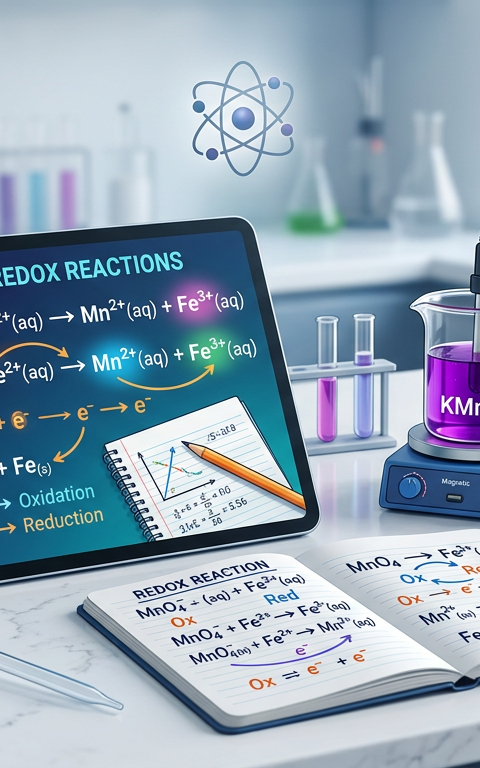
Medium Redox Reaction Practice Questions
Master medium-level redox reaction problems with our comprehensive guide featuring solved examples, balancing tips, and practice questions for students.
Apr 4, 2026
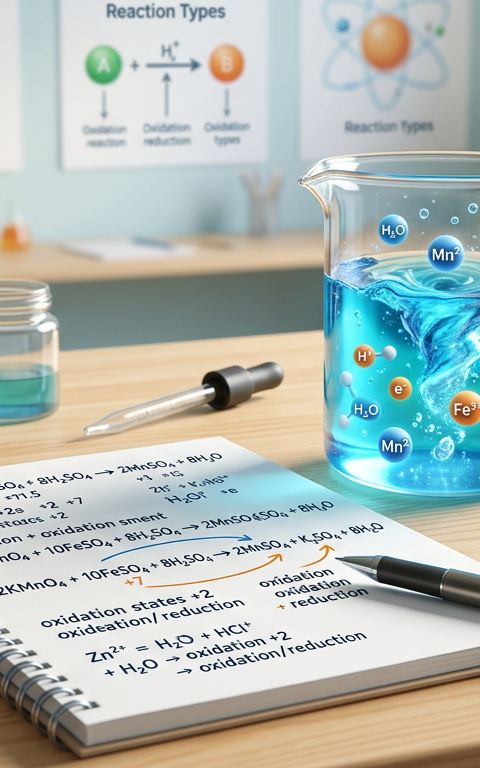
Stop Guessing: How to Balance Redox Charges Without Losing Electrons
Master the basics of oxidation-reduction with these easy balancing redox practice questions and step-by-step solutions for students.
Apr 4, 2026
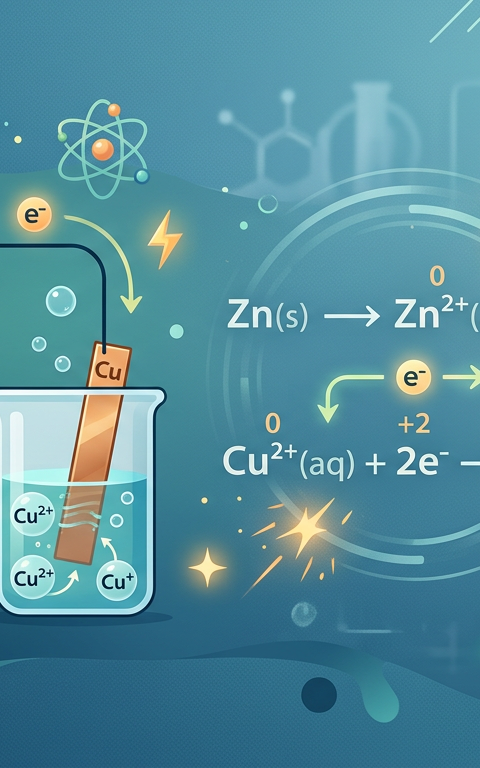
Easy Redox Reaction Practice Questions
Master the basics of electron transfer with these easy redox reaction practice questions, featuring step-by-step solutions and clear explanations.
Apr 4, 2026
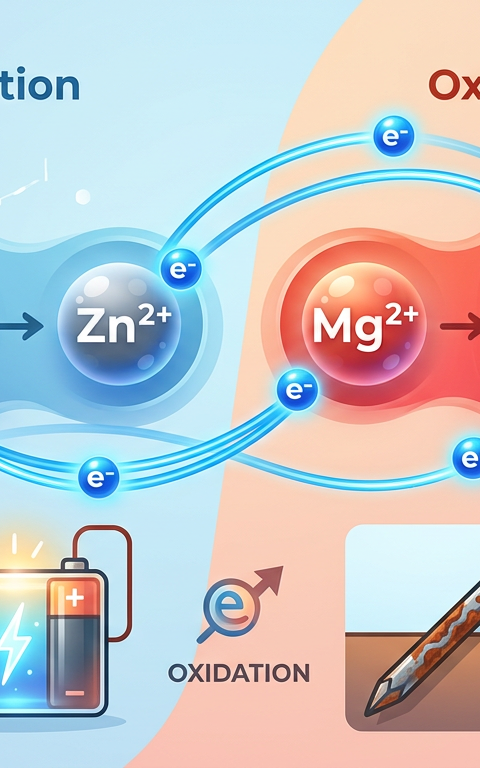
Redox Reaction Practice Questions with Answers
Master redox reactions with these practice questions and answers. Learn to identify oxidation, reduction, and balancing techniques for your chemistry exams.
Apr 3, 2026
Calculating High-Stakes Meds: BSA Mosteller Formula Practice
Master hard body surface area-based dosage calculations with our comprehensive guide, solved examples, and practice questions for healthcare students.
May 17, 2026