Mastering M1V1 = M2V2: Solving Complex Solution Dilutions

A student carefully measures 10.0 mL of a 12.0 M hydrochloric acid stock solution and adds enough water to reach a final volume of 100.0 mL. They correctly calculate the new concentration as 1.2 M. However, if that same student had simply added 100.0 mL of water to the acid, the final volume would be 110.0 mL, and the resulting concentration would be 1.09 M. This 10% discrepancy illustrates the most frequent trap in solution chemistry: failing to distinguish between the final total volume and the volume of solvent added.
Precision in the lab relies on the principle that the total moles of solute remain constant even as the liquid around them increases. When you use the M1V1 = M2V2 equation, you are essentially tracking those moles as they spread out. The following problems move beyond simple plug and play arithmetic to help you navigate multi step dilutions, unit conversions between milliliters and liters, and the specific logic required to determine exactly how much water must be added to reach a target molarity.
The Mechanics of Molar Conservation
Dilution is the laboratory technique of adding additional solvent to a solution to reduce its molarity while keeping the total amount of solute constant. The fundamental principle of dilution is that the number of moles of solute before dilution is equal to the number of moles of solute after dilution. This relationship is mathematically expressed by the dilution equation: M1V1 = M2V2. In this formula, M1 and V1 represent the molarity and volume of the initial concentrated solution (stock solution), while M2 and V2 represent the molarity and volume of the final diluted solution.
According to Wikipedia's entry on dilution, the process does not change the amount of solute present, only how spread out that solute is within the liquid. For more background on how concentration is measured, you might find it helpful to review What Is Molarity? The Complete Guide. When performing these calculations, it is vital to ensure that your units for volume are consistent on both sides of the equation—if V1 is in milliliters, V2 must also be in milliliters.
Common applications of dilution include:
Preparing working solutions from concentrated stock solutions.
Creating a series of standard solutions for a calibration curve (serial dilution).
Adjusting the strength of medications in clinical settings.
Reducing the intensity of acids or bases for safe handling.
Solved Examples
Reviewing these step-by-step examples will help you understand how to apply the dilution formula in different scenarios.
Example 1: Finding Final Molarity
If you dilute 50.0 mL of a 2.0 M HCl solution to a final volume of 200.0 mL, what is the new concentration?
Identify the knowns: M1 = 2.0 M, V1 = 50.0 mL, V2 = 200.0 mL.
Set up the equation: (2.0 M)(50.0 mL) = (M2)(200.0 mL).
Solve for M2: M2 = (2.0 × 50.0) / 200.0.
Result: M2 = 100 / 200 = 0.50 M.
Example 2: Finding Initial Volume Needed
How many milliliters of 12.0 M H2SO4 are needed to prepare 500.0 mL of a 0.100 M solution?
Identify the knowns: M1 = 12.0 M, M2 = 0.100 M, V2 = 500.0 mL.
Set up the equation: (12.0 M)(V1) = (0.100 M)(500.0 mL).
Solve for V1: V1 = (0.100 × 500.0) / 12.0.
Result: V1 = 50.0 / 12.0 = 4.17 mL.
Example 3: Calculating Volume of Solvent Added
How much water must be added to 100 mL of 1.5 M NaOH to make it 0.50 M?
Identify the knowns: M1 = 1.5 M, V1 = 100 mL, M2 = 0.50 M.
Calculate V2: (1.5)(100) = (0.50)(V2) → V2 = 150 / 0.50 = 300 mL.
Subtract the initial volume to find added water: Vadded = V2 - V1 = 300 mL - 100 mL.
Result: 200 mL of water must be added.
Practice Questions
Test your knowledge with these dilution problems. If you find these challenging, you may want to practice how to solve molarity problems first.
1. A student takes 25.0 mL of a 4.0 M KNO3 solution and dilutes it to 500.0 mL. What is the concentration of the diluted solution?
2. To what volume should 10.0 mL of 15.0 M HNO3 be diluted to prepare a 0.30 M solution?
3. If you have 50.0 mL of a 10.0% (m/v) glucose solution and dilute it to 250.0 mL, what is the new percentage concentration?
Want unlimited practice questions like these?
Generate AI-powered questions with step-by-step solutions on any topic.
Try Question Generator Free →4. How many milliliters of water must be added to 30.0 mL of a 5.0 M NaCl solution to produce a 1.5 M solution?
5. A laboratory technician needs 2.0 L of 0.50 M MgCl2. The available stock solution is 4.0 M. How much stock solution is required?
6. You dilute 5.0 mL of a 1.0 M solution to 50.0 mL. Then, you take 10.0 mL of that new solution and dilute it again to 100.0 mL. What is the final concentration?
7. A 0.75 M solution of CuSO4 is evaporated until the volume is reduced from 400 mL to 150 mL. What is the new molarity? (Hint: This is an "inverse" dilution or concentration problem).
8. What volume of 18.0 M H2SO4 is needed to make 250 mL of a 2.5 M solution?
9. If 45 mL of water is added to 15 mL of 6.0 M HCl, what is the resulting molarity?
10. A stock solution of 10.0 M NaOH is used to make 1.5 L of a 0.20 M solution. How many milliliters of the stock solution were used?
Answers & Explanations
0.20 M: Use M1V1 = M2V2. (4.0 M)(25.0 mL) = (M2)(500.0 mL). M2 = 100 / 500 = 0.20 M.
500 mL: (15.0 M)(10.0 mL) = (0.30 M)(V2). V2 = 150 / 0.30 = 500 mL.
2.0%: The dilution formula works for percentages too. (10%)(50.0 mL) = (C2)(250.0 mL). C2 = 500 / 250 = 2.0%.
70.0 mL: First find V2. (5.0 M)(30.0 mL) = (1.5 M)(V2). V2 = 150 / 1.5 = 100 mL. Water added = 100 mL - 30 mL = 70 mL.
0.25 L (or 250 mL): (4.0 M)(V1) = (0.50 M)(2.0 L). V1 = 1.0 / 4.0 = 0.25 L.
0.01 M: Step 1: (1.0)(5)/(50) = 0.1 M. Step 2: (0.1)(10)/(100) = 0.01 M.
2.0 M: Use M1V1 = M2V2. (0.75 M)(400 mL) = (M2)(150 mL). M2 = 300 / 150 = 2.0 M.
34.7 mL: (18.0 M)(V1) = (2.5 M)(250 mL). V1 = 625 / 18.0 = 34.72 mL.
1.5 M: Total volume V2 = 15 mL + 45 mL = 60 mL. (6.0 M)(15 mL) = (M2)(60 mL). M2 = 90 / 60 = 1.5 M.
30 mL: (10.0 M)(V1) = (0.20 M)(1500 mL). V1 = 300 / 10 = 30 mL.
1. Which of the following stays constant during a dilution?
Frequently Asked Questions
What is the dilution formula?
The dilution formula is M1V1 = M2V2, where M and V represent molarity and volume respectively. It is used to calculate how changing the volume of a solution affects its concentration.
Can I use milliliters instead of liters in the dilution equation?
Yes, you can use milliliters as long as you use the same unit for both V1 and V2. The units cancel out in the ratio, making the calculation valid for any volume unit.
Does adding more solute count as a dilution?
No, adding more solute increases the concentration, which is the opposite of dilution. Dilution specifically refers to adding more solvent to decrease the concentration.
How is serial dilution different from simple dilution?
Serial dilution involves a stepwise series of dilutions where the diluted solution from one step serves as the stock for the next. This is commonly used in microbiology to reduce cell concentrations.
What happens to the number of moles during dilution?
The total number of moles of solute remains exactly the same during a dilution. Only the volume of the liquid increases, which causes the molarity (moles per liter) to decrease.
Is the dilution equation useful for stoichiometry?
While the dilution equation helps prepare solutions, you often need to use the Stoichiometry Practice Questions methods to determine how those solutions react in chemical equations. Dilution is a precursor step to many stoichiometric experiments.
Ready to ace your exams?
Try Bevinzey's AI-powered study tools for free.
Enjoyed this article?
Share it with others who might find it helpful.
Related Articles

Solving High-Stakes IV Titrations and Weight-Based Infusions
Master advanced IV flow rate calculations with these hard practice questions. Covers weight-based dosing, titrations, and dimensional analysis for nurses.
May 17, 2026

Solving Weight-Based Dosing: The 2.2 Conversion and Rounding Logic
Weight-Based Dosage Calculations Practice Questions with Answers
May 17, 2026
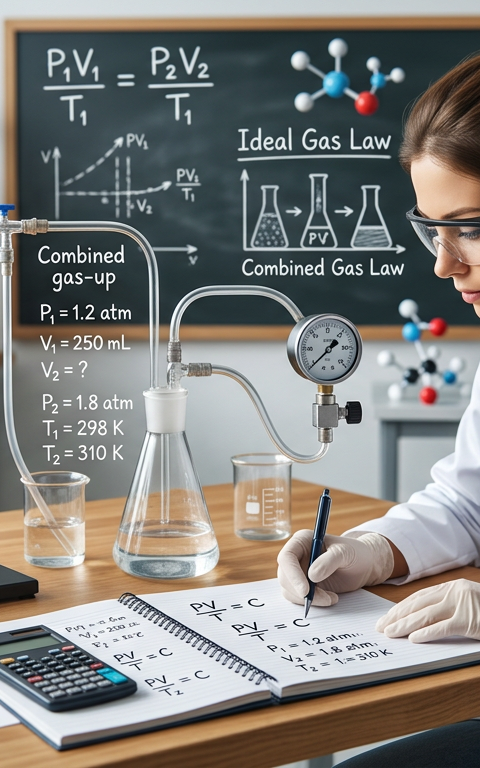
Solving Combined Gas Law Problems: Managing Three Changing Variables
Master the Combined Gas Law with this comprehensive guide featuring clear explanations, step-by-step solved examples, and 10 practice questions with answers.
Apr 2, 2026
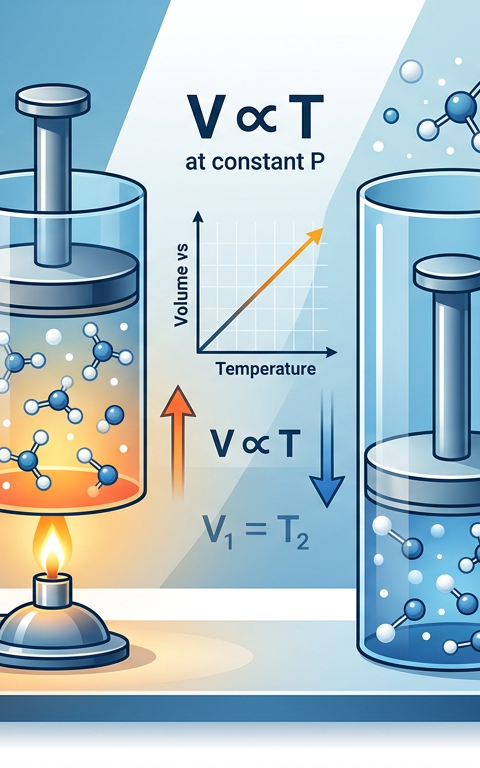
Solving Charles’s Law: Avoiding the Celsius Temperature Trap
Master Charles’s Law with our comprehensive guide featuring solved examples, practice questions, and step-by-step explanations for chemistry students.
Apr 2, 2026

Solving PV=nRT: Why Units and Constants Trip Up Every Student
Master the Ideal Gas Law with these easy practice questions. Includes step-by-step solved examples, unit conversion tips, and a quick quiz to test your skills.
Apr 2, 2026
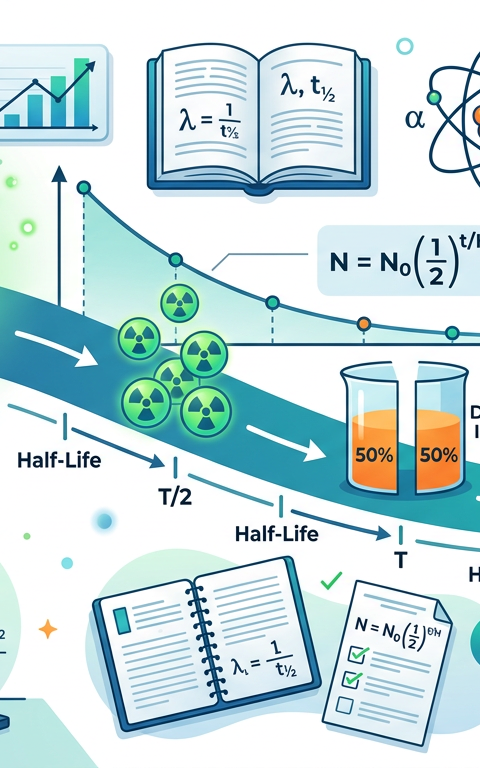
Predicting Radioactive Decay: Solving for Mass and Time Intervals
Master half-life calculations with our comprehensive guide featuring step-by-step solved examples, practice questions, and detailed answers for students.
Apr 2, 2026
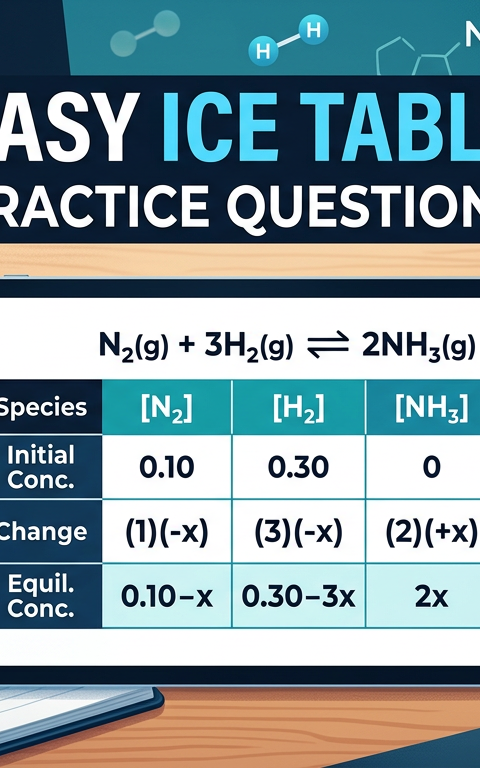
Solving Equilibrium Problems Without Losing Your Stoichiometry
Master chemical equilibrium with these easy ICE table practice questions. Learn to calculate concentrations and K values with step-by-step solved examples.
Mar 30, 2026

Solving Kp with Dalton’s Law and Partial Pressure Gradients
Master Hard Kp Calculations with our comprehensive guide. Includes solved examples, practice questions on partial pressure, and Kp to Kc conversions.
Mar 30, 2026