USMLE Reproductive Physiology Practice Questions with Answers
Concept Explanation
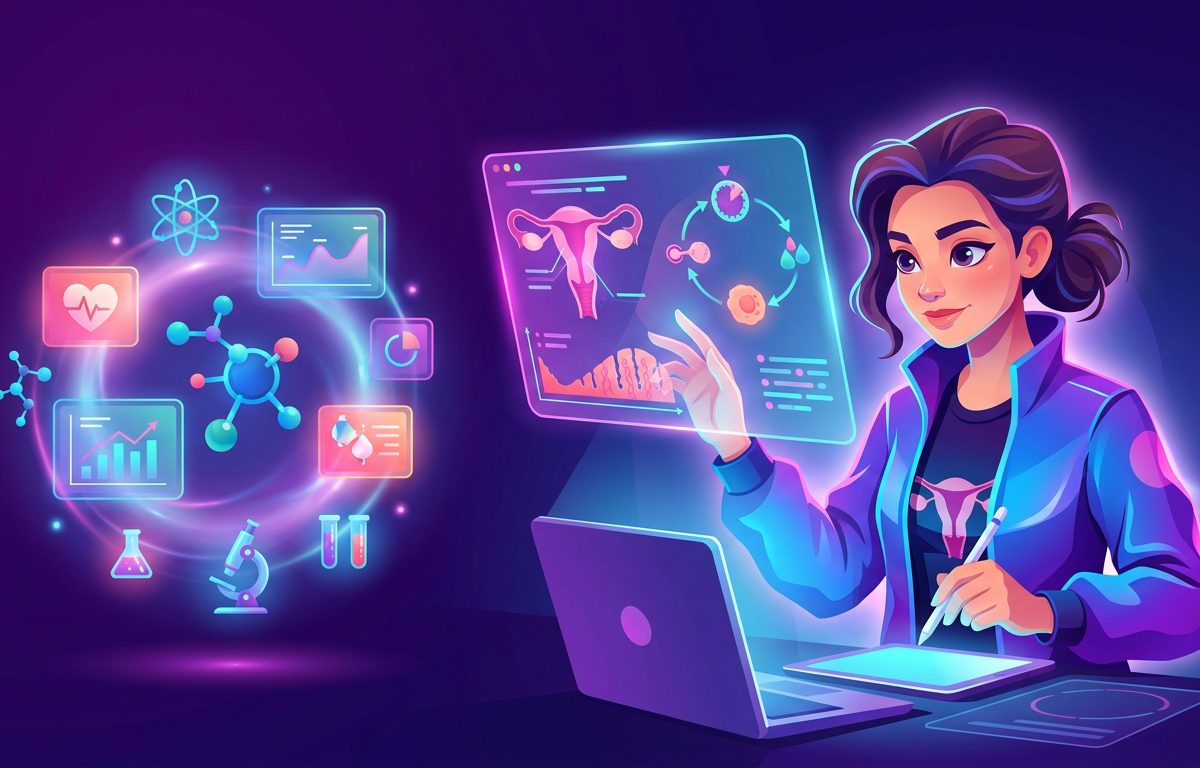
USMLE Reproductive Physiology involves the study of the hormonal and mechanical processes governing male and female reproduction, including the hypothalamic-pituitary-gonadal axis, the menstrual cycle, and pregnancy adaptations.
At the center of this system is Gonadotropin-Releasing Hormone (GnRH), secreted in a pulsatile fashion by the hypothalamus. This stimulates the anterior pituitary to release Luteinizing Hormone (LH) and Follicle-Stimulating Hormone (FSH). In males, LH acts on Leydig cells to produce testosterone, while FSH acts on Sertoli cells to support spermatogenesis. In females, these hormones regulate the ovarian cycle, which consists of the follicular phase (estrogen-dominant) and the luteal phase (progesterone-dominant). Success on the USMLE requires an integrated understanding of how these hormones interact with external factors and pathological states, such as Polycystic Ovary Syndrome (PCOS) or Kallmann syndrome.
Key concepts include the feedback loops where estrogen can exert both negative and positive feedback on the pituitary, the role of Human Chorionic Gonadotropin (hCG) in maintaining the corpus luteum during early pregnancy, and the physiological changes in the renal, cardiovascular, and respiratory systems during gestation. For students preparing for medical boards, utilizing a USMLE Prep hub can provide the structured review necessary to master these complex feedback mechanisms.
Solved Examples
Review these worked examples to understand how to apply physiological principles to clinical vignettes.
- The LH Surge Mechanism: A 26-year-old woman is tracking her ovulation. She notices a sharp rise in her urinary LH levels. What physiological event triggered this surge?
- Estrogen levels rise significantly during the late follicular phase.
- Once estrogen stays above a certain threshold (approximately 200 pg/mL) for about 48 hours, it switches from negative feedback to positive feedback on the anterior pituitary.
- This positive feedback triggers a massive release of LH, which induces ovulation within 24 to 36 hours.
- Spermatogenesis Regulation: How does exogenous testosterone use lead to infertility in a male bodybuilder?
- Exogenous testosterone provides strong negative feedback to the hypothalamus and anterior pituitary.
- This suppresses the secretion of GnRH, LH, and FSH.
- Low FSH levels result in decreased stimulation of Sertoli cells, while low LH leads to low intratesticular testosterone levels, both of which are essential for sperm production.
- Pregnancy and the Thyroid: Why do total T4 levels increase during pregnancy while the patient remains euthyroid?
- High estrogen levels during pregnancy stimulate the liver to increase the production of Thyroid-Binding Globulin (TBG).
- As TBG increases, more free T4 is bound, initially lowering the free T4 concentration.
- The pituitary senses this decrease and increases TSH (briefly) to stimulate the production of more T4 until a new steady state is reached where free T4 is normal, but total T4 is elevated.
Practice Questions
- A 22-year-old female athlete presents with amenorrhea. Lab tests show low FSH, low LH, and low estradiol. What is the most likely physiological cause of her condition?
- During the mid-luteal phase of the menstrual cycle, which hormone is primarily responsible for the secretory changes in the endometrium?
- A 34-year-old male with a history of mumps orchitis has an elevated FSH level but a normal LH level. Which cells in the testes are most likely dysfunctional?
Practice with AI-powered USMLE questions, personalized quizzes, adaptive learning, and detailed explanations. Start USMLE Prep Free
- What is the primary function of Human Placental Lactogen (hPL) regarding maternal glucose metabolism?
- In the fetal circulation, what is the oxygen saturation status of the blood in the umbilical vein compared to the umbilical arteries?
- A patient with Polycystic Ovary Syndrome (PCOS) typically shows an alteration in which hormonal ratio?
- Which hormone is responsible for the closure of the epiphyseal plates in both males and females?
- During the first trimester of pregnancy, which structure is the primary source of progesterone?
- A 15-year-old girl has never had a period but has normal breast development and absent pubic hair. A karyotype reveals 46,XY. What is the most likely diagnosis?
- How does the pH of the vagina change during the reproductive years, and what organism maintains it?
Answers & Explanations
- Functional Hypothalamic Amenorrhea: Intense exercise and low caloric intake lead to decreased GnRH pulsation, which subsequently lowers LH, FSH, and estrogen. This is a common finding in athletes.
- Progesterone: Produced by the corpus luteum, progesterone induces the secretory phase of the endometrium, preparing it for implantation.
- Sertoli Cells: FSH specifically stimulates Sertoli cells to produce inhibin B. If Sertoli cells are damaged (as in some cases of orchitis), inhibin B levels fall, removing the negative feedback on FSH, causing it to rise. For more on biological systems, see Hard ACT Biology Practice Questions.
- Inducing Insulin Resistance: hPL (also known as human chorionic somatomammotropin) increases maternal insulin resistance to ensure a steady supply of glucose is available for the fetus.
- Umbilical Vein is Oxygenated: Unlike postnatal circulation, the umbilical vein carries oxygenated blood from the placenta to the fetus, while the two umbilical arteries carry deoxygenated blood back to the placenta.
- Increased LH:FSH Ratio: PCOS is characterized by increased GnRH pulse frequency, which favors LH production over FSH, often resulting in an LH:FSH ratio greater than 2:1.
- Estrogen: While testosterone contributes to the growth spurt, it is the conversion of androgens to estrogen that eventually triggers the fusion of epiphyseal plates.
- Corpus Luteum: Until approximately 8-10 weeks of gestation (the luteal-placental shift), the corpus luteum is the main producer of progesterone, maintained by hCG from the syncytiotrophoblast.
- Androgen Insensitivity Syndrome: In 46,XY individuals with a non-functional androgen receptor, testosterone cannot exert its effects, leading to female external genitalia and breast development (via peripheral conversion of androgens to estrogen), but because of Anti-Müllerian Hormone (AMH), internal female structures are absent.
- Acidic pH (3.5–4.5) maintained by Lactobacillus: Lactobacilli metabolize glycogen from vaginal epithelial cells into lactic acid, protecting the area from pathogens.
1. Which hormone is directly responsible for stimulating the Leydig cells to produce testosterone?
Frequently Asked Questions
What is the role of the SRY gene in sex determination?
The SRY gene on the Y chromosome encodes the Testis-Determining Factor (TDF), which triggers the undifferentiated gonads to develop into testes. Without this gene, the default pathway leads to the development of ovaries.
How does Prolactin affect the reproductive axis?
High levels of prolactin inhibit the pulsatile release of GnRH from the hypothalamus. This suppression leads to decreased LH and FSH, often resulting in infertility and amenorrhea in conditions like prolactinoma.
What is the difference between theca cells and granulosa cells?
Theca cells produce androgens under the influence of LH, while granulosa cells use the enzyme aromatase to convert those androgens into estrogen under the influence of FSH. This is known as the "two-cell, two-gonadotropin" theory.
Why does hematocrit decrease during pregnancy?
While red cell mass increases during pregnancy, the plasma volume increases significantly more. This disproportionate expansion leads to a state of physiological hemodilution, commonly called the "anemia of pregnancy."
What is the function of Inhibin B?
Inhibin B is produced by Sertoli cells in males and granulosa cells in females to provide specific negative feedback to the anterior pituitary, primarily inhibiting the secretion of FSH. Students can use the AI Question Generator to practice more on feedback loops.
Ready to elevate your USMLE preparation?
Practice with AI-powered USMLE questions, personalized quizzes, adaptive learning, and detailed explanations.
Start USMLE Prep FreeTags
Enjoyed this article?
Share it with others who might find it helpful.
Related Articles
Hard USMLE Reproductive Physiology Practice Questions
Hard USMLE Reproductive Physiology Practice Questions
Jun 9, 2026

Medium USMLE Reproductive Physiology Practice Questions
Medium USMLE Reproductive Physiology Practice Questions
Jun 8, 2026
Easy USMLE Reproductive Physiology Practice Questions
Easy USMLE Reproductive Physiology Practice Questions
Jun 8, 2026
Hard USMLE GI Physiology Practice Questions
Hard USMLE GI Physiology Practice Questions
Jun 9, 2026
Hard USMLE Endocrine Physiology Practice Questions
Hard USMLE Endocrine Physiology Practice Questions
Jun 9, 2026
Hard USMLE Renal Physiology Practice Questions
Hard USMLE Renal Physiology Practice Questions
Jun 9, 2026
Hard USMLE Respiratory Physiology Practice Questions
Hard USMLE Respiratory Physiology Practice Questions
Jun 9, 2026
Hard USMLE Cardiovascular Physiology Practice Questions
Hard USMLE Cardiovascular Physiology Practice Questions
Jun 9, 2026