Easy Nervous System Questions Practice Questions
Concept Explanation
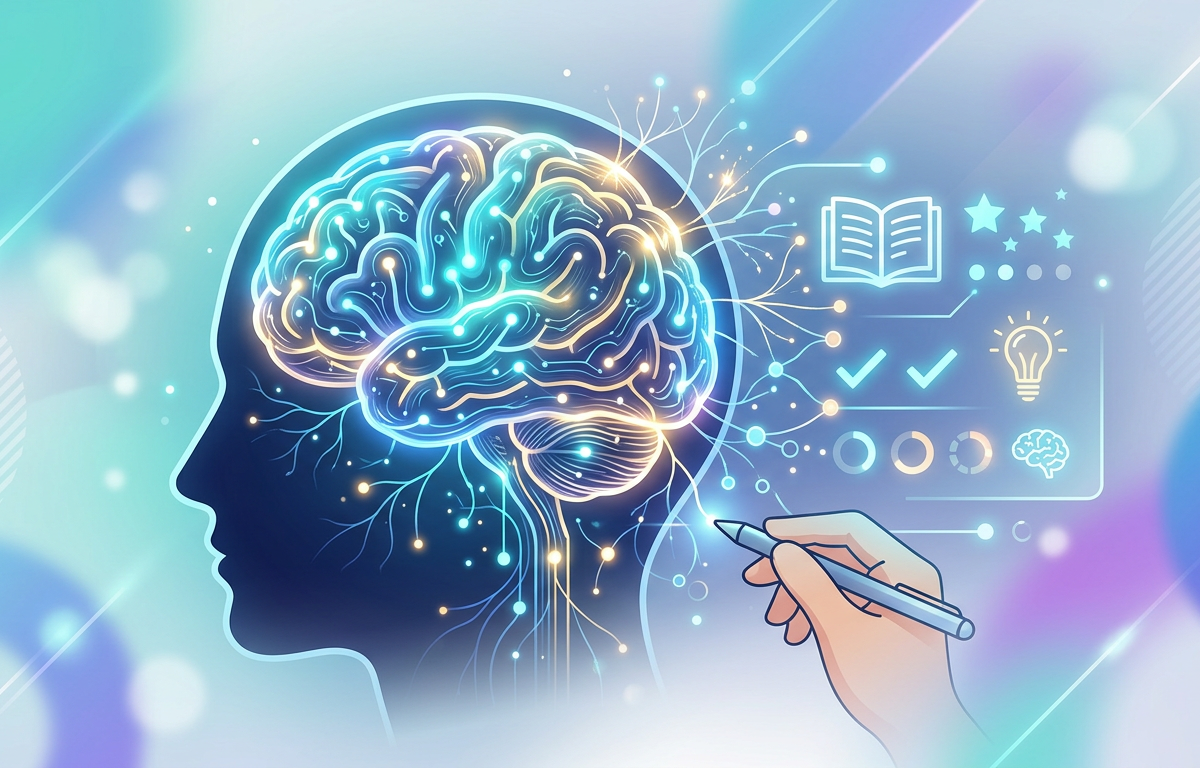
The nervous system is the body’s primary communication network, consisting of the brain, spinal cord, and a vast network of nerves that coordinate all physical and mental activities. It acts as the command center for your body, processing sensory information and sending out instructions to muscles and organs. To understand Easy Nervous System Questions, one must first recognize the two main divisions: the Central Nervous System (CNS) and the Peripheral Nervous System (PNS). The CNS, comprising the brain and spinal cord, serves as the processing hub, while the PNS consists of the nerves that branch out to the rest of the body, as explained by Khan Academy's overview of human biology.
At the cellular level, the functional unit of the nervous system is the neuron. Neurons are specialized cells designed to transmit electrical signals called impulses. A typical neuron includes a cell body, dendrites (which receive signals), and an axon (which sends signals). This structure is a fundamental part of anatomy practice questions. Beyond individual cells, the system is further categorized into the somatic nervous system, which controls voluntary movements like walking, and the autonomic nervous system, which manages involuntary functions like your heartbeat and digestion.
Understanding how these components interact is essential for mastering organ system questions. For instance, when you touch a hot stove, sensory neurons carry the heat signal to your CNS, which immediately sends a motor signal back to your muscles to pull your hand away. This rapid response, known as a reflex arc, demonstrates the efficiency of the nervous system in ensuring survival.
Solved Examples
Reviewing these solved examples will help you build a foundation for tackling Easy Nervous System Questions with confidence.
Question: Which part of the neuron is responsible for receiving signals from other cells?
Solution:Identify the parts of a neuron: Dendrites, Cell Body, and Axon.
Recall the function of each: Axons send signals, while dendrites act like antennas.
Conclusion: The dendrites are the receiving structures.
Question: If a person accidentally touches a sharp needle, which division of the nervous system processes the immediate reflex?
Solution:Identify the components involved: The spinal cord is the primary center for spinal reflexes.
The spinal cord is a part of the Central Nervous System (CNS).
Conclusion: The CNS (specifically the spinal cord) processes the reflex.
Question: Which part of the brain is primarily responsible for maintaining balance and coordination?
Solution:Look at the major brain regions: Cerebrum, Cerebellum, and Brainstem.
The Cerebrum handles high-level thought; the Brainstem handles basic life functions.
The Cerebellum is specifically tuned for motor control and balance.
Conclusion: The Cerebellum.
Practice Questions
Test your knowledge with these Easy Nervous System Questions. They range from basic terminology to simple functional scenarios.
What are the two main components of the Central Nervous System (CNS)?
Which type of neuron carries information from the body's receptors to the brain?
What is the name of the insulating layer that surrounds many axons to speed up signal transmission?
Start Learning Smarter Today
Join thousands of students using AI-powered study tools to achieve better results.
Get Started FreeWhich part of the brain is the largest and responsible for conscious thought and memory?
The "fight or flight" response is triggered by which specific branch of the autonomic nervous system?
What is the tiny gap between two neurons where chemical signals are exchanged?
Which part of the nervous system controls involuntary actions like breathing and heart rate?
Which structure connects the two hemispheres of the brain?
What do we call the chemical messengers released by neurons to communicate with other cells?
True or False: The peripheral nervous system includes the brain.
Answers & Explanations
Compare your answers to the detailed explanations below to reinforce your learning of nervous system questions.
1. Brain and Spinal Cord: These two structures make up the CNS, acting as the control center for the entire body.
2. Sensory Neurons: Also known as afferent neurons, they carry "input" from the environment to the CNS.
3. Myelin Sheath: This fatty layer acts as electrical insulation, allowing impulses to jump along the axon faster.
4. Cerebrum: This is the largest part of the human brain, divided into four lobes that handle everything from vision to decision-making.
5. Sympathetic Nervous System: This branch of the autonomic system prepares the body for action during stressful situations.
6. Synapse: Signals travel electrically down the axon but must cross this chemical gap to reach the next neuron.
7. Autonomic Nervous System: This system functions "automatically" to regulate internal organs without conscious effort.
8. Corpus Callosum: This thick band of nerve fibers ensures that both sides of the brain can communicate and share information.
9. Neurotransmitters: Examples include dopamine and serotonin, which transmit signals across the synapse.
10. False: The brain is part of the Central Nervous System; the Peripheral Nervous System consists only of the nerves outside the CNS.
1. Which of the following is the basic functional unit of the nervous system?
Frequently Asked Questions
What is the difference between the CNS and PNS?
The Central Nervous System (CNS) consists of the brain and spinal cord and serves as the main processing center. The Peripheral Nervous System (PNS) consists of all the nerves that branch out from the CNS to the rest of the body, carrying signals to and from the limbs and organs.
How do neurons communicate with each other?
Neurons communicate through a combination of electrical impulses and chemical signals. An electrical impulse travels down the axon to the synapse, where it triggers the release of neurotransmitters that cross the gap to stimulate the next neuron.
What does the cerebellum do?
The cerebellum is located at the back of the brain and is primarily responsible for coordinating voluntary movements. It helps maintain posture, balance, and equilibrium, ensuring that physical actions are smooth and precise, as noted by the National Institute of Neurological Disorders and Stroke.
What is a reflex arc?
A reflex arc is a neural pathway that controls a reflex action, allowing for an immediate response to a stimulus without waiting for the brain to process the information. It typically involves a sensory neuron, a motor neuron, and sometimes an interneuron in the spinal cord.
Why is the myelin sheath important?
The myelin sheath is a fatty coating that wraps around axons to provide electrical insulation. Its presence significantly increases the speed at which electrical impulses travel, which is vital for rapid communication within the nervous system.
What are neurotransmitters?
Neurotransmitters are chemical messengers that transmit signals across a chemical synapse from one neuron to another "target" neuron, muscle cell, or gland cell. They play a crucial role in shaping everyday life and functions, from sleep to movement.
Start Learning Smarter Today
Join thousands of students using AI-powered study tools to achieve better results.
Get Started FreeEnjoyed this article?
Share it with others who might find it helpful.
Related Articles
Hard Le Chatelier’s Principle Practice Questions
Master Hard Le Chatelier’s Principle Practice Questions with our comprehensive guide featuring solved examples, practice problems, and detailed explanations.
Mar 30, 2026

Hard Reaction Quotient (Q) Practice Questions
Hard Reaction Quotient (Q) Practice Questions
Mar 30, 2026

Grams to Moles Practice Questions with Answers
Master grams to moles conversions with our comprehensive guide. Includes step-by-step examples, practice questions, and detailed answers for chemistry students.
Mar 26, 2026
Avogadro’s Number Practice Questions with Answers
Master the mole concept with our Avogadro’s Number practice questions. Includes step-by-step solved examples, a quick quiz, and detailed explanations.
Mar 26, 2026

Empirical Formulas: Solving Ratios from Mass and Percent Data
Master empirical formula calculations with 10 practice questions, worked answers, and a free step-by-step calculator for mass, percentage, and combustion problems.
Mar 26, 2026