Metabolism Questions Practice Questions with Answers
Concept Explanation
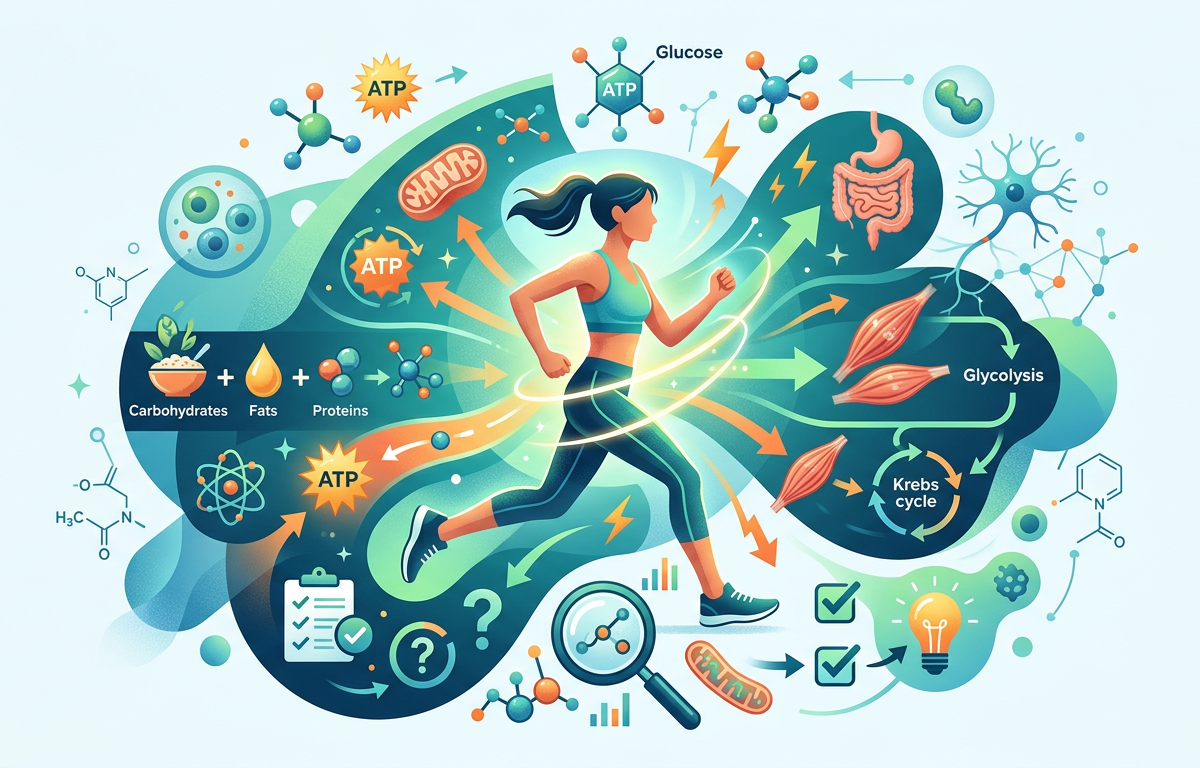
Metabolism is the sum of all chemical reactions that occur within a living organism to maintain life, encompassing the conversion of food into energy and the building of cellular components. These biochemical processes are divided into two main categories: catabolism, which breaks down molecules to release energy, and anabolism, which uses energy to construct complex molecules like proteins and nucleic acids. Metabolism is highly regulated by enzymes and hormones to ensure that the body meets its energy demands while maintaining homeostasis. For a deeper understanding of how these processes relate to physical structures, you may want to review Organ System Questions Practice Questions.
The primary energy currency of the cell is Adenosine Triphosphate (ATP). Cells generate ATP through pathways such as glycolysis, the citric acid cycle (Krebs cycle), and oxidative phosphorylation. According to the Nature Education Scitable, metabolic pathways are often interconnected, meaning the product of one reaction serves as the substrate for the next. These pathways are not just limited to energy production; they also involve the detoxification of waste products and the synthesis of essential lipids and carbohydrates. Understanding metabolism is crucial for grasping how the cardiovascular system delivers nutrients and oxygen to tissues for aerobic respiration.
Key metabolic terms include:
Basal Metabolic Rate (BMR): The number of calories the body needs to function at rest.
Enzymes: Biological catalysts that speed up metabolic reactions by lowering activation energy.
Cofactors: Non-protein chemical compounds (like vitamins or minerals) required for enzyme activity.
Glycolysis: The anaerobic breakdown of glucose into pyruvate, occurring in the cytoplasm.
Solved Examples
Metabolism questions often require calculating energy yields or identifying specific pathway intermediates. Here are three solved examples to illustrate common problem types.
Calculate the net ATP yield from one molecule of glucose during glycolysis.
Identify the energy investment phase: 2 ATP molecules are used to phosphorylate glucose and fructose-6-phosphate.
Identify the energy payoff phase: 4 ATP molecules are produced via substrate-level phosphorylation.
Subtract the investment from the payoff: 4 ATP - 2 ATP = 2 ATP.
Result: The net yield is 2 ATP.
Determine the primary product of the Citric Acid Cycle (Krebs Cycle) per turn.
List the outputs for one acetyl-CoA: 2 CO2, 3 NADH, 1 FADH2, and 1 GTP (or ATP).
Note that one glucose molecule produces two acetyl-CoA molecules, effectively doubling these numbers per glucose.
Result: For one turn, the cycle produces 3 NADH, 1 FADH2, 1 ATP/GTP, and 2 CO2.
Identify the final electron acceptor in the electron transport chain (ETC) during aerobic respiration.
Recall that the ETC is a series of protein complexes in the inner mitochondrial membrane.
Observe that electrons move through these complexes to reach the highest electronegative element.
Identify that Oxygen (O2) combines with electrons and protons (H+) to form water (H2O).
Result: Oxygen is the final electron acceptor.
Practice Questions
Test your knowledge with these metabolism questions ranging from basic terminology to complex biochemical pathways.
Which metabolic pathway occurs in the cytoplasm and does not require oxygen?
What is the difference between an endergonic and an exergonic reaction in terms of Gibbs free energy (ΔG)?
During the transition step between glycolysis and the Krebs cycle, pyruvate is converted into which two-carbon molecule?
Start Learning Smarter Today
Join thousands of students using AI-powered study tools to achieve better results.
Get Started FreeIn the absence of oxygen, yeast cells undergo fermentation to produce ATP. What are the two primary byproducts of this process?
Explain the role of NAD+ and FAD in cellular respiration.
Which enzyme is responsible for synthesizing ATP as protons flow down their electrochemical gradient in the mitochondria?
How many carbon atoms are lost as CO2 during one full turn of the Citric Acid Cycle?
What is gluconeogenesis, and in which organ does it primarily occur?
If a cell has a high concentration of ATP, how does this typically affect the rate of glycolysis?
Which molecule acts as the "starting material" for the Citric Acid Cycle by combining with Oxaloacetate?
Answers & Explanations
Glycolysis. This pathway breaks down glucose into two molecules of pyruvate. It is considered an ancient metabolic process because it occurs in the cytoplasm and is anaerobic, meaning it does not need oxygen to function.
Endergonic reactions have a positive ΔG and require energy input, while exergonic reactions have a negative ΔG and release energy. Metabolism couples these reactions so that the energy released from exergonic catabolism can power endergonic anabolism.
Acetyl-CoA. Before entering the mitochondria's matrix, pyruvate undergoes decarboxylation, losing a carbon atom as CO2 and attaching to Coenzyme A.
Ethanol and Carbon Dioxide (CO2). Unlike lactic acid fermentation in humans, yeast performs alcoholic fermentation, which is essential for brewing and baking industries.
They act as electron carriers. NAD+ and FAD pick up high-energy electrons (becoming NADH and FADH2) during glycolysis and the Krebs cycle and transport them to the Electron Transport Chain.
ATP Synthase. This protein acts like a molecular turbine, using the potential energy of the proton gradient (chemiosmosis) to phosphorylate ADP into ATP.
Two. Two carbon atoms enter as Acetyl-CoA and two are released as CO2 during the cycle, maintaining the balance of the four-carbon oxaloacetate.
The synthesis of glucose from non-carbohydrate sources. This happens primarily in the liver during periods of fasting or intense exercise to maintain blood sugar levels. For more on cellular structures involved in transport, see Cell Transport Problems Practice Questions.
It inhibits the rate. High ATP levels act as an allosteric inhibitor for enzymes like phosphofructokinase, signaling that the cell has enough energy and should slow down production.
Acetyl-CoA. The four-carbon oxaloacetate combines with the two-carbon Acetyl-CoA to form the six-carbon citrate, which gives the cycle its name.
1. Which of the following best describes an anabolic pathway?
Frequently Asked Questions
What is the difference between catabolism and anabolism?
Catabolism is the metabolic process of breaking down large molecules into smaller units to release energy, while anabolism uses that energy to construct complex components like proteins and nucleic acids. Together, these two processes balance the energy economy of the cell.
Why is ATP called the energy currency of the cell?
ATP is called the energy currency because it provides readily releasable energy in the bond between its second and third phosphate groups. This energy can be used immediately to power various cellular functions, such as muscle contraction or active transport.
What happens to metabolism during exercise?
During exercise, the metabolic rate increases significantly to meet the higher demand for ATP in muscle tissues. The body accelerates glycolysis and aerobic respiration, and if oxygen is limited, it switches to lactic acid fermentation to maintain energy production.
How do enzymes affect metabolism?
Enzymes act as biological catalysts that lower the activation energy required for chemical reactions, allowing metabolic pathways to proceed at speeds necessary for life. Without enzymes, most metabolic reactions would occur too slowly to sustain an organism.
What is the role of the liver in metabolism?
The liver serves as a central metabolic hub, regulating blood glucose levels through glycogenesis and glycogenolysis, processing lipids, and detoxifying metabolic waste products like ammonia. It ensures that nutrients are distributed to other tissues based on the body's current needs.
Can metabolism occur without oxygen?
Yes, metabolism can occur without oxygen through anaerobic pathways like glycolysis and fermentation. While these processes produce significantly less ATP than aerobic respiration, they allow cells to survive in low-oxygen environments or during bursts of intense activity.
Start Learning Smarter Today
Join thousands of students using AI-powered study tools to achieve better results.
Get Started FreeEnjoyed this article?
Share it with others who might find it helpful.
Related Articles
Hard Le Chatelier’s Principle Practice Questions
Master Hard Le Chatelier’s Principle Practice Questions with our comprehensive guide featuring solved examples, practice problems, and detailed explanations.
Mar 30, 2026
Hard Reaction Quotient (Q) Practice Questions
Hard Reaction Quotient (Q) Practice Questions
Mar 30, 2026
Grams to Moles Practice Questions with Answers
Master grams to moles conversions with our comprehensive guide. Includes step-by-step examples, practice questions, and detailed answers for chemistry students.
Mar 26, 2026
Avogadro’s Number Practice Questions with Answers
Master the mole concept with our Avogadro’s Number practice questions. Includes step-by-step solved examples, a quick quiz, and detailed explanations.
Mar 26, 2026
Empirical Formulas: Solving Ratios from Mass and Percent Data
Master empirical formula calculations with 10 practice questions, worked answers, and a free step-by-step calculator for mass, percentage, and combustion problems.
Mar 26, 2026