Cell Transport Problems Practice Questions with Answers
Concept Explanation
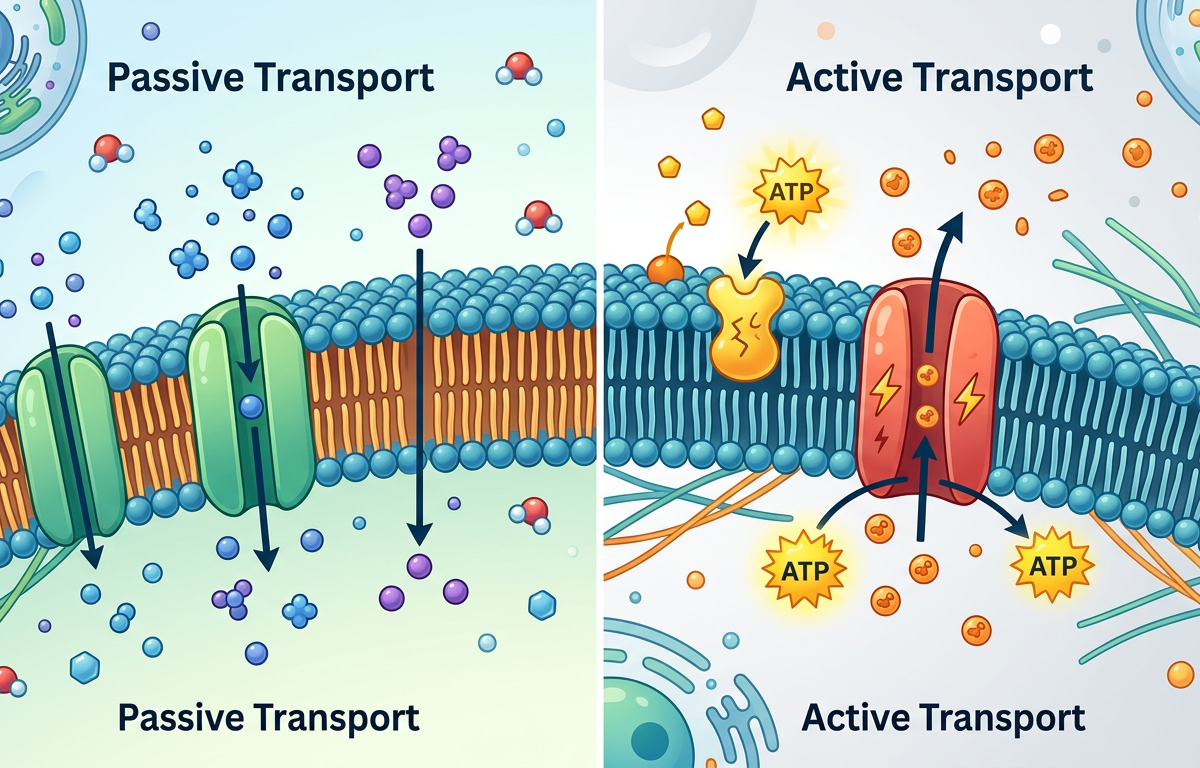
Cell transport refers to the movement of substances across the semi-permeable cell membrane to maintain homeostasis and support biological functions. This fundamental biological process is categorized into two main types: passive transport, which requires no energy as substances move down their concentration gradient, and active transport, which uses ATP to move substances against their gradient. Understanding Cell Transport Problems involves mastering the principles of diffusion, osmosis, facilitated diffusion, and active transport mechanisms like the sodium-potassium pump.
The cell membrane, often described by the fluid mosaic model, acts as a selective barrier. Small, nonpolar molecules like oxygen and carbon dioxide move freely via simple diffusion. In contrast, larger or charged particles require specialized proteins. For instance, water moves through specific channels called aquaporins in a process known as osmosis. When solving Cell Transport Problems, the tonicity of the surrounding environment—hypertonic, hypotonic, or isotonic—is a critical factor in determining the direction of water movement. Similar to how unit conversion practice questions require precise ratios, calculating osmotic pressure and concentration gradients requires a firm grasp of solute-to-solvent proportions.
Key terms for mastering this topic include:
Concentration Gradient: The difference in the concentration of a substance across a space or membrane.
Equilibrium: A state where the concentration of a substance is equal throughout a space.
Tonicity: The ability of an extracellular solution to make water move into or out of a cell.
Endocytosis/Exocytosis: Bulk transport mechanisms for moving large particles or quantities of fluid.
According to Nature Scitable, the plasma membrane is not just a passive film but a dynamic structure that regulates the cell's internal environment. Mastering these concepts is as foundational to biology as linear equations practice questions are to algebra.
Solved Examples
The following examples demonstrate how to approach common Cell Transport Problems by identifying the type of transport and the direction of movement.
Example 1: Osmosis in Red Blood Cells
A red blood cell with an internal salt concentration of 0.9% is placed in a beaker containing a 5% salt solution. Predict the movement of water and the resulting state of the cell.Identify the concentrations: Inside = 0.9% solute; Outside = 5% solute.
Determine tonicity: The external solution has a higher solute concentration, making it hypertonic to the cell.
Apply the rule of osmosis: Water moves from a lower solute concentration (hypotonic) to a higher solute concentration (hypertonic).
Conclusion: Water will leave the cell. The cell will shrink or crenate.
Example 2: Facilitated Diffusion Calculation
A glucose molecule needs to enter a cell where the internal concentration is 2mM and the external concentration is 10mM. If the molecule uses a carrier protein without ATP, what process is occurring?Analyze the gradient: The molecule is moving from 10mM (high) to 2mM (low).
Check energy requirement: No ATP is used.
Identify the mechanism: Movement down a gradient using a protein is called facilitated diffusion.
Conclusion: The glucose enters the cell via facilitated diffusion until equilibrium is reached.
Example 3: Active Transport Mechanics
A cell utilizes a protein pump to move sodium ions (Na+) from the cytoplasm (low concentration) to the extracellular fluid (high concentration). What is required for this to occur?Analyze the gradient: The ions are moving against the gradient (low to high).
Identify the transport type: Movement against a gradient is active transport.
Determine requirements: Active transport requires a transmembrane protein and energy in the form of ATP.
Conclusion: The cell must expend ATP to power the sodium pump.
Practice Questions
Test your knowledge with these Cell Transport Problems. They range from basic definitions to complex scenarios involving tonicity and membrane dynamics.
A plant cell is placed in distilled water (0% solute). Describe the direction of water movement and the effect on the cell's turgor pressure.
Distinguish between simple diffusion and facilitated diffusion. Which one reaches a maximum rate (saturation point)?
If a cell contains 15% glucose and the surrounding solution contains 5% glucose, is the solution hypotonic, hypertonic, or isotonic relative to the cell?
Start Learning Smarter Today
Join thousands of students using AI-powered study tools to achieve better results.
Get Started Free
Start Learning Smarter Today
Join thousands of students using AI-powered study tools to achieve better results.
Get Started FreeExplain why a freshwater fish would die if placed in a saltwater environment, specifically focusing on the cellular level.
A macrophage (white blood cell) engulfs a large bacterium. What specific form of bulk transport is this?
Compare the energy requirements of the sodium-potassium pump versus an ion channel.
A dialysis bag filled with a 20% sucrose solution is placed in a beaker of 5% sucrose. If the membrane is permeable to water but not sucrose, what will happen to the mass of the bag?
How does the presence of cholesterol in the cell membrane affect transport during temperature fluctuations?
In a lab experiment, a student notices that a certain molecule only enters the cell when ATP is present, even though the concentration is higher outside. What does this suggest about the transport mechanism?
Define "dynamic equilibrium" in the context of a cell placed in an isotonic solution.
Answers & Explanations
Answer: Water moves into the cell; turgor pressure increases. Explanation: Distilled water is hypotonic to the cell. Water enters the central vacuole, pushing the plasma membrane against the cell wall, creating turgor pressure which prevents the cell from bursting.
Answer: Facilitated diffusion reaches a saturation point. Explanation: While both move substances down a gradient, facilitated diffusion relies on limited transport proteins. Once all proteins are occupied, the rate cannot increase further.
Answer: Hypotonic. Explanation: The solution has a lower solute concentration (5%) than the cell (15%). Therefore, the solution is hypotonic, and water will enter the cell.
Answer: The fish's cells would lose water and shrivel. Explanation: The saltwater is hypertonic to the fish's cells. Water would leave the cells via osmosis to balance the high salt concentration outside, leading to cellular dehydration.
Answer: Phagocytosis. Explanation: Phagocytosis is a type of endocytosis where the cell membrane extends (pseudopodia) to surround and "eat" large solid particles.
Answer: The pump requires ATP; the channel does not. Explanation: The sodium-potassium pump is active transport (against gradient), while ion channels facilitate passive diffusion (down gradient).
Answer: The mass of the bag will increase. Explanation: Water will move from the beaker (hypotonic, 5%) into the bag (hypertonic, 20%) to dilute the sucrose, increasing the volume and mass of the bag.
Answer: It maintains fluidity and regulates permeability. Explanation: Cholesterol prevents the membrane from becoming too rigid in the cold or too fluid in the heat, ensuring transport proteins can function correctly.
Answer: It suggests active transport or a mechanism involving phosphorylation. Explanation: Usually, if the concentration is higher outside, it should move in via diffusion. If it requires ATP, it might be coupled with another ion or require a conformational change in a pump protein.
Answer: Molecules move back and forth at equal rates. Explanation: There is no net change in concentration, but individual molecules continue to cross the membrane in both directions, maintaining a steady state.
1. Which process requires the cell to expend energy in the form of ATP?
Frequently Asked Questions
What is the difference between active and passive transport?
Passive transport moves substances down their concentration gradient without energy, while active transport moves substances against their gradient using ATP. Common examples of passive transport include diffusion and osmosis, whereas the sodium-potassium pump is a classic active transport example.
Why is the cell membrane called "selectively permeable"?
It is called selectively permeable because it allows certain molecules, like small nonpolar gases, to pass through easily while blocking others, like large polar molecules or ions. This selectivity is maintained by the lipid bilayer and specific transport proteins embedded within it.
What happens to a plant cell in a hypotonic solution?
In a hypotonic solution, water enters the plant cell, filling the central vacuole and creating turgor pressure. Unlike animal cells, the rigid cell wall prevents the plant cell from bursting, allowing it to remain turgid and upright.
How does facilitated diffusion differ from simple diffusion?
Simple diffusion occurs directly through the phospholipid bilayer, while facilitated diffusion requires specific transmembrane proteins to help larger or charged molecules cross. Both are passive processes that do not require cellular energy to function.
What is the role of ATP in the sodium-potassium pump?
ATP provides the necessary energy to change the shape of the pump protein, allowing it to move three sodium ions out of the cell and two potassium ions into the cell. This process is essential for maintaining the electrochemical gradient necessary for nerve impulse transmission.
Can osmosis occur without a semi-permeable membrane?
No, osmosis is specifically defined as the diffusion of water across a selectively permeable membrane. Without the membrane to restrict solute movement, the solutes and solvent would simply diffuse until they reached a uniform concentration throughout the volume.
Start Learning Smarter Today
Join thousands of students using AI-powered study tools to achieve better results.
Get Started FreeEnjoyed this article?
Share it with others who might find it helpful.
Related Articles
Medium Cell Transport Problems Practice Questions
Master cell transport with our practice problems. This guide covers water potential, tonicity, and osmosis to help you solve medium-difficulty biology questions.
Apr 25, 2026
Easy Cell Transport Problems Practice Questions
Master the fundamentals of cell biology with our easy cell transport problems. This guide includes clear explanations, solved examples, and practice questions on osmosis and tonicity.
Apr 25, 2026
Medium Cell Membrane Questions Practice Questions
Medium Cell Membrane Questions Practice Questions
Apr 25, 2026
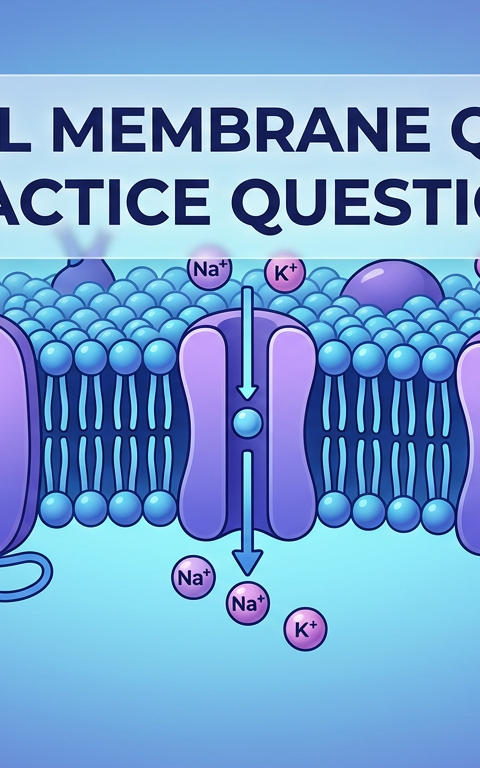
Hard Cell Membrane Questions Practice Questions
Master advanced cell biology with our hard cell membrane practice questions. Test your knowledge on electrochemical gradients, transport mechanisms, and more.
Apr 25, 2026
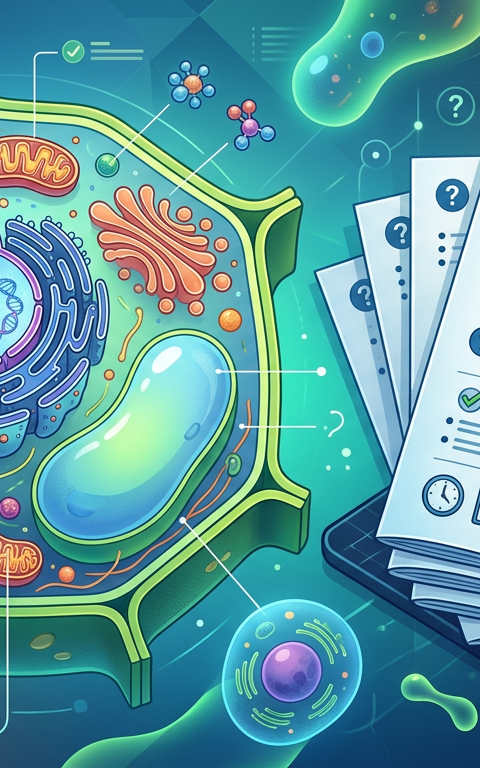
Hard Cell Structure Practice Questions Practice Questions
Challenge your understanding of cell biology with these hard cell structure practice questions, complete with solved examples, detailed answers, and a quick quiz.
Apr 25, 2026
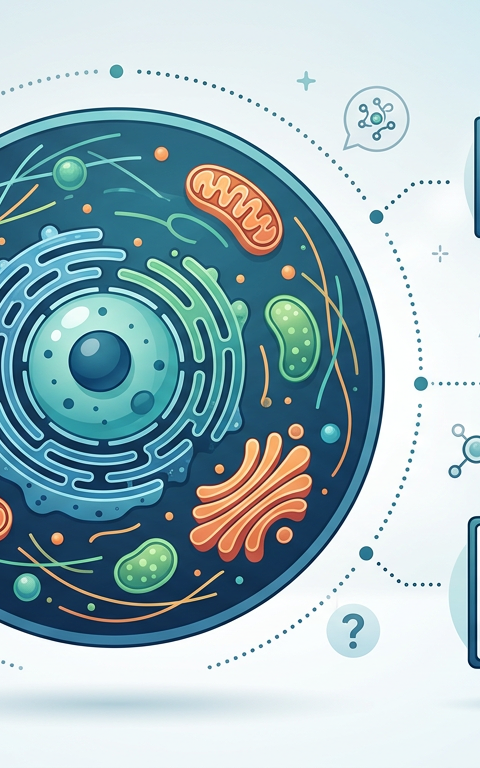
Medium Cell Structure Practice Questions Practice Questions
Master cell biology with these medium cell structure practice questions. Get detailed explanations and solved examples to boost your understanding.
Apr 25, 2026
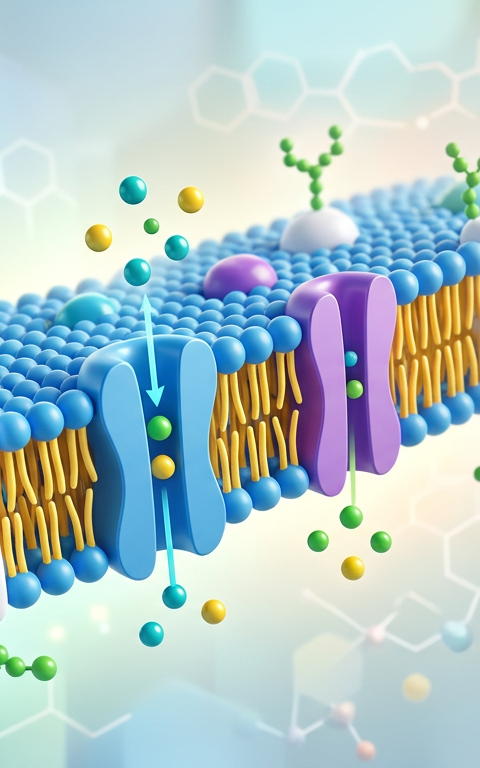
Easy Cell Membrane Questions Practice Questions
Master the basics of the cell membrane with our easy practice questions. Learn about the phospholipid bilayer, membrane proteins, and selective permeability with worked examples.
Apr 25, 2026
Easy Cell Structure Practice Questions Practice Questions
Master the basics of biology with our easy cell structure practice questions. This guide includes clear explanations, solved examples, and a quiz to test your knowledge.
Apr 25, 2026