Medium Standard Deviation Practice Questions

Medium Standard Deviation Practice Questions
Mastering statistics requires understanding how to measure the spread of data. The standard deviation is one of the most fundamental measures of dispersion, telling you how much your data points deviate from the average. This guide provides a clear explanation, worked examples, and medium-difficulty practice questions to help you build confidence in calculating and interpreting standard deviation for various datasets.
Concept Explanation
Standard deviation is a statistical measure that quantifies the amount of variation or dispersion of a set of data values. In simpler terms, a low standard deviation indicates that the data points tend to be very close to the mean (the average), while a high standard deviation indicates that the data points are spread out over a wider range of values. It's often interpreted as the "average distance" of each data point from the mean. Understanding standard deviation is crucial for many areas of data analysis, from quality control in manufacturing to analyzing financial market volatility.
When calculating standard deviation, it's essential to distinguish between a population and a sample:
Population Standard Deviation (σ): This is used when your dataset includes every member of the group you are studying (e.g., the test scores of every student in a single classroom).
Sample Standard Deviation (s): This is used when your dataset is a smaller subset of a larger population (e.g., the test scores of 50 randomly selected students from an entire school district). The formula is slightly different to provide a better, unbiased estimate of the true population standard deviation.
Formulas for Standard Deviation
The formula you use depends on whether you have data for a population or a sample.
Population Standard Deviation (σ):
σ = √[ Σ(xᵢ - μ)² / N ]
σ(sigma) is the population standard deviation.Σ(sigma) is the summation symbol, meaning "sum of".xᵢrepresents each individual data point.μ(mu) is the population mean.Nis the total number of data points in the population.
Sample Standard Deviation (s):
s = √[ Σ(xᵢ - x̄)² / (n - 1) ]
sis the sample standard deviation.x̄("x-bar") is the sample mean.nis the number of data points in the sample.
The use of n-1 in the denominator for the sample standard deviation is known as Bessel's correction. It adjusts for the fact that a sample is likely to underestimate the variability of the full population.
How to Calculate Standard Deviation: Step-by-Step
Calculate the Mean: Find the average of all data points. For a refresher, check out our guide on Mean, Median, Mode Practice Questions.
Find Squared Differences: For each data point, subtract the mean and square the result. This gives you the squared deviation for each value.
Sum the Squared Differences: Add up all the squared deviations you calculated in the previous step.
Calculate the Variance: Divide the sum of squared differences by
N(for a population) orn-1(for a sample). This value is the variance. You can practice this specific step with our Variance Calculation Practice Questions.Take the Square Root: The square root of the variance is the standard deviation.
Solved Examples of Standard Deviation
Working through examples is the best way to understand the calculation process. Here are three solved problems demonstrating how to find both sample and population standard deviation.
Example 1: Sample Standard Deviation
Problem: A botanist measures the height (in cm) of a small sample of 5 seedlings: {12, 15, 11, 18, 14}. Calculate the sample standard deviation.
Calculate the sample mean (x̄):
x̄ = (12 + 15 + 11 + 18 + 14) / 5 = 70 / 5 = 14 cmFind the squared differences from the mean:
(12 - 14)² = (-2)² = 4
(15 - 14)² = (1)² = 1
(11 - 14)² = (-3)² = 9
(18 - 14)² = (4)² = 16
(14 - 14)² = (0)² = 0
Sum the squared differences:
Σ(xᵢ - x̄)² = 4 + 1 + 9 + 16 + 0 = 30Calculate the sample variance (s²):
s² = 30 / (n - 1) = 30 / (5 - 1) = 30 / 4 = 7.5Take the square root to find the sample standard deviation (s):
s = √7.5 ≈ 2.74 cm
Example 2: Population Standard Deviation
Problem: A small business has exactly 5 employees. Their ages are 25, 30, 35, 40, and 45. Since this is the entire population of employees, calculate the population standard deviation of their ages.
Calculate the population mean (μ):
μ = (25 + 30 + 35 + 40 + 45) / 5 = 175 / 5 = 35 yearsFind the squared differences from the mean:
(25 - 35)² = (-10)² = 100
(30 - 35)² = (-5)² = 25
(35 - 35)² = (0)² = 0
(40 - 35)² = (5)² = 25
(45 - 35)² = (10)² = 100
Sum the squared differences:
Σ(xᵢ - μ)² = 100 + 25 + 0 + 25 + 100 = 250Calculate the population variance (σ²):
σ² = 250 / N = 250 / 5 = 50Take the square root to find the population standard deviation (σ):
σ = √50 ≈ 7.07 years
Example 3: Comparing Consistency
Problem: Two basketball players, Alex and Ben, have the following points per game over their last 6 games (treated as a sample):
Alex: {20, 22, 18, 25, 15, 20}
Ben: {19, 21, 20, 20, 18, 22}
Who is the more consistent scorer? (Hint: The more consistent scorer will have a lower standard deviation).
Solution for Alex:
Mean:
(20+22+18+25+15+20) / 6 = 120 / 6 = 20points.Sum of squared differences:
(20-20)² + (22-20)² + (18-20)² + (25-20)² + (15-20)² + (20-20)² = 0 + 4 + 4 + 25 + 25 + 0 = 58.Sample variance:
58 / (6-1) = 58 / 5 = 11.6.Sample standard deviation:
s_alex = √11.6 ≈ 3.41points.
Solution for Ben:
Mean:
(19+21+20+20+18+22) / 6 = 120 / 6 = 20points.Sum of squared differences:
(19-20)² + (21-20)² + (20-20)² + (20-20)² + (18-20)² + (22-20)² = 1 + 1 + 0 + 0 + 4 + 4 = 10.Sample variance:
10 / (6-1) = 10 / 5 = 2.Sample standard deviation:
s_ben = √2 ≈ 1.41points.
Conclusion: Ben is the more consistent scorer. His standard deviation of 1.41 is significantly lower than Alex's 3.41, which means his scoring performance varies less from game to game.
Practice Questions
Now it's your turn. Use the formulas and methods from the examples above to solve these problems. Treat datasets as samples unless explicitly told they represent a population.
1. Calculate the sample standard deviation for the following dataset of waiting times (in minutes) at a coffee shop: {5, 7, 8, 4, 6}.
2. A small population consists of five numbers: {10, 20, 30, 40, 50}. Calculate the population standard deviation.
3. The daily high temperatures (in Celsius) for a week in a city were recorded as a sample: 22, 25, 19, 23, 24, 21, 20. Calculate the sample standard deviation of the temperatures. Round your answer to two decimal places.
Want unlimited practice questions like these?
Generate AI-powered questions with step-by-step solutions on any topic.
Try Question Generator Free →4. A student's scores on 8 math quizzes are: 85, 92, 78, 88, 90, 82, 85, 96. Treat these scores as a sample and calculate the standard deviation. Round your answer to two decimal places.
5. Two assembly lines produce widgets. A sample of 10 widgets from Line A has a mean weight of 100g and a standard deviation of 2g. A sample of 10 widgets from Line B has a mean weight of 100g and a standard deviation of 5g. Which line is more reliable in producing widgets of a consistent weight, and why?
6. The heights (in cm) of a starting lineup of a basketball team (a population of 5) are 198, 201, 205, 196, and 210. What is the population standard deviation of their heights? Round your answer to two decimal places.
7. A dataset of 5 numbers has a mean of 10. Four of the numbers are 7, 9, 11, and 13. What is the population standard deviation of this dataset of five numbers?
8. You are given a sample of data: {3, 5, 12, x}. If the sample mean is 7, what is the sample standard deviation?
9. The sample variance of a dataset is 25. If each number in the dataset is increased by 5, what is the new sample standard deviation?
10. The sample standard deviation of the dataset {10, 20, 30} is calculated. If a new data point, 20, is added to the dataset, will the new sample standard deviation be smaller, larger, or the same? Justify your answer by calculating both.
Answers & Explanations
Below are the detailed solutions for the practice questions. Check your work and make sure you understand each step.
1. Answer: 1.58 minutes
Mean: (5 + 7 + 8 + 4 + 6) / 5 = 30 / 5 = 6.
Sum of squared differences: (5-6)² + (7-6)² + (8-6)² + (4-6)² + (6-6)² = 1 + 1 + 4 + 4 + 0 = 10.
Sample Variance: 10 / (5 - 1) = 10 / 4 = 2.5.
Sample Standard Deviation: √2.5 ≈ 1.58 minutes.
2. Answer: 14.14
Mean: (10 + 20 + 30 + 40 + 50) / 5 = 150 / 5 = 30.
Sum of squared differences: (10-30)² + (20-30)² + (30-30)² + (40-30)² + (50-30)² = 400 + 100 + 0 + 100 + 400 = 1000.
Population Variance: 1000 / 5 = 200.
Population Standard Deviation: √200 ≈ 14.14.
3. Answer: 2.14 °C
Mean: (22 + 25 + 19 + 23 + 24 + 21 + 20) / 7 = 154 / 7 = 22.
Sum of squared differences: (22-22)² + (25-22)² + (19-22)² + (23-22)² + (24-22)² + (21-22)² + (20-22)² = 0 + 9 + 9 + 1 + 4 + 1 + 4 = 28.
Sample Variance: 28 / (7 - 1) = 28 / 6 ≈ 4.67.
Sample Standard Deviation: √4.67 ≈ 2.16 °C. (Rounding may vary slightly based on when you round the variance).
4. Answer: 5.90 points
Mean: (85+92+78+88+90+82+85+96) / 8 = 696 / 8 = 87.
Sum of squared differences: (85-87)²+(92-87)²+(78-87)²+(88-87)²+(90-87)²+(82-87)²+(85-87)²+(96-87)² = 4 + 25 + 81 + 1 + 9 + 25 + 4 + 81 = 230.
Sample Variance: 230 / (8 - 1) = 230 / 7 ≈ 32.857.
Sample Standard Deviation: √32.857 ≈ 5.73 points.
5. Answer: Line A is more reliable.
Explanation: Reliability, in this context, means consistency. A lower standard deviation signifies greater consistency because it means the data points are clustered more tightly around the mean. Since Line A's standard deviation (2g) is lower than Line B's (5g), its widget weights are less variable and therefore more reliable.
6. Answer: 5.10 cm
Mean: (198 + 201 + 205 + 196 + 210) / 5 = 1010 / 5 = 202.
Sum of squared differences: (198-202)² + (201-202)² + (205-202)² + (196-202)² + (210-202)² = 16 + 1 + 9 + 36 + 64 = 126.
Population Variance: 126 / 5 = 25.2.
Population Standard Deviation: √25.2 ≈ 5.02 cm.
7. Answer: 2
Find the missing number: The sum of 5 numbers with a mean of 10 must be 5 * 10 = 50. The sum of the known numbers is 7 + 9 + 11 + 13 = 40. Therefore, the missing number is 50 - 40 = 10. The full dataset is {7, 9, 10, 11, 13}.
Mean: The mean is given as 10.
Sum of squared differences: (7-10)² + (9-10)² + (10-10)² + (11-10)² + (13-10)² = 9 + 1 + 0 + 1 + 9 = 20.
Population Variance: 20 / 5 = 4.
Population Standard Deviation: √4 = 2.
8. Answer: 4.08
Find x: The sample mean is 7. So, (3 + 5 + 12 + x) / 4 = 7. This means 20 + x = 28, so x = 8. The dataset is {3, 5, 12, 8}.
Mean: The mean is given as 7.
Sum of squared differences: (3-7)² + (5-7)² + (12-7)² + (8-7)² = 16 + 4 + 25 + 1 = 46.
Sample Variance: 46 / (4 - 1) = 46 / 3 ≈ 15.33.
Sample Standard Deviation: √15.33 ≈ 3.92.
9. Answer: 5
Explanation: The standard deviation is a measure of spread or dispersion. Adding a constant value to every data point shifts the entire dataset along the number line, but it does not change the distance between the data points or their distance from the mean. Therefore, the spread remains the same. The standard deviation is the square root of the variance, so if the variance is 25, the standard deviation is √25 = 5. This value does not change when the dataset is shifted.
10. Answer: The new standard deviation will be smaller.
Original Dataset {10, 20, 30}:
Mean: (10+20+30)/3 = 20.
Sum of squares: (10-20)² + (20-20)² + (30-20)² = 100 + 0 + 100 = 200.
Sample Variance: 200 / (3-1) = 100.
Sample SD: √100 = 10.
New Dataset {10, 20, 30, 20}:
Mean: (10+20+30+20)/4 = 80/4 = 20.
Sum of squares: (10-20)² + (20-20)² + (30-20)² + (20-20)² = 100 + 0 + 100 + 0 = 200.
Sample Variance: 200 / (4-1) = 200/3 ≈ 66.67.
Sample SD: √66.67 ≈ 8.16.
Justification: The new standard deviation (8.16) is smaller than the original (10). This is because the new data point added (20) was exactly equal to the mean, which reduces the overall spread of the data relative to the mean.
1. Test your knowledge with these quick multiple-choice questions.1. What does a low standard deviation signify?
Frequently Asked Questions
What is the difference between standard deviation and variance?
Variance measures the average squared difference of data points from the mean, so its units are the square of the original data's units (e.g., dollars squared). Standard deviation is the square root of the variance, which returns the measure of spread to the original units (e.g., dollars). This makes standard deviation more intuitive and easier to interpret in a real-world context.
Why do we divide by n-1 for a sample standard deviation?
We divide by n-1, a method called Bessel's correction, because sample data tends to underestimate the true population variance. Using n-1 in the denominator provides a more accurate and unbiased estimate of the population's true spread when you only have a sample to work with. You can learn more from educational resources like Khan Academy.
What does a standard deviation of 0 mean?
A standard deviation of 0 means that all the data points in the set are identical. There is no variation or spread in the data whatsoever because every single value is equal to the mean.
Can standard deviation be negative?
No, standard deviation cannot be negative. It is calculated by taking the square root of the variance. Since variance is an average of squared numbers (which are always non-negative), the variance itself is always non-negative, and its principal square root is also always non-negative.
What is considered a 'high' or 'low' standard deviation?
Whether a standard deviation is 'high' or 'low' is relative to the mean of the dataset and the context of the data. For example, a standard deviation of 5 might be very large for test scores out of 20, but very small for house prices measured in thousands of dollars. It's often useful to compare the standard deviation to the mean or to the standard deviations of other, similar datasets to get a sense of its magnitude.
How does standard deviation relate to the normal distribution?
In a normal distribution, standard deviation is a key parameter that defines the shape of the bell curve. The Empirical Rule (or 68-95-99.7 rule) states that for a normal distribution, approximately 68% of data falls within one standard deviation of the mean, 95% within two, and 99.7% within three. This makes standard deviation a powerful tool for understanding probability and the distribution of data.
Want unlimited practice questions like these?
Generate AI-powered questions with step-by-step solutions on any topic.
Try Question Generator Free →
Want unlimited practice questions like these?
Generate AI-powered questions with step-by-step solutions on any topic.
Try Question Generator Free →Enjoyed this article?
Share it with others who might find it helpful.
Related Articles
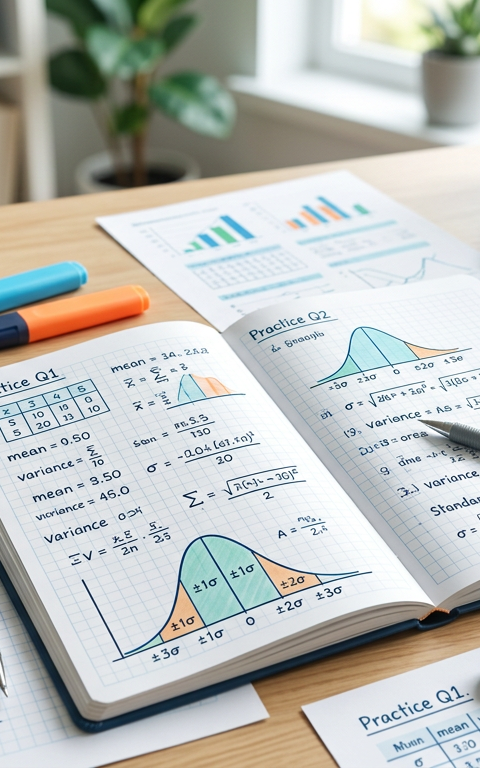
Easy Standard Deviation Practice Questions
Master the basics of a key statistical concept with easy standard deviation practice questions. Learn the formula, follow worked examples, and test your skills.
Apr 5, 2026

Standard Deviation Practice Questions with Answers
Master standard deviation with our comprehensive guide featuring step-by-step solved examples, practice questions, and detailed answer explanations.
Apr 5, 2026
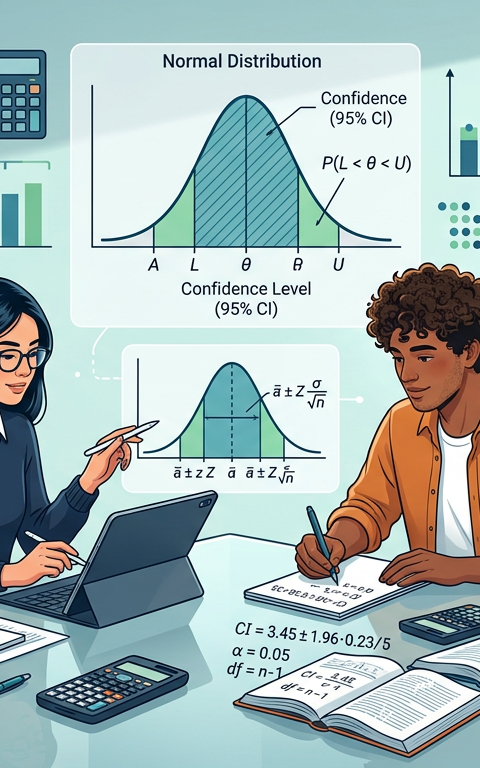
Hard Confidence Interval Practice Questions
Challenge your statistical skills with hard confidence interval practice questions. This guide covers complex scenarios like two-sample tests and sample size determination.
Apr 5, 2026
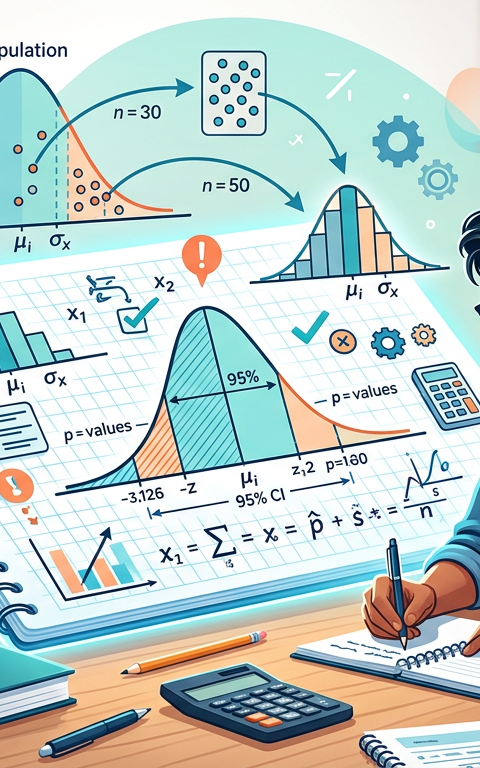
Medium Sampling Distribution Practice Questions
Master the sampling distribution with clear explanations, worked examples, and medium-difficulty practice questions on the Central Limit Theorem and standard error.
Apr 5, 2026

Medium Hypothesis Testing Practice Questions
Master hypothesis testing with our comprehensive guide. This page includes solved examples, practice questions with detailed answers, a quiz, and FAQs.
Apr 5, 2026

Medium Confidence Interval Practice Questions
Master the art of estimating population parameters with our comprehensive guide. This page features medium-level confidence interval practice questions with full solutions.
Apr 5, 2026
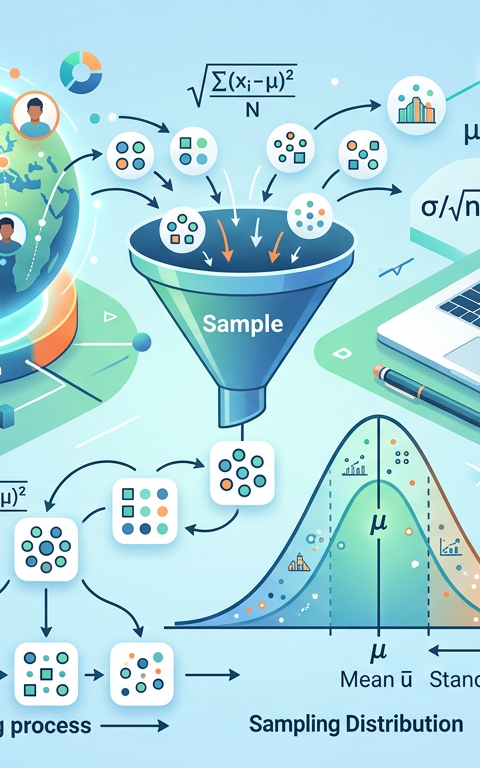
Easy Sampling Distribution Practice Questions
Master the fundamentals of the sampling distribution with easy-to-understand explanations, solved examples, and practice questions. Learn how to apply the Central Limit Theorem.
Apr 5, 2026

Easy Normal Distribution Practice Questions
Easy Normal Distribution Practice Questions
Apr 5, 2026