Hard NAPLEX Hazardous Drug Practice Questions
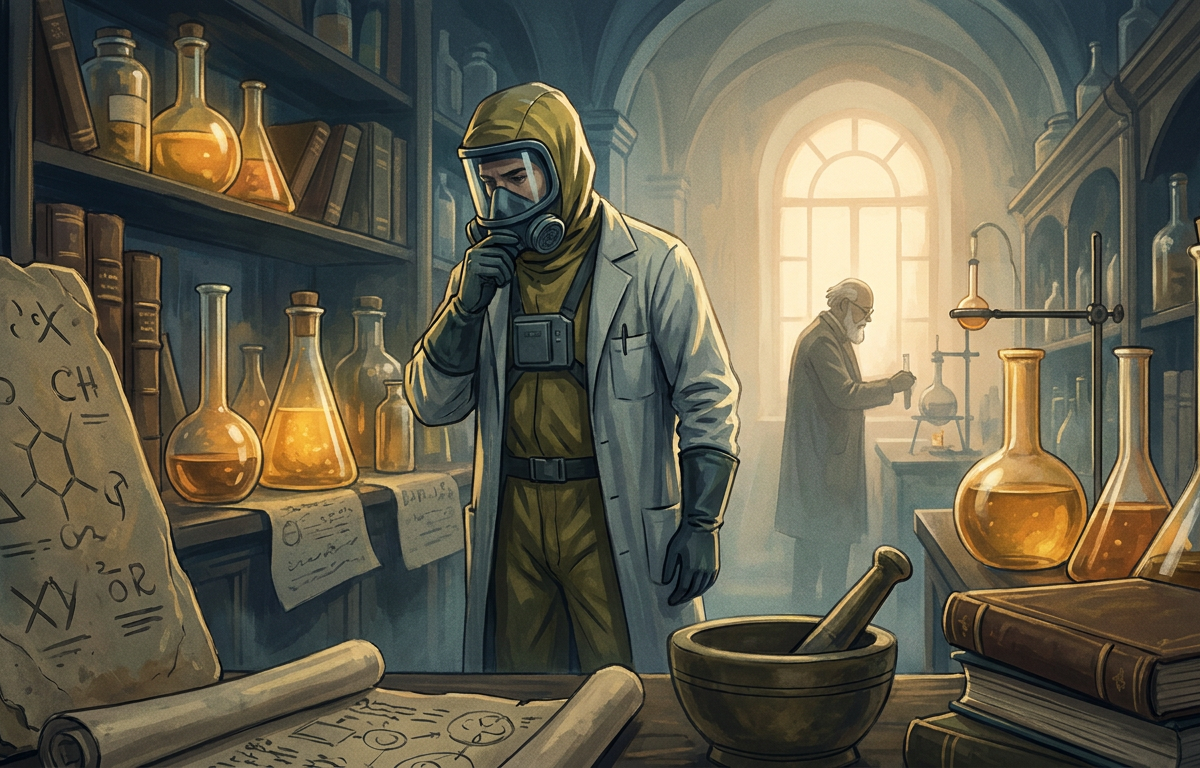
Hard NAPLEX Hazardous Drug Practice Questions
Mastering hazardous drug (HD) handling is a critical component of the NAPLEX Prep curriculum, as it ensures both patient safety and the protection of healthcare workers. These Hard NAPLEX Hazardous Drug Practice Questions are designed to test your knowledge of USP <800> standards, personal protective equipment (PPE) requirements, and the clinical management of drugs with reproductive or carcinogenic risks. Given the increasing prevalence of complex therapies, pharmacists must be proficient in identifying HDs, managing spills, and understanding the engineering controls required for sterile and non-sterile compounding of these substances.
Concept Explanation
Hazardous drugs are medications that exhibit one or more characteristics such as carcinogenicity, teratogenicity, reproductive toxicity, organ toxicity at low doses, or genotoxicity, as defined by the National Institute for Occupational Safety and Health (NIOSH). To manage these risks, the United States Pharmacopeia (USP) Chapter <800> provides standards for the safe handling of HDs to minimize the exposure of personnel and the environment. This includes requirements for structural design, such as Negative Pressure Rooms and Containment Primary Engineering Controls (C-PECs), as well as rigorous PPE protocols like double-gloving and chemotherapy-rated gowns. While many HDs are chemotherapy agents, the list also includes non-antineoplastics like hormones, certain transplant medications, and antivirals. Understanding the nuances of deactivation, decontamination, and cleaning is essential for passing the NAPLEX and practicing safely in a clinical setting.
When studying for this section, it is helpful to contrast HD requirements with standard sterile compounding found in Infectious Disease or Renal Therapeutics settings. For example, while standard sterile compounding often utilizes positive pressure to protect the product, HD compounding requires negative pressure to protect the operator.
Solved Examples
Example 1: Pressure Requirements
A pharmacy is designing a new cleanroom for the compounding of hazardous sterile preparations. According to USP <800>, what is the required pressure relationship for the C-SEC (Containment Secondary Engineering Control) relative to adjacent positive pressure areas?
- Identify the goal: Protecting personnel from hazardous vapors/particles.
- Recall the standard: The C-SEC must be physically separated and maintained at a negative pressure.
- Determine the specific value: The pressure must be between and inches of water column lower than the surrounding areas.
- Solution: The room must maintain a continuous negative pressure of to inches of water column.
Example 2: PPE for Administration
A nurse is preparing to administer an intact tablet of a hazardous drug (NIOSH Group 1) to a patient. What is the minimum PPE required if no manipulation (crushing/splitting) is involved?
- Consult the NIOSH list: Group 1 drugs are antineoplastics.
- Assess the risk: Administering an intact tablet is a lower-risk activity than compounding, but still requires protection.
- Identify standard requirements: One pair of chemotherapy-rated gloves is the minimum for administration of intact HDs.
- Solution: A single pair of chemotherapy-rated gloves is required.
Example 3: Surface Decontamination
A technician spills a small amount of a liquid hazardous drug on the work surface of a Biological Safety Cabinet (BSC). What are the four sequential steps for cleaning the area?
- Deactivation: Use a chemical (e.g., sodium hypochlorite) to render the compound inactive.
- Decontamination: Remove the deactivated residue.
- Cleaning: Remove organic and inorganic material (usually with germicidal detergent).
- Disinfection: Destroy microorganisms (usually with Sterile Isopropyl Alcohol).
- Solution: Deactivation, Decontamination, Cleaning, then Disinfection.
Practice Questions
1. Which of the following drugs is classified as a NIOSH Group 1 hazardous drug and requires a Closed System Transfer Device (CSTD) during administration when the dosage form allows?
2. A pharmacy technician is compounding a hazardous sterile injectable. According to USP <800>, how often must the chemotherapy-rated gown be changed if the manufacturer does not provide a specific timeframe?
3. A hospital pharmacy uses a Containment Segregated Compounding Area (C-SCA) for hazardous drug compounding. What is the maximum Beyond-Use Date (BUD) that can be assigned to a sterile hazardous preparation compounded in this environment?
Train like it’s exam day.
Build confidence with timed NAPLEX practice questions, mock exams, and performance analytics.
Start Timed Practice4. Which specific type of respirator is required when a staff member is cleaning up a large hazardous drug spill that exceeds the capacity of a standard spill kit?
5. A pharmacist is reviewing the Assessment of Risk (AoR) for a facility. Which of the following drugs is a NIOSH Group 3 drug, typically characterized by reproductive toxicity?
6. When compounding hazardous drugs in a C-PEC, where should the technician perform the work to ensure optimal airflow and containment?
7. A technician is double-gloving for the preparation of an intravenous chemotherapy infusion. Which of the following is the correct procedure regarding the placement of the gloves relative to the gown cuffs?
8. Which of the following engineering controls is strictly prohibited for use when compounding hazardous drugs because it blows air toward the operator?
9. A pharmacy receives a shipment of hazardous drugs. The outer shipping carton appears damaged and there is visible moisture. What is the first action the receiving personnel should take?
10. Under USP <800>, how frequently must personnel who handle hazardous drugs undergo competency assessment?
Answers & Explanations
- Vincristine: Group 1 includes antineoplastic drugs. CSTDs are required for administration of antineoplastics when the dosage form allows (e.g., IV secondary sets). You can find more about dosing high-risk medications in our Oncology Therapeutics guide.
- Every 2 to 3 hours: Or immediately after a spill or splash. This prevents the permeation of HDs through the gown material over time.
- 12 hours: A C-SCA is an unclassified room (not an ISO 7 cleanroom). Therefore, the BUD is limited to 12 hours, similar to standard low-risk CSPs prepared in a Segregated Compounding Area.
- Full-facepiece, chemical cartridge-type respirator or PAPR: A standard N95 is insufficient for vapors or large spills. A Powered Air-Purifying Respirator (PAPR) provides a higher level of protection.
- Paroxetine: NIOSH Group 3 includes drugs that pose a reproductive risk to men and women who are trying to conceive, or who are pregnant or breastfeeding. Other examples include warfarin and misoprostol. Review Psychiatric Therapeutics for more on SSRIs.
- At least 6 inches inside the C-PEC: Working too close to the front opening disrupts the protective air curtain and increases the risk of exposure.
- Inner glove under the cuff, outer glove over the cuff: This ensures that any liquid running down the arm does not enter the glove and that the gown sleeve is fully sealed.
- Horizontal Laminar Airflow Workbench (LAFW): These hoods blow air from the back toward the front (the operator), which would direct hazardous particles directly at the pharmacist.
- Don PPE, including double chemotherapy gloves: Before handling a potentially contaminated package, personnel must protect themselves. The package should then be moved to a neutral or negative pressure area for inspection.
- At least every 12 months: Personnel must demonstrate knowledge of HDs, proper PPE use, and spill management annually to ensure ongoing safety.
1. Which organization maintains the official list of hazardous drugs used in healthcare settings?
Frequently Asked Questions
What is the difference between USP <797> and USP <800>?
USP <797> focuses on the sterility and quality of the compounded preparation to protect the patient, while USP <800> focuses on the safety of the healthcare worker and environment when handling hazardous drugs. Both chapters must be followed when compounding sterile hazardous drugs.
Can a pharmacist use an N95 mask for hazardous drug spills?
An N95 mask only protects against airborne particles and does not provide protection against gases or vapors. For large HD spills or when vapor protection is needed, a full-face chemical cartridge respirator or a PAPR is required.
Are all hazardous drugs antineoplastic?
No, the NIOSH list includes three categories: Group 1 (Antineoplastics), Group 2 (Non-antineoplastic HDs like phenytoin or carbamazepine), and Group 3 (Drugs with reproductive risks like ribavirin or fluconazole). Many drugs in Groups 2 and 3 are not used for cancer treatment.
What is a CSTD and when is it mandatory?
A Closed System Transfer Device (CSTD) mechanically prevents the escape of HD drug into the environment. Under USP <800>, CSTDs are recommended for compounding but are mandatory for the administration of antineoplastic HDs when the dosage form allows.
How should hazardous drug waste be disposed of?
Trace hazardous waste (e.g., empty vials, used gloves) should be placed in yellow sharps containers or waste bags. Bulk hazardous waste (e.g., partially used vials, large spills) must be disposed of in black containers according to EPA Resource Conservation and Recovery Act (RCRA) regulations.
Train like it’s exam day.
Build confidence with timed NAPLEX practice questions, mock exams, and performance analytics.
Start Timed PracticeTags
Enjoyed this article?
Share it with others who might find it helpful.
Related Articles
Medium NAPLEX Hazardous Drug Practice Questions
Medium NAPLEX Hazardous Drug Practice Questions
May 31, 2026
NAPLEX Hazardous Drug Practice Questions with Answers
NAPLEX Hazardous Drug Practice Questions with Answers
May 31, 2026
Hard NAPLEX Therapeutic Drug Monitoring Practice Questions
Hard NAPLEX Therapeutic Drug Monitoring Practice Questions
Jun 1, 2026

Easy NAPLEX Therapeutic Drug Monitoring Practice Questions
Easy NAPLEX Therapeutic Drug Monitoring Practice Questions
Jun 1, 2026
NAPLEX Therapeutic Drug Monitoring Practice Questions with Answers
NAPLEX Therapeutic Drug Monitoring Practice Questions with Answers
Jun 1, 2026

Hard NAPLEX Adverse Drug Reaction Practice Questions
Hard NAPLEX Adverse Drug Reaction Practice Questions
May 31, 2026
Hard NAPLEX Drug Interaction Case Practice Questions
Master complex drug interactions for the NAPLEX with this guide featuring hard case studies, solved examples, and practice questions on CYP450 and P-gp.
May 31, 2026
Medium NAPLEX Adverse Drug Reaction Practice Questions
Medium NAPLEX Adverse Drug Reaction Practice Questions
May 31, 2026