Predicting Radioactive Decay: Solving for Mass and Time Intervals
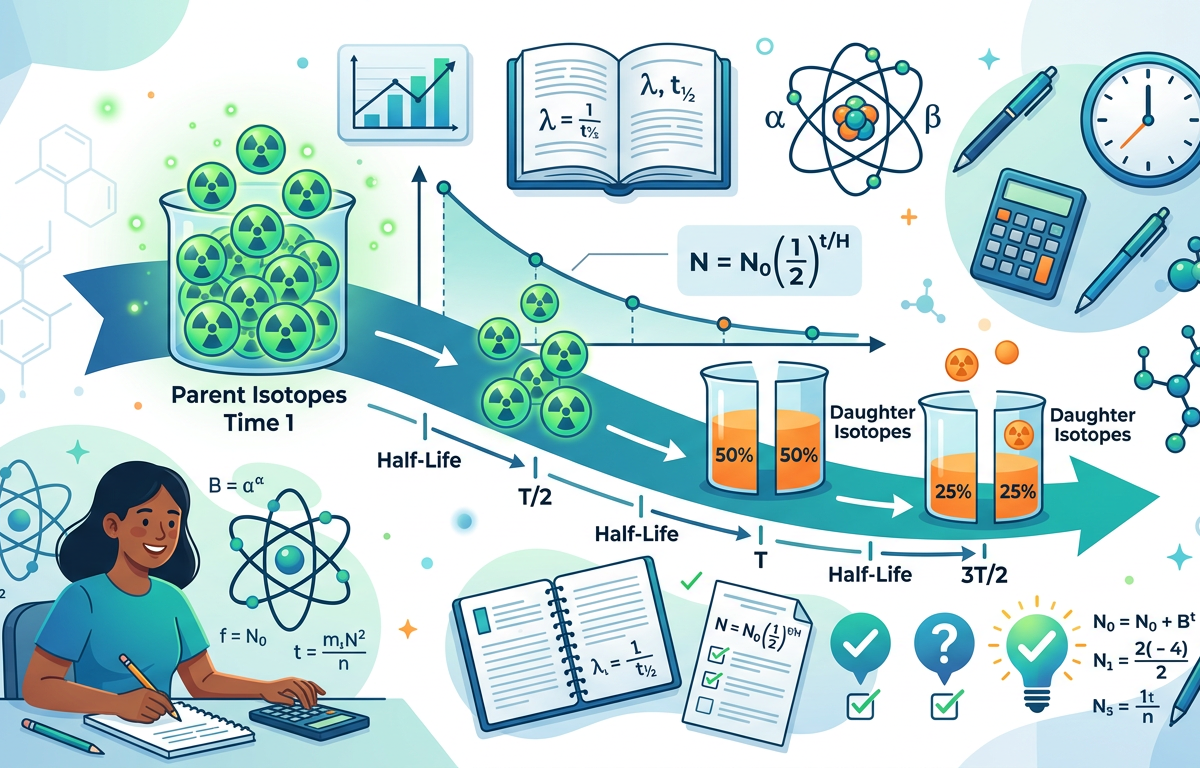
When a student sees a 100g sample with a 10-year half-life, the most common error is to assume it disappears entirely after 20 years. In reality, radioactive decay follows an asymptotic curve where the substance never truly hits zero. You are not subtracting fixed amounts of mass; you are repeatedly dividing the remaining population of atoms by two. This geometric progression is why a sample still retains 12.5% of its original activity even after three full cycles have passed.
To solve these problems without getting lost in the exponents, you must first isolate the number of half-lives, represented by n. Whether you are using the formula Nt = N0 × (0.5)^n or tracing the decay through a table, the logic remains the same: the total time elapsed must be a multiple of the specific interval unique to that isotope. If you can identify that a sample has reached one-eighth of its starting mass, you have instinctively identified that three half-lives have occurred, providing the bridge needed to calculate the total age of the specimen.
The Mechanics of Exponential Decay
Half-life is defined as the time required for exactly one-half of the atoms in a sample of a radioactive isotope to decay into a different element or isotope. This process is a hallmark of first-order kinetics, meaning the rate of decay depends only on the amount of substance present. According to Wikipedia, the concept is widely used in nuclear physics to describe the stability of atoms and in pharmacology to measure how quickly a drug is eliminated from the body.
To perform Half-Life Calculations, you typically work with four variables:
- Initial Amount (N₀): The mass or activity of the substance at the start (time = 0).
- Remaining Amount (Nₜ): The mass or activity left after a certain period has passed.
- Total Time Elapsed (t): The total duration of the decay process.
- Half-Life (t₁/₂): The specific time constant for the isotope in question.
The number of half-lives that have passed, denoted as n, is calculated by dividing the total time by the half-life period: n = t / t₁/₂. The relationship between the initial and remaining amount is expressed by the formula: Nₜ = N₀ × (0.5)ⁿ. If you are preparing for high-stakes testing, learning how to study for exams efficiently under pressure can help you recall these formulas quickly when the clock is ticking.
Solved Examples
Review these step-by-step solutions to understand the logic behind various types of Half-Life Calculations.
Example 1: Finding the Remaining Mass
A 100g sample of an isotope has a half-life of 10 years. How much of the isotope will remain after 30 years?
- Identify the variables: N₀ = 100g, t = 30 years, t₁/₂ = 10 years.
- Calculate the number of half-lives (n): 30 / 10 = 3 half-lives.
- Apply the formula: Nₜ = 100 × (0.5)³.
- Calculate: 100 × 0.125 = 12.5g.
- The remaining mass is 12.5g.
Example 2: Finding the Initial Mass
After 24 days, a sample has decayed to 5g. If the half-life is 8 days, what was the original mass?
- Identify the variables: Nₜ = 5g, t = 24 days, t₁/₂ = 8 days.
- Calculate the number of half-lives (n): 24 / 8 = 3 half-lives.
- Set up the equation: 5 = N₀ × (0.5)³.
- Divide to isolate N₀: N₀ = 5 / 0.125.
- Calculate: N₀ = 40g.
Example 3: Determining the Half-Life
A 200g sample decays to 25g in 45 minutes. What is the half-life of this substance?
- Determine how many half-lives passed by halving the initial amount until you reach the final amount: 200 → 100 (1), 100 → 50 (2), 50 → 25 (3). So, n = 3.
- Use the formula n = t / t₁/₂.
- Plug in the values: 3 = 45 / t₁/₂.
- Solve for t₁/₂: t₁/₂ = 45 / 3 = 15 minutes.
Practice Questions
Test your knowledge with these Half-Life Calculations practice problems. These are designed to mimic the rigor of exams like the AP Chemistry curriculum.
1. Phosphorus-32 has a half-life of 14.3 days. If you start with a 4.0g sample, how much remains after 57.2 days?
2. A medical tracer has a half-life of 6 hours. If a patient is injected with 80mg, how much is left in their system after 24 hours?
3. Carbon-14 is used for radiocarbon dating and has a half-life of 5,730 years. If an ancient wooden tool contains only 25% of its original Carbon-14, how old is the tool?
Want unlimited practice questions like these?
Generate AI-powered questions with step-by-step solutions on any topic.
Try Question Generator Free →4. After 42 days, a 2.0g sample of an isotope has decayed to 0.25g. What is the half-life of the isotope?
5. An isotope of Cesium-137 has a half-life of 30 years. If 10g remains after 90 years, what was the initial mass?
6. Radon-222 has a half-life of 3.8 days. If you start with 500g, how much will remain after 15.2 days?
7. A sample of Iodine-131 decays from 160 counts per minute (cpm) to 20 cpm in 24 days. What is its half-life?
8. If the half-life of a substance is 100 years, what percentage of the original sample will remain after 500 years?
9. A scientist finds that a 64g sample has decayed to 1g in 12 hours. What is the half-life of the substance in minutes?
10. Technetium-99m is used in medical imaging and has a half-life of 6 hours. If a 100mg dose is administered, how much remains after 18 hours?
Answers & Explanations
1. 0.25g. First, find n: 57.2 / 14.3 = 4 half-lives. Then, 4.0g × (0.5)⁴ = 4.0 × 0.0625 = 0.25g.
2. 5mg. First, find n: 24 / 6 = 4 half-lives. Then, 80mg × (0.5)⁴ = 80 / 16 = 5mg.
3. 11,460 years. To get to 25%, the sample must undergo two half-lives (100% → 50% → 25%). Thus, 2 × 5,730 = 11,460 years.
4. 14 days. Determine n: 2.0 → 1.0 (1), 1.0 → 0.5 (2), 0.5 → 0.25 (3). Since n = 3, half-life = 42 / 3 = 14 days.
5. 80g. Find n: 90 / 30 = 3 half-lives. Initial mass = 10 / (0.5)³ = 10 / 0.125 = 80g.
6. 31.25g. Find n: 15.2 / 3.8 = 4 half-lives. 500 × (0.5)⁴ = 500 / 16 = 31.25g.
7. 8 days. Determine n: 160 → 80 (1), 80 → 40 (2), 40 → 20 (3). Since n = 3, half-life = 24 / 3 = 8 days.
8. 3.125%. Find n: 500 / 100 = 5 half-lives. (0.5)⁵ = 0.03125, which is 3.125%.
9. 120 minutes. Determine n: 64 → 32 → 16 → 8 → 4 → 2 → 1 (6 half-lives). Half-life = 12 hours / 6 = 2 hours. 2 hours = 120 minutes.
10. 12.5mg. Find n: 18 / 6 = 3 half-lives. 100 × (0.5)³ = 100 / 8 = 12.5mg.
If you find these calculations difficult to recall during a test, you might be interested in why people forget what they study and how to use active recall to improve your memory.
1. If a substance has a half-life of 5 days, how much of a 20g sample remains after 10 days?
Frequently Asked Questions
What is the formula for half-life?
The standard formula for half-life calculations is Nₜ = N₀ × (0.5)^(t / t₁/₂), where Nₜ is the final amount, N₀ is the initial amount, t is the total time, and t₁/₂ is the half-life.
Can half-life be affected by temperature or pressure?
No, the half-life of a radioactive isotope is a constant physical property that is not affected by external environmental factors like temperature, pressure, or chemical bonding.
What is the difference between physical and biological half-life?
Physical half-life is the time for a radioactive isotope to decay naturally, while biological half-life is the time it takes for a living organism to eliminate half of a substance through metabolic processes.
How do you calculate half-life if the remaining amount is not a power of two?
When the remaining amount is not a simple fraction like 1/2 or 1/4, you must use logarithms with the formula t₁/₂ = (t × log 2) / (log N₀ / Nₜ) to find the precise value.
Why is half-life important in medicine?
In medicine, knowing the half-life of a drug or radiopharmaceutical ensures that doctors can administer safe dosages and predict how long a treatment will remain active in a patient's body.
Does a shorter half-life mean a substance is more radioactive?
Yes, substances with shorter half-lives decay more rapidly, meaning they emit more radiation in a shorter period of time compared to isotopes with longer half-lives.
Enjoyed this article?
Share it with others who might find it helpful.
Related Articles

Solving High-Stakes IV Titrations and Weight-Based Infusions
Master advanced IV flow rate calculations with these hard practice questions. Covers weight-based dosing, titrations, and dimensional analysis for nurses.
May 17, 2026

Solving Weight-Based Dosing: The 2.2 Conversion and Rounding Logic
Weight-Based Dosage Calculations Practice Questions with Answers
May 17, 2026
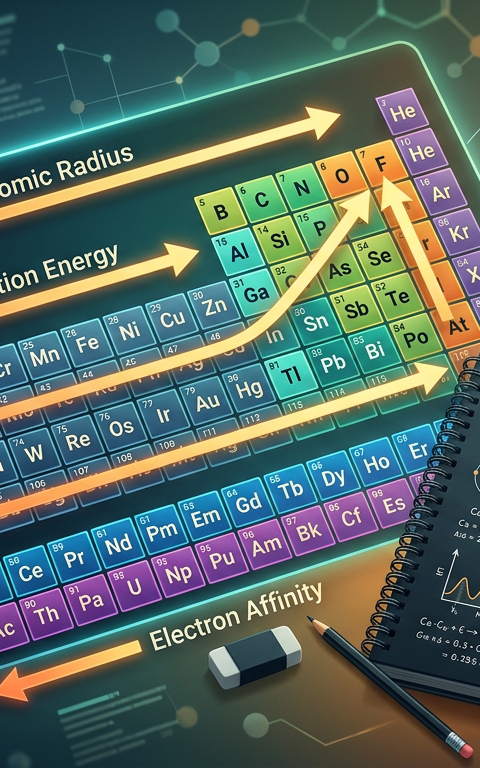
Predicting Periodic Anomalies: Beyond Basic Trend Rules
Hard Periodic Trends Practice Questions
Apr 4, 2026

Solving Combined Gas Law Problems: Managing Three Changing Variables
Master the Combined Gas Law with this comprehensive guide featuring clear explanations, step-by-step solved examples, and 10 practice questions with answers.
Apr 2, 2026
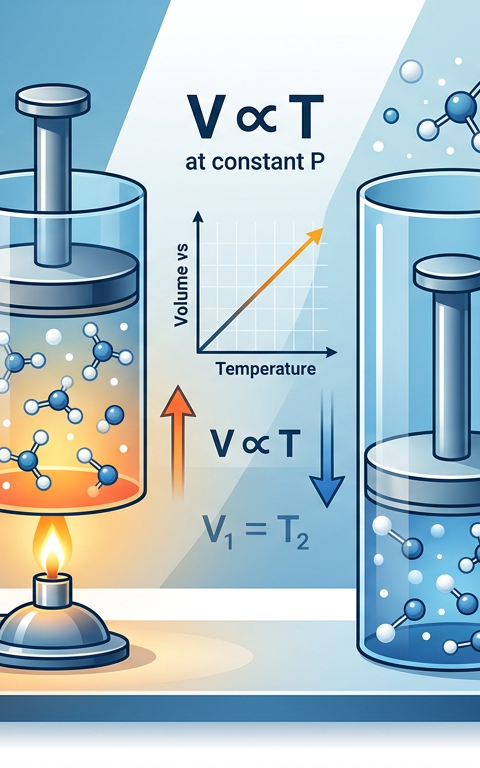
Solving Charles’s Law: Avoiding the Celsius Temperature Trap
Master Charles’s Law with our comprehensive guide featuring solved examples, practice questions, and step-by-step explanations for chemistry students.
Apr 2, 2026
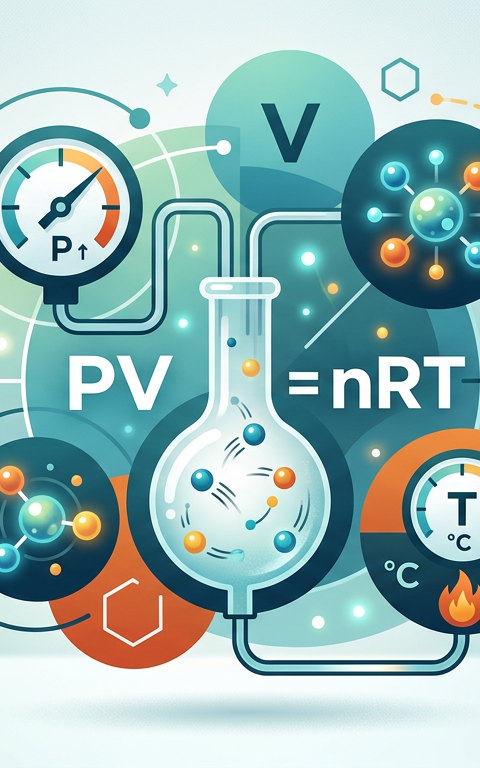
Solving PV=nRT: Why Units and Constants Trip Up Every Student
Master the Ideal Gas Law with these easy practice questions. Includes step-by-step solved examples, unit conversion tips, and a quick quiz to test your skills.
Apr 2, 2026
Predicting Rate Law Exponents: Beyond Stoichiometric Coefficients
Master reaction order with our comprehensive guide featuring solved examples, practice questions, and clear explanations for zero, first, and second-order kinetics.
Apr 2, 2026

Predicting Reaction Direction: Q vs K Comparison Practice
Master the reaction quotient (Q) with these easy practice questions. Learn how to calculate Q and predict the direction of chemical shifts.
Mar 30, 2026