Easy Probability Practice Questions

Easy Probability Practice Questions
Understanding probability is a fundamental skill in mathematics and statistics, forming the bedrock for more advanced topics. Whether you're flipping a coin, rolling dice, or forecasting the weather, probability is all around us. This guide is designed to make the concept of basic probability clear and accessible. With straightforward explanations, worked-out examples, and plenty of easy probability practice questions, you'll build a solid foundation and gain the confidence to tackle any probability problem that comes your way.
Concept Explanation
Probability is a measure of the likelihood that a specific event will occur, expressed as a number between 0 and 1. An event with a probability of 0 is impossible, while an event with a probability of 1 is certain. For most events, the probability falls somewhere in between. The fundamental way to calculate the probability of an event is by using a simple formula. To find the probability of an event 'A', you divide the number of ways that event can happen (favorable outcomes) by the total number of possible outcomes (the sample space).
The formula is:
P(A) = (Number of Favorable Outcomes) / (Total Number of Possible Outcomes)
Let's break down the key terms:
Event: A specific outcome or a set of outcomes you are interested in (e.g., rolling a 5 on a die).
Favorable Outcome: An outcome that satisfies the conditions of the event.
Sample Space: The set of all possible outcomes of an experiment (e.g., the numbers {1, 2, 3, 4, 5, 6} for a standard die).
For example, if you flip a fair coin, there are two possible outcomes: heads or tails. This is your sample space. If you want to find the probability of getting heads (the event), there is only one favorable outcome. Therefore, the probability is 1 divided by 2, or 0.5. For a deeper dive into the theory, Khan Academy offers an excellent probability library. Once you master these basics, you can explore more advanced topics like conditional probability.
Solved Examples
These solved examples demonstrate how to calculate basic probability for common scenarios like rolling dice, drawing cards, and selecting items from a group. Each solution follows a clear, step-by-step process.
Example 1: Rolling a Die
Question: What is the probability of rolling a 3 on a standard six-sided die?
Identify the total number of possible outcomes. A standard die has six faces, numbered 1, 2, 3, 4, 5, and 6. So, there are 6 total outcomes.
Identify the number of favorable outcomes. We want to roll a 3. There is only one face with the number 3 on it. So, there is 1 favorable outcome.
Apply the probability formula.
P(rolling a 3) = (Number of favorable outcomes) / (Total number of possible outcomes) = 1/6.
Answer: The probability of rolling a 3 is 1/6, or approximately 0.167.
Example 2: Drawing a Card
Question: You draw one card from a standard 52-card deck. What is the probability that the card is a King?
Identify the total number of possible outcomes. A standard deck has 52 cards. So, there are 52 total outcomes.
Identify the number of favorable outcomes. There are four Kings in a deck (King of Hearts, King of Diamonds, King of Clubs, King of Spades). So, there are 4 favorable outcomes.
Apply the probability formula.
P(drawing a King) = (Number of favorable outcomes) / (Total number of possible outcomes) = 4/52.Simplify the fraction. The fraction 4/52 can be simplified by dividing both the numerator and the denominator by 4, which gives 1/13.
Answer: The probability of drawing a King is 1/13.
Example 3: Marbles in a Bag
Question: A bag contains 5 red marbles, 3 blue marbles, and 2 green marbles. If you pick one marble without looking, what is the probability that it is blue?
Identify the total number of possible outcomes. First, find the total number of marbles in the bag: 5 (red) + 3 (blue) + 2 (green) = 10 marbles. So, there are 10 total outcomes.
Identify the number of favorable outcomes. We want to pick a blue marble. There are 3 blue marbles. So, there are 3 favorable outcomes.
Apply the probability formula.
P(picking a blue marble) = (Number of favorable outcomes) / (Total number of possible outcomes) = 3/10.
Answer: The probability of picking a blue marble is 3/10, or 0.3.
Easy Probability Practice Questions
Test your understanding of basic probability with these practice questions, ranging from easy to slightly more challenging problems. The answers and full explanations are provided below.
1. If you flip a fair coin, what is the probability that it lands on tails?
2. A standard six-sided die is rolled. What is the probability of rolling an even number (2, 4, or 6)?
3. A spinner is divided into 4 equal sections colored red, green, blue, and yellow. What is the probability of the spinner landing on green?
Want unlimited practice questions like these?
Generate AI-powered questions with step-by-step solutions on any topic.
Try Question Generator Free →4. From a standard 52-card deck, one card is drawn. What is the probability of drawing a heart?
5. A bag contains 12 candies: 4 are cherry, 5 are lemon, and 3 are orange. What is the probability of picking a lemon candy?
6. A number from 1 to 10 is chosen at random. What is the probability that the number is a prime number (2, 3, 5, 7)?
7. The letters of the word "APPLE" are placed in a hat. If one letter is drawn at random, what is the probability that it is the letter 'P'?
8. Two fair coins are flipped simultaneously. What is the probability of getting at least one head?
9. A jar contains 8 red balls, 5 blue balls, and 7 green balls. What is the probability of drawing a ball that is *not* blue?
10. You roll a standard six-sided die. What is the probability of rolling a number greater than 4?
Answers & Explanations
This section provides detailed, step-by-step explanations for each of the practice questions to help you understand the reasoning behind the correct answers.
1. If you flip a fair coin, what is the probability that it lands on tails?
Answer: 1/2
Explanation: A fair coin has two possible outcomes: heads or tails. This is the total number of outcomes. The favorable outcome is landing on tails, which is 1 outcome. So, the probability is 1/2.
2. A standard six-sided die is rolled. What is the probability of rolling an even number (2, 4, or 6)?
Answer: 1/2
Explanation: The total number of outcomes when rolling a die is 6 (numbers 1 through 6). The favorable outcomes are the even numbers: 2, 4, and 6. There are 3 favorable outcomes. The probability is 3/6, which simplifies to 1/2.
3. A spinner is divided into 4 equal sections colored red, green, blue, and yellow. What is the probability of the spinner landing on green?
Answer: 1/4
Explanation: There are 4 equal sections, so there are 4 total possible outcomes. The favorable outcome is landing on green, which is 1 section. The probability is 1/4.
4. From a standard 52-card deck, one card is drawn. What is the probability of drawing a heart?
Answer: 1/4
Explanation: A standard deck has 52 cards. There are four suits (hearts, diamonds, clubs, spades), and each suit has 13 cards. The number of favorable outcomes (drawing a heart) is 13. The probability is 13/52, which simplifies to 1/4.
5. A bag contains 12 candies: 4 are cherry, 5 are lemon, and 3 are orange. What is the probability of picking a lemon candy?
Answer: 5/12
Explanation: The total number of candies is 12, which is the total number of outcomes. The number of lemon candies (favorable outcomes) is 5. The probability is 5/12.
6. A number from 1 to 10 is chosen at random. What is the probability that the number is a prime number (2, 3, 5, 7)?
Answer: 2/5
Explanation: The sample space is the set of numbers {1, 2, 3, 4, 5, 6, 7, 8, 9, 10}, so there are 10 total outcomes. The prime numbers between 1 and 10 are 2, 3, 5, and 7. There are 4 favorable outcomes. The probability is 4/10, which simplifies to 2/5.
7. The letters of the word "APPLE" are placed in a hat. If one letter is drawn at random, what is the probability that it is the letter 'P'?
Answer: 2/5
Explanation: The word "APPLE" has 5 letters in total. This is the total number of outcomes. The letter 'P' appears 2 times. These are the favorable outcomes. Therefore, the probability is 2/5.
8. Two fair coins are flipped simultaneously. What is the probability of getting at least one head?
Answer: 3/4
Explanation: When flipping two coins, the sample space of all possible outcomes is: {Heads-Heads (HH), Heads-Tails (HT), Tails-Heads (TH), Tails-Tails (TT)}. There are 4 total outcomes. The favorable outcomes are those with at least one head: HH, HT, and TH. There are 3 favorable outcomes. The probability is 3/4. This is a great introduction before moving on to more complex probability practice questions.
9. A jar contains 8 red balls, 5 blue balls, and 7 green balls. What is the probability of drawing a ball that is *not* blue?
Answer: 3/4
Explanation: First, find the total number of balls: 8 + 5 + 7 = 20 balls. The number of balls that are *not* blue is the sum of red and green balls: 8 + 7 = 15. These are the favorable outcomes. The probability is 15/20, which simplifies to 3/4.
10. You roll a standard six-sided die. What is the probability of rolling a number greater than 4?
Answer: 1/3
Explanation: The total number of outcomes is 6. The numbers greater than 4 are 5 and 6. There are 2 favorable outcomes. The probability is 2/6, which simplifies to 1/3.
1. This quick quiz offers a fast way to check your grasp of the core concepts covered in this article on easy probability.1. A standard six-sided die is rolled. What is the probability of rolling a 5?
Frequently Asked Questions
Here are answers to some frequently asked questions about the fundamentals of easy probability.
What is the difference between probability and odds?
Probability compares the number of favorable outcomes to the total number of outcomes, while odds compare the number of favorable outcomes to the number of unfavorable outcomes. For example, the probability of rolling a 4 on a die is 1/6, but the odds in favor of rolling a 4 are 1 to 5 (1 favorable vs. 5 unfavorable).
Can probability be negative or greater than 1?
No, the probability of an event must always be a value between 0 and 1, inclusive. A probability of 0 signifies an impossible event, and a probability of 1 signifies a certain event. Any value outside this range is not a valid probability.
What does a probability of 0.5 mean?
A probability of 0.5 (or 1/2 or 50%) means that an event has an even chance of occurring. It is just as likely to happen as it is not to happen. A classic example is the probability of a fair coin landing on heads.
How is probability used in real life?
Probability is used extensively in many fields. Weather forecasting, for instance, uses probability to predict the chance of rain, as explained by the National Weather Service. It's also crucial in finance for risk assessment, in sports for predicting game outcomes, and in medicine for determining the effectiveness of treatments.
What is a 'sample space'?
The sample space is the complete set of all possible outcomes of a random experiment. For a coin flip, the sample space is {Heads, Tails}. For a six-sided die roll, the sample space is {1, 2, 3, 4, 5, 6}. Identifying the sample space is the first step in solving most probability problems.
How do I find the probability of an event *not* happening?
The probability of an event not happening is called its complement. You can calculate it by subtracting the probability of the event happening from 1. The formula is P(not A) = 1 - P(A). For example, if the probability of rain is 0.3 (30%), the probability of it not raining is 1 - 0.3 = 0.7 (70%). This concept is a useful building block, just like understanding basic statistics from our guide on mean, median, and mode practice questions.
Want unlimited practice questions like these?
Generate AI-powered questions with step-by-step solutions on any topic.
Try Question Generator Free →
Want unlimited practice questions like these?
Generate AI-powered questions with step-by-step solutions on any topic.
Try Question Generator Free →Enjoyed this article?
Share it with others who might find it helpful.
Related Articles

Probability Practice Questions with Answers
Master probability with our guide featuring solved examples, practice questions, and detailed explanations for students and exam prep.
Apr 5, 2026

Easy Conditional Probability Practice Questions
Master conditional probability with easy-to-understand examples and practice questions. Learn the formula and apply it to real-world scenarios.
Apr 5, 2026

Conditional Probability Practice Questions with Answers
Master conditional probability with our comprehensive guide featuring solved examples, formula explanations, and 10+ practice questions with detailed answers.
Apr 5, 2026
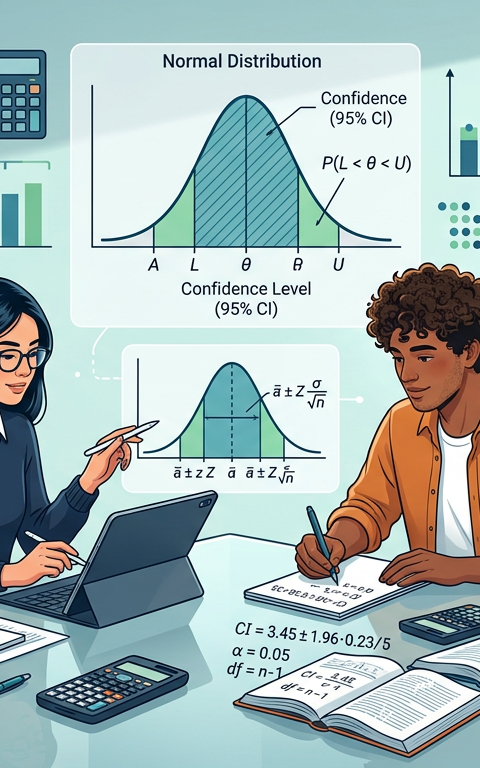
Hard Confidence Interval Practice Questions
Challenge your statistical skills with hard confidence interval practice questions. This guide covers complex scenarios like two-sample tests and sample size determination.
Apr 5, 2026
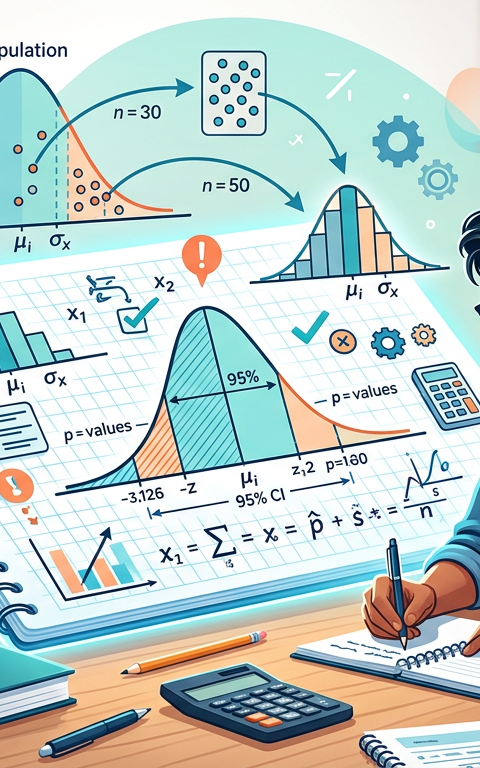
Medium Sampling Distribution Practice Questions
Master the sampling distribution with clear explanations, worked examples, and medium-difficulty practice questions on the Central Limit Theorem and standard error.
Apr 5, 2026

Medium Hypothesis Testing Practice Questions
Master hypothesis testing with our comprehensive guide. This page includes solved examples, practice questions with detailed answers, a quiz, and FAQs.
Apr 5, 2026

Medium Confidence Interval Practice Questions
Master the art of estimating population parameters with our comprehensive guide. This page features medium-level confidence interval practice questions with full solutions.
Apr 5, 2026
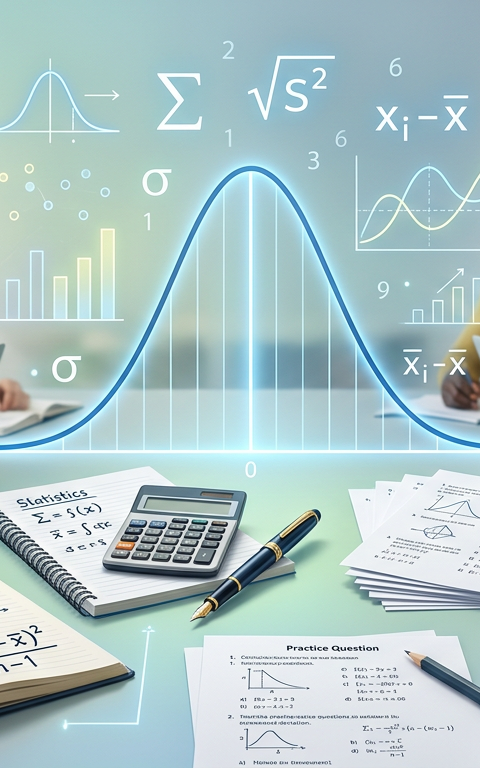
Medium Standard Deviation Practice Questions
Master standard deviation with our comprehensive guide. Features clear explanations, solved examples, and medium-difficulty practice questions with detailed answers.
Apr 5, 2026