Probability Practice Questions with Answers

Concept Explanation
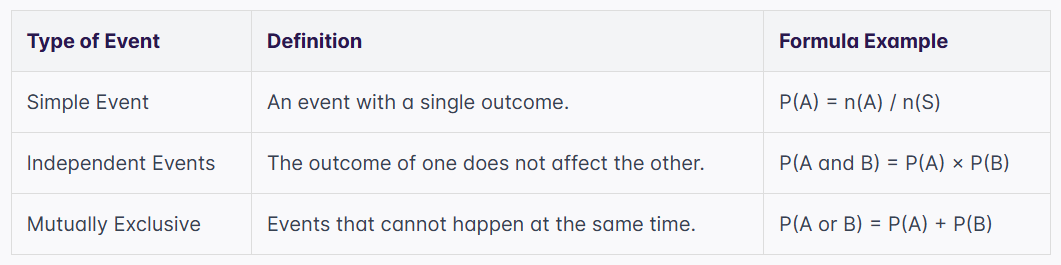
Probability is the mathematical measure of the likelihood that a specific event will occur, expressed as a number between 0 and 1. In any random experiment, the probability of an outcome is calculated by dividing the number of favorable outcomes by the total number of possible outcomes in the sample space. This fundamental concept allows us to quantify uncertainty in fields ranging from quantum mechanics to financial forecasting. According to Wikipedia, the formal study of probability began in the 17th century with the correspondence of Blaise Pascal and Pierre de Fermat. Understanding probability requires familiarity with several key terms: the Sample Space (all possible outcomes), Events (subsets of the sample space), and Independent vs. Dependent Events. For more complex scientific applications, such as interpreting molecular data, students often transition from basic statistics to advanced topics like mass spectrometry analysis, which relies on isotopic abundance probabilities.
Solved Examples
Example 1: Single Die Roll
Calculate the probability of rolling an even number on a standard six-sided die.Identify the sample space: S = {1, 2, 3, 4, 5, 6}. Total outcomes = 6.
Identify favorable outcomes (even numbers): E = {2, 4, 6}. Number of favorable outcomes = 3.
Apply the formula: P(E) = 3/6 = 0.5 or 50%.
Example 2: Independent Events (Coin and Die)
What is the probability of flipping a "Heads" on a coin AND rolling a 5 on a die?Calculate P(Heads): There are 2 sides, so P(H) = 1/2.
Calculate P(5): There are 6 sides, so P(5) = 1/6.
Since these are independent, multiply the probabilities: 1/2 × 1/6 = 1/12.
Example 3: Complementary Events
If the probability of it raining tomorrow is 0.23, what is the probability that it will not rain?The sum of all probabilities in a sample space is 1.
Use the complement rule: P(Not A) = 1 - P(A).
Calculation: 1 - 0.23 = 0.77.
Practice Questions
1. A bag contains 5 red marbles, 3 blue marbles, and 2 green marbles. If one marble is drawn at random, what is the probability it is blue?
2. Two fair coins are tossed simultaneously. What is the probability of getting at least one head?
3. In a deck of 52 playing cards, what is the probability of drawing a King or a Queen?
Want unlimited practice questions like these?
Generate AI-powered questions with step-by-step solutions on any topic.
Try Question Generator Free →4. A card is drawn from a standard deck. What is the probability that it is a Spade AND an Ace?
5. If you roll two six-sided dice, what is the probability that the sum of the numbers is exactly 7?
6. A jar contains 10 black pens and 20 blue pens. If you pick two pens without replacement, what is the probability that both are black?
7. In a class of 30 students, 18 study Biology, 15 study Chemistry, and 8 study both. What is the probability that a randomly selected student studies neither?
8. A weather forecast states there is a 40% chance of rain on Saturday and a 30% chance of rain on Sunday. Assuming these are independent events, what is the probability it rains on both days?
9. What is the probability of drawing a red card from a deck of cards, given that the card drawn is a Face card (Jack, Queen, or King)?
10. An urn contains 4 white balls and 6 black balls. Three balls are drawn at random without replacement. What is the probability that all three are black?
Answers & Explanations
Answer: 3/10 (0.3). Total marbles = 5 + 3 + 2 = 10. Blue marbles = 3. Probability = 3/10.
Answer: 3/4 (0.75). Sample space: {HH, HT, TH, TT}. Outcomes with at least one head: {HH, HT, TH}. Probability = 3/4.
Answer: 2/13. There are 4 Kings and 4 Queens in a deck of 52. Since they are mutually exclusive, P(K or Q) = 4/52 + 4/52 = 8/52. Simplified, this is 2/13. Just as you might identify groups in functional group identification, identifying subsets is key here.
Answer: 1/52. There is only one card that is both a Spade and an Ace (the Ace of Spades).
Answer: 1/6. Total outcomes for two dice = 6 × 6 = 36. Combinations for a sum of 7: (1,6), (2,5), (3,4), (4,3), (5,2), (6,1). Total = 6. Probability = 6/36 = 1/6.
Answer: 3/29. Total pens = 30. P(First is black) = 10/30. P(Second is black | First was black) = 9/29. Total probability = (10/30) × (9/29) = 1/3 × 9/29 = 3/29.
Answer: 1/6. Use the principle of inclusion-exclusion: P(B ∪ C) = P(B) + P(C) - P(B ∩ C) = 18 + 15 - 8 = 25. Students studying neither = 30 - 25 = 5. Probability = 5/30 = 1/6.
Answer: 0.12 (12%). P(Rain Sat) = 0.40. P(Rain Sun) = 0.30. Since independent: 0.40 × 0.30 = 0.12.
Answer: 1/2 (0.5). Total face cards = 12 (4 J, 4 Q, 4 K). Red face cards = 6 (Hearts and Diamonds). Given it's a face card, P = 6/12 = 1/2. This conditional logic is similar to narrowing down structures in NMR interpretation.
Answer: 1/6. Calculation: (6/10) × (5/9) × (4/8). 6/10 = 3/5; 5/9; 4/8 = 1/2. (3/5) × (5/9) × (1/2) = (3 × 5 × 1) / (5 × 9 × 2) = 15/90 = 1/6.
1. Which value represents an impossible event in probability theory?
Frequently Asked Questions
What is the difference between theoretical and experimental probability?
Theoretical probability is calculated based on reasoning and possible outcomes in a perfect environment, whereas experimental probability is based on actual data collected from repeated trials. For instance, the theoretical probability of a coin toss is always 0.5, but 10 actual tosses might result in 6 heads, giving an experimental probability of 0.6.
Can a probability value be greater than 1?
No, a probability value must always fall within the range of 0 to 1, inclusive. A value of 0 indicates the event is impossible, while a value of 1 indicates the event is certain to occur.
What are mutually exclusive events?
Mutually exclusive events are two or more events that cannot happen at the same time. For example, when tossing a single coin, the outcomes "Heads" and "Tails" are mutually exclusive because the coin cannot land on both simultaneously.
How do independent events differ from dependent events?
Independent events occur when the outcome of the first event does not change the likelihood of the second event, such as rolling a die twice. Dependent events occur when the first outcome affects the second, such as drawing two cards from a deck without replacing the first one.
What is the Law of Large Numbers?
The Law of Large Numbers is a theorem in statistics that states as the number of trials in an experiment increases, the experimental probability will get closer and closer to the theoretical probability. This concept is fundamental to the reliability of statistical sampling and insurance risk modeling, as explained by Khan Academy.
Want unlimited practice questions like these?
Generate AI-powered questions with step-by-step solutions on any topic.
Try Question Generator Free →
Want unlimited practice questions like these?
Generate AI-powered questions with step-by-step solutions on any topic.
Try Question Generator Free →Enjoyed this article?
Share it with others who might find it helpful.
Related Articles

Easy Probability Practice Questions
Master the basics of probability with our easy-to-follow guide. Includes solved examples, practice questions with answers, and a quick quiz to test your skills.
Apr 5, 2026

Easy Conditional Probability Practice Questions
Master conditional probability with easy-to-understand examples and practice questions. Learn the formula and apply it to real-world scenarios.
Apr 5, 2026

Conditional Probability Practice Questions with Answers
Master conditional probability with our comprehensive guide featuring solved examples, formula explanations, and 10+ practice questions with detailed answers.
Apr 5, 2026
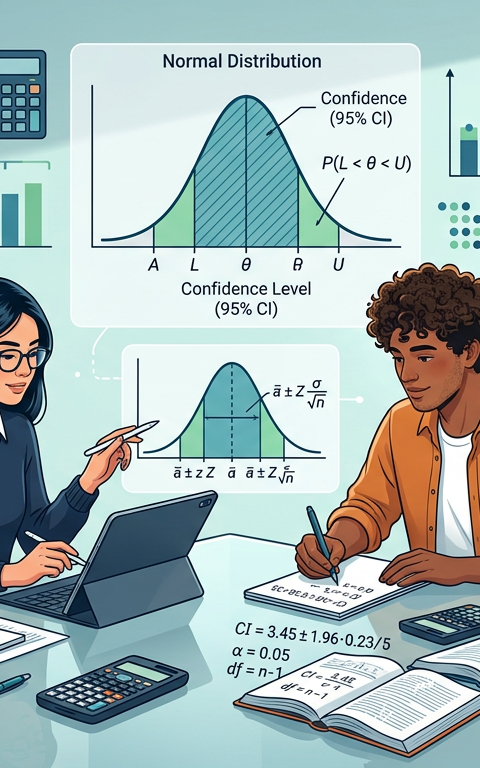
Hard Confidence Interval Practice Questions
Challenge your statistical skills with hard confidence interval practice questions. This guide covers complex scenarios like two-sample tests and sample size determination.
Apr 5, 2026
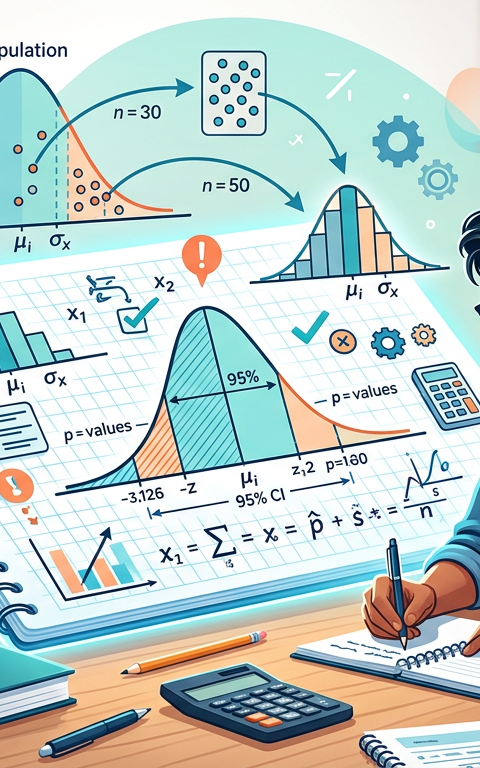
Medium Sampling Distribution Practice Questions
Master the sampling distribution with clear explanations, worked examples, and medium-difficulty practice questions on the Central Limit Theorem and standard error.
Apr 5, 2026

Medium Hypothesis Testing Practice Questions
Master hypothesis testing with our comprehensive guide. This page includes solved examples, practice questions with detailed answers, a quiz, and FAQs.
Apr 5, 2026

Medium Confidence Interval Practice Questions
Master the art of estimating population parameters with our comprehensive guide. This page features medium-level confidence interval practice questions with full solutions.
Apr 5, 2026

Medium Standard Deviation Practice Questions
Master standard deviation with our comprehensive guide. Features clear explanations, solved examples, and medium-difficulty practice questions with detailed answers.
Apr 5, 2026