Easy Homeostasis Questions Practice Questions
1. Concept Explanation
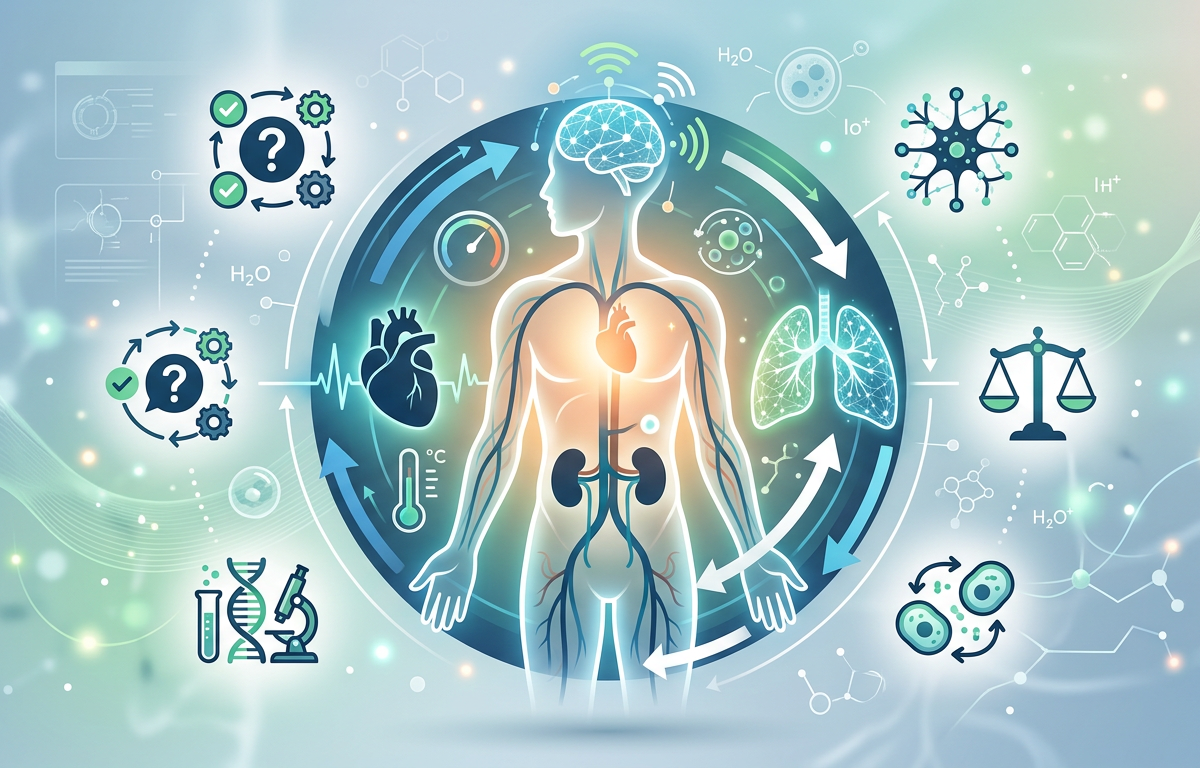
Homeostasis is the ability of an organism or cell to maintain a stable internal environment despite changes in external conditions. This dynamic equilibrium is crucial for the proper functioning of biological systems, involving continuous regulation through feedback mechanisms. The body constantly monitors various internal parameters, such as temperature, blood glucose levels, pH, and water balance, and employs regulatory processes to keep them within a narrow, optimal range. Without proper homeostatic regulation, cells and organs cannot function effectively, leading to disease or even death. For example, maintaining a stable body temperature is a classic example of homeostasis, where the body shivers to generate heat or sweats to cool down. You can find more information about how different systems contribute to this balance in our Organ System Questions Practice Questions.
2. Solved Examples
Example 1: Regulating Body Temperature
When a person exercises vigorously, their body temperature tends to rise. Describe the homeostatic mechanisms that help the body return to its normal temperature.
- Detection: Thermoreceptors in the skin and hypothalamus detect the increase in body temperature.
- Control Center: The hypothalamus acts as the body's thermostat, receiving signals from the thermoreceptors.
- Effector Response: The hypothalamus sends signals to effectors. These include sweat glands, which increase sweat production to cool the body through evaporation, and blood vessels in the skin, which dilate (vasodilation) to increase blood flow near the surface, allowing heat to dissipate.
- Return to Set Point: These actions reduce body temperature, bringing it back to the normal range, thus maintaining homeostasis.
Example 2: Blood Glucose Regulation
After eating a carbohydrate-rich meal, a person's blood glucose levels rise. Explain how the body regulates this increase to maintain homeostasis.
- Detection: Beta cells in the pancreas detect the rise in blood glucose levels.
- Control Center/Effector: The beta cells release insulin into the bloodstream.
- Effector Response: Insulin signals target cells (like muscle and liver cells) to take up glucose from the blood for energy or storage (as glycogen). The liver also converts excess glucose into glycogen.
- Return to Set Point: This uptake and storage reduce blood glucose levels, returning them to the normal range and maintaining glucose homeostasis.
Example 3: Maintaining Water Balance
If a person becomes dehydrated, their body needs to conserve water. How does the body achieve this homeostatically?
- Detection: Osmoreceptors in the hypothalamus detect an increase in blood osmolarity (concentration of solutes), indicating dehydration.
- Control Center: The hypothalamus stimulates the pituitary gland to release Antidiuretic Hormone (ADH), also known as vasopressin.
- Effector Response: ADH travels to the kidneys, causing the renal tubules to reabsorb more water from the filtrate back into the bloodstream. This reduces the amount of water lost in urine.
- Return to Set Point: Conserving water increases blood volume and decreases blood osmolarity, bringing water balance back to normal.
3. Practice Questions
1. Which of the following is the primary goal of homeostasis?
- To increase metabolic rate
- To maintain a stable internal environment
- To adapt to external temperature changes
- To produce more energy
2. What role does the hypothalamus play in maintaining body temperature?
- It produces sweat
- It acts as the body's thermostat
- It constricts blood vessels
- It generates heat
3. When blood glucose levels are too high, which hormone is released by the pancreas?
- Glucagon
- Adrenaline
- Insulin
- Thyroxine
4. Which type of feedback mechanism is most commonly used in homeostatic regulation?
- Positive feedback
- Negative feedback
- Neutral feedback
- Circular feedback
5. What happens to blood vessels in the skin when the body needs to cool down?
- They constrict
- They dilate
- They remain unchanged
- They become impermeable
6. The regulation of blood pH is an example of homeostasis. What is the approximate normal pH range of human blood?
- 6.0 - 6.5
- 7.0 - 7.2
- 7.35 - 7.45
- 8.0 - 8.5
7. If blood pressure drops significantly, the body responds by increasing heart rate and constricting blood vessels. This is an example of:
- Disruption of homeostasis
- Positive feedback
- Negative feedback
- Lack of regulation
8. Which of the following organs is most directly involved in maintaining water balance by regulating urine output?
- Liver
- Lungs
- Kidneys
- Heart
9. What is the term for the process where the body produces heat to maintain its temperature in a cold environment?
- Vasodilation
- Sweating
- Thermogenesis
- Glycogenesis
10. A fever is an example of the body temporarily resetting its homeostatic set point for:
- Blood glucose
- Blood pressure
- Body temperature
- Water balance
4. Answers & Explanations
1. B. To maintain a stable internal environment
Homeostasis is fundamentally about keeping internal conditions, such as temperature, pH, and glucose levels, within a narrow, optimal range, regardless of external changes.
2. B. It acts as the body's thermostat
The hypothalamus is the control center in the brain responsible for regulating body temperature, receiving input from thermoreceptors and initiating appropriate responses.
3. C. Insulin
When blood glucose levels are high after a meal, the pancreas releases insulin to lower them by promoting glucose uptake by cells and storage as glycogen.
4. B. Negative feedback
Negative feedback loops are the most common homeostatic mechanism. They work to reverse a change, bringing the system back to its set point (e.g., if temperature rises, mechanisms activate to lower it).
5. B. They dilate
When the body needs to cool down, blood vessels in the skin dilate (vasodilation) to increase blood flow near the surface, allowing more heat to be radiated away from the body.
6. C. 7.35 - 7.45
The normal pH range for human blood is slightly alkaline, specifically between 7.35 and 7.45. Deviations outside this range can be dangerous.
7. C. Negative feedback
This response is a classic example of negative feedback. The drop in blood pressure triggers actions (increased heart rate, vasoconstriction) that counteract the initial change, bringing blood pressure back up towards its set point. You can learn more about how the Cardiovascular System contributes to this.
8. C. Kidneys
The kidneys play a central role in maintaining water balance by filtering blood and selectively reabsorbing water and solutes, thus regulating the volume and concentration of urine. This is a critical aspect of kidney function and homeostasis.
9. C. Thermogenesis
Thermogenesis is the process of heat production in organisms. In a cold environment, the body can increase heat production through shivering (muscle contractions) and non-shivering thermogenesis (metabolic processes).
10. C. Body temperature
A fever is a temporary increase in the body's set point for temperature, often in response to infection. While the body still regulates temperature, it does so around a higher desired value.
1. What is the primary function of homeostasis in living organisms?
6. Frequently Asked Questions
What are the main components of a homeostatic control system?
A typical homeostatic control system includes a receptor (to detect changes), a control center (to process information and initiate a response), and an effector (to carry out the response). These components work together to maintain stability.
Why is negative feedback more common than positive feedback in homeostasis?
Negative feedback mechanisms reverse the initial change, bringing the body back to its set point, thus promoting stability. Positive feedback, by contrast, amplifies the initial change, which can lead to instability and is typically reserved for processes that need to be completed quickly, like childbirth or blood clotting.
Can external factors affect homeostasis?
Yes, absolutely. External factors like extreme temperatures, diet, stress, and disease can all challenge the body's homeostatic mechanisms. The body then works harder to counteract these external influences and maintain its internal balance.
What happens if homeostasis fails?
If homeostatic mechanisms fail, the body's internal environment can deviate significantly from its optimal range. This can lead to various physiological dysfunctions, illness, or even life-threatening conditions, as cells and organs cannot operate correctly outside their normal parameters.
How does the nervous system contribute to homeostasis?
The nervous system plays a crucial role in homeostasis by rapidly detecting changes and coordinating responses through nerve impulses. For example, the hypothalamus, a part of the brain, is a key control center for many homeostatic processes, including temperature and fluid balance. For more in-depth practice, check out our Nervous System Questions Practice Questions.
Is maintaining blood pH an example of homeostasis?
Yes, maintaining blood pH within a narrow range (7.35-7.45) is a vital example of homeostasis. The body uses buffer systems, the respiratory system (exhaling CO2), and the renal system (excreting acids/bases) to regulate pH and prevent dangerous shifts.
Enjoyed this article?
Share it with others who might find it helpful.
Related Articles
Hard Le Chatelier’s Principle Practice Questions
Master Hard Le Chatelier’s Principle Practice Questions with our comprehensive guide featuring solved examples, practice problems, and detailed explanations.
Mar 30, 2026
Hard Reaction Quotient (Q) Practice Questions
Hard Reaction Quotient (Q) Practice Questions
Mar 30, 2026
Grams to Moles Practice Questions with Answers
Master grams to moles conversions with our comprehensive guide. Includes step-by-step examples, practice questions, and detailed answers for chemistry students.
Mar 26, 2026
Avogadro’s Number Practice Questions with Answers
Master the mole concept with our Avogadro’s Number practice questions. Includes step-by-step solved examples, a quick quiz, and detailed explanations.
Mar 26, 2026
Empirical Formulas: Solving Ratios from Mass and Percent Data
Master empirical formula calculations with 10 practice questions, worked answers, and a free step-by-step calculator for mass, percentage, and combustion problems.
Mar 26, 2026