Easy Cell Transport Problems Practice Questions
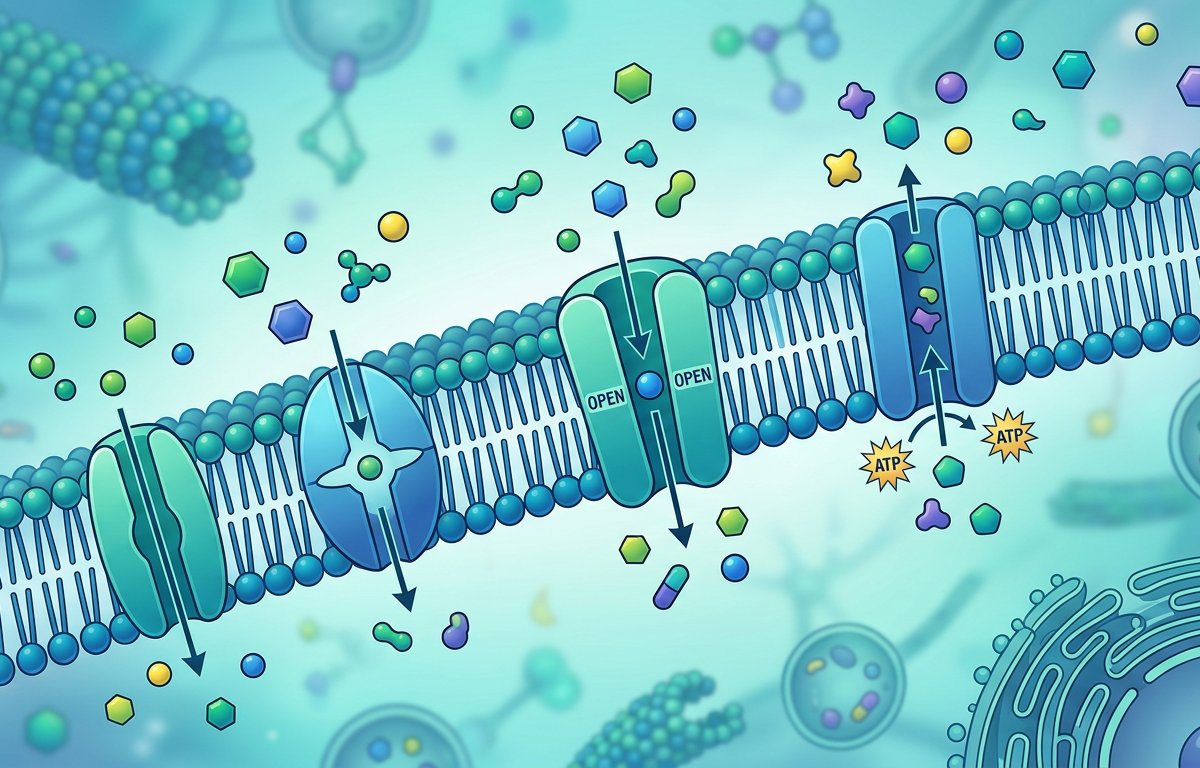
Easy Cell Transport Problems Practice Questions
Understanding how substances move in and out of cells is a fundamental concept in biology. From simple diffusion to the more complex process of osmosis, mastering the basics is key to success in your science courses. This guide is designed to help you tackle easy cell transport problems with confidence. We will walk through the core ideas, provide solved examples, and give you plenty of practice to test your knowledge.
Concept Explanation
Cell transport is the movement of substances across the cell membrane, either into or out of the cell. This process is essential for a cell to acquire nutrients, expel waste, and maintain a stable internal environment (homeostasis). There are two main categories of cell transport: passive transport and active transport. For these easy problems, we will focus primarily on passive transport, specifically osmosis.
Passive Transport
Passive transport does not require the cell to expend metabolic energy. Instead, it relies on the natural kinetic energy of particles and the concentration gradient.
- Diffusion: The net movement of molecules from an area of higher concentration to an area of lower concentration.
- Osmosis: A special type of diffusion involving the movement of water across a semipermeable membrane. Water moves from an area of higher water potential (lower solute concentration) to an area of lower water potential (higher solute concentration).
Tonicity
Tonicity describes how an extracellular solution can change the volume of a cell by affecting osmosis. It's a measure of the relative concentration of solutes on either side of the membrane.
- Hypertonic Solution: The solution has a higher solute concentration than the cell. Water will move out of the cell, causing it to shrink (crenate in animal cells, plasmolysis in plant cells).
- Hypotonic Solution: The solution has a lower solute concentration than the cell. Water will move into the cell, causing it to swell and potentially burst (lyse in animal cells). Plant cells become turgid but do not burst due to their rigid cell wall.
- Isotonic Solution: The solution has the same solute concentration as the cell. There is no net movement of water, and the cell's volume remains stable.
Water Potential (Ψ)
Water potential is a more formal way to quantify the tendency of water to move from one area to another. Water always moves from a region of higher water potential to a region of lower water potential. It is measured in units of pressure, like bars or megapascals (MPa). Pure water in an open container has a water potential of 0.
The formula for water potential is: Ψ = Ψs + Ψp
- Ψs (Solute Potential): This is the effect of dissolved solutes. Solutes lower the water potential, so this value is always negative or zero. It can be calculated using the formula Ψs = -iCRT.
- Ψp (Pressure Potential): This is the physical pressure on a solution. It is usually positive but can be negative (tension). In an open container, Ψp is 0.
Solved Examples of Cell Transport Problems
Solved examples of cell transport problems demonstrate how to apply principles of osmosis and water potential to predict the movement of water across a semipermeable membrane. By working through these steps, you can see the concepts in action.
Example 1: Animal Cell in a Hypotonic Solution
Problem: A red blood cell, which has an internal solute concentration equivalent to 0.9% NaCl, is placed in a beaker of pure water (0% NaCl). What will happen to the cell?
- Identify the solutions: The inside of the cell has a 0.9% solute concentration. The outside solution (pure water) has a 0% solute concentration.
- Determine tonicity: The outside solution has a lower solute concentration than the cell. Therefore, the pure water is a hypotonic solution relative to the cell.
- Predict water movement: Water moves from an area of higher water concentration (outside the cell) to an area of lower water concentration (inside the cell). Thus, water will rush into the red blood cell.
- State the outcome: Because animal cells lack a cell wall, the influx of water will cause the red blood cell to swell and eventually burst, a process called lysis.
Example 2: Plant Cell in a Hypertonic Solution
Problem: A potato core cell has a water potential of -3.0 bars. It is placed in a sucrose solution with a water potential of -5.5 bars. In which direction will water move, and what will happen to the cell?
- Compare water potentials: The cell's water potential is Ψ = -3.0 bars. The solution's water potential is Ψ = -5.5 bars.
- Predict water movement: Water always moves from a region of higher water potential to a region of lower water potential. Since -3.0 is higher than -5.5, water will move from the cell into the surrounding sucrose solution.
- State the outcome: The loss of water will cause the plant cell's membrane to pull away from the cell wall. This process is called plasmolysis, and the cell will become flaccid.
Example 3: Calculating Solute Potential
Problem: What is the solute potential (Ψs) of a 0.1 M sucrose solution at 22°C in an open beaker? (The ionization constant 'i' for sucrose is 1.0. The pressure constant 'R' is 0.0831 L·bar/mol·K).
- List the variables from the formula Ψs = -iCRT:
- i = 1.0 (sucrose does not ionize in water)
- C = 0.1 M (molar concentration)
- R = 0.0831 L·bar/mol·K
- T = Temperature in Kelvin. To convert from Celsius, use K = °C + 273. So, T = 22 + 273 = 295 K. If you need more practice with this, check out these unit conversion practice questions.
- Plug the values into the formula: Ψs = -(1.0)(0.1 M)(0.0831 L·bar/mol·K)(295 K)
- Calculate the result: Ψs = -2.45 bars.
Practice Questions
These practice questions will test your understanding of tonicity, osmosis, and basic water potential calculations in various cell transport scenarios.
1. (Easy) An animal cell is placed into a solution where the concentration of solutes is much higher than the concentration of solutes inside the cell. What term describes this solution, and what will happen to the cell?
2. (Easy) A piece of celery is placed in a glass of fresh water. After several hours, the celery is crisper and more rigid. Is the fresh water hypotonic, hypertonic, or isotonic to the celery cells?
3. (Easy) A dialysis bag containing a 10% sugar solution is placed in a beaker containing a 5% sugar solution. The bag is permeable to water but not to sugar. Will the bag gain or lose weight over time? Why?
4. (Medium) A plant cell with a solute potential (Ψs) of -7.0 bars and a pressure potential (Ψp) of +3.0 bars is placed in a beaker of sugar water with a water potential (Ψ) of -5.0 bars. What is the water potential of the plant cell, and which way will water move?
5. (Medium) Two solutions are separated by a semipermeable membrane. Solution A has a water potential of -2.8 bars. Solution B has a water potential of -3.4 bars. Which solution has a higher solute concentration?
6. (Medium) You are designing an IV drip for a patient. For the patient's red blood cells to remain stable, should the IV fluid be hypertonic, hypotonic, or isotonic to the blood cells?
7. (Medium) Calculate the solute potential (Ψs) of a 0.5 M NaCl solution at 20°C. (Note: NaCl ionizes into two particles, Na+ and Cl-, so i=2. R = 0.0831 L·bar/mol·K).
8. (Hard) A biologist observes a Paramecium, a single-celled organism living in a freshwater pond. She notices its contractile vacuole is pumping frequently. What does this tell you about the tonicity of the pond water relative to the Paramecium, and what is the function of the contractile vacuole?
9. (Hard) A potato core is found to have no change in mass when placed in a 0.3 M sucrose solution. What can you conclude about the water potential of the potato cells compared to the 0.3 M sucrose solution?
10. (Hard) A plant cell has a solute potential of -6.0 bars. If it is in an open beaker of pure water (Ψ = 0), what will its pressure potential (Ψp) be once it reaches equilibrium and becomes fully turgid?
Answers & Explanations
The answers and explanations below provide detailed, step-by-step solutions for each of the cell transport practice questions.
1. Answer: The solution is hypertonic, and the cell will shrink or crenate.
Explanation: A hypertonic solution has a higher solute concentration than the cell. Due to osmosis, water will move from the area of higher water concentration (inside the cell) to the area of lower water concentration (outside the cell), causing it to lose water and shrink.
2. Answer: The fresh water is hypotonic to the celery cells.
Explanation: The celery became more rigid, meaning its cells took in water and became turgid. This happens when the surrounding solution is hypotonic (has a lower solute concentration) to the cells. Water moved into the celery cells by osmosis.
3. Answer: The bag will gain weight.
Explanation: The bag contains a 10% sugar solution (lower water concentration) and is in a 5% sugar solution (higher water concentration). Since the membrane is permeable to water, water will move from the beaker into the bag, following its concentration gradient. This influx of water increases the bag's total mass.
4. Answer: The cell's water potential is -4.0 bars, and water will move into the cell.
Explanation: First, calculate the cell's total water potential: Ψ_cell = Ψs + Ψp = -7.0 bars + 3.0 bars = -4.0 bars. Now compare this to the solution's water potential of -5.0 bars. Water moves from higher potential to lower potential. Since -4.0 is higher than -5.0, water will move from the solution into the plant cell.
5. Answer: Solution B has a higher solute concentration.
Explanation: Water potential is inversely related to solute concentration; adding solutes makes the water potential more negative. Since Solution B has a more negative water potential (-3.4 bars) than Solution A (-2.8 bars), it must contain more dissolved solutes.
6. Answer: The IV fluid should be isotonic.
Explanation: An isotonic solution has the same solute concentration as the red blood cells. This ensures there is no net movement of water, preventing the cells from either shrinking (in a hypertonic solution) or bursting (in a hypotonic solution).
7. Answer: The solute potential is -24.34 bars.
Explanation: Use the formula Ψs = -iCRT.
T in Kelvin = 20 + 273 = 293 K.
Ψs = -(2)(0.5 M)(0.0831 L·bar/mol·K)(293 K)
Ψs = -(1)(0.0831)(293)
Ψs = -24.34 bars.
8. Answer: The pond water is hypotonic to the Paramecium. The contractile vacuole's function is to actively pump excess water out of the cell to prevent it from bursting.
Explanation: Freshwater has a very low solute concentration, making it hypotonic to the Paramecium's cytoplasm. Water constantly flows into the organism via osmosis. The contractile vacuole is an organelle that collects this excess water and expels it, using energy to work against the osmotic gradient. This process is a form of active transport, which you can contrast with the passive energy systems studied in physics, such as those in work, energy, and power problems.
9. Answer: The water potential of the potato cells is equal to the water potential of the 0.3 M sucrose solution.
Explanation: If there is no change in mass, there is no net movement of water. This state of equilibrium, called incipient plasmolysis, occurs when the water potential inside the cell is equal to the water potential of the surrounding solution.
10. Answer: The pressure potential (Ψp) will be +6.0 bars.
Explanation: The cell is in pure water, which has a water potential of Ψ=0. Water will move into the cell until the cell's internal water potential also equals 0. We use the formula Ψ_cell = Ψs + Ψp. At equilibrium, Ψ_cell = 0. We are given Ψs = -6.0 bars. So, 0 = -6.0 bars + Ψp. Solving for Ψp gives Ψp = +6.0 bars. This positive pressure is the turgor pressure exerted by the cell wall.
1. This quick quiz offers five multiple-choice questions to rapidly assess your grasp of key cell transport concepts like diffusion, osmosis, and tonicity. 1. A plant cell is placed in a very salty solution. What is the most likely outcome?
Frequently Asked Questions
Here are answers to some frequently asked questions about cell transport mechanisms.
What is the main difference between active and passive transport?
The main difference is the requirement of energy. Passive transport (like diffusion and osmosis) does not require metabolic energy from the cell because molecules move down their concentration gradient. Active transport requires energy, usually in the form of ATP, to move substances against their concentration gradient.
Why does a cell swell in a hypotonic solution?
A cell swells in a hypotonic solution because the concentration of water is higher outside the cell than inside. This creates a water potential gradient, causing water to move into the cell via osmosis in an attempt to equalize the solute concentrations on both sides of the membrane.
What is plasmolysis?
Plasmolysis is the process in plant cells where the plasma membrane pulls away from the cell wall as the cell loses water to a hypertonic environment. This causes the cell to become flaccid and can lead to cell death if not reversed.
Does temperature affect the rate of diffusion?
Yes, temperature significantly affects the rate of diffusion. Higher temperatures increase the kinetic energy of molecules, causing them to move faster and collide more frequently. This results in a faster rate of net movement from high to low concentration. This is a core principle of thermodynamics, as explained by Nature Education's Scitable.
What happens to a cell in an isotonic solution?
In an isotonic solution, the concentration of solutes outside the cell is the same as inside the cell. While water molecules still move across the cell membrane in both directions, there is no net movement of water. As a result, the cell's volume remains constant and stable.
Why is solute potential (Ψs) always negative?
Solute potential is always negative (or zero for pure water) because the addition of solutes to water reduces the free energy of the water molecules and lowers their ability to move. This effectively lowers the water's potential to do work, so the value is expressed as a negative number relative to the zero potential of pure water. The relationships in this formula are direct, unlike some complex physics problems which may require solving linear equations to find unknown variables.
Enjoyed this article?
Share it with others who might find it helpful.
Related Articles
Medium Cell Transport Problems Practice Questions
Master cell transport with our practice problems. This guide covers water potential, tonicity, and osmosis to help you solve medium-difficulty biology questions.
Apr 25, 2026
Cell Transport Problems Practice Questions with Answers
Cell Transport Problems Practice Questions with Answers
Apr 25, 2026
Medium Cell Membrane Questions Practice Questions
Medium Cell Membrane Questions Practice Questions
Apr 25, 2026
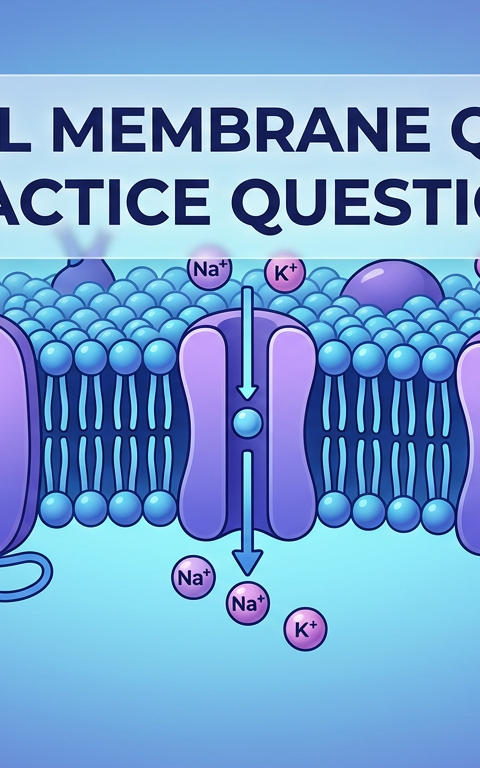
Hard Cell Membrane Questions Practice Questions
Master advanced cell biology with our hard cell membrane practice questions. Test your knowledge on electrochemical gradients, transport mechanisms, and more.
Apr 25, 2026

Hard Cell Structure Practice Questions Practice Questions
Challenge your understanding of cell biology with these hard cell structure practice questions, complete with solved examples, detailed answers, and a quick quiz.
Apr 25, 2026

Medium Cell Structure Practice Questions Practice Questions
Master cell biology with these medium cell structure practice questions. Get detailed explanations and solved examples to boost your understanding.
Apr 25, 2026
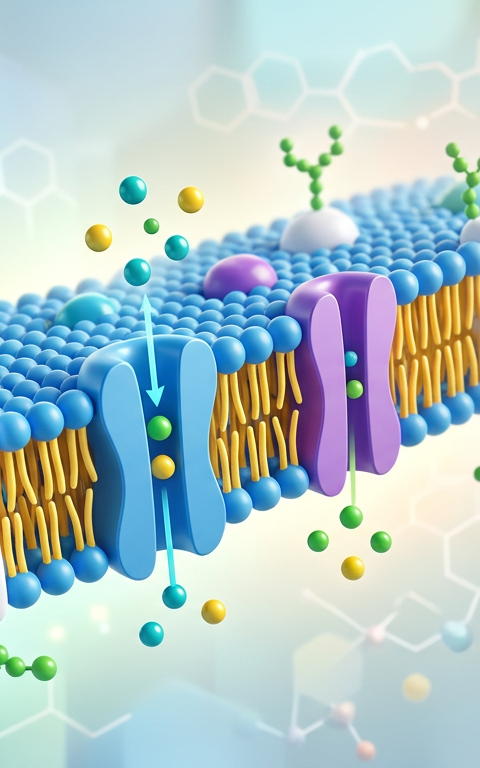
Easy Cell Membrane Questions Practice Questions
Master the basics of the cell membrane with our easy practice questions. Learn about the phospholipid bilayer, membrane proteins, and selective permeability with worked examples.
Apr 25, 2026

Easy Cell Structure Practice Questions Practice Questions
Master the basics of biology with our easy cell structure practice questions. This guide includes clear explanations, solved examples, and a quiz to test your knowledge.
Apr 25, 2026