Cell Membrane Questions Practice Questions with Answers
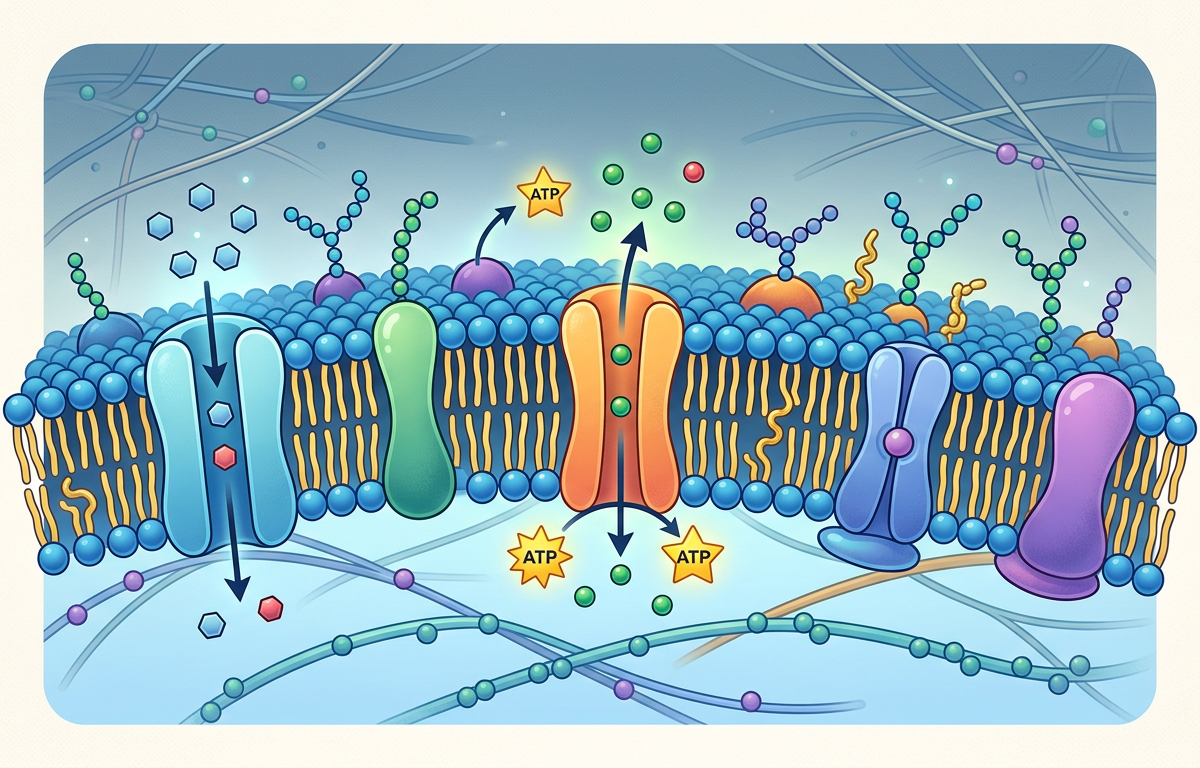
Mastering Cell Membrane Questions is essential for any biology student, as the plasma membrane serves as the fundamental boundary of life, regulating the internal environment of every living cell. This selectively permeable barrier is not just a simple wall; it is a dynamic mosaic of lipids, proteins, and carbohydrates that facilitates communication, transport, and structural integrity. Whether you are preparing for a high school biology exam or a college-level physiology test, understanding the nuances of the fluid mosaic model and transport mechanisms is vital for success.
Concept Explanation
The cell membrane, also known as the plasma membrane, is a semi-permeable biological membrane that separates the interior of all cells from the outside environment. It consists primarily of a phospholipid bilayer with embedded proteins, cholesterol, and carbohydrates, a structure famously described by S.J. Singer and G.L. Nicolson in 1972 as the Fluid Mosaic Model. The primary functions of the membrane include protecting the cell, controlling the movement of substances in and out, and mediating cell-to-cell recognition.
Key Components
Phospholipids: These molecules have a hydrophilic (water-loving) head and two hydrophobic (water-fearing) tails. In water, they spontaneously form a bilayer where the tails face inward, creating a hydrophobic core.
Proteins: Integral proteins span the membrane, while peripheral proteins are attached to the surfaces. They function as transporters, enzymes, and receptors.
Cholesterol: This lipid molecule is tucked between phospholipids in animal cells, helping to regulate membrane fluidity across different temperatures.
Carbohydrates: Often attached to proteins (glycoproteins) or lipids (glycolipids), these act as identification tags for cell recognition.
Transport Mechanisms
Movement across the membrane occurs via several pathways. Passive transport, such as simple diffusion and facilitated diffusion, moves substances down their concentration gradient without energy expenditure. In contrast, active transport requires ATP to move molecules against their gradient. For larger-scale movements, cells utilize endocytosis (taking material in) and exocytosis (releasing material out). Understanding these processes is as fundamental to biology as mastering Unit Conversion Practice Questions is to physics and chemistry.
Solved Examples
Below are fully worked examples to help you visualize how to approach common Cell Membrane Questions.
Example 1: Calculating Osmotic Direction
A cell with an internal solute concentration of 0.3M is placed in a solution with a solute concentration of 0.5M. Describe the movement of water.Identify the tonicity: The external solution has a higher solute concentration, making it hypertonic.
Determine water potential: Water always moves from an area of lower solute concentration (higher water potential) to higher solute concentration (lower water potential).
Conclusion: Water will exit the cell via osmosis, causing the cell to shrink (crenate in animal cells or plasmolyze in plant cells).
Example 2: Identifying Transport Types
A glucose molecule moves into a cell through a specific carrier protein from an area of high concentration to low concentration. Is this active or passive transport?Analyze the gradient: The molecule moves from high to low concentration, which defines passive movement.
Identify the helper: Since a carrier protein is involved, it is not simple diffusion.
Conclusion: This is facilitated diffusion, a form of passive transport.
Example 3: Membrane Fluidity
How does the presence of unsaturated fatty acid tails affect membrane fluidity at low temperatures?Understand tail structure: Unsaturated tails have "kinks" due to double bonds.
Analyze packing: These kinks prevent the phospholipids from packing tightly together as the temperature drops.
Conclusion: The presence of unsaturated tails maintains fluidity, preventing the membrane from solidifying.
Practice Questions
Test your knowledge with these Cell Membrane Questions ranging from basic identification to complex transport scenarios.
Which component of the cell membrane is primarily responsible for its ability to act as a barrier to most polar molecules?
Define the term "amphipathic" and explain how it applies to phospholipids.
A small, non-polar molecule like Oxygen (O₂) enters a cell. What specific transport mechanism is it using?
Start Learning Smarter Today
Join thousands of students using AI-powered study tools to achieve better results.
Get Started FreeCompare and contrast primary active transport and secondary active transport.
What would happen to a red blood cell placed in a purely hypotonic solution like distilled water?
Explain the role of the sodium-potassium pump (Na+/K+ ATPase) in maintaining the resting membrane potential.
How do glycoproteins contribute to the immune system's function?
Which type of transport involves the cell membrane wrapping around a large solid particle to bring it inside the cell?
Why is the "fluid" part of the Fluid Mosaic Model significant for membrane protein function?
Describe the difference between a channel protein and a carrier protein.
Answers & Explanations
Review the detailed explanations below to correct any misconceptions and strengthen your understanding of Cell Membrane Questions.
Answer: The phospholipid bilayer (specifically the hydrophobic tails).
The interior of the membrane is made of non-polar fatty acid tails. Because "like dissolves like," polar or charged molecules cannot easily pass through this oily layer without help from proteins. This is a foundational concept similar to how Linear Equations Practice Questions form the basis for algebra.Answer: Amphipathic means having both hydrophilic and hydrophobic parts.
Phospholipids have a phosphate head that is polar (hydrophilic) and fatty acid tails that are non-polar (hydrophobic). This dual nature allows them to form bilayers in aqueous environments.Answer: Simple Diffusion.
Oxygen is small and non-polar, allowing it to slip directly between the phospholipids moving from high concentration to low concentration without the need for energy or transport proteins.Answer: Primary uses ATP directly; Secondary uses an electrochemical gradient.
Primary active transport (like the Na+/K+ pump) hydrolyzes ATP to move ions. Secondary active transport uses the energy stored in the concentration gradient of one molecule to "piggyback" another molecule against its gradient.Answer: The cell will swell and likely burst (lyse).
In a hypotonic solution, the concentration of solutes is lower outside the cell than inside. Water follows the solute concentration and rushes into the cell. Unlike plant cells, animal cells lack a cell wall to prevent over-expansion.Answer: It pumps 3 Na+ ions out and 2 K+ ions in.
This creates a net loss of positive charge from the inside and maintains a concentration gradient. This electrochemical gradient is essential for nerve impulse transmission, much like how understanding Circuit Practice Questions is essential for understanding electricity.Answer: Facilitating cell-to-cell recognition.
The carbohydrate chains on glycoproteins act as unique markers. The immune system uses these to distinguish between "self" cells and foreign invaders like bacteria.Answer: Phagocytosis.
This is a specific form of endocytosis often referred to as "cell eating." It is commonly used by white blood cells to destroy pathogens.Answer: It allows proteins to move laterally and interact.
If the membrane were rigid, proteins could not move to aggregate for signaling or to transport materials efficiently. Fluidity is maintained by temperature, cholesterol, and lipid composition.Answer: Channels are pores; Carriers change shape.
Channel proteins provide a hydrophilic tunnel for specific ions. Carrier proteins bind to a substance, undergo a conformational change, and release it on the other side.
1. Which of the following molecules would most easily pass through the lipid bilayer without the help of a protein?
Frequently Asked Questions
What is the fluid mosaic model?
The fluid mosaic model describes the cell membrane as a tapestry of several types of molecules (phospholipids, cholesterols, and proteins) that are constantly moving. This movement helps the cell membrane maintain its role as a barrier between the inside and outside of the cell environments.
Why is the cell membrane called selectively permeable?
The membrane is selectively permeable because it allows certain molecules to pass through while blocking others. This selectivity is determined by the size, charge, and solubility of the molecules, as well as the presence of specific transport proteins.
How does temperature affect cell membrane fluidity?
As temperature decreases, membranes become less fluid and can solidify; however, cholesterol and unsaturated fatty acids help prevent this. Conversely, high temperatures increase fluidity, which can compromise the membrane's structural integrity if not regulated.
What is the difference between endocytosis and exocytosis?
Endocytosis is the process by which a cell takes in materials by folding the membrane inward to form a vesicle. Exocytosis is the reverse process where a vesicle fuses with the membrane to release its contents into the extracellular space.
What role do proteins play in the cell membrane?
Proteins serve multiple roles including acting as transporters for molecules that cannot cross the lipid bilayer, functioning as receptors for signal transduction, and providing structural support. They are essential for the membrane's dynamic biological activities.
How do ions cross the cell membrane?
Since ions are charged, they cannot pass through the hydrophobic core of the phospholipid bilayer. They must cross through specialized integral proteins known as ion channels or via active transport pumps like the sodium-potassium pump.
Start Learning Smarter Today
Join thousands of students using AI-powered study tools to achieve better results.
Get Started FreeEnjoyed this article?
Share it with others who might find it helpful.
Related Articles
Medium Cell Membrane Questions Practice Questions
Medium Cell Membrane Questions Practice Questions
Apr 25, 2026
Hard Cell Membrane Questions Practice Questions
Master advanced cell biology with our hard cell membrane practice questions. Test your knowledge on electrochemical gradients, transport mechanisms, and more.
Apr 25, 2026
Easy Cell Membrane Questions Practice Questions
Master the basics of the cell membrane with our easy practice questions. Learn about the phospholipid bilayer, membrane proteins, and selective permeability with worked examples.
Apr 25, 2026
Hard Microbiology Practice Questions Practice Questions
Hard Microbiology Practice Questions Practice Questions
Apr 26, 2026
Medium Microbiology Practice Questions Practice Questions
Master microbiology with our medium-level practice questions covering bacterial growth, genetics, and metabolism. Includes solved examples and a quick quiz.
Apr 26, 2026

Easy Microbiology Practice Questions Practice Questions
Easy Microbiology Practice Questions Practice Questions
Apr 26, 2026

Hard Enzyme Questions Practice Questions
Master complex biochemistry with these hard enzyme questions. Cover Michaelis-Menten kinetics, inhibition types, and Lineweaver-Burk plots with solved examples.
Apr 26, 2026

Medium Enzyme Questions Practice Questions
Master enzyme kinetics and regulation with our Medium Enzyme Questions Practice Questions. Includes solved examples, detailed explanations, and a quick quiz.
Apr 26, 2026