pH Calculation Practice Questions with Answers

Concept Explanation
pH calculation is a fundamental concept in chemistry that quantifies the acidity or basicity of an aqueous solution using a logarithmic scale. The pH scale typically ranges from 0 to 14, where a pH of 7 is neutral, values below 7 indicate acidity, and values above 7 indicate basicity (alkalinity). This concept is crucial for understanding chemical reactions, biological processes, and environmental science. The pH of a solution is defined by the negative base-10 logarithm of the hydronium ion (H₃O⁺ or H⁺) concentration, expressed in moles per liter (M):
pH = -log[H⁺]
Conversely, if the pH is known, the hydrogen ion concentration can be determined by:
[H⁺] = 10-pH
Similarly, pOH is defined as the negative base-10 logarithm of the hydroxide ion (OH⁻) concentration:
pOH = -log[OH⁻]
And the hydroxide ion concentration can be found using:
[OH⁻] = 10-pOH
In aqueous solutions at 25°C, the product of the hydrogen ion concentration and the hydroxide ion concentration is a constant, known as the ion product of water (Kw):
Kw = [H⁺][OH⁻] = 1.0 × 10⁻¹⁴
This relationship also means that pH and pOH are related by:
pH + pOH = 14
Strong acids and strong bases dissociate completely in water, making their [H⁺] or [OH⁻] concentrations directly equal to their initial molar concentrations. For weak acids and bases, the dissociation is incomplete, requiring equilibrium calculations (using Ka or Kb values) to determine the ion concentrations. However, for the purpose of these practice questions, we will primarily focus on strong acids and bases or direct concentration values of H⁺ or OH⁻. Understanding these relationships is vital for mastering pH calculation. For more detailed explanations on related topics, you might find articles on What Is Molarity? or Molarity Formula Explained helpful. Consistent practice is key to developing proficiency in these calculations, as highlighted in articles about effective study techniques.
Solved Examples
Here are some fully worked examples demonstrating pH calculation.
Example 1: Calculating pH from [H⁺]
What is the pH of a solution with a hydrogen ion concentration of 3.5 × 10⁻⁴ M?
Identify the given value: We are given [H⁺] = 3.5 × 10⁻⁴ M.
Apply the pH formula: pH = -log[H⁺].
Substitute the value and calculate: pH = -log(3.5 × 10⁻⁴).
Result: pH ≈ 3.46.
Example 2: Calculating [H⁺] from pH
A solution has a pH of 8.25. What is its hydrogen ion concentration?
Identify the given value: We are given pH = 8.25.
Apply the [H⁺] formula: [H⁺] = 10-pH.
Substitute the value and calculate: [H⁺] = 10-8.25.
Result: [H⁺] ≈ 5.62 × 10⁻⁹ M.
Example 3: Calculating pH from [OH⁻]
Determine the pH of a solution where the hydroxide ion concentration is 1.8 × 10⁻² M.
Identify the given value: We are given [OH⁻] = 1.8 × 10⁻² M.
Calculate pOH: pOH = -log[OH⁻] = -log(1.8 × 10⁻²) ≈ 1.74.
Use the relationship pH + pOH = 14: pH = 14 - pOH.
Substitute and calculate: pH = 14 - 1.74.
Result: pH ≈ 12.26.
Example 4: Calculating [OH⁻] from pH
If a cleaning solution has a pH of 11.5, what is its hydroxide ion concentration?
Identify the given value: We are given pH = 11.5.
Calculate pOH: pOH = 14 - pH = 14 - 11.5 = 2.5.
Apply the [OH⁻] formula: [OH⁻] = 10-pOH.
Substitute and calculate: [OH⁻] = 10-2.5.
Result: [OH⁻] ≈ 3.16 × 10⁻³ M.
Practice Questions
Practice these pH calculation problems to solidify your understanding.
What is the pH of a solution where the hydrogen ion concentration is 7.2 × 10⁻⁶ M?
Calculate the [H⁺] of a solution that has a pH of 5.8.
A strong acid solution has a concentration of 0.0035 M. Assuming complete dissociation, what is its pH?
Want unlimited practice questions like these?
Generate AI-powered questions with step-by-step solutions on any topic.
Try Question Generator Free →What is the pOH of a solution with a hydroxide ion concentration of 2.5 × 10⁻³ M?
If a solution has a pOH of 3.9, what is its pH?
A solution of NaOH, a strong base, has a concentration of 0.015 M. What is the pH of this solution?
Calculate the [OH⁻] of a solution with a pH of 9.4.
The [H⁺] of a substance is found to be 1.0 × 10⁻⁷ M. What is its pH, and is it acidic, basic, or neutral?
A chemical spill results in a solution with [OH⁻] = 4.0 × 10⁻⁵ M. What is the pH of this solution?
An unknown solution has a pH of 2.1. What is its [H⁺]?
Answers & Explanations
Detailed solutions for each practice question are provided below.
What is the pH of a solution where the hydrogen ion concentration is 7.2 × 10⁻⁶ M?
Answer: pH ≈ 5.14
Explanation: Use the formula pH = -log[H⁺].
pH = -log(7.2 × 10⁻⁶) = -(log 7.2 + log 10-6) = -(0.857 - 6) = -(-5.143) ≈ 5.14.
Calculate the [H⁺] of a solution that has a pH of 5.8.
Answer: [H⁺] ≈ 1.58 × 10⁻⁶ M
Explanation: Use the formula [H⁺] = 10-pH.
[H⁺] = 10-5.8 ≈ 1.58 × 10⁻⁶ M.
A strong acid solution has a concentration of 0.0035 M. Assuming complete dissociation, what is its pH?
Answer: pH ≈ 2.46
Explanation: For a strong acid, [H⁺] = initial acid concentration. So, [H⁺] = 0.0035 M.
pH = -log(0.0035) = -log(3.5 × 10⁻³) ≈ 2.46.
What is the pOH of a solution with a hydroxide ion concentration of 2.5 × 10⁻³ M?
Answer: pOH ≈ 2.60
Explanation: Use the formula pOH = -log[OH⁻].
pOH = -log(2.5 × 10⁻³) ≈ 2.60.
If a solution has a pOH of 3.9, what is its pH?
Answer: pH = 10.1
Explanation: Use the relationship pH + pOH = 14.
pH = 14 - pOH = 14 - 3.9 = 10.1.
A solution of NaOH, a strong base, has a concentration of 0.015 M. What is the pH of this solution?
Answer: pH ≈ 12.18
Explanation: For a strong base like NaOH, [OH⁻] = initial base concentration. So, [OH⁻] = 0.015 M.
First, calculate pOH: pOH = -log(0.015) ≈ 1.82.
Then, calculate pH: pH = 14 - pOH = 14 - 1.82 = 12.18.
Calculate the [OH⁻] of a solution with a pH of 9.4.
Answer: [OH⁻] ≈ 2.51 × 10⁻⁵ M
Explanation: First, calculate pOH: pOH = 14 - pH = 14 - 9.4 = 4.6.
Then, calculate [OH⁻]: [OH⁻] = 10-pOH = 10-4.6 ≈ 2.51 × 10⁻⁵ M.
The [H⁺] of a substance is found to be 1.0 × 10⁻⁷ M. What is its pH, and is it acidic, basic, or neutral?
Answer: pH = 7.0, Neutral
Explanation: pH = -log[H⁺] = -log(1.0 × 10⁻⁷) = 7.0.
Since the pH is 7.0, the solution is neutral.
A chemical spill results in a solution with [OH⁻] = 4.0 × 10⁻⁵ M. What is the pH of this solution?
Answer: pH ≈ 9.60
Explanation: First, calculate pOH: pOH = -log[OH⁻] = -log(4.0 × 10⁻⁵) ≈ 4.40.
Then, calculate pH: pH = 14 - pOH = 14 - 4.40 = 9.60.
An unknown solution has a pH of 2.1. What is its [H⁺]?
Answer: [H⁺] ≈ 7.94 × 10⁻³ M
Explanation: Use the formula [H⁺] = 10-pH.
[H⁺] = 10-2.1 ≈ 7.94 × 10⁻³ M.
1. What is the pH of a solution if its hydrogen ion concentration ([H⁺]) is 1.0 × 10⁻⁹ M?
Frequently Asked Questions
What does pH stand for?
pH stands for "potential of hydrogen" or "power of hydrogen." It is a measure of the hydrogen ion concentration in a solution, indicating its acidity or alkalinity.
Why is the pH scale logarithmic?
The pH scale is logarithmic because the concentration of hydrogen ions can vary over an extremely wide range, spanning many orders of magnitude. Using a logarithmic scale allows for a more manageable and convenient way to express these vast differences in concentration.
What is the relationship between pH and pOH?
In aqueous solutions at 25°C, pH and pOH are inversely related and their sum is always 14 (pH + pOH = 14). This relationship arises from the ion product of water, Kw = [H⁺][OH⁻] = 1.0 × 10⁻¹⁴.
Can pH be negative or greater than 14?
While the pH scale typically ranges from 0 to 14, it is theoretically possible for pH values to be negative or greater than 14 for very concentrated strong acid or strong base solutions, respectively. These extreme values indicate exceptionally high concentrations of H⁺ or OH⁻ ions.
How do temperature changes affect pH?
Temperature affects the ion product of water (Kw). As temperature increases, the autoionization of water increases, leading to higher [H⁺] and [OH⁻] concentrations, and thus a lower neutral pH (e.g., neutral pH is 6.8 at 37°C instead of 7.0 at 25°C). The relationship pH + pOH still holds, but the sum may not be exactly 14 at temperatures other than 25°C.
What is the difference between strong and weak acids/bases in pH calculation?
For strong acids and bases, they are assumed to dissociate completely in water, so their initial concentration directly determines the [H⁺] or [OH⁻] for pH calculation. Weak acids and bases, however, only partially dissociate, requiring equilibrium constant (Ka or Kb) calculations to determine the actual ion concentrations and thus the pH.
Want unlimited practice questions like these?
Generate AI-powered questions with step-by-step solutions on any topic.
Try Question Generator Free →Enjoyed this article?
Share it with others who might find it helpful.
Related Articles
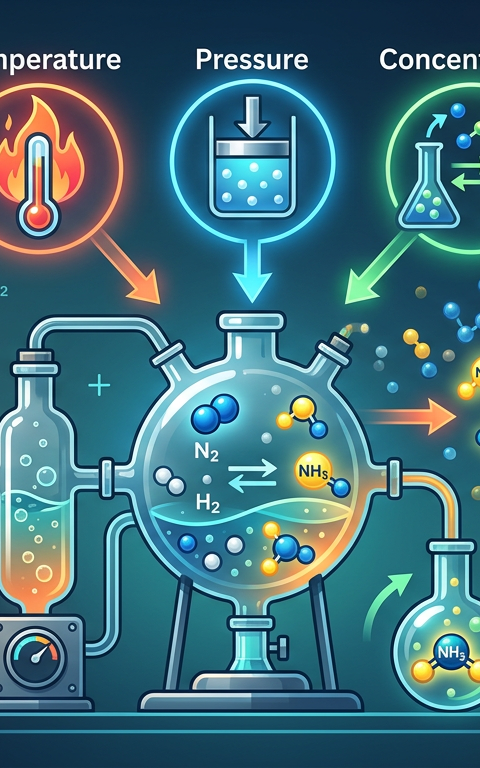
Hard Le Chatelier’s Principle Practice Questions
Master Hard Le Chatelier’s Principle Practice Questions with our comprehensive guide featuring solved examples, practice problems, and detailed explanations.
Mar 30, 2026
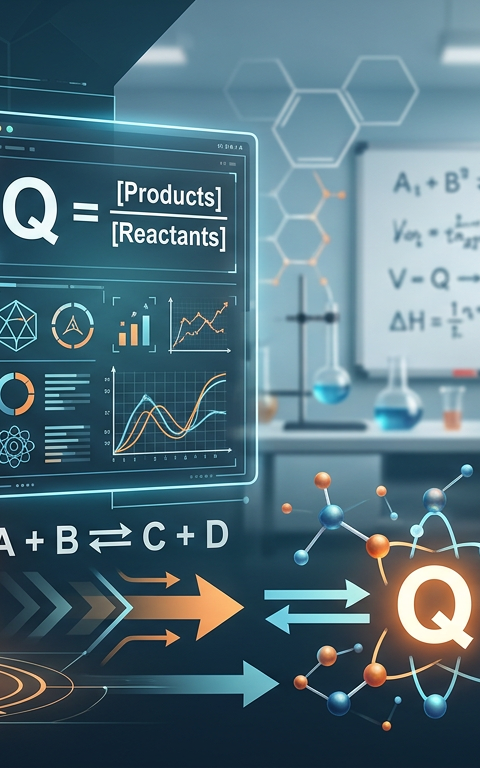
Hard Reaction Quotient (Q) Practice Questions
Hard Reaction Quotient (Q) Practice Questions
Mar 30, 2026
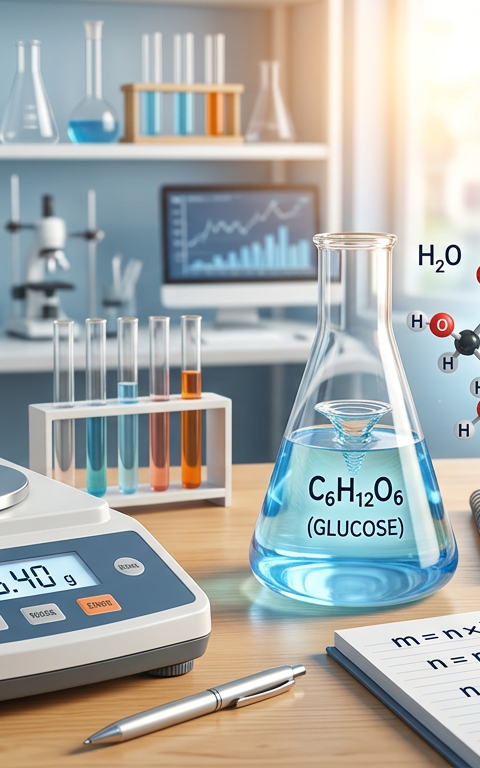
Grams to Moles Practice Questions with Answers
Master grams to moles conversions with our comprehensive guide. Includes step-by-step examples, practice questions, and detailed answers for chemistry students.
Mar 26, 2026
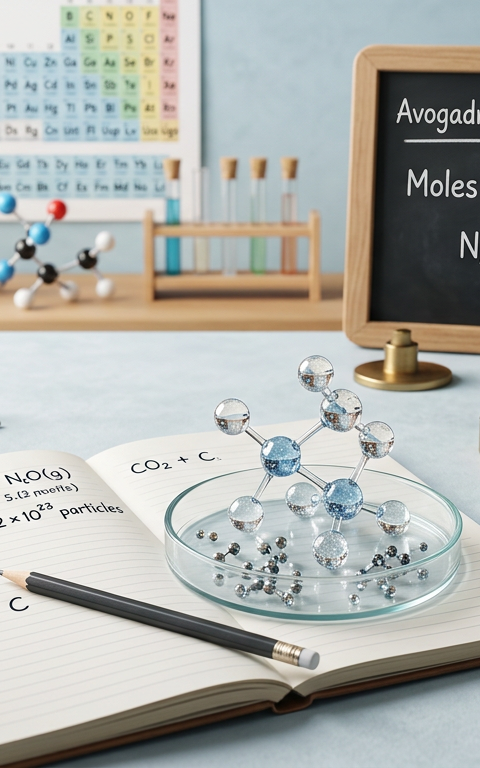
Avogadro’s Number Practice Questions with Answers
Master the mole concept with our Avogadro’s Number practice questions. Includes step-by-step solved examples, a quick quiz, and detailed explanations.
Mar 26, 2026
Empirical Formulas: Solving Ratios from Mass and Percent Data
Master empirical formula calculations with 10 practice questions, worked answers, and a free step-by-step calculator for mass, percentage, and combustion problems.
Mar 26, 2026