Hard Organ System Questions Practice Questions
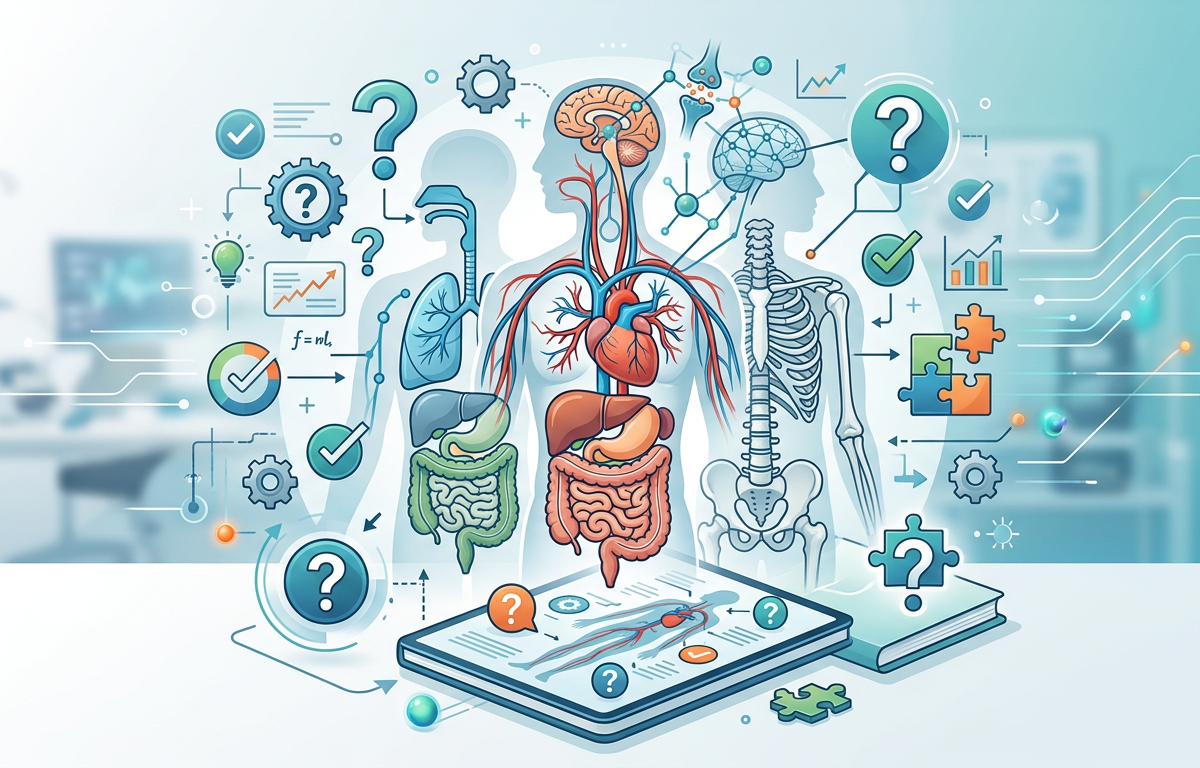
Mastering Hard Organ System Questions requires a deep understanding of how individual biological structures collaborate to maintain homeostasis in the human body. These complex interactions involve feedback loops, chemical signaling, and structural adaptations that go far beyond basic anatomy. By challenging yourself with high-level practice, you can better grasp the physiological nuances often tested in advanced medical and biological examinations.
1. Concept Explanation
Organ systems are groups of organs that work together to perform one or more complex functions, such as the regulation of blood pH, the processing of nutrients, or the coordination of rapid responses to environmental stimuli. While basic biology focuses on the primary role of an organ, advanced study examines the integrated physiology where systems overlap. For example, the endocrine system releases hormones that directly influence the renal system's ability to filter blood, which in turn affects the cardiovascular system by altering blood volume and pressure. Understanding these systems at a "hard" level means analyzing how a failure in one system, such as a decrease in pulmonary gas exchange efficiency, leads to compensatory mechanisms in the urinary and circulatory systems to prevent metabolic acidosis. This level of inquiry is essential for students pursuing careers in healthcare or research, as it mirrors the clinical reality of multi-system organ failure and complex disease pathology.
2. Solved Examples
Review these detailed walkthroughs to understand the logic required for solving complex physiological problems.
- Problem: Explain the role of the Renin-Angiotensin-Aldosterone System (RAAS) in blood pressure regulation.
Solution:- Detection: The juxtaglomerular cells in the kidneys detect a drop in blood pressure or low sodium levels.
- Release: The kidneys release the enzyme renin into the bloodstream.
- Conversion: Renin acts on angiotensinogen (produced by the liver) to form Angiotensin I.
- Activation: Angiotensin-Converting Enzyme (ACE), primarily found in the lungs, converts Angiotensin I into Angiotensin II.
- Effect: Angiotensin II causes systemic vasoconstriction and triggers the adrenal cortex to release aldosterone, which increases sodium and water reabsorption in the kidneys, ultimately raising blood pressure.
- Problem: How does the body compensate for respiratory acidosis?
Solution:- Identification: Respiratory acidosis occurs when the lungs cannot remove enough CO2, leading to a drop in blood pH.
- Chemical Buffering: Immediate bicarbonate buffering occurs in the blood to neutralize excess hydrogen ions.
- Renal Compensation: The kidneys begin to secrete more hydrogen ions into the urine and reabsorb more bicarbonate ions into the blood.
- Timeframe: While respiratory changes happen quickly, renal compensation takes 24-48 hours to fully engage and stabilize pH levels.
- Problem: Describe the sequence of the cardiac conduction system.
Solution:- Initiation: The Sinoatrial (SA) node, the heart's natural pacemaker, generates an electrical impulse.
- Atrial Contraction: The impulse spreads across the atria, causing them to contract and push blood into the ventricles.
- Delay: The impulse reaches the Atrioventricular (AV) node, where it is delayed slightly to allow the ventricles to fill completely.
- Distribution: The impulse travels through the Bundle of His, the bundle branches, and finally the Purkinje fibers, triggering a coordinated ventricular contraction.
3. Practice Questions
- A patient presents with a tumor on the parathyroid gland causing hyperparathyroidism. Which organ system is most likely to suffer from secondary structural damage due to the resulting calcium imbalance?
- During intense anaerobic exercise, the muscular system produces significant amounts of lactic acid. Detail the specific mechanism the liver uses to process this byproduct and its impact on the circulatory system.
- Explain the physiological reason why an individual with chronic obstructive pulmonary disease (COPD) might develop polycythemia (an abnormally high red blood cell count).
- Compare the roles of the sympathetic and parasympathetic nervous systems in regulating the digestive process, specifically focusing on the enteric nervous system.
- How does the countercurrent multiplier system in the Loop of Henle allow the urinary system to produce concentrated urine?
- Identify the specific endocrine response to a sudden decrease in blood glucose and the subsequent metabolic pathways activated in the liver.
- Describe the role of the lymphatic system in the absorption of lipids from the small intestine and the path these lipids take to enter the general circulation.
- A deficiency in Vitamin K would primarily interfere with the function of which two organ systems simultaneously?
- Explain the mechanism by which the nervous system modulates the force of skeletal muscle contraction through motor unit recruitment.
- What is the role of the surfactant produced by Type II alveolar cells, and what systemic complication arises if this production is inhibited?
4. Answers & Explanations
- Answer: The skeletal system. Explanation: Hyperparathyroidism leads to overproduction of PTH, which stimulates osteoclasts to break down bone matrix to release calcium into the blood, leading to osteoporosis or bone fractures.
- Answer: The Cori Cycle. Explanation: The liver converts lactate back into glucose via gluconeogenesis. The circulatory system must transport lactate from muscles to the liver and then transport the newly formed glucose back to the muscles.
- Answer: Hypoxia-induced erythropoiesis. Explanation: Low oxygen levels in the blood (hypoxia) trigger the kidneys to release erythropoietin (EPO), which stimulates the bone marrow to produce more red blood cells to increase oxygen-carrying capacity.
- Answer: The sympathetic system inhibits digestion (vasoconstriction of GI vessels), while the parasympathetic system (Vagus nerve) stimulates peristalsis and secretion by activating the enteric nervous system.
- Answer: It creates an osmotic gradient in the renal medulla. Explanation: The ascending limb pumps out salts while being impermeable to water, making the interstitial fluid salty. This draws water out of the descending limb and collecting duct via osmosis.
- Answer: Glucagon release. Explanation: The alpha cells of the pancreas release glucagon, which triggers glycogenolysis (breakdown of glycogen) and gluconeogenesis in the liver to raise blood sugar.
- Answer: Via lacteals. Explanation: Lipids are packaged into chylomicroons and absorbed into lacteals (lymphatic capillaries) in the villi. They travel through the thoracic duct and enter the venous system at the left subclavian vein.
- Answer: The circulatory and skeletal systems. Explanation: Vitamin K is a co-factor for clotting factors (circulatory) and is essential for bone mineralization proteins like osteocalcin (skeletal).
- Answer: The Size Principle. Explanation: The CNS recruits smaller, slow-twitch motor units first and progressively activates larger, fast-twitch units as more force is required.
- Answer: Reducing surface tension. Explanation: Surfactant prevents alveoli from collapsing. Without it, the respiratory system fails due to atelectasis (collapsed lungs), leading to systemic respiratory distress and hypoxia.
1. Which hormone is primarily responsible for the reabsorption of water in the collecting ducts of the kidneys?
6. Frequently Asked Questions
How do the respiratory and circulatory systems work together?
The respiratory system provides oxygen to the blood and removes carbon dioxide, while the circulatory system transports these gases to and from the body's tissues. This gas exchange occurs at the capillary-alveolar membrane in the lungs, as detailed on Khan Academy.
What is the difference between the endocrine and nervous systems in signaling?
The nervous system uses electrical impulses for rapid, short-term communication, whereas the endocrine system uses chemical hormones transported via the blood for slower, long-lasting effects. Both systems are vital for maintaining homeostasis and often overlap in function, such as in the adrenal response.
How does the urinary system regulate blood pH?
The kidneys regulate blood pH by selectively secreting hydrogen ions (acid) into the urine and reabsorbing bicarbonate ions (base) back into the blood. This process is slower than respiratory regulation but provides a more powerful, long-term solution for acid-base balance.
Why is the liver considered part of multiple organ systems?
The liver functions in the digestive system by producing bile, the circulatory system by filtering blood and synthesizing plasma proteins, and the metabolic system by storing glucose as glycogen. Its diverse roles make it a central hub for human physiology, according to the Johns Hopkins Medicine resources.
What happens when the negative feedback loop in an organ system fails?
Failure of a negative feedback loop leads to homeostatic imbalance, which often results in disease or chronic conditions. For example, the failure of the pancreas to regulate blood glucose through insulin results in diabetes mellitus, characterized by dangerously high blood sugar levels.
How do the integumentary and immune systems interact?
The integumentary system (skin) serves as the first physical barrier against pathogens, while the immune system provides specialized cells like macrophages within the dermis to attack any invaders that breach the surface. This collaboration is the body's primary defense against infection.
Enjoyed this article?
Share it with others who might find it helpful.
Related Articles
Hard Le Chatelier’s Principle Practice Questions
Master Hard Le Chatelier’s Principle Practice Questions with our comprehensive guide featuring solved examples, practice problems, and detailed explanations.
Mar 30, 2026

Hard Reaction Quotient (Q) Practice Questions
Hard Reaction Quotient (Q) Practice Questions
Mar 30, 2026
Grams to Moles Practice Questions with Answers
Master grams to moles conversions with our comprehensive guide. Includes step-by-step examples, practice questions, and detailed answers for chemistry students.
Mar 26, 2026
Avogadro’s Number Practice Questions with Answers
Master the mole concept with our Avogadro’s Number practice questions. Includes step-by-step solved examples, a quick quiz, and detailed explanations.
Mar 26, 2026

Empirical Formulas: Solving Ratios from Mass and Percent Data
Master empirical formula calculations with 10 practice questions, worked answers, and a free step-by-step calculator for mass, percentage, and combustion problems.
Mar 26, 2026