Hard Bond Energy Practice Questions

Concept Explanation
Bond energy, also known as bond enthalpy, is the amount of energy required to break one mole of a specific chemical bond in the gas phase under standard conditions. This thermodynamic value is a direct measure of bond strength; higher values indicate stronger, more stable bonds. When chemical reactions occur, energy is absorbed to break bonds in the reactants (an endothermic process) and released when new bonds form in the products (an exothermic process). To calculate the overall enthalpy change (ΔH) for a reaction using bond energies, we use the formula: ΔH = Σ(Bond energies of bonds broken) - Σ(Bond energies of bonds formed).
In advanced chemistry, bond energy calculations require meticulous attention to molecular geometry and stoichiometry. Unlike Hess’s Law, which uses enthalpies of formation, bond energy calculations are approximations because they use average values for specific bond types across different molecules. For instance, the C-H bond energy in methane (CH4) is slightly different from the C-H bond energy in ethane (C2H6), so chemists use a mean value for general calculations. Understanding these nuances is critical for solving complex problems involving combustion, synthesis, and gaseous phase transitions. For more detailed data on specific chemical constants, the IUPAC Gold Book provides standardized definitions.
Solved Examples
Review these detailed walkthroughs to master the logic behind multi-step bond energy problems.
Example 1: Combustion of Methane
Calculate the ΔH for the reaction: CH4(g) + 2O2(g) → CO2(g) + 2H2O(g).
Bond Energies (kJ/mol): C-H = 413, O=O = 495, C=O = 799, O-H = 463.Identify bonds broken: 4 moles of C-H and 2 moles of O=O. Total = (4 × 413) + (2 × 495) = 1652 + 990 = 2642 kJ.
Identify bonds formed: 2 moles of C=O and 4 moles of O-H. Total = (2 × 799) + (4 × 463) = 1598 + 1852 = 3450 kJ.
Apply the formula: ΔH = 2642 - 3450 = -808 kJ/mol.
Example 2: Synthesis of Ammonia
Determine the enthalpy change for: N2(g) + 3H2(g) → 2NH3(g).
Bond Energies (kJ/mol): N≡N = 941, H-H = 436, N-H = 391.Bonds broken: 1 mol N≡N and 3 mol H-H. Total = 941 + (3 × 436) = 941 + 1308 = 2249 kJ.
Bonds formed: 6 mol N-H (since each NH3 has 3 bonds and there are 2 molecules). Total = 6 × 391 = 2346 kJ.
ΔH = 2249 - 2346 = -97 kJ/mol.
Example 3: Solving for an Unknown Bond Energy
The ΔH for the reaction H2(g) + Cl2(g) → 2HCl(g) is -184 kJ. If H-H is 436 kJ/mol and H-Cl is 431 kJ/mol, find the bond energy of Cl-Cl.Set up the equation: ΔH = [BE(H-H) + BE(Cl-Cl)] - [2 × BE(H-Cl)].
Substitute known values: -184 = [436 + X] - [2 × 431].
Simplify: -184 = 436 + X - 862.
Solve for X: -184 = X - 426 → X = 426 - 184 = 242 kJ/mol.
Practice Questions
Test your skills with these hard bond energy practice questions. Ensure you draw Lewis structures if the bond types are not explicitly stated.
Calculate the enthalpy of reaction for the hydrogenation of ethene: C2H4(g) + H2(g) → C2H6(g). (C=C: 614, C-C: 348, C-H: 413, H-H: 436 kJ/mol).
Estimate the energy released during the combustion of 1 mole of propane (C3H8) to form CO2 and H2O gas. (C-C: 347, C-H: 413, O=O: 495, C=O: 799, O-H: 463 kJ/mol).
Given that the reaction N2F4(g) → 2NF2(g) has a ΔH of 160 kJ/mol and the N-F bond energy is 280 kJ/mol, calculate the N-N bond energy in N2F4.
Want unlimited practice questions like these?
Generate AI-powered questions with step-by-step solutions on any topic.
Try Question Generator Free →Compare the theoretical ΔH for the combustion of methanol (CH3OH) vs. ethanol (C2H5OH) per mole. (C-O: 358, O-H: 463, C-C: 347, C-H: 413, O=O: 495, C=O: 799).
The decomposition of hydrogen peroxide is 2H2O2(g) → 2H2O(g) + O2(g). If the O-O single bond is 146 kJ/mol and O=O double bond is 495 kJ/mol, find ΔH. (O-H: 463 kJ/mol).
Calculate the energy required to completely atomize 1 mole of benzene (C6H6) into gaseous atoms. Assume 3 C-C and 3 C=C bonds. (C-C: 347, C=C: 614, C-H: 413 kJ/mol).
In the reaction HCN(g) + 2H2(g) → CH3NH2(g), calculate ΔH. (C≡N: 891, H-H: 436, C-H: 413, C-N: 293, N-H: 391 kJ/mol).
Using the heat of reaction principles and bond energies, determine if the formation of hydrazine (N2H4) from its elements is endothermic or exothermic. (N≡N: 941, H-H: 436, N-N: 158, N-H: 391).
A specific CFC, CCl2F2, reacts with UV light. Calculate the energy needed to break one C-Cl bond vs one C-F bond. (C-Cl: 328 kJ/mol, C-F: 485 kJ/mol).
Explain why the calculated ΔH for the combustion of liquid ethanol would differ from the bond energy calculation using gaseous ethanol.
Answers & Explanations
Answer: -124 kJ/mol. Broken: 1 C=C (614) + 1 H-H (436) = 1050 kJ. Formed: 1 C-C (348) + 2 C-H (2 × 413 = 826) = 1174 kJ. ΔH = 1050 - 1174 = -124 kJ/mol. Note that 4 C-H bonds exist in both, so they cancel out.
Answer: -2024 kJ/mol. Broken: 2 C-C (694) + 8 C-H (3304) + 5 O=O (2475) = 6473 kJ. Formed: 6 C=O (4794) + 8 O-H (3704) = 8498 kJ. ΔH = 6473 - 8498 = -2025 kJ/mol.
Answer: 160 kJ/mol. In N2F4 → 2NF2, the only bond broken is the N-N bond. 4 N-F bonds remain intact (2 in each NF2). Thus, ΔH = BE(N-N) = 160 kJ/mol.
Answer: Methanol ≈ -676 kJ, Ethanol ≈ -1277 kJ. Ethanol is more exothermic due to the additional C-C and C-H bonds providing more fuel for oxidation.
Answer: -203 kJ. Broken: 2 O-O (292) + 4 O-H (1852) = 2144 kJ. Formed: 4 O-H (1852) + 1 O=O (495) = 2347 kJ. ΔH = 2144 - 2347 = -203 kJ.
Answer: 5361 kJ/mol. Energy = (3 × 347) + (3 × 614) + (6 × 413) = 1041 + 1842 + 2478 = 5361 kJ.
Answer: -158 kJ/mol. Broken: 1 C-H (413) + 1 C≡N (891) + 2 H-H (872) = 2176 kJ. Formed: 3 C-H (1239) + 1 C-N (293) + 2 N-H (782) = 2314 kJ. ΔH = 2176 - 2314 = -138 kJ. (Re-check: 2176 - 2314 = -138).
Answer: Endothermic (+95 kJ/mol). Broken: 941 + 872 = 1813. Formed: 158 + 1564 = 1722. ΔH = 1813 - 1722 = +91 kJ/mol.
Answer: C-Cl is easier to break. C-Cl (328) < C-F (485). This explains why chlorine radicals are released in the stratosphere to deplete ozone.
Answer: Phase change. Bond energy calculations assume all species are gases. If ethanol is liquid, the energy of vaporization must be accounted for using Enthalpy of Vaporization.
1. Which process is always endothermic?
6. **Frequently Asked Questions**
What is the difference between bond energy and bond dissociation energy?
Bond dissociation energy refers to the energy required to break one specific bond in a specific molecule, while bond energy is the average value for that bond type across many different molecules. In simple diatomic molecules like H2, the two values are identical.
Why is bond breaking endothermic?
Bond breaking requires an input of energy to overcome the electrostatic attraction between the shared electrons and the nuclei of the bonded atoms. This absorption of energy from the surroundings makes the process endothermic by definition.
Can bond energy be used for solids or liquids?
Standard bond energy values are specifically defined for substances in the gaseous state to avoid the influence of intermolecular forces. If reactants or products are in liquid or solid phases, additional energy terms for phase changes must be included in the calculation.
How does bond length relate to bond energy?
Generally, there is an inverse relationship where shorter bonds are stronger and possess higher bond energies. This is because the nuclei are closer to the shared electron pair, resulting in a stronger electrostatic pull.
Why does a triple bond not have exactly three times the energy of a single bond?
Triple bonds consist of one sigma bond and two pi bonds, and pi bonds are typically weaker than sigma bonds due to less effective orbital overlap. Consequently, the total energy of a triple bond is higher than a single bond but less than a perfect triple multiple.
What is the most common error in bond energy calculations?
The most frequent mistake is failing to account for the total number of bonds in a molecule, such as counting only one O-H bond in water (H2O) instead of two. Always draw the Lewis structure to visualize every individual bond involved in the reaction.
Want unlimited practice questions like these?
Generate AI-powered questions with step-by-step solutions on any topic.
Try Question Generator Free →
Want unlimited practice questions like these?
Generate AI-powered questions with step-by-step solutions on any topic.
Try Question Generator Free →Enjoyed this article?
Share it with others who might find it helpful.
Related Articles
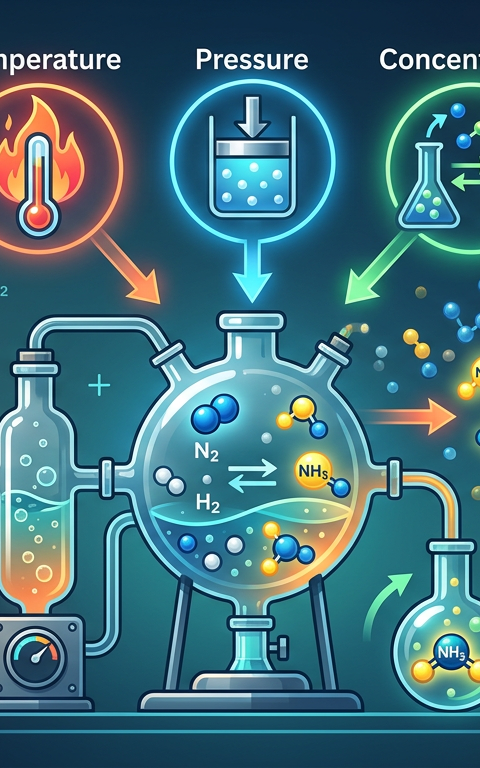
Hard Le Chatelier’s Principle Practice Questions
Master Hard Le Chatelier’s Principle Practice Questions with our comprehensive guide featuring solved examples, practice problems, and detailed explanations.
Mar 30, 2026

Hard Reaction Quotient (Q) Practice Questions
Hard Reaction Quotient (Q) Practice Questions
Mar 30, 2026
Grams to Moles Practice Questions with Answers
Master grams to moles conversions with our comprehensive guide. Includes step-by-step examples, practice questions, and detailed answers for chemistry students.
Mar 26, 2026
Avogadro’s Number Practice Questions with Answers
Master the mole concept with our Avogadro’s Number practice questions. Includes step-by-step solved examples, a quick quiz, and detailed explanations.
Mar 26, 2026
Empirical Formulas: Solving Ratios from Mass and Percent Data
Master empirical formula calculations with 10 practice questions, worked answers, and a free step-by-step calculator for mass, percentage, and combustion problems.
Mar 26, 2026