Easy USMLE GI Physiology Practice Questions
Concept Explanation
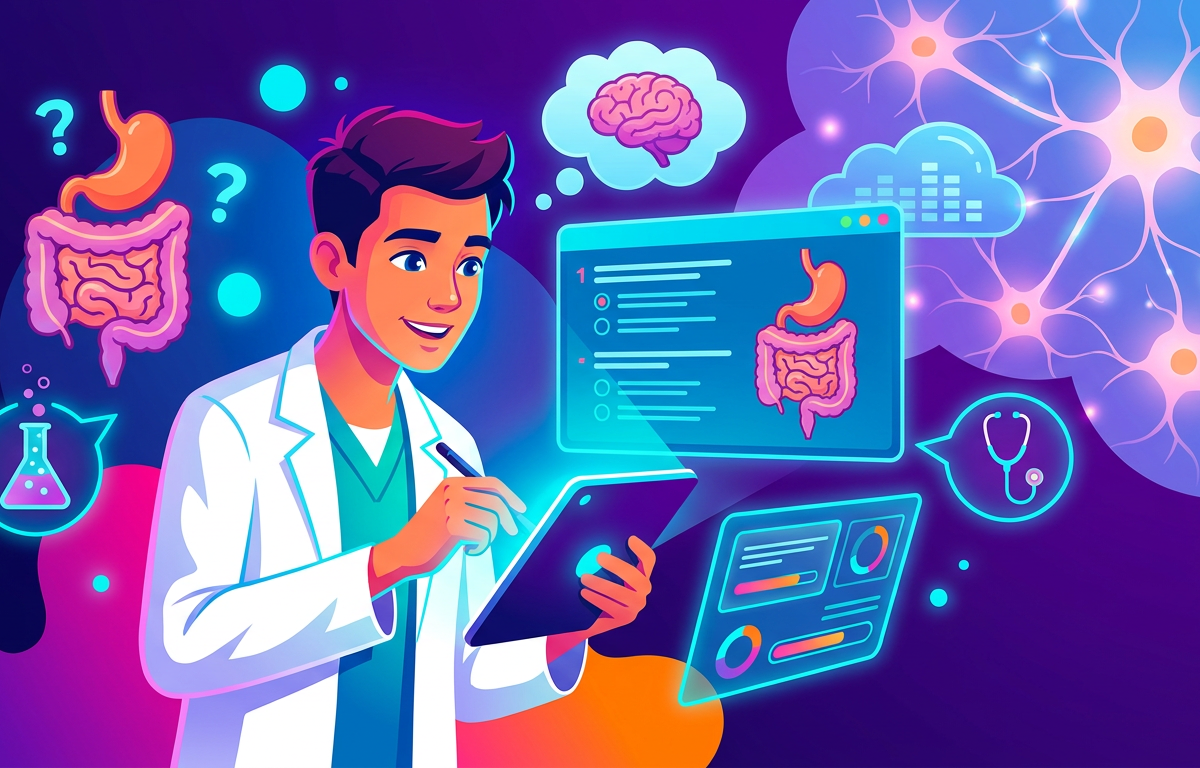
Gastrointestinal (GI) physiology encompasses the mechanical and chemical processes by which the body breaks down food, absorbs nutrients, and eliminates waste. This complex system relies on the coordinated action of hormones, enzymes, and neural pathways to maintain homeostasis. For medical students preparing for Step 1, understanding the secretagogues, digestive enzymes, and motility patterns is essential. Key concepts include the roles of gastrin, secretin, and cholecystokinin (CCK), as well as the unique functions of different GI tract segments. A solid foundation in USMLE GI physiology practice questions helps bridge the gap between basic science and clinical application.
The GI tract operates under the influence of the enteric nervous system, often called the "second brain." This system works alongside the autonomic nervous system to regulate blood flow and secretions. According to the National Institute of Diabetes and Digestive and Kidney Diseases, the digestive process involves a sequence of motility, secretion, digestion, and absorption. For instance, the stomach maintains a highly acidic environment with a pH near to facilitate protein denaturation and activate pepsinogen into pepsin. Understanding these physiological gradients is a core component of USMLE Prep and clinical reasoning.
Solved Examples
Reviewing these worked examples will clarify how physiological principles appear in board-style scenarios.
- Example: Gastrin Regulation
A researcher identifies a hormone that increases H+ secretion by gastric parietal cells and stimulates growth of the gastric mucosa. Which cell type produces this hormone?
- Identify the hormone: The description matches Gastrin.
- Recall the source: Gastrin is produced by G cells.
- Determine location: G cells are primarily located in the antrum of the stomach and the duodenum.
- Solution: G cells.
- Example: Pancreatic Secretion
An individual eats a high-fat meal. Which hormone is primarily responsible for the contraction of the gallbladder and the release of pancreatic lipases?
- Identify the stimulus: Fatty acids and amino acids in the duodenum.
- Recall the hormone: Cholecystokinin (CCK) is released in response to these stimuli.
- List the actions: CCK increases pancreatic enzyme secretion and gallbladder contraction while slowing gastric emptying.
- Solution: Cholecystokinin (CCK).
- Example: Vitamin B12 Absorption
A patient undergoes a total gastrectomy. Which substance must be supplemented parenterally to prevent megaloblastic anemia?
- Identify the missing organ: The stomach contains parietal cells.
- Identify the missing product: Parietal cells secrete Intrinsic Factor (IF).
- Determine the consequence: Without IF, Vitamin B12 cannot be absorbed in the terminal ileum.
- Solution: Vitamin B12 (Cobalamin).
Practice Questions
- Which of the following gastrointestinal hormones is responsible for increasing pancreatic bicarbonate secretion and decreasing gastric acid production?
- A 45-year-old male presents with chronic diarrhea. Laboratory tests show a deficiency in fat-soluble vitamins. A biopsy of the small intestine shows normal villi but a lack of bile salts. In which part of the GI tract are the majority of bile salts normally reabsorbed?
- During the cephalic phase of digestion, which neurotransmitter is primarily responsible for stimulating the secretion of HCl from parietal cells?
Practice with AI-powered USMLE questions, personalized quizzes, adaptive learning, and detailed explanations. Start USMLE Prep Free
- Iron absorption primarily occurs in which segment of the gastrointestinal tract?
- Which gastric cell type is responsible for the secretion of pepsinogen?
- A patient with a gastrin-secreting tumor (Zollinger-Ellison syndrome) is likely to have hypertrophy of which gastric cell layer?
- The Migrating Motor Complex (MMC) is a pattern of electromechanical activity observed in the GI tract during fasting. Which hormone is the primary mediator of this process?
- Which enzyme, located on the brush border of the small intestine, is responsible for activating trypsinogen into trypsin?
- In the presence of low luminal pH in the duodenum, S cells release a hormone that acts on the pancreas. What is the primary intracellular second messenger for this hormone's action on ductal cells?
- Glucose and galactose are transported into the enterocyte via which specific transport protein?
Answers & Explanations
- Answer: Secretin. Secretin is released by S cells in the duodenum in response to acid. It stimulates the pancreas to release bicarbonate-rich fluid to neutralize the acid and inhibits further gastric acid secretion.
- Answer: Terminal Ileum. More than 95% of bile salts are reabsorbed via the enterohepatic circulation in the terminal ileum. Damage to this area often leads to fat malabsorption.
- Answer: Acetylcholine. The cephalic phase is mediated by the Vagus nerve, which releases acetylcholine (ACh). ACh directly stimulates M3 receptors on parietal cells to increase acid production.
- Answer: Duodenum. Iron is primarily absorbed in the duodenum in its ferrous state. This is why patients with duodenal bypass or malabsorption often develop iron deficiency anemia.
- Answer: Chief Cells. Chief cells, found in the body and fundus of the stomach, secrete pepsinogen, which is an inactive proenzyme converted to pepsin by stomach acid.
- Answer: Parietal Cells. Gastrin has a trophic (growth-stimulating) effect on the gastric mucosa, specifically leading to the hyperplasia and hypertrophy of acid-secreting parietal cells.
- Answer: Motilin. Motilin is produced by M cells in the duodenum and jejunum and is responsible for initiating the MMC to clear the gut of residual debris between meals.
- Answer: Enterokinase (Enteropeptidase). This enzyme is essential for protein digestion as it triggers the activation cascade of all other pancreatic proteases by converting trypsinogen to trypsin.
- Answer: cAMP. Secretin binds to G-protein coupled receptors on pancreatic duct cells, activating adenylate cyclase and increasing intracellular cAMP levels.
- Answer: SGLT1. Sodium-glucose linked transporter 1 (SGLT1) uses secondary active transport (dependent on the ATPase) to bring glucose and galactose into the cell.
1. Which hormone is released by I cells in the duodenum and causes gallbladder contraction?
Frequently Asked Questions
What is the role of the alkaline tide in GI physiology?
The alkaline tide refers to the temporary increase in plasma pH that occurs after a meal. As parietal cells secrete into the stomach lumen, they transport bicarbonate () into the bloodstream in exchange for chloride.
How does the Vagus nerve influence gastric acid secretion?
The Vagus nerve stimulates acid secretion through three pathways: direct stimulation of parietal cells via acetylcholine, stimulation of G cells to release gastrin, and inhibition of D cells to reduce somatostatin release.
Where is most water absorbed in the digestive system?
While the large intestine is efficient at water reabsorption, the majority of water (about 7-8 liters per day) is absorbed in the small intestine, specifically the jejunum, following the osmotic gradient created by solute absorption.
What triggers the release of secretin?
Secretin is released by S cells in the duodenum when the luminal pH drops below . Its primary goal is to stimulate pancreatic bicarbonate secretion to neutralize the acidic chyme entering from the stomach.
Why is the pancreas protected from autodigestion?
The pancreas avoids autodigestion by secreting proteolytic enzymes as inactive zymogens, such as trypsinogen. These are only activated in the duodenum by the brush border enzyme enterokinase.
Ready to elevate your USMLE preparation?
Practice with AI-powered USMLE questions, personalized quizzes, adaptive learning, and detailed explanations.
Start USMLE Prep FreeTags
Enjoyed this article?
Share it with others who might find it helpful.
Related Articles
Hard USMLE GI Physiology Practice Questions
Hard USMLE GI Physiology Practice Questions
Jun 9, 2026
Medium USMLE GI Physiology Practice Questions
Medium USMLE GI Physiology Practice Questions
Jun 8, 2026
USMLE GI Physiology Practice Questions with Answers
USMLE GI Physiology Practice Questions with Answers
Jun 8, 2026
Hard USMLE Reproductive Physiology Practice Questions
Hard USMLE Reproductive Physiology Practice Questions
Jun 9, 2026
Hard USMLE Endocrine Physiology Practice Questions
Hard USMLE Endocrine Physiology Practice Questions
Jun 9, 2026
Hard USMLE Renal Physiology Practice Questions
Hard USMLE Renal Physiology Practice Questions
Jun 9, 2026
Hard USMLE Respiratory Physiology Practice Questions
Hard USMLE Respiratory Physiology Practice Questions
Jun 9, 2026
Hard USMLE Cardiovascular Physiology Practice Questions
Hard USMLE Cardiovascular Physiology Practice Questions
Jun 9, 2026