Easy NCLEX Hygiene Practice Questions
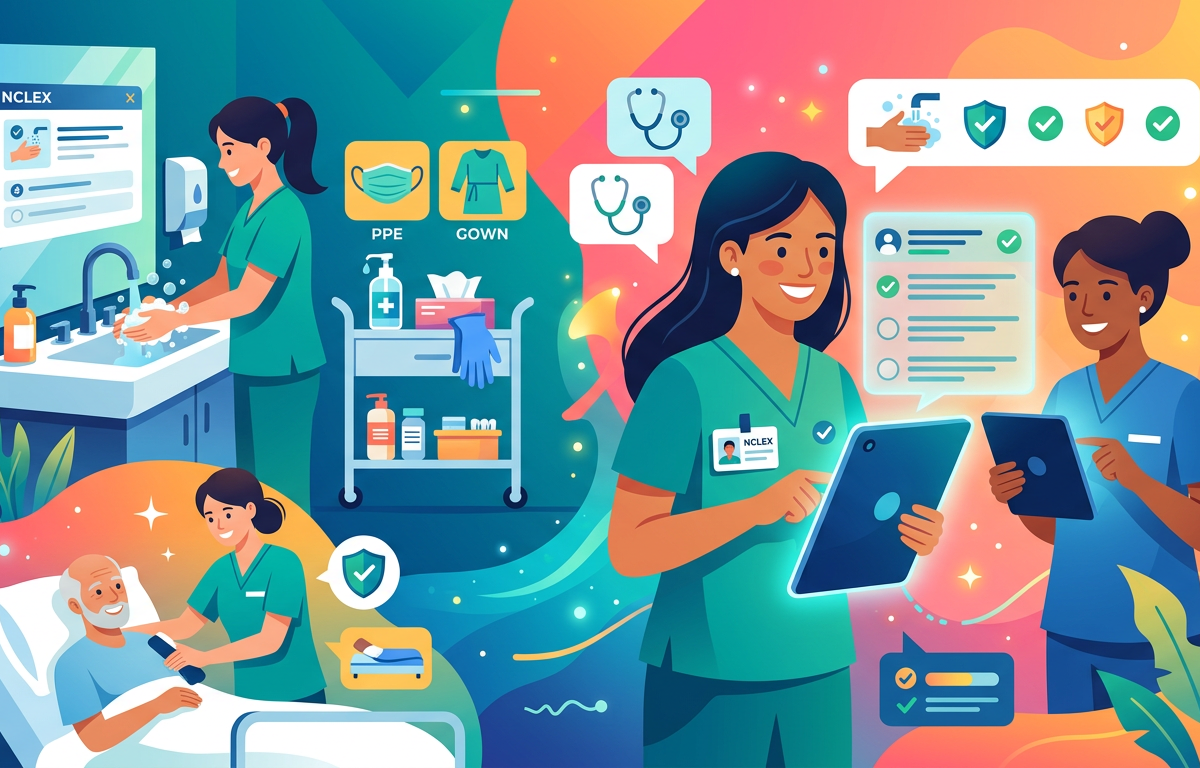
Mastering Easy NCLEX Hygiene Practice Questions is essential for nursing students because basic care and comfort represent a significant portion of the NCLEX-RN and NCLEX-PN client needs categories. Hygiene is not just about cleanliness; it is a fundamental aspect of infection control, skin integrity, and patient dignity. By practicing these foundational concepts early, you build the clinical judgment necessary to handle complex scenarios involving immobilized or immunocompromised patients.
Concept Explanation
Hygiene in nursing refers to the set of practices performed to preserve health and prevent the spread of disease through cleanliness. This encompasses skin care, oral care, perineal care, and grooming for patients who may be unable to perform these tasks themselves. Effective hygiene practices are the first line of defense in maintaining the healthcare environment and preventing healthcare-associated infections (HAIs).
When preparing for the NCLEX, you must understand the principles of medical asepsis (clean technique) and how they apply to daily care. For instance, always wash from the "cleanest to the dirtiest" area to prevent cross-contamination. Hygiene also providing an excellent opportunity for the nurse to perform a physical assessment, particularly of the integumentary system. You can find more foundational resources in our NCLEX Fundamentals Practice Questions with Answers guide.
Key principles of hygiene include:
- Client Independence: Encourage the patient to perform as much of their own care as possible to maintain self-esteem and range of motion.
- Safety: Always ensure the bed is at a working height during the bath and lowered with side rails up (as per policy) when finished.
- Privacy: Keep the patient covered as much as possible, exposing only the limb or area currently being washed.
- Water Temperature: Ensure water is warm but not hot, typically between and ( to ).
If you are also studying for clinical calculations, you might find our Easy NCLEX Dosage Calculation Practice Questions helpful for rounding out your basic skills. Utilizing tools like an AI Flashcard Generator can also help memorize the specific steps for sterile vs. clean hygiene procedures.
Solved Examples
- Scenario: A nurse is preparing to give a complete bed bath to an unconscious patient.
Question: What is the first action the nurse should take?
Solution:- Verify the physician's order and identify the patient using two identifiers.
- Explain the procedure to the patient (even if unconscious) to maintain dignity and provide sensory input.
- Perform hand hygiene and don clean gloves.
- The correct first clinical step is to assess the environment for safety and privacy.
- Scenario: A nurse is performing perineal care for a female patient.
Question: In what direction should the nurse wipe?
Solution:- The nurse should always wipe from front to back (pubis to rectum).
- This prevents the introduction of E. coli and other fecal bacteria into the urinary meatus.
- Use a fresh section of the washcloth for each stroke.
- Scenario: A patient has an injured right arm and needs help changing their gown.
Question: How should the nurse proceed?
Solution:- When removing the gown, start with the unaffected (left) arm first.
- When putting on a new gown, start with the affected (right) arm first.
- Mnemonic: "Off with the strong, on with the weak."
Practice Questions
1. A nurse is providing oral care for an unresponsive patient. In which position should the nurse place the patient to prevent aspiration?
2. While performing a bed bath, the nurse notices a reddened area on the patient's sacrum that does not blanch. What is the nurse's priority action?
3. A nurse is assisting a client with a tub bath. What is the maximum recommended time the client should remain in the water?
Train under NCLEX-style pressure.
Use timed NCLEX practice questions and adaptive quizzes to improve speed, accuracy, and confidence.
Start Timed Practice4. When cleaning the eyes during a bed bath, which technique should the nurse use?
5. A nurse is providing foot care to a client with diabetes mellitus. Which action is contraindicated?
6. Which of the following is the most important reason for the nurse to encourage a patient to participate in their own hygiene care?
7. A nurse is preparing to shave a male client's face with a safety razor. In which direction should the nurse shave?
8. What is the correct sequence for washing body parts during a complete bed bath?
9. A nurse is caring for a patient with a self-care deficit. How often should the nurse perform mouth care for a patient who is NPO (nothing by mouth)?
10. When performing a bed bath, why does the nurse use long, firm strokes from distal to proximal on the extremities?
Answers & Explanations
- Side-lying (Lateral) position: This allows fluids to drain out of the mouth by gravity rather than being swallowed or inhaled into the lungs, reducing the risk of aspiration pneumonia.
- Reposition the patient and avoid massaging the area: A non-blanchable reddened area indicates a Stage 1 pressure injury. Massaging it can cause further tissue damage. For more on skin safety, see NCLEX Patient Safety Practice Questions.
- 20 minutes: Prolonged exposure to warm water can cause vasodilation, leading to lightheadedness or fainting (syncope), and can overly dry the skin.
- Wipe from the inner canthus to the outer canthus: This prevents secretions from entering the nasolacrimal duct and protects the tear ducts from contamination.
- Cutting the toenails: Nurses should not cut the nails of diabetic patients due to the high risk of infection and poor wound healing. Foot care should involve washing, drying (especially between toes), and inspection.
- To promote independence and self-esteem: Encouraging self-care helps the patient maintain a sense of control and prevents the physical complications of immobility. You can learn more about movement in NCLEX Mobility Practice Questions.
- In the direction of hair growth: Shaving with the grain prevents skin irritation, nicks, and ingrown hairs.
- Face, Arms, Trunk, Legs, Back, Perineum: The general rule is clean to dirty. The face is considered the cleanest, while the perineal area is handled last.
- Every 2 hours: Patients who are NPO have drier mucous membranes because they are not swallowing saliva or fluids, necessitating frequent oral hygiene to prevent crusting and infection.
- To promote venous return: Brisk, distal-to-proximal strokes (moving toward the heart) assist the blood flow in the veins back toward the central circulation.
1. Which water temperature range is generally considered safe and comfortable for a bed bath?
Frequently Asked Questions
Why is hygiene a priority in the NCLEX?
Hygiene is prioritized because it directly impacts patient safety, infection control, and skin integrity. It is often the first step in identifying early signs of complications like pressure ulcers or systemic infections.
How do I handle hygiene for a patient with a Foley catheter?
Perform catheter care at least twice daily and after any bowel movement. Clean the meatus-catheter junction with soap and water, moving down the catheter tubing away from the body to prevent bacteria from entering the bladder.
Can I delegate hygiene tasks to assistive personnel (UAP)?
Yes, hygiene tasks can usually be delegated to UAPs, but the nurse remains responsible for the initial assessment and must ensure the UAP knows specific precautions, such as skin integrity issues or activity limits. Check out our NCLEX Infection Control guide for more on delegation.
What is the most important factor in preventing infection during hygiene?
Hand hygiene is the single most effective way to prevent the transmission of pathogens. Nurses must wash hands before and after patient contact, even if gloves were worn during the hygiene procedure.
How should a nurse clean a patient's dentures?
Dentures should be cleaned over a sink filled with water or lined with a towel to prevent breakage if dropped. Use cool or tepid water, as hot water can warp the plastic material of the dentures.
Train under NCLEX-style pressure.
Use timed NCLEX practice questions and adaptive quizzes to improve speed, accuracy, and confidence.
Start Timed PracticeEnjoyed this article?
Share it with others who might find it helpful.
Related Articles

Hard NCLEX Hygiene Practice Questions
Hard NCLEX Hygiene Practice Questions
May 21, 2026
Medium NCLEX Hygiene Practice Questions
Practice medium-level NCLEX hygiene questions focusing on skin care, infection control, and patient safety. Includes solved examples and detailed rationales.
May 21, 2026
Hard NCLEX Prenatal Care Practice Questions
Hard NCLEX Prenatal Care Practice Questions
May 21, 2026

Medium NCLEX Prioritization Practice Questions
Medium NCLEX Prioritization Practice Questions
May 21, 2026

Medium NCLEX Pediatric Practice Questions
Medium NCLEX Pediatric Practice Questions
May 21, 2026

Hard NCLEX Mixed Medication Practice Questions
Master high-difficulty NCLEX mixed medication questions with our comprehensive guide featuring solved examples, practice questions, and expert explanations.
May 21, 2026

Hard NCLEX Mixed SATA Practice Questions
Hard NCLEX Mixed SATA Practice Questions
May 21, 2026

Hard NCLEX Mixed Practice Questions Practice Questions
Hard NCLEX Mixed Practice Questions Practice Questions
May 21, 2026