Easy NAPLEX Percentage Strength Practice Questions
Concept Explanation
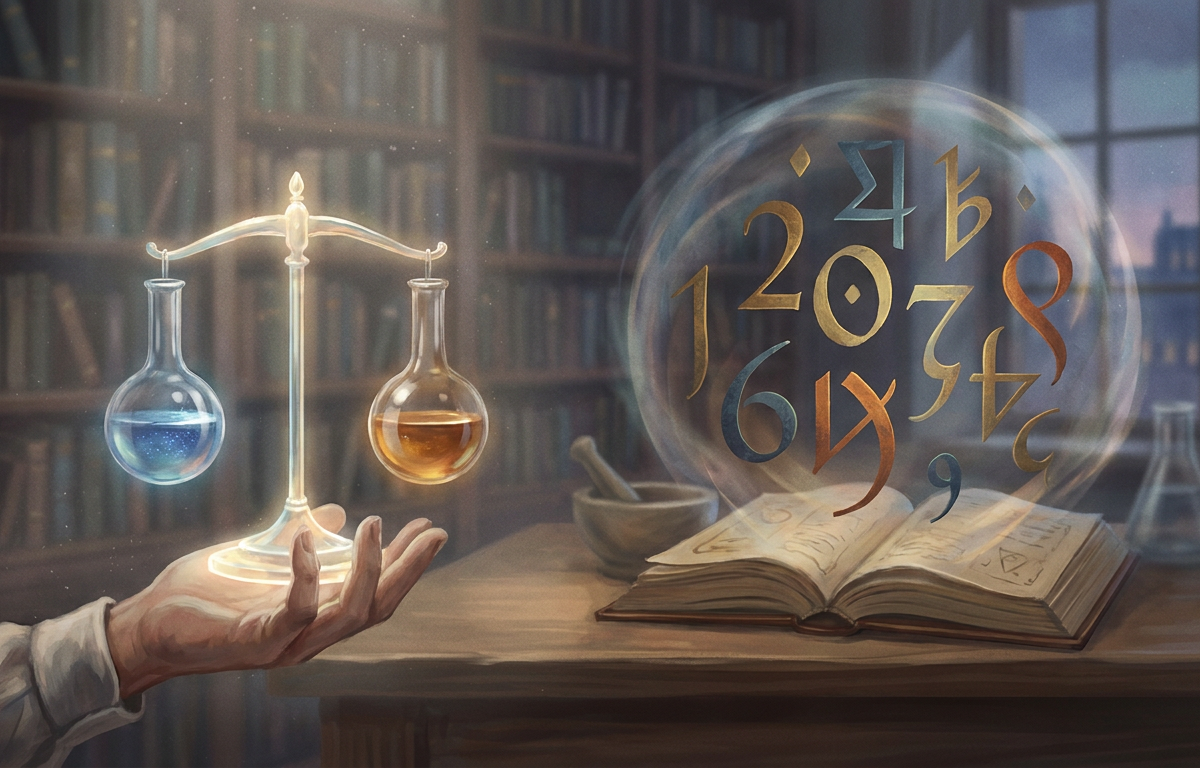
Percentage strength in pharmacy refers to the number of grams of a solute per 100 milliliters of solution for liquids, or grams per 100 grams for solids, and is a fundamental concept for mastering NAPLEX pharmaceutical calculations. By definition, a percentage strength of means there are grams of active ingredient in every 100 units of the total preparation. When working with liquids, this is commonly expressed as weight-in-volume (w/v), where the strength represents grams per 100 mL. For solids, it is weight-in-weight (w/w), representing grams per 100 g. Understanding these ratios allows pharmacists to convert between percentages and concentrations, which is essential for safe medication compounding and dispensing as outlined by the United States Pharmacopeia.
Solved Examples
- Calculate the amount of dextrose in 500 mL of a 5% dextrose solution.
Step 1: Identify that 5% means 5 grams per 100 mL.
Step 2: Set up a proportion: .
Step 3: Solve for : . - A pharmacist needs to prepare 1 liter of a 0.9% sodium chloride solution. How many grams of NaCl are required?
Step 1: Convert 1 liter to 1,000 mL.
Step 2: Recognize that 0.9% means 0.9 g per 100 mL.
Step 3: Solve: .
Step 4: . - What is the percentage strength (w/v) of a solution containing 2 grams of drug in 80 mL?
Step 1: Set up the ratio: .
Step 2: Divide 2 by 80 to get 0.025 g/mL.
Step 3: Multiply by 100 to convert to percentage: .
Practice Questions
1. How many grams of active ingredient are in 250 mL of a 2% solution?
2. A patient requires 50 mL of a 10% solution. How many grams of medication are needed?
3. Express 0.5% as a ratio strength (1:x).
Master NAPLEX calculations faster.
Practice dosage calculations, IV flow rates, alligation, and pharmacokinetics with instant feedback.
Practice Calculations4. If you have 5 g of a solute in 200 mL of solution, what is the percentage (w/v) strength?
5. How many milligrams of drug are in 10 mL of a 0.1% solution?
6. You are told to prepare 500 mL of a 0.05% solution. How many grams of drug are required?
7. A solution contains 1.5 g of drug in 30 mL. What is the percentage (w/v) strength?
8. How many grams of medication are in 1.5 L of a 0.45% solution?
9. A 3% ointment weighs 50 g. How many grams of active ingredient are present?
10. Convert 0.02% to a ratio strength.
Answers & Explanations
- 5 g. .
- 5 g. .
- 1:200. .
- 2.5%. .
- 10 mg. . In 10 mL, .
- 0.25 g. .
- 5%. .
- 6.75 g. .
- 1.5 g. .
- 1:5,000. .
1. What does a 1% (w/v) solution contain?
Frequently Asked Questions
What is the difference between w/v and w/w?
Weight-in-volume (w/v) expresses grams of solute per 100 mL of solution, commonly used for liquids. Weight-in-weight (w/w) expresses grams of solute per 100 g of total product, typically used for creams, ointments, and powders.
How do I convert percentage strength to ratio strength?
To convert a percentage to a ratio, divide the percentage value by 100 to get a fraction, then express that fraction as 1:x. For example, 2% becomes 2/100, which simplifies to 1:50.
Why is percentage strength important for the NAPLEX?
Accurate calculation of percentage strength is vital for compounding sterile and non-sterile products, ensuring patients receive the correct dosage. Errors in these calculations can lead to significant clinical consequences and adverse drug events, making it a high-priority topic for NAPLEX compounding and dosage calculation sections.
Can I use the same formula for all percentage calculations?
Yes, the fundamental formula is the standard approach for almost all percentage strength problems. As noted by Khan Academy, mastering proportional reasoning is the key to solving these types of algebraic relationships consistently.
What is the most common mistake when calculating percentage strength?
The most common error is failing to convert units, such as liters to milliliters or milligrams to grams, before performing the percentage calculation. Always standardize your units to grams and milliliters before starting the math.
Master NAPLEX calculations faster.
Practice dosage calculations, IV flow rates, alligation, and pharmacokinetics with instant feedback.
Practice CalculationsEnjoyed this article?
Share it with others who might find it helpful.
Related Articles

CrCl Calculations: Navigating Obese and Underweight Dosing Traps
Master complex renal dosing with these hard NAPLEX creatinine clearance practice questions, featuring obese, elderly, and underweight patient cases.
Jun 1, 2026
Hard NAPLEX Absolute Risk Reduction Practice Questions
Master Absolute Risk Reduction (ARR) for the NAPLEX with our hard practice questions, step-by-step solutions, and clear concept explanations.
Jun 1, 2026

NAPLEX Absolute Risk Reduction Practice Questions with Answers
Master Absolute Risk Reduction (ARR) for the NAPLEX with our comprehensive guide featuring solved examples, practice questions, and detailed explanations.
Jun 1, 2026
Hard NAPLEX Hepatic Dosing Practice Questions
Hard NAPLEX Hepatic Dosing Practice Questions
Jun 1, 2026
Hard NAPLEX Renal Dosing Practice Questions
Hard NAPLEX Renal Dosing Practice Questions
Jun 1, 2026
Hard NAPLEX Therapeutic Drug Monitoring Practice Questions
Hard NAPLEX Therapeutic Drug Monitoring Practice Questions
Jun 1, 2026

Solving Multi-Step Pharmacokinetics Problems for the NAPLEX
Hard NAPLEX Pharmacokinetics Calculation Practice Questions
Jun 1, 2026

Hard NAPLEX Elimination Rate Practice Questions
Hard NAPLEX Elimination Rate Practice Questions
Jun 1, 2026