NAPLEX Dosage Calculation Practice Questions with Answers
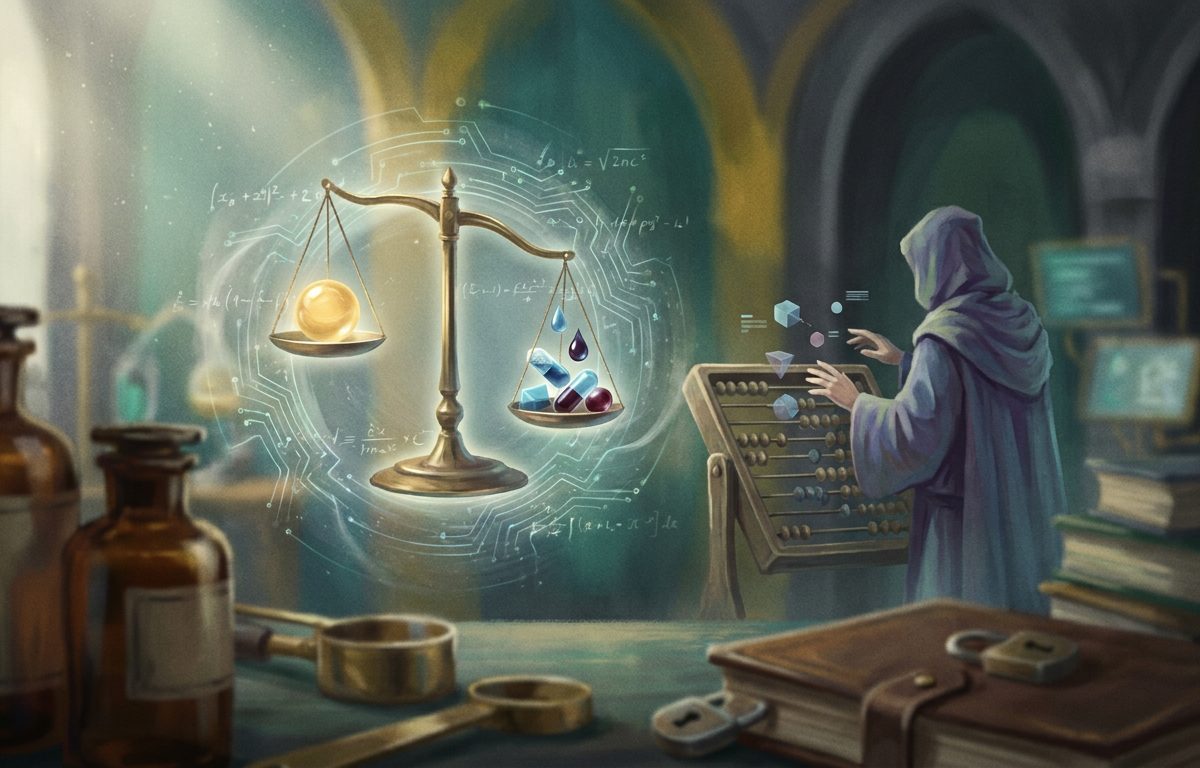
Concept Explanation
NAPLEX Dosage Calculation is the process of using mathematical formulas and dimensional analysis to determine the precise amount of medication to administer based on a patient's weight, body surface area, or prescribed dose. Mastering these calculations is vital for ensuring patient safety and passing the North American Pharmacist Licensure Examination (NAPLEX). The ability to convert between units, calculate flow rates, and determine concentrations is a core competency for any practicing pharmacist. For those preparing for various healthcare licensure exams, practicing with medication-related questions can help build the necessary mental stamina.
To succeed in these calculations, you must be proficient in several key areas:
- Dimensional Analysis: A systematic method of converting units by multiplying by fractions equal to one.
- Alligation: A technique used to find the proportions of two different strengths of the same substance needed to produce a final desired strength.
- Pharmacokinetics: Calculating loading doses, maintenance doses, and clearance rates.
- IV Flow Rates: Determining drops per minute (gtt/min) or milliliters per hour (mL/hr).
According to the National Association of Boards of Pharmacy (NABP), approximately 14% of the NAPLEX exam focuses on calculations. This makes it a high-yield area where accuracy is non-negotiable. You can also utilize tools like an AI Exam Simulator to practice these problems in a timed, realistic environment.
Solved Examples
- Weight-Based Dosing: A patient weighs 154 lbs. The physician orders a drug at a dose of 5 mg/kg. How many milligrams should the patient receive?
- Convert weight from lbs to kg:
- Calculate total dose:
- Final Answer: 350 mg.
- IV Flow Rate Calculation: An IV bag contains 1,000 mL of Normal Saline to be infused over 8 hours. What is the flow rate in mL/hr?
- Identify total volume and total time: Volume = 1,000 mL; Time = 8 hours.
- Divide volume by time:
- Final Answer: 125 mL/hr.
- Alligation Alternate: How many mL of 70% alcohol and 20% alcohol are needed to prepare 500 mL of 40% alcohol?
- Set up the alligation grid: Higher strength (70), Lower strength (20), Target (40).
- Calculate parts:
- Total parts = 20 + 30 = 50 parts.
- Calculate volume for 70%:
- Calculate volume for 20%:
- Final Answer: 200 mL of 70% and 300 mL of 20%.
Practice Questions
- A physician orders 0.25 mg of Digoxin. The pharmacy stocks Digoxin 125 mcg tablets. How many tablets are required for one dose?
- A patient is to receive 1 liter of D5W over 12 hours. The drop factor is 15 gtt/mL. What is the flow rate in gtt/min? (Round to the nearest whole drop).
- A prescription calls for 150 mg of a drug to be taken three times daily for 10 days. The drug is available as a 75 mg/5 mL suspension. What is the total volume in mL needed for the 10-day supply?
Master NAPLEX calculations faster.
Practice dosage calculations, IV flow rates, alligation, and pharmacokinetics with instant feedback.
Practice Calculations- A 176 lb patient requires a dopamine drip at 5 mcg/kg/min. The concentration is 400 mg in 250 mL D5W. Calculate the infusion rate in mL/hr. (Round to one decimal place).
- How many grams of dextrose are in 250 mL of D10W?
- A solution contains 5 mEq of potassium chloride per 10 mL. How many milliliters are needed to provide 25 mEq?
- A pharmacist needs to prepare 100 mL of a 5% ointment by mixing a 10% ointment and a 2% ointment. How many grams of the 10% ointment are needed?
- A child weighing 22 lbs is prescribed Amoxicillin 40 mg/kg/day divided into two doses. How many mg will the child receive per dose?
- Calculate the Body Surface Area (BSA) for a patient who is 170 cm tall and weighs 75 kg using the Mosteller formula: (Round to two decimal places).
- Convert a 1:2500 (w/v) solution to a percentage strength.
Answers & Explanations
- Answer: 2 tablets.
Convert mg to mcg: . Divide dose by strength: . - Answer: 21 gtt/min.
Total volume = 1,000 mL; Total time = 720 minutes (12 hours × 60). Formula: . - Answer: 600 mL.
Dose per day = . Total dose = . Volume calculation: . Wait, recalculate: ; . (Correction: Check steps, 300 mL is correct). - Answer: 15 mL/hr.
Weight = . Dose = . Hourly dose = . Concentration = . Rate = . - Answer: 25 g.
D10W means 10g/100mL. So, . . - Answer: 50 mL.
Setting up the ratio: . ; . - Answer: 37.5 g.
Using alligation: ; . Total parts = 8. Volume of 10% = . Assuming density of 1g/mL for ointment, it is 37.5g. - Answer: 200 mg.
Weight = . Total daily dose = . Divided by 2 doses = 200 mg/dose. - Answer: 1.88 m².
. - Answer: 0.04%.
. ; .
1. How many milligrams are in 0.05 grams?
Frequently Asked Questions
What is the most common mistake on NAPLEX calculations?
The most common errors involve incorrect unit conversions and misplacing decimal points. Students often fail to convert pounds to kilograms or forget to account for the total number of doses in a multi-day supply.
How should I round my answers on the NAPLEX?
Always follow the specific rounding instructions provided in the question stem. If no instructions are given, usually rounding to the nearest tenth or hundredth is standard, but the NAPLEX often specifies the required decimal place.
Is a calculator provided during the NAPLEX?
Yes, an on-screen scientific calculator is provided during the examination. It is essential to become familiar with its layout and functions, such as square roots for BSA calculations, before the test day.
What is the best way to study for dosage calculations?
Consistent practice using dimensional analysis is the most effective strategy. Using resources like pediatric medication practice can also help you understand high-risk dosing scenarios.
Why is dimensional analysis preferred over ratio and proportion?
Dimensional analysis is often preferred because it allows you to see all unit cancellations in a single equation. This reduces the risk of making sequential errors that can occur when performing multiple ratio-and-proportion steps.
Master NAPLEX calculations faster.
Practice dosage calculations, IV flow rates, alligation, and pharmacokinetics with instant feedback.
Practice CalculationsEnjoyed this article?
Share it with others who might find it helpful.
Related Articles
Medium NAPLEX Pharmacokinetics Calculation Practice Questions
Medium NAPLEX Pharmacokinetics Calculation Practice Questions
Jun 1, 2026

Easy NAPLEX Pharmacokinetics Calculation Practice Questions
Easy NAPLEX Pharmacokinetics Calculation Practice Questions
Jun 1, 2026

NAPLEX Pharmacokinetics Calculation Practice Questions with Answers
NAPLEX Pharmacokinetics Calculation Practice Questions with Answers
Jun 1, 2026
CrCl Calculations: Navigating Obese and Underweight Dosing Traps
Master complex renal dosing with these hard NAPLEX creatinine clearance practice questions, featuring obese, elderly, and underweight patient cases.
Jun 1, 2026
Hard NAPLEX Absolute Risk Reduction Practice Questions
Master Absolute Risk Reduction (ARR) for the NAPLEX with our hard practice questions, step-by-step solutions, and clear concept explanations.
Jun 1, 2026

NAPLEX Absolute Risk Reduction Practice Questions with Answers
Master Absolute Risk Reduction (ARR) for the NAPLEX with our comprehensive guide featuring solved examples, practice questions, and detailed explanations.
Jun 1, 2026
Hard NAPLEX Hepatic Dosing Practice Questions
Hard NAPLEX Hepatic Dosing Practice Questions
Jun 1, 2026
Hard NAPLEX Renal Dosing Practice Questions
Hard NAPLEX Renal Dosing Practice Questions
Jun 1, 2026