Easy IV Flow Rate Practice Questions

Easy IV Flow Rate Practice Questions
Mastering Easy IV Flow Rate Practice Questions is a fundamental skill for nursing students and healthcare professionals ensuring patient safety during fluid administration. Intravenous (IV) therapy requires precise calculations to deliver medications and fluids at the correct speed, preventing complications like fluid overload or medication toxicity. This guide provides a clear breakdown of the formulas you need, followed by realistic practice scenarios designed to build your confidence.
Concept Explanation
An IV flow rate is the speed at which an intravenous fluid is delivered to a patient, typically measured in milliliters per hour (mL/hr) for infusion pumps or drops per minute (gtt/min) for gravity infusions. To calculate these rates, you must understand the relationship between the total volume of fluid, the time over which it must be infused, and the drop factor of the tubing being used. According to the CDC guidelines on injection safety, accuracy in these calculations is vital to prevent adverse events.
For most modern clinical settings, you will use an electronic infusion pump. The formula for an infusion pump is simple:
When using gravity tubing, you must account for the "drop factor," which is the number of drops (gtt) it takes to equal 1 mL. This is printed on the IV tubing package. Common drop factors include 10, 15, or 20 gtt/mL (macrodrip) and 60 gtt/mL (microdrip). The formula for gravity drip rates is:
If you find yourself struggling with the mathematical setup, using dimensional analysis practice questions can help you organize your units effectively. Many students also find that practicing NCLEX dosage calculation practice questions helps bridge the gap between simple math and clinical application.
Solved Examples
- Example 1: Calculating mL/hr
The physician orders 1,000 mL of Normal Saline to be infused over 8 hours. What is the hourly flow rate?- Identify the volume: 1,000 mL.
- Identify the time: 8 hours.
- Apply the formula:
- Final Answer: 125 mL/hr.
- Example 2: Calculating Drip Rate (gtt/min)
An IV of 500 mL D5W is to infuse over 4 hours. The drop factor is 15 gtt/mL. Calculate the drip rate in gtt/min.- Convert hours to minutes: .
- Apply the formula:
- Simplify the numerator: .
- Divide by time: .
- Final Answer: Round to the nearest whole drop: 31 gtt/min.
- Example 3: Microdrip Calculation
A nurse needs to administer 60 mL of an antibiotic over 60 minutes using microdrip tubing (60 gtt/mL).- Identify the variables: Volume = 60 mL, Time = 60 min, Drop Factor = 60 gtt/mL.
- Apply the formula:
- Notice that the 60s cancel out.
- Final Answer: 60 gtt/min. (Note: In microdrip, the mL/hr always equals the gtt/min).
Practice Questions
1. A patient is prescribed 250 mL of 0.45% Normal Saline to infuse over 2 hours. What rate should the nurse set on the infusion pump in mL/hr?
2. The healthcare provider orders 1 liter of Lactated Ringer’s to infuse over 10 hours. Calculate the flow rate in mL/hr.
3. Administer 100 mL of an IV piggyback medication over 30 minutes. What is the mL/hr rate?
Struggling with dosage calculations?
Practice IV flow rates, dimensional analysis, drip rates, and dosage calculations instantly with Bevinzey.
Practice Dosage Questions4. An IV of 1,000 mL is to infuse at 125 mL/hr. How many hours will this infusion take?
5. Calculate the drip rate (gtt/min) for 500 mL of NS to infuse over 5 hours. The drop factor is 20 gtt/mL.
6. A physician orders 2,000 mL of D5NS over 24 hours. What is the mL/hr rate? (Round to the nearest whole number).
7. You are using microdrip tubing (60 gtt/mL) to infuse 120 mL of fluid over 2 hours. What is the drip rate in gtt/min?
8. An IV medication of 50 mL is to be delivered over 15 minutes. What is the flow rate in mL/hr?
9. A patient is receiving fluids at 75 mL/hr. If the drop factor is 10 gtt/mL, what is the drip rate in gtt/min?
10. An infusion of 1,500 mL is started at 0800 and is set to run at 150 mL/hr. At what time will the infusion be complete?
Answers & Explanations
- 125 mL/hr. Explanation: .
- 100 mL/hr. Explanation: 1 Liter = 1,000 mL. .
- 200 mL/hr. Explanation: 30 minutes is 0.5 hours. .
- 8 hours. Explanation: .
- 33 gtt/min. Explanation: 5 hours = 300 minutes. . Round to 33.
- 83 mL/hr. Explanation: . Rounded to 83.
- 60 gtt/min. Explanation: 2 hours = 120 minutes. .
- 200 mL/hr. Explanation: 15 minutes is 0.25 hours. .
- 13 gtt/min. Explanation: . Round to 13.
- 1800 (6:00 PM). Explanation: . 0800 + 10 hours = 1800.
1. Which of the following is the correct microdrip drop factor?
Frequently Asked Questions
What is the difference between macrodrip and microdrip?
Macrodrip tubing is used for large volumes and delivers 10, 15, or 20 drops per mL, whereas microdrip tubing is used for small, precise amounts and always delivers 60 drops per mL. Microdrip is commonly used in pediatric or critical care settings where fluid restriction is necessary.
Why do I need to round the drip rate (gtt/min)?
You must round drip rates to the nearest whole number because it is impossible to count a fraction of a drop falling from the IV chamber. Standard practice is to round to the nearest whole drop for safety and accuracy.
How do I convert minutes to hours for mL/hr calculations?
To convert minutes to hours, divide the number of minutes by 60. For example, 30 minutes is hours, and 90 minutes is hours. This is a critical step when using the mL/hr formula.
What should I do if the IV flow rate is running behind schedule?
If an IV is behind, you should first assess the site for complications like infiltration and then follow facility policy regarding "catching up." According to Infusion Nurses Society (INS) standards, you should never significantly increase the rate without a physician's order due to the risk of fluid overload.
When should I use dimensional analysis for IV calculations?
Dimensional analysis is best used for complex multi-step problems, such as weight-based dosage calculations or when converting between different units of measurement like mcg/kg/min to mL/hr. It helps ensure that all units cancel out correctly, leaving you with the desired unit.
Struggling with dosage calculations?
Practice IV flow rates, dimensional analysis, drip rates, and dosage calculations instantly with Bevinzey.
Practice Dosage QuestionsReviewed by
Michael Danquah, MS, PhD
Dr. Michael Danquah is a professor of pharmaceutical sciences and founder of several educational technology platforms focused on improving student learning and performance.
Enjoyed this article?
Share it with others who might find it helpful.
Related Articles
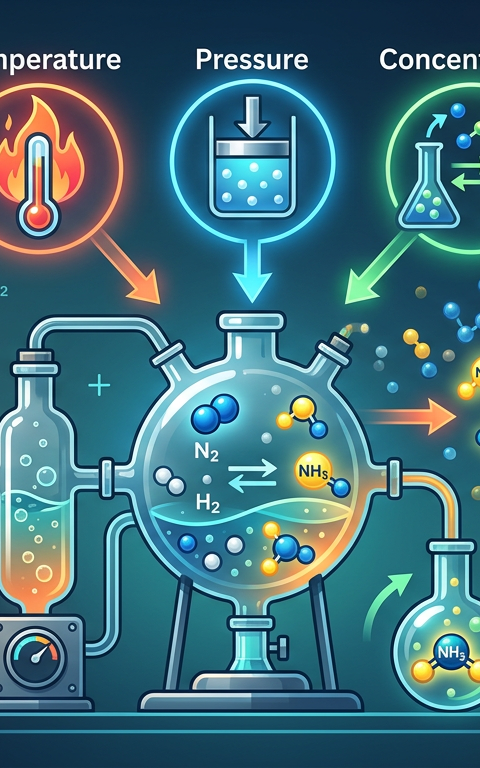
Hard Le Chatelier’s Principle Practice Questions
Master Hard Le Chatelier’s Principle Practice Questions with our comprehensive guide featuring solved examples, practice problems, and detailed explanations.
Mar 30, 2026

Hard Reaction Quotient (Q) Practice Questions
Hard Reaction Quotient (Q) Practice Questions
Mar 30, 2026
Grams to Moles Practice Questions with Answers
Master grams to moles conversions with our comprehensive guide. Includes step-by-step examples, practice questions, and detailed answers for chemistry students.
Mar 26, 2026
Avogadro’s Number Practice Questions with Answers
Master the mole concept with our Avogadro’s Number practice questions. Includes step-by-step solved examples, a quick quiz, and detailed explanations.
Mar 26, 2026

Empirical Formulas: Solving Ratios from Mass and Percent Data
Master empirical formula calculations with 10 practice questions, worked answers, and a free step-by-step calculator for mass, percentage, and combustion problems.
Mar 26, 2026