Solving Weight-Based Dosing: The 2.2 Conversion and Rounding Logic

A 44-pound pediatric patient requires a medication dosed at 25 mg/kg per day. If you skip the conversion to kilograms or round your intermediate numbers too early, you risk administering a dose that is over double what the child's body can safely metabolize. The math of weight-based dosing is not just about multiplication; it is about the precise sequence of converting mass, determining the total 24-hour requirement, and then dividing that total into specific administration windows.
The most frequent trap for students is the 1 kg = 2.2 lbs conversion. While it seems simple, forgetting to round the weight to the nearest tenth before calculating the final dose can lead to discrepancies that fail clinical exams and, more importantly, endanger patients in high-acuity settings like oncology or the NICU. This guide moves past basic formulas to show you how the patient's actual body mass dictates the volume of fluid drawn into a syringe or the rate set on an infusion pump.
The Mechanics of Weight-Proportional Dosing
Weight-based dosage calculations are mathematical processes used to determine a patient’s specific drug dose by multiplying a prescribed dose per unit of weight by the patient’s total body weight. This concept relies on the understanding that physiological requirements and metabolic rates often correlate with body mass. To perform these calculations accurately, you must follow a systematic approach: first, convert the patient’s weight from pounds to kilograms if necessary; second, calculate the total dose required; and third, convert that dose into the volume or quantity to be administered based on the medication’s concentration.
The standard conversion factor used globally is . When calculating weight-based doses, it is vital to follow facility-specific rounding rules, though the general rule is to round the weight in kilograms to the nearest tenth before proceeding with the dose calculation. This ensures consistency across the healthcare team. For those preparing for specialized exams, reviewing NCLEX Pharmacology Practice Questions with Answers can help integrate these math skills with clinical knowledge. Understanding these principles is essential for administering high-risk medications, such as those found in NCLEX Cardiovascular Practice Questions with Answers, where dosages are often titrated based on weight.
Key steps in the process include:
- Weight Conversion: Divide the weight in pounds by 2.2 to get kilograms.
- Dose Calculation: Multiply the weight (kg) by the ordered dose (e.g., mg/kg).
- Volume Calculation: Use the available concentration to find the final volume (mL).
Resources like the CDC's guidelines on pediatric safety and the FDA's medication error reports emphasize that weight-based errors are among the most common preventable mistakes in clinical settings.
Solved Examples
Review these step-by-step examples to understand the logic behind weight-based dosage calculations.
- Example 1: Pediatric Oral Suspension
Order: Amoxicillin divided into two doses. The child weighs . The medication is available as . How many mL will the nurse administer per dose?- Convert lbs to kg: .
- Calculate total daily dose: .
- Calculate dose per administration: .
- Calculate volume: .
- Answer: 5 mL
- Example 2: IV Bolus Medication
Order: Heparin IV bolus. The patient weighs . The pharmacy provides a vial with . How many mL should be administered?- Convert lbs to kg: .
- Calculate total dose: .
- Calculate volume: .
- Answer: 6.4 mL
- Example 3: Critical Care Infusion
Order: Dopamine . The patient weighs . The concentration is in D5W. Calculate the infusion rate in mL/hr.- Calculate dose in mcg/min: .
- Convert mcg/min to mg/hr: .
- Calculate mL/hr: .
- Round to the nearest tenth: 13.1 mL/hr.
- Answer: 13.1 mL/hr
Practice Questions
Test your knowledge with these weight-based dosage calculations practice questions. Ensure you have a calculator and scratch paper ready.
- A patient weighing is prescribed a medication at . The medication is supplied in vials. How many mL will you administer?
- An infant weighs . The physician orders Acetaminophen every 4 hours as needed for fever. The concentration is . How many mL is one dose?
- A patient weighs . The order is for a loading dose of Phenytoin to be infused at a rate not exceeding . What is the total loading dose in mg?
Struggling with dosage calculations?
Practice IV flow rates, dimensional analysis, drip rates, and dosage calculations instantly with Bevinzey.
Practice Dosage Questions- The doctor orders Methylprednisolone IV push for a child weighing . The medication comes in a strength of . How many mL should be given?
- A patient is to receive an initial dose of a medication at . The patient's weight is . How many milligrams (mg) will the patient receive?
- A pediatric patient weighs . The order is for Cefazolin IV divided into three equal doses. How many mg will the patient receive per dose?
- A physician orders a maintenance fluid of for a child weighing . What is the hourly IV rate in mL/hr?
- A continuous infusion of Nitroprusside is ordered at for a patient weighing . The solution is in D5W. Calculate the mL/hr.
- Calculate the dose of Enoxaparin for a patient weighing if the order is subcutaneously once daily.
- A patient weighing is prescribed an IV infusion of a drug at . The drug is available in a concentration of . What is the rate in mL/hr?
For more practice with specific drug classes, check out our NCLEX Antibiotic Practice Questions. If you find the math challenging, utilizing the Bevinzey AI Question Generator can provide personalized practice sets to improve your speed and accuracy.
Answers & Explanations
- Answer: 6 mL
Explanation: First, convert weight: . Next, find total dose: . Finally, find volume: . - Answer: 2.3 mL
Explanation: Weight conversion: . Total dose: . Volume: . Round to the nearest tenth: 2.3 mL. - Answer: 1,620 mg
Explanation: The weight is already in kg (). Multiply weight by dose: . - Answer: 1.1 mL
Explanation: Convert weight: . Round weight to . Calculate dose: . Volume: . Round to 1.1 mL. - Answer: 1.08 mg
Explanation: Weight: . Total dose in mcg: . Convert to mg: . - Answer: 150 mg
Explanation: Total daily dose: . Divide by 3 doses: . - Answer: 33.3 mL/hr
Explanation: Total daily volume: . Hourly rate: . Round to 33.3 mL/hr. - Answer: 45 mL/hr
Explanation: Weight: . Dose: . Hourly dose: . Convert to mg: . Rate: . - Answer: 157.5 mg
Explanation: Weight: . Dose: . - Answer: 26 mL/hr
Explanation: Dose: . Rate: .
1. A patient weighs 154 lbs. What is their weight in kilograms?
Frequently Asked Questions
How do I convert pounds to kilograms accurately?
To convert pounds to kilograms, divide the total weight in pounds by 2.2. For nursing exams and clinical practice, it is standard to round the final kilogram weight to the nearest tenth.
Why are weight-based calculations used for certain adults?
Weight-based dosing is used for adults when medications have a narrow therapeutic index or when body mass significantly impacts the drug's distribution, such as with heparin, insulin, or chemotherapy. This ensures the patient receives a dose tailored to their physiological capacity.
Should I round my answer at every step of the calculation?
No, you should carry out calculations to at least two or three decimal places and only round the final answer to the required precision. Rounding at every step can lead to significant cumulative errors in the final dosage.
What is the most common error in weight-based dosing?
The most common error is failing to convert pounds to kilograms or incorrectly moving the decimal point during unit conversions (e.g., mg to mcg). Always double-check your units and use dimensional analysis to verify your math.
How can I improve my speed with these calculations?
Improving speed requires consistent practice with diverse problem sets and a strong grasp of basic algebra. Using tools like the Bevinzey AI Exam Simulator can help you simulate the pressure of a timed environment.
Struggling with dosage calculations?
Practice IV flow rates, dimensional analysis, drip rates, and dosage calculations instantly with Bevinzey.
Practice Dosage QuestionsReviewed by
Michael Danquah, MS, PhD
Dr. Michael Danquah is a professor of pharmaceutical sciences and founder of several educational technology platforms focused on improving student learning and performance.
Enjoyed this article?
Share it with others who might find it helpful.
Related Articles

Solving High-Stakes IV Titrations and Weight-Based Infusions
Master advanced IV flow rate calculations with these hard practice questions. Covers weight-based dosing, titrations, and dimensional analysis for nurses.
May 17, 2026

Solving Combined Gas Law Problems: Managing Three Changing Variables
Master the Combined Gas Law with this comprehensive guide featuring clear explanations, step-by-step solved examples, and 10 practice questions with answers.
Apr 2, 2026
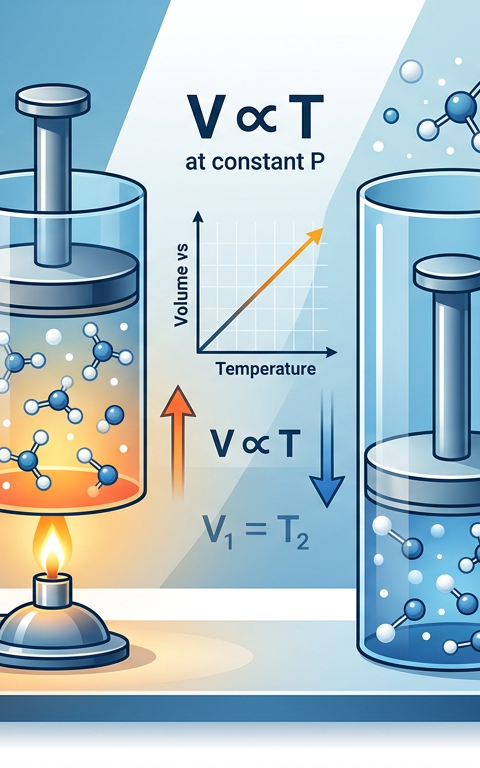
Solving Charles’s Law: Avoiding the Celsius Temperature Trap
Master Charles’s Law with our comprehensive guide featuring solved examples, practice questions, and step-by-step explanations for chemistry students.
Apr 2, 2026

Solving PV=nRT: Why Units and Constants Trip Up Every Student
Master the Ideal Gas Law with these easy practice questions. Includes step-by-step solved examples, unit conversion tips, and a quick quiz to test your skills.
Apr 2, 2026
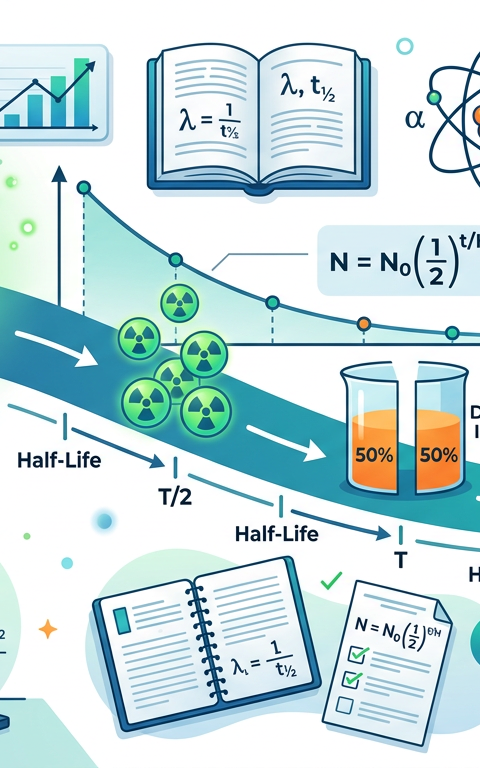
Predicting Radioactive Decay: Solving for Mass and Time Intervals
Master half-life calculations with our comprehensive guide featuring step-by-step solved examples, practice questions, and detailed answers for students.
Apr 2, 2026
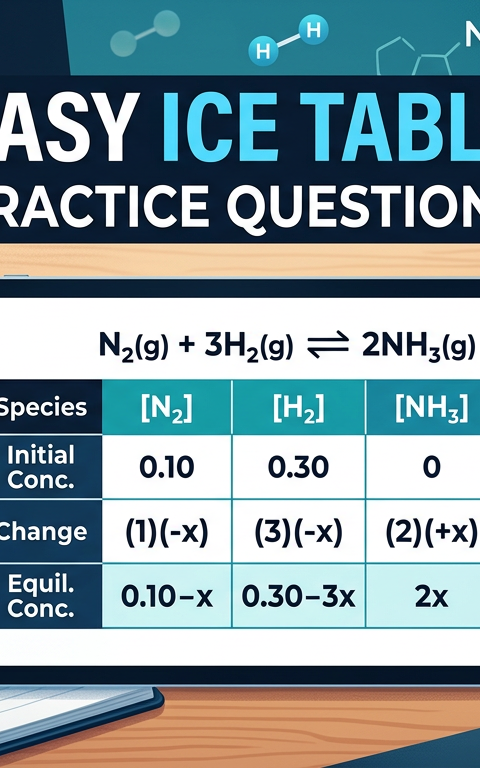
Solving Equilibrium Problems Without Losing Your Stoichiometry
Master chemical equilibrium with these easy ICE table practice questions. Learn to calculate concentrations and K values with step-by-step solved examples.
Mar 30, 2026

Solving Kp with Dalton’s Law and Partial Pressure Gradients
Master Hard Kp Calculations with our comprehensive guide. Includes solved examples, practice questions on partial pressure, and Kp to Kc conversions.
Mar 30, 2026

Calculating Enthalpy Changes: Hess’s Law Puzzle Solving Guide
Master Hess’s Law with our comprehensive guide featuring solved examples, step-by-step practice questions, and detailed answers for chemistry students.
Mar 29, 2026