10 Common NCLEX Mistakes: How to Pass the First Time
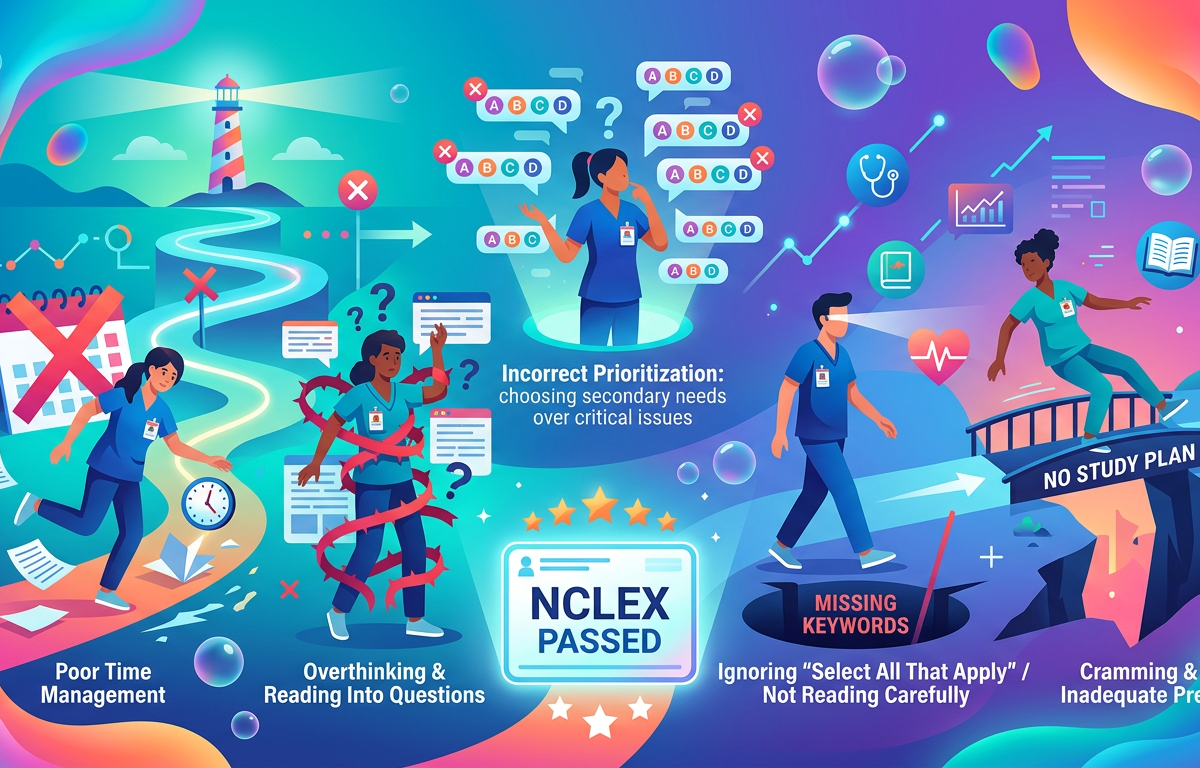
Passing the NCLEX-RN is the final hurdle between your nursing degree and your professional license. Despite years of rigorous clinicals and late-night study sessions, many high-achieving students find themselves staring at a failing result. Avoiding Common NCLEX Mistakes requires more than just memorizing lab values; it demands a fundamental shift in how you process clinical information under pressure. The National Council of State Boards of Nursing (NCSBN) reports that while the majority of first-time U.S.-educated candidates pass, thousands still fail annually because they treat the exam like a classroom quiz rather than a measure of safe, entry-level competence.
The exam isn't purely a test of what you know, but a test of how you think. You can recite every symptom of Cushing's Syndrome and still fail if you cannot prioritize which patient to see first in a busy telemetry unit. Understanding the psychology of the exam and the technical pitfalls of the Next Generation NCLEX (NGN) format is the only way to ensure your first attempt is your last.
The Psychology of the NCLEX: Why Smart Students Fail
Smart students fail the NCLEX because they rely on rote memorization while the exam demands clinical judgment. The NCSBN designed the test to identify individuals who can make safe decisions in unpredictable environments. If you are used to "A" grades based on your ability to recall facts from a textbook, the NCLEX may feel like a foreign language. It doesn't care if you know the molecular structure of a drug; it cares if you know to check an apical pulse before administering it.
The "Straight A" student trap is a psychological phenomenon where high performers assume their academic success translates directly to NCLEX success. This leads to under-preparation and a lack of respect for the exam's unique logic. In nursing school, you often have the "perfect" hospital scenario, but on the NCLEX, you must work only with the data provided, which is often sparse. You must transition from a "student mindset"—looking for the one right answer—to an "entry-level nurse mindset"—identifying the safest action. For more on this, explore these NCLEX Critical Thinking Practice Questions with Answers to see how judgment beats memorization.
Safety is the primary lens of the NCLEX according to the official NCSBN test plans. Every question essentially asks: "Is this candidate going to kill someone or keep them safe?" If an answer choice promotes patient autonomy but compromises immediate physical safety, the safety choice almost always wins. Overconfidence in your GPA often blinds you to this hierarchy, causing you to choose "nice to do" interventions over "must do" safety measures.
The most frequent error in Common NCLEX Mistakes is resource hoarding, where students collect five different review books and three different question banks. This "resource overload" creates a fragmented study plan that leads to confusion rather than clarity. Research suggests that mastering one reputable resource is far more effective than skimming through five. When you jump between platforms, you lose the consistency of the "logic" that each prep course teaches.
Focusing on passive learning—reading chapters and highlighting text—instead of active practice is another recipe for failure. The NCLEX is an application-based exam. You should spend 70% of your time answering questions and 30% reviewing content. If you are struggling with specific systems, using tools like the AI Question Generator can help you create targeted practice sets that force your brain to apply knowledge in real-time. This active engagement builds the mental stamina required for the actual test day.
Many students also fall into the "Rationale Pitfall." They check the rationale for questions they got wrong but skip the ones they got right. This is dangerous because you may have gotten the right answer for the wrong reason. You must understand the "why" behind every answer choice, including the distractors. If you don't understand the underlying pathophysiology, you won't be able to adapt when the NCLEX presents that same concept in a different scenario. For example, when reviewing NCLEX Neurology Practice Questions, pay close attention to why a specific reflex or sign indicates a worsening condition.
Finally, ignoring the NCLEX Test Plan is a strategic blunder. The NCSBN explicitly tells you what percentage of the exam covers "Management of Care" versus "Pharmacological Therapies." If you spend all your time on medications and ignore delegation or prioritization, you are studying blindly. Use the AI MasterPlan to align your study schedule with these official weightings to ensure you aren't neglecting high-yield subjects.
Critical Test-Taking Errors During the Exam
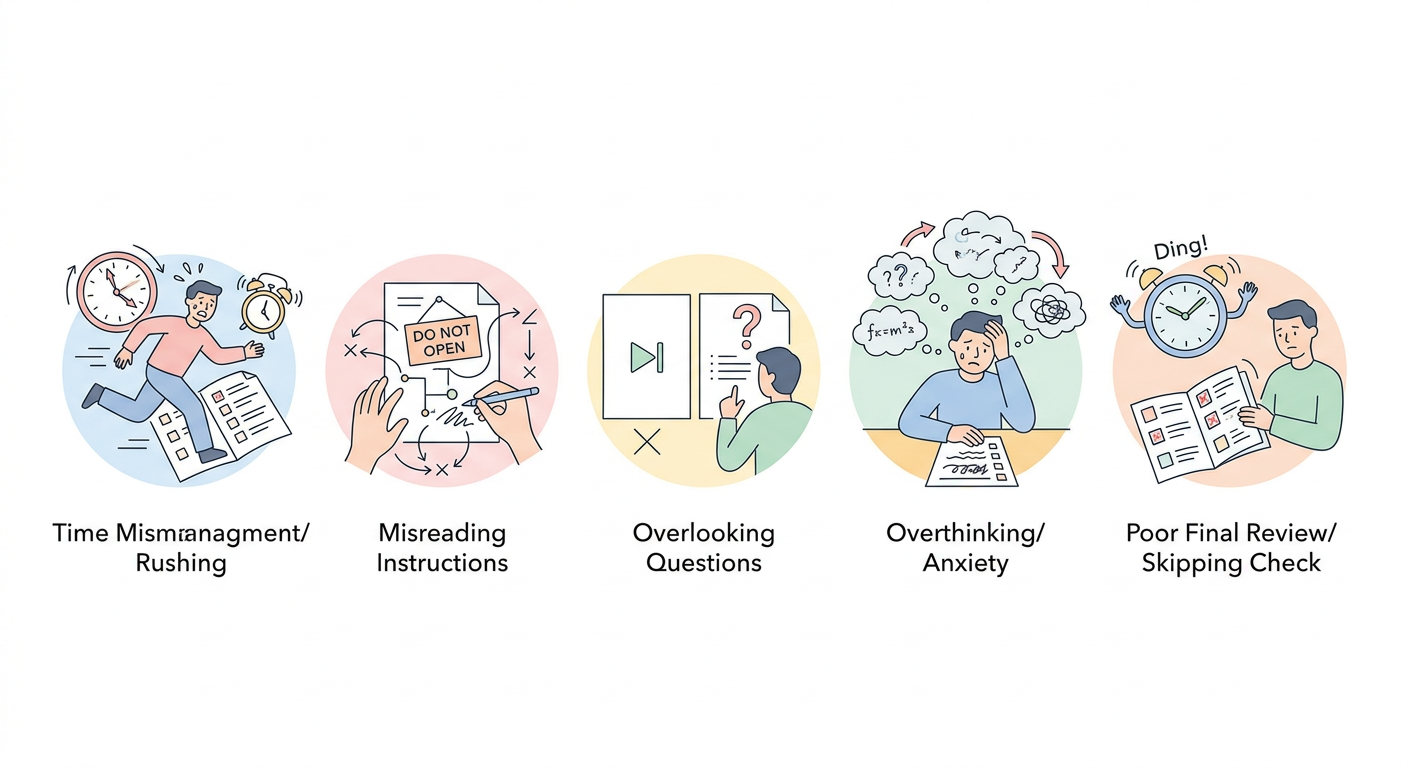
One of the most destructive Common NCLEX Mistakes is "reading into the question," also known as the "What-If Syndrome." Students often add imaginary details to a scenario. If the question says the patient has a blood pressure of 90/60, don't assume they are also hemorrhaging unless the question states it. You must answer the question based strictly on the data provided on the screen. Treat each question as a closed universe where only the provided facts exist.
Failure to identify the "stem" and the "keyword" leads to answering the wrong question entirely. Keywords like first, initial, best, most, or except completely change the required response. For instance, if a question asks for the initial nursing action for a patient with a suspected pulmonary embolism, you are looking for an assessment or a simple intervention like raising the head of the bed, not a complex medical order. If you struggle with these distinctions, practicing with Easy NCLEX Fundamentals Practice Questions can help ground your strategy in basic safety principles.
Poor time management often stems from the fear of the "145-question" limit (now 150 in the NGN format). Students either rush to finish quickly, worried the computer will shut off, or they spend five minutes agonizing over a single question. Remember, the NCLEX is a Variable-Length Adaptive Test. The number of questions you get is not an indicator of your performance; the computer is simply trying to determine your level of competence with 95% certainty. If you find your heart racing, utilize the Metacognitive Calibration tool during your prep to learn how to trust your first instinct and move on.
Lastly, ignoring priority cues like the ABCs (Airway, Breathing, Circulation), Maslow’s Hierarchy of Needs, and the Nursing Process (ADPIE) will cost you points. The NCLEX loves to give you four "correct" nursing actions and ask you which one to do first. If you don't follow the hierarchy—addressing a physical airway issue before a psychosocial anxiety issue—you will choose the wrong "right" answer. This is particularly vital in specialized areas like NCLEX Maternity Practice Questions, where the safety of both mother and baby must be prioritized.
Navigating the Next Generation NCLEX (NGN) Specific Hurdles
The Next Generation NCLEX (NGN) introduced case studies and new item types that target clinical judgment more aggressively. A major mistake students make is "case study fatigue." NGN case studies provide a wealth of information including Electronic Health Records (EHR), lab results, and nursing notes. Students often get overwhelmed by the volume of data and lose focus. You must learn to skim for relevant data points and ignore the "noise" designed to distract you.
The new "partial credit" scoring model is a double-edged sword. While it’s great that you no longer lose the entire point for missing one option in a Select All That Apply (SATA) question, many students become reckless with their choices. In the +/- scoring model used for some NGN items, choosing an incorrect option can actually subtract a point from your total. You must be precise. Only select the options you are 100% sure are correct. If you want to practice this specific skill, try these NCLEX Mixed SATA Practice Questions.
Mastering new item types like "Bowtie" and "Trend" questions requires a different mental layout. Trend questions ask you to look at data over time—like vital signs or lab values—to determine if a patient is improving or deteriorating. If you fail to notice a subtle upward trend in a heart rate over three hours, you will miss the early signs of shock. According to the Mayo Clinic's clinical guidelines, early intervention is key to patient outcomes, and the NGN reflects this by testing your ability to spot these patterns.
Environmental and Physical Mistakes to Avoid
Success on the NCLEX isn't just about what is in your head; it's about the state of your body and mind. One of the most avoidable Common NCLEX Mistakes is poor preparation the night before. Cramming until 3:00 AM does nothing but increase cortisol levels and decrease cognitive function. Your brain needs REM sleep to process information and maintain the focus required for a five-hour exam. Sleep deprivation mimics the cognitive effects of alcohol intoxication, which is the last thing you want when making life-or-death clinical decisions.
Managing in-exam panic is equally critical. When the computer doesn't shut off at question 85, many students experience a spike in anxiety, assuming they are failing. This "testing anxiety" causes the prefrontal cortex—the part of the brain responsible for logic—to shut down. If you feel panic rising, take a scheduled break. Step away from the computer, get water, and reset. The exam is as much a test of endurance and emotional regulation as it is of clinical knowledge.
Familiarity with the testing environment can also reduce stress. Many students fail to read the Pearson VUE candidate rules and are shocked by the security measures, such as palm vein scans and the "nothing in pockets" rule. Knowing exactly what to expect when you walk through those doors prevents unnecessary adrenaline spikes that can cloud your judgment during the first few questions.
Post-Exam Mistakes: Managing the Results Period
The 48-hour wait for results is often the most stressful part of the process. A frequent mistake is an obsession with the "Pearson VUE Trick" (PVT). While often accurate, it is not an official result. Spending hours refreshing forums and spiraling into depression based on a pop-up can derail your mental health. Regardless of the outcome, you need a clear head to plan your next steps.
If you do receive a failing result, don't throw away your Candidate Performance Report (CPR). This document is a goldmine of data. It tells you exactly where you were "Below Passing Standard," "Near Passing Standard," or "Above Passing Standard." Many students ignore this and start studying everything from scratch, which is inefficient. Instead, use the CPR to create a surgical study plan that targets your specific weaknesses. For instance, if you were low in "Psychosocial Integrity," you should focus your energy on NCLEX Mental Health Exam Practice Questions rather than reviewing cardiac meds for the tenth time.
Finally, maintain professionalism online. It is tempting to vent about specific questions on social media, but the NCSBN monitors these platforms. Sharing specific exam content is a violation of the confidentiality agreement you signed and can lead to your results being voided or even permanent disqualification from licensure. Keep your focus on your professional growth and, if necessary, your retake strategy.
Ready to Pass the First Time?
Stop guessing and start preparing with precision. Bevinzey's AI-driven tools help you identify your weak spots and master the NCLEX test-taking strategies used by top students.
Get Started FreeFrequently Asked Questions
What is the number one reason students fail the NCLEX?
The primary reason for failure is a lack of clinical judgment. Students often focus on memorizing facts rather than understanding how to prioritize patient care and ensure safety in a clinical setting.
How many times can you take the NCLEX if you fail?
While the NCSBN allows you to take the exam up to 8 times a year, most individual State Boards of Nursing have their own limits. You must typically wait 45 days between attempts.
Should I change my answers on the NCLEX if I'm unsure?
Generally, you should only change an answer if you have a concrete reason, such as misreading the question or discovering a new piece of data. Your first instinct is often based on subconscious clinical knowledge.
Is the NCLEX harder than nursing school exams?
The NCLEX is often perceived as harder because it uses adaptive testing (CAT), meaning the questions get progressively more difficult as you answer correctly, and it focuses heavily on application rather than recall.
How can I tell if I'm failing during the NCLEX exam?
There is no reliable way to tell if you are failing during the exam. The difficulty of the questions is a reflection of the computer trying to find your limit, not an indicator of a pass or fail status.
How many hours a day should I study for the NCLEX?
Most experts recommend 3-4 hours of high-quality, focused study per day for 6 to 8 weeks. Quality and active participation (practice questions) are more important than the total number of hours spent reading.
Enjoyed this article?
Share it with others who might find it helpful.
Related Articles

How to Pass the NCLEX Faster: The Ultimate Accelerated Guide
Discover the ultimate guide on how to pass the NCLEX faster. Learn expert study strategies, NGN prep tips, and time-saving hacks to get licensed in weeks.
May 21, 2026

Hard NCLEX Prenatal Care Practice Questions
Hard NCLEX Prenatal Care Practice Questions
May 21, 2026

Medium NCLEX Prioritization Practice Questions
Medium NCLEX Prioritization Practice Questions
May 21, 2026
Medium NCLEX Pediatric Practice Questions
Medium NCLEX Pediatric Practice Questions
May 21, 2026

Hard NCLEX Mixed Medication Practice Questions
Master high-difficulty NCLEX mixed medication questions with our comprehensive guide featuring solved examples, practice questions, and expert explanations.
May 21, 2026

Hard NCLEX Mixed SATA Practice Questions
Hard NCLEX Mixed SATA Practice Questions
May 21, 2026

Hard NCLEX Mixed Practice Questions Practice Questions
Hard NCLEX Mixed Practice Questions Practice Questions
May 21, 2026

Hard NCLEX Mental Health Exam Practice Questions
Hard NCLEX Mental Health Exam Practice Questions
May 21, 2026