NAPLEX USP 797 Practice Questions with Answers
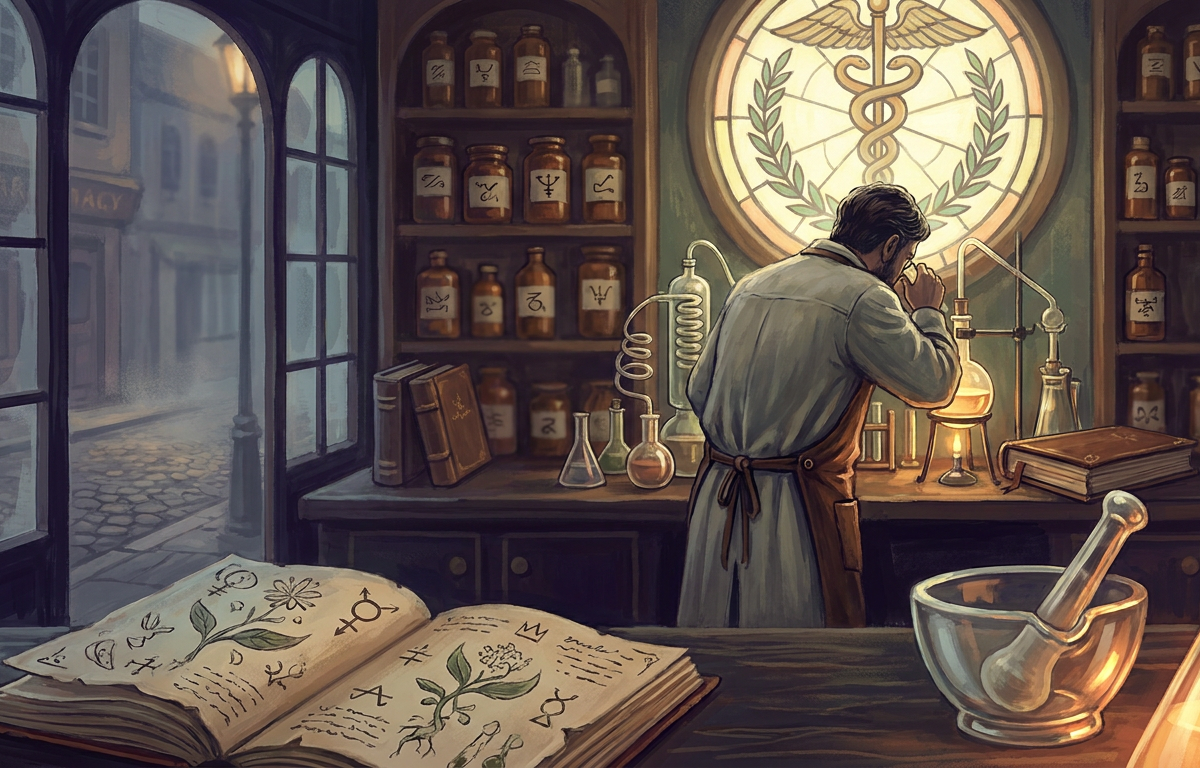
Mastering the standards for sterile compounding is a critical component of the pharmacy licensure exam, and these NAPLEX USP 797 practice questions with answers are designed to help you verify your knowledge of environmental controls, beyond-use dates (BUDs), and aseptic techniques. USP Chapter 797 provides the national standards for the preparation of compounded sterile preparations (CSPs) to ensure patient safety by preventing contamination and maintaining product integrity. For students preparing for the boards, integrating these concepts with clinical knowledge, such as NAPLEX Infectious Disease Practice Questions, is essential for a comprehensive understanding of parenteral therapy.
Concept Explanation
USP Chapter 797 is the regulatory standard that governs the procedures and requirements for compounding sterile preparations (CSPs) in all healthcare settings. This chapter focuses on minimizing the risk of harm to patients by preventing microbial contamination, excessive bacterial endotoxins, variability in the intended strength of ingredients, and unintended chemical and physical contaminants. Key areas of focus include the categorization of CSPs (Category 1, 2, and 3), environmental monitoring requirements, personnel training and hygiene, and the determination of Beyond-Use Dates (BUDs) based on the conditions under which the preparation was made. Understanding these regulations is just as vital as mastering clinical topics found in the NAPLEX Prep hub.
Under the revised USP 797 standards, CSPs are categorized primarily by the environment in which they are prepared and the time within which they must be used:
- Category 1: CSPs typically prepared in a Segregated Compounding Area (SCA) with a shorter BUD (e.g., ≤ 12 hours at room temperature).
- Category 2: CSPs prepared in a cleanroom suite (buffer room and ante-room) that may have longer BUDs based on sterility testing and storage conditions.
- Category 3: CSPs that meet additional requirements (e.g., increased monitoring, stability testing) to justify even longer BUDs.
Proper environmental maintenance requires an ISO Class 5 Primary Engineering Control (PEC), such as a laminar airflow workbench (LAFW), located within an ISO Class 7 buffer room. For more specialized sterile compounding, such as those used in chemotherapy, you might also want to review NAPLEX Oncology Therapeutics Practice Questions to understand the clinical application of these sterile medications.
Solved Examples
- Example: Determining BUD for Category 1 CSP
A technician prepares a sterile antibiotic dose in a Segregated Compounding Area (SCA) at 10:00 AM on Monday. According to USP 797, what is the maximum BUD if stored at room temperature?- Identify the environment: An SCA does not meet the full cleanroom requirements of a buffer room.
- Apply Category 1 rules: Category 1 CSPs prepared in an SCA have a maximum BUD of 12 hours at room temperature.
- Calculate: 10:00 AM + 12 hours = 10:00 PM on Monday.
- Example: Garbing Sequence
A pharmacist is preparing to enter the buffer room. Place the following garbing steps in the correct order: Gown, Shoe Covers, Mask, Gloves, Head Cover.- The process moves from "dirtiest" to "cleanest."
- Order: 1. Shoe covers, 2. Head/facial hair covers, 3. Face mask.
- Perform hand hygiene (wash hands/arms to elbows).
- 4. Non-shedding gown.
- Enter the buffer area and apply alcohol-based hand rub.
- 5. Sterile, powder-free gloves.
- Example: ISO Class Requirements
What is the maximum allowed particle count for an ISO Class 7 environment during dynamic conditions?- Recall the ISO standards: ISO Class 5 (PEC) allows particles per cubic meter.
- ISO Class 7 (Buffer room) allows particles per cubic meter.
- ISO Class 8 (Ante-room) allows particles per cubic meter.
Practice Questions
1. A pharmacy intern is compounding a Category 2 CSP using only sterile starting ingredients. The preparation is performed in an ISO Class 5 PEC within an ISO Class 7 buffer room. If no sterility testing is performed and the product is stored in a refrigerator, what is the maximum BUD?
2. During the cleaning process of a horizontal laminar airflow workbench, in which direction should the operator wipe the interior side walls?
3. According to USP 797, how often must personnel who compound Category 1 and Category 2 CSPs undergo successful completion of a gloved fingertip and thumb sampling test?
Train like it’s exam day.
Build confidence with timed NAPLEX practice questions, mock exams, and performance analytics.
Start Timed Practice4. Which of the following is an appropriate pressure requirement for a non-hazardous sterile compounding buffer room relative to the ante-room?
5. A technician is compounding a TPN (Total Parenteral Nutrition) solution using a complex automated compounding device. This involves multiple transfers of sterile products. If this Category 2 CSP is stored at room temperature without sterility testing, what is the BUD?
6. How often must the HEPA filters in the Primary Engineering Control (PEC) be certified by a qualified professional?
7. A pharmacist is working in a laminar flow hood and needs to move a syringe from the outer edge toward the HEPA filter. To maintain proper airflow, how far inside the hood must all compounding activities take place?
8. Which solution is used to disinfect gloves during the compounding process, and how often should it be applied?
9. If a pharmacy utilizes a Segregated Compounding Area (SCA) for sterile compounding, what is the maximum BUD for a CSP stored in a refrigerator?
10. What is the required minimum temperature for a cleanroom suite (buffer and ante-room)?
Answers & Explanations
- Answer: 10 days. For Category 2 CSPs prepared with sterile components and no sterility testing, the BUD is 4 days at room temperature, 10 days in a refrigerator, and 45 days in a freezer. Using an AI Exam Simulator can help you memorize these specific timeframes.
- Answer: From top to bottom and back to front. When cleaning side walls, you should start at the top and wipe downward, moving from the back (near the HEPA filter) toward the front (the operator) to ensure contaminants are moved away from the critical area.
- Answer: Initially (3 times) and then every 6 months. Personnel must demonstrate competency initially with three successful samples (zero CFUs). For Category 1 and 2 compounding, re-evaluation is required at least every 6 months.
- Answer: Positive pressure of at least 0.02-inch water column. Non-hazardous rooms must be at a higher pressure than the adjacent ante-room to prevent "dirty" air from entering the sterile environment. For hazardous drugs, refer to USP 800 standards.
- Answer: 4 days. Even complex Category 2 CSPs made from sterile ingredients follow the standard BUD of 4 days at room temperature unless sterility testing is performed.
- Answer: Every 6 months. Certification of the PEC and cleanroom (including HEPA integrity and airflow velocity) must occur at least every 6 months or whenever the device is moved or repaired.
- Answer: At least 6 inches. Compounding must occur at least 6 inches inside the front edge of the hood to prevent room air from mixing with the ISO Class 5 air.
- Answer: 70% Sterile Isopropyl Alcohol (IPA); applied frequently. Gloves must be disinfected with 70% sterile IPA before starting, whenever they touch a non-sterile surface, and periodically during long compounding sessions.
- Answer: 24 hours. For Category 1 CSPs (prepared in an SCA), the BUD is 12 hours at room temperature and 24 hours if refrigerated.
- Answer: 20°C (68°F) or cooler. Maintaining a cool temperature is vital for both microbial control and the comfort of garbed personnel to prevent sweating, which can introduce contaminants.
1. Which ISO Class is required for the Primary Engineering Control (PEC) used in sterile compounding?
Frequently Asked Questions
What is the difference between Category 1 and Category 2 CSPs?
Category 1 CSPs are prepared in a Segregated Compounding Area and have shorter BUDs (12-24 hours), while Category 2 CSPs are prepared in a full cleanroom suite and allow for longer BUDs based on storage conditions. For more advanced study on drug stability, check out NAPLEX Renal Therapeutics Practice Questions which often involve complex IV dosing.
How often should the air be sampled for viable particles?
USP 797 requires viable air sampling to be performed at least every 6 months. This is typically done during the certification of the cleanroom and PEC to ensure the environment remains within ISO limits.
Can I use a single-dose vial for multiple patients?
No, a single-dose vial is intended for a single patient for a single procedure. Once punctured in ISO Class 5 air, it must be used within 12 hours unless the manufacturer specifies a shorter time.
What is the required humidity level in a cleanroom?
The relative humidity in the cleanroom suite should be maintained below 60%. This helps prevent microbial growth and ensures the integrity of the garbing materials and equipment.
Is a sink allowed in the buffer room?
No, sinks and floor drains are prohibited in the ISO Class 7 buffer room to minimize the risk of water-borne microbial contamination. Sinks must be located in the ISO Class 8 ante-room.
What should I do if the power goes out in the cleanroom?
If the PEC is turned off, it must be run for at least 30 minutes and thoroughly disinfected with 70% sterile IPA before compounding can resume. If the cleanroom environment was compromised, additional cleaning and monitoring may be required.
Train like it’s exam day.
Build confidence with timed NAPLEX practice questions, mock exams, and performance analytics.
Start Timed PracticeTags
Enjoyed this article?
Share it with others who might find it helpful.
Related Articles
Hard NAPLEX USP 797 Practice Questions
Hard NAPLEX USP 797 Practice Questions
May 31, 2026

Medium NAPLEX USP 797 Practice Questions
Practice USP 797 sterile compounding standards with medium-level NAPLEX questions covering BUDs, ISO classes, and garbing protocols.
May 31, 2026

Easy NAPLEX USP 797 Practice Questions
Master the essentials of sterile compounding with our Easy NAPLEX USP 797 Practice Questions. Learn ISO classes, garbing, and BUDs for exam success.
May 31, 2026
CrCl Calculations: Navigating Obese and Underweight Dosing Traps
Master complex renal dosing with these hard NAPLEX creatinine clearance practice questions, featuring obese, elderly, and underweight patient cases.
Jun 1, 2026
Hard NAPLEX Absolute Risk Reduction Practice Questions
Master Absolute Risk Reduction (ARR) for the NAPLEX with our hard practice questions, step-by-step solutions, and clear concept explanations.
Jun 1, 2026

NAPLEX Absolute Risk Reduction Practice Questions with Answers
Master Absolute Risk Reduction (ARR) for the NAPLEX with our comprehensive guide featuring solved examples, practice questions, and detailed explanations.
Jun 1, 2026

Hard NAPLEX Hepatic Dosing Practice Questions
Hard NAPLEX Hepatic Dosing Practice Questions
Jun 1, 2026
Hard NAPLEX Renal Dosing Practice Questions
Hard NAPLEX Renal Dosing Practice Questions
Jun 1, 2026