Medium NCLEX Triage Practice Questions

Medium NCLEX Triage Practice Questions
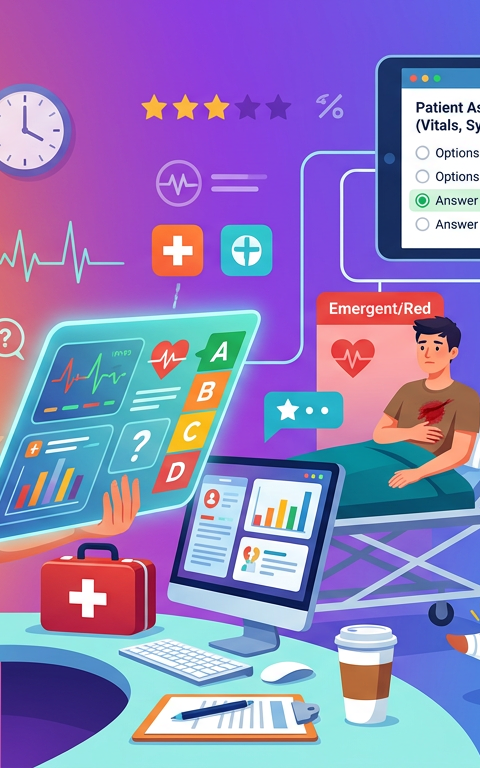
Triage is the clinical process of prioritizing patients based on the severity of their condition and the urgency of their need for medical intervention. Mastering Medium NCLEX Triage Practice Questions is essential for nursing students because it tests the ability to apply the ABCs (Airway, Breathing, Circulation) and Maslow’s Hierarchy of Needs in high-pressure scenarios. Whether you are working in an emergency department or responding to a mass casualty incident, understanding how to differentiate between life-threatening emergencies and stable conditions is a core competency for the NCLEX-RN and NCLEX-PN exams.
Concept Explanation
Triage is a systematic method used by healthcare providers to categorize patients into priority levels based on the acuity of their illness or injury. In the hospital setting, the Emergency Severity Index (ESI) is often used, while in disaster scenarios, the START (Simple Triage and Rapid Treatment) method is preferred. The primary goal is to ensure that the most critically ill patients receive care first, especially when resources are limited. Nurses must look for "red flags" such as compromised airways, signs of shock, sudden neurological changes, or unstable vital signs.
Effective triage requires a deep understanding of NCLEX triage principles, which emphasize that "acute beats chronic" and "unstable beats stable." For example, a patient with a new onset of chest pain (potential myocardial infarction) always takes priority over a patient with chronic back pain, even if the latter is in significant distress. When practicing with an AI Exam Simulator, you will notice that triage questions often provide four patients and ask you which one to see first. The answer is almost always the patient whose condition is most likely to deteriorate rapidly without immediate intervention.
Key categories in hospital triage include:
- Emergent (Level 1): Life-threatening conditions (e.g., cardiac arrest, respiratory distress).
- Urgent (Level 2-3): Serious but not immediately life-threatening (e.g., abdominal pain, compound fractures).
- Non-Urgent (Level 4-5): Minor injuries or illnesses (e.g., sore throat, simple lacerations).
Solved Examples
- Example: Prioritizing Multiple Patients
A nurse receives a report on four patients. Which patient should the nurse assess first?
A) A patient with type 2 diabetes and a blood glucose of 150 mg/dL.
B) A patient with a history of asthma reporting a new onset of a "tight chest" and audible wheezing.
C) A patient 2 days post-op from a hip replacement complaining of 6/10 pain.
D) A patient with a chronic cough and a temperature of 100.2°F.
Solution:- Identify the stability of each patient. Patients A, C, and D are stable or have expected findings.
- Evaluate Patient B: A "tight chest" and wheezing indicate an acute respiratory issue (Airway/Breathing).
- Apply the ABCs: Breathing issues take priority over pain and stable glucose levels.
- Correct Answer: Patient B.
- Example: Mass Casualty Triage
During a disaster, a nurse finds a victim who is not breathing. After opening the airway, the victim begins to breathe at a rate of 25 breaths per minute. How should this victim be tagged?
Solution:- In START triage, if a patient is not breathing, you open the airway.
- If they start breathing, they are immediately tagged Red (Immediate).
- If they do not start breathing, they are tagged Black (Deceased).
- Correct Answer: Red Tag.
- Example: Pediatric Triage
Which pediatric patient requires immediate intervention?
A) A 4-year-old with a barking cough and no stridor at rest.
B) A 6-month-old with a heart rate of 140 bpm while crying.
C) A 2-year-old who swallowed a coin and is now drooling and unable to speak.
D) An 8-year-old with a fractured arm and capillary refill of 2 seconds.
Solution:- Assess for airway obstruction. Drooling and inability to speak suggest a total airway obstruction (foreign body aspiration).
- Compare with others: A barking cough without stridor is less urgent; a heart rate of 140 is normal for a crying infant; 2-second capillary refill is normal.
- Correct Answer: Patient C.
Practice Questions
1. A nurse in the emergency department is assigned to four patients. Which patient should the nurse see first?
2. During a mass casualty incident involving a chemical leak, which patient should be moved to the decontamination zone first?
3. A nurse is triaging patients in a clinic. Which of the following patients is the highest priority?
Feel more prepared for exam day.
Strengthen your clinical judgment and retention with AI-powered NCLEX preparation tools.
Start Preparing Free4. A patient arrives at the triage desk clutching their chest and sweating profusely. They state the pain radiates to the left jaw. What is the nurse’s immediate priority action?
5. Which patient should be categorized as "Yellow" (Delayed) during a disaster triage scenario?
6. The nurse receives four telephone calls in the pediatric clinic. Which call should the nurse return first?
7. A nurse is caring for a group of patients on a medical-surgical unit. Which patient should the nurse assess first after shift report?
8. A triage nurse is evaluating a patient with a head injury. Which finding requires the most immediate intervention?
9. In a mass casualty event, a victim has a respiratory rate of 35 breaths per minute. According to START triage, what color tag do they receive?
10. Which patient should the nurse prioritize in the labor and delivery triage unit?
Answers & Explanations
- Answer: The patient with a sudden onset of confusion and right-sided weakness. Explanation: These are classic signs of an acute stroke (Cerebrovascular Accident). Time is brain, and immediate intervention is required to evaluate for thrombolytic therapy.
- Answer: The patient with the highest level of exposure who is still breathing. Explanation: In chemical triage, those with life-threatening exposures who are salvageable take priority for decontamination and treatment.
- Answer: A patient with a history of anaphylaxis who was just stung by a bee and reports a "lump in the throat." Explanation: A "lump in the throat" indicates laryngeal edema, which is an immediate airway threat. This is more critical than patients with anxiety or stable chronic conditions.
- Answer: Obtain an EKG and initiate oxygen therapy if indicated. Explanation: Symptoms suggest an acute myocardial infarction. Rapid diagnostics and stabilizing the heart’s oxygen supply are the highest priorities.
- Answer: A patient with a closed tibia fracture who has a palpable pedal pulse and stable vitals. Explanation: Yellow tags are for patients who need medical attention but are not in immediate danger of death or loss of limb.
- Answer: The parent of a 2-month-old who reports the infant is lethargic and has not had a wet diaper in 12 hours. Explanation: Lethargy and decreased urine output in a young infant are signs of severe dehydration or sepsis, which can lead to rapid shock.
- Answer: A patient who underwent a thyroidectomy 4 hours ago and is experiencing muscle twitching and tingling around the mouth. Explanation: These are signs of hypocalcemia (Trousseau’s or Chvostek’s sign), which can lead to laryngospasm and airway obstruction.
- Answer: A Glasgow Coma Scale (GCS) score that has dropped from 13 to 10. Explanation: A decrease in GCS indicates worsening intracranial pressure or neurological deterioration and requires immediate imaging and intervention.
- Answer: Red Tag. Explanation: In START triage, a respiratory rate over 30 breaths per minute is an automatic Red (Immediate) classification.
- Answer: A patient at 32 weeks gestation reporting a sudden gush of bright red vaginal bleeding without pain. Explanation: This suggests placenta previa, which can lead to massive maternal hemorrhage and fetal distress. This is a higher priority than routine postpartum care.
1. Which patient should be classified as "Emergent" (Level 1) in the Emergency Department?
Frequently Asked Questions
What is the difference between hospital triage and disaster triage?
Hospital triage focuses on providing the most resources to the sickest individual to save their life. In contrast, disaster triage (like the START method) focuses on saving the largest number of people possible by prioritizing those who are salvageable over those who are likely to die despite intervention.
What does the "Black Tag" represent in a mass casualty incident?
A black tag indicates that the individual is either deceased or has injuries so extensive that they are not expected to survive given the available resources. These individuals are not given priority for treatment or transport during the initial phase of the response.
How does the ABC mnemonic apply to triage?
The ABC mnemonic stands for Airway, Breathing, and Circulation. In any triage situation, a patient with a compromised airway is the highest priority, followed by those with breathing difficulties, and then those with circulatory or perfusion issues like hemorrhage or shock.
When should a nurse use the "Red Tag"?
A red tag is used for patients with immediate life-threatening injuries who have a high chance of survival if treated quickly. Examples include tension pneumothorax, uncontrolled internal bleeding, or severe respiratory distress.
Can a patient’s triage category change?
Yes, triage is a dynamic and ongoing process. A patient who was initially classified as stable (Green or Yellow) can deteriorate and be upgraded to Red, requiring a reassessment of priorities by the nursing staff.
Why is "acute vs. chronic" important in NCLEX triage?
The NCLEX tests your ability to distinguish between expected findings of a chronic disease and new, life-threatening acute changes. Acute conditions are generally less stable and carry a higher risk of rapid decline, making them the priority in triage questions.
Feel more prepared for exam day.
Strengthen your clinical judgment and retention with AI-powered NCLEX preparation tools.
Start Preparing FreeEnjoyed this article?
Share it with others who might find it helpful.
Related Articles

Hard NCLEX Triage Practice Questions
Hard NCLEX Triage Practice Questions
May 21, 2026

Easy NCLEX Triage Practice Questions
Easy NCLEX Triage Practice Questions
May 21, 2026
NCLEX Triage Practice Questions with Answers
NCLEX Triage Practice Questions with Answers
May 21, 2026

Hard NCLEX Prenatal Care Practice Questions
Hard NCLEX Prenatal Care Practice Questions
May 21, 2026

Medium NCLEX Prioritization Practice Questions
Medium NCLEX Prioritization Practice Questions
May 21, 2026

Medium NCLEX Pediatric Practice Questions
Medium NCLEX Pediatric Practice Questions
May 21, 2026

Hard NCLEX Mixed Medication Practice Questions
Master high-difficulty NCLEX mixed medication questions with our comprehensive guide featuring solved examples, practice questions, and expert explanations.
May 21, 2026

Hard NCLEX Mixed SATA Practice Questions
Hard NCLEX Mixed SATA Practice Questions
May 21, 2026