Medium NAPLEX Half-Life Practice Questions
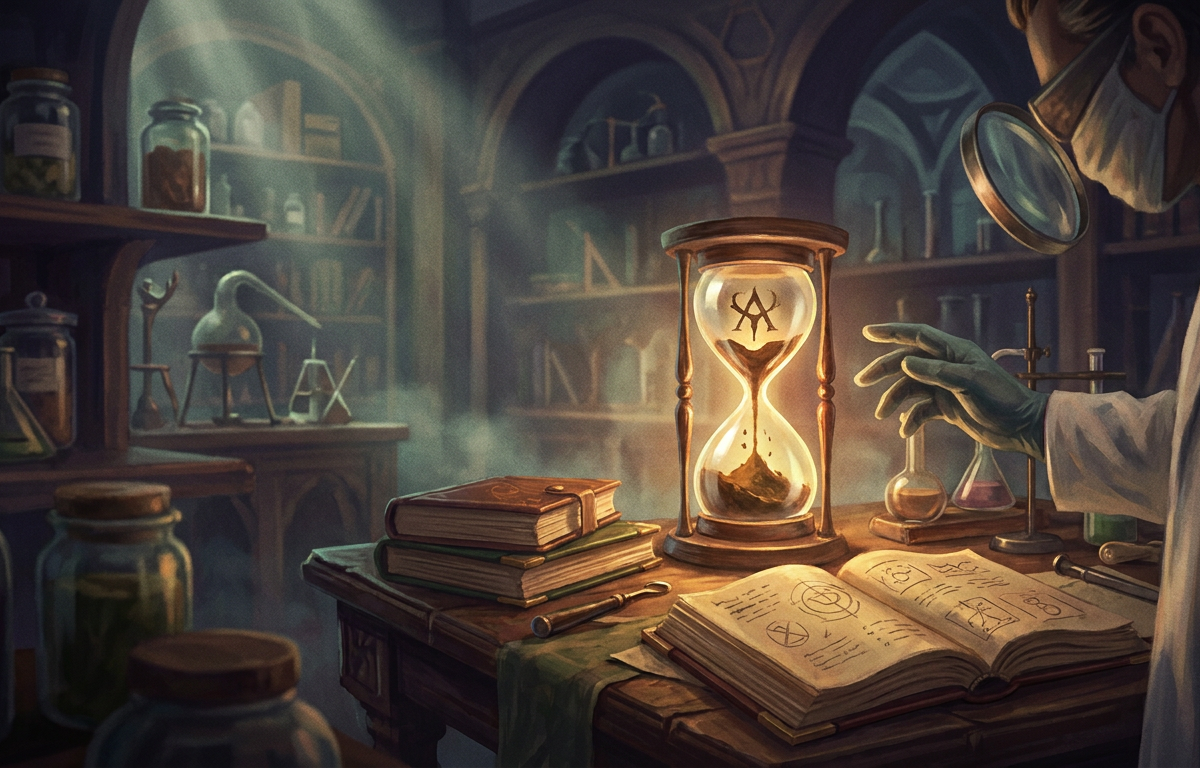
Medium NAPLEX Half-Life Practice Questions
Mastering pharmacokinetic calculations is a cornerstone of passing the North American Pharmacist Licensure Examination (NAPLEX). Among these, understanding NAPLEX half-life concepts is essential for determining dosing intervals, predicting drug accumulation, and ensuring patient safety during therapy transitions. This guide provides a deep dive into the calculations and clinical applications you will encounter on exam day.
Concept Explanation
Drug half-life () is defined as the time required for the concentration of a drug in the plasma to decrease by exactly 50%.
This pharmacokinetic parameter is a reflection of both the volume of distribution () and the clearance () of a medication. In a first-order elimination model, which applies to most drugs at therapeutic doses, the half-life remains constant regardless of the drug concentration. To excel in NAPLEX Prep, students must be comfortable with the relationship between the elimination rate constant () and half-life, expressed by the formula:
Where represents the fraction of drug removed per unit of time. Understanding this concept allows pharmacists to predict when a drug will reach steady state—generally considered to be 4 to 5 half-lives—and when a drug will be effectively eliminated from the body. For instance, in patients with impaired organ function, such as those discussed in Medium NAPLEX Renal Therapeutics Practice Questions, the clearance may decrease, leading to a prolonged half-life and an increased risk of toxicity.
Key Formulas for the NAPLEX
Beyond the basic definition, you should be familiar with these variations:
- Elimination Rate Constant:
- Concentration at Time (t):
- Time to reach Steady State: Approximately
Solved Examples
Example 1: Calculating Half-Life from the Elimination Rate Constant
A new aminoglycoside has an elimination rate constant () of . Calculate its half-life.
- Identify the formula: .
- Substitute the given value: .
- Calculate: .
Example 2: Determining Remaining Drug Concentration
A patient receives an IV bolus of a drug that results in an initial plasma concentration of . If the half-life is 6 hours, what will the concentration be after 18 hours?
- Determine the number of half-lives elapsed: .
- Apply the reduction factor: After 1 half-life (20 mg/L), after 2 half-lives (10 mg/L), after 3 half-lives (5 mg/L).
- Final Answer: .
Example 3: Calculating Clearance using Half-Life and Volume of Distribution
A drug has a half-life of 4 hours and a volume of distribution of . What is the clearance of this drug in L/hr?
- First, find : .
- Use the clearance formula: .
- Substitute the values: .
- Final Answer: .
Practice Questions
- A drug follows first-order kinetics with a half-life of 8 hours. If the current plasma concentration is , how long will it take for the concentration to reach ?
- Calculate the elimination rate constant () for a medication with a half-life of 14 hours.
- A patient is started on a continuous infusion of a drug with a half-life of 12 hours. How many days will it take for the drug to reach approximately 94% of its steady-state concentration?
Track your NAPLEX progress intelligently.
Use AI-powered analytics to identify weak areas and optimize your pharmacy exam preparation.
Track My Progress- A drug has a of in a male. If the clearance is , what is the half-life of the drug?
- If a drug has a half-life of 3 hours, what percentage of the initial dose remains in the body after 12 hours?
- A medication with a half-life of 10 hours is discontinued. How long will it take for of the drug to be eliminated from the body?
- Patient AB is taking a drug with a half-life of 5 hours. If the peak concentration is , what is the concentration 7 hours after the peak?
- An experimental drug has an elimination rate constant of . How long is the half-life?
- A drug has a clearance of and a volume of distribution of . Calculate the half-life in hours.
- If the half-life of a drug increases due to hepatic impairment (as seen in Medium NAPLEX Liver Disease Practice Questions), what happens to the elimination rate constant ?
Answers & Explanations
- 32 hours. To get from 64 to 4, the drug must undergo 4 half-lives (). Since each half-life is 8 hours, .
- . Using the formula , we get .
- 2 days. Steady state is reached in 4-5 half-lives. 4 half-lives = , which is 2 days. 4 half-lives reach of steady state.
- 9.7 hours. First, calculate . Then find . Finally, .
- 6.25%. 12 hours represents 4 half-lives (). The percentage remaining is .
- 66.4 hours. Elimination of 99% requires approximately 6.64 half-lives (based on ). . Most exams accept 7 half-lives as a rule of thumb for "complete" elimination.
- 9.47 mg/L. Use . First, . Then .
- 13.86 hours. .
- 9.24 hours. First, convert clearance to L/hr: . Then . Finally, .
- It decreases. Because and are inversely proportional (), an increase in half-life results in a smaller elimination rate constant.
1. How many half-lives does it take for a drug to reach approximately 97% of its steady-state concentration?
Frequently Asked Questions
What is the clinical significance of drug half-life?
Half-life determines the dosing frequency required to maintain therapeutic levels and predicts the time needed to reach steady state or clear the drug from the body. It helps clinicians adjust doses for patients with organ dysfunction to avoid toxicity.
How is steady state defined in pharmacokinetics?
Steady state occurs when the rate of drug administration equals the rate of drug elimination, resulting in a constant plasma concentration. This typically takes 4 to 5 half-lives of regular dosing to achieve.
Does half-life change with the dose of the drug?
For drugs following first-order kinetics, the half-life is constant and does not change with the dose. However, for drugs with zero-order kinetics (like high-dose aspirin or phenytoin), the half-life can increase as the dose increases because elimination pathways become saturated.
Why is the number 0.693 used in half-life calculations?
The number 0.693 is the natural logarithm of 2 (). It arises from the mathematical derivation of the first-order decay equation when solving for the time it takes for a concentration to reach half of its initial value.
How do volume of distribution and clearance affect half-life?
Half-life is directly proportional to the volume of distribution and inversely proportional to clearance. This means a larger volume of distribution or a lower clearance will result in a longer half-life.
Can I use the AI Question Generator for more practice?
Yes, utilizing a tool like the AI Question Generator can help you create custom practice sets focusing specifically on pharmacokinetic calculations to reinforce these concepts before the exam.
Track your NAPLEX progress intelligently.
Use AI-powered analytics to identify weak areas and optimize your pharmacy exam preparation.
Track My ProgressTags
Enjoyed this article?
Share it with others who might find it helpful.
Related Articles

Hard NAPLEX Half-Life Practice Questions
Hard NAPLEX Half-Life Practice Questions
Jun 1, 2026

Easy NAPLEX Half-Life Practice Questions
Easy NAPLEX Half-Life Practice Questions
Jun 1, 2026

NAPLEX Half-Life Practice Questions with Answers
Master NAPLEX half-life calculations with our comprehensive guide featuring solved examples, practice questions, and detailed pharmacokinetic explanations.
Jun 1, 2026
CrCl Calculations: Navigating Obese and Underweight Dosing Traps
Master complex renal dosing with these hard NAPLEX creatinine clearance practice questions, featuring obese, elderly, and underweight patient cases.
Jun 1, 2026

Hard NAPLEX Absolute Risk Reduction Practice Questions
Master Absolute Risk Reduction (ARR) for the NAPLEX with our hard practice questions, step-by-step solutions, and clear concept explanations.
Jun 1, 2026

NAPLEX Absolute Risk Reduction Practice Questions with Answers
Master Absolute Risk Reduction (ARR) for the NAPLEX with our comprehensive guide featuring solved examples, practice questions, and detailed explanations.
Jun 1, 2026

Hard NAPLEX Hepatic Dosing Practice Questions
Hard NAPLEX Hepatic Dosing Practice Questions
Jun 1, 2026
Hard NAPLEX Renal Dosing Practice Questions
Hard NAPLEX Renal Dosing Practice Questions
Jun 1, 2026