Hard NCLEX Triage Practice Questions

Hard NCLEX Triage Practice Questions
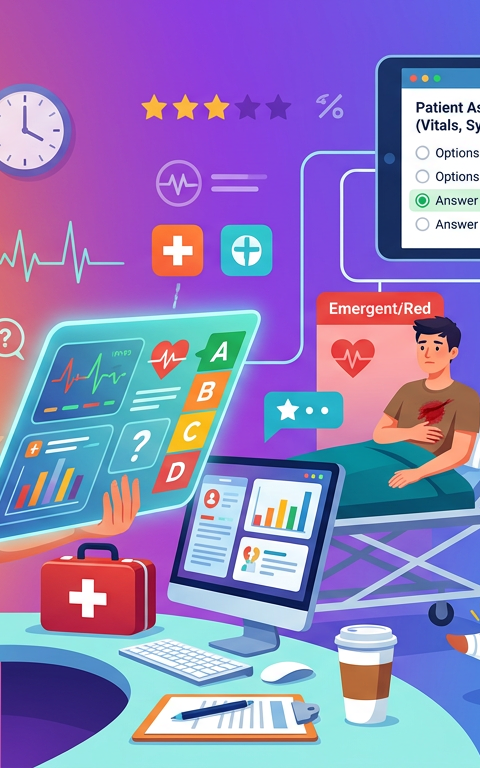
Mastering triage is a critical skill for any aspiring nurse, as it requires the ability to rapidly assess patient stability and prioritize care under pressure. This comprehensive guide provides Hard NCLEX Triage Practice Questions designed to challenge your clinical judgment and prepare you for high-stakes decision-making. By understanding how to differentiate between emergent, urgent, and non-urgent needs, you will be better equipped to handle the complex scenarios often found on the licensing exam.
Concept Explanation
Triage is the clinical process of prioritizing patients based on the severity of their condition and the urgency of their need for medical intervention. In the context of the NCLEX, triage often involves applying the Emergency Severity Index (ESI) or the ABCs (Airway, Breathing, Circulation) to determine which patient requires immediate attention. Nurses must distinguish between life-threatening emergencies and stable conditions that can safely wait for care.
Key frameworks for triage include:
- Emergent (Red): Life-threatening conditions. Examples include cardiac arrest, active seizures, or tension pneumothorax.
- Urgent (Yellow): Serious but not immediately life-threatening. Examples include a stable bone fracture or high fever without respiratory distress.
- Non-Urgent (Green): Minor injuries or illnesses. Examples include a simple laceration or a sore throat.
- Expectant (Black): Used in mass casualty events for those who are deceased or have injuries incompatible with life.
Effective triage requires a deep understanding of pathophysiology. For instance, while a patient with a broken leg is in pain, a patient with a silent myocardial infarction is at a higher risk of immediate death. Integrating your knowledge from cardiac nursing concepts and respiratory emergencies is essential for success in these questions.
Solved Examples
- Scenario: Four patients arrive at the emergency department. Which patient should the nurse see first?
- A 45-year-old with chest pain radiating to the jaw.
- A 10-year-old with a 102°F fever and a cough.
- A 22-year-old with a possible forearm fracture after a fall.
- A 60-year-old with chronic back pain requesting a prescription refill.
- Scenario: During a mass casualty event, a victim has a respiratory rate of 35 breaths per minute. How should this victim be tagged?
- Red (Immediate)
- Yellow (Delayed)
- Green (Minor)
- Black (Expectant)
- Scenario: Which patient assessment finding requires the most immediate intervention?
- Pulse oximetry of 88% on room air.
- Blood pressure of 150/90 mmHg.
- Urine output of 120 mL over the last 4 hours.
- A pain scale rating of 9/10.
Practice Questions
- A nurse is triaging patients in the emergency department. Which patient should be seen first?
- A 30-year-old with a history of asthma reporting a "tight chest" and audible wheezing.
- A 50-year-old with a sudden onset of "the worst headache of my life."
- A 19-year-old with a deep laceration on the thigh that is currently controlled with pressure.
- A 70-year-old with a history of diabetes who is confused and diaphoretic.
- Following a multi-car accident, which victim should the nurse attend to first?
- An unconscious victim with a clear airway and a pulse of 110.
- A conscious victim with an open femur fracture and significant bleeding.
- A victim screaming for help with multiple abrasions on the arms.
- A victim with a sucking chest wound and a respiratory rate of 28.
- A nurse receives four telephone calls from clients. Which client should the nurse return the call to first?
- A client with a casted leg reporting that the toes are cold and blue.
- A client with Type 1 diabetes reporting a blood glucose of 250 mg/dL.
- A client 2 days post-appendectomy reporting a fever of 100.4°F.
- A client with a history of heart failure reporting increased swelling in the ankles.
Feel more prepared for exam day.
Strengthen your clinical judgment and retention with AI-powered NCLEX preparation tools.
Start Preparing Free- Which patient in the labor and delivery triage unit should the nurse assess first?
- A 38-week gestation client reporting a sudden gush of clear fluid.
- A 32-week gestation client reporting bright red vaginal bleeding without pain.
- A 40-week gestation client reporting contractions every 5 minutes.
- A 36-week gestation client reporting a headache and blurred vision.
- The nurse is assigned to four patients. Which patient should be the priority?
- A patient with a potassium level of .
- A patient with a hemoglobin level of .
- A patient with a white blood cell count of .
- A patient with a sodium level of .
- A nurse is working in a pediatric clinic. Which child should be evaluated first?
- A 2-year-old with a "barking" cough and stridor at rest.
- A 5-year-old with a sore throat and a fine red rash on the chest.
- An 8-month-old who has had three bouts of diarrhea today.
- A 10-year-old with a twisted ankle and moderate edema.
- During a disaster, which patient should be assigned a "Green" tag?
- A patient with an airway obstruction.
- A patient with a tension pneumothorax.
- A patient with a sprained wrist who is able to walk.
- A patient with no spontaneous respirations after airway repositioning.
- Which client should the nurse see first after the shift report?
- A client with a chest tube who has 100 mL of drainage in the last hour.
- A client with a tracheostomy who has thick, tenacious secretions.
- A client scheduled for surgery in 30 minutes who has not signed the consent form.
- A client with a PCA pump reporting a pain level of 5/10.
Answers & Explanations
- Answer: A 50-year-old with a sudden onset of "the worst headache of my life." This symptom is classic for a subarachnoid hemorrhage, which is a neurological emergency. While the asthmatic patient is a high priority, a potential brain bleed often takes precedence in triage due to the risk of rapid herniation. The diabetic patient is likely hypoglycemic, which is urgent, but the neurological event is the most critical.
- Answer: A victim with a sucking chest wound and a respiratory rate of 28. A sucking chest wound (open pneumothorax) is a life-threatening breathing emergency that requires immediate occlusive dressing. The bleeding femur is urgent but can be managed with a tourniquet or pressure, and the unconscious victim with a clear airway is stable for the moment.
- Answer: A client with a casted leg reporting that the toes are cold and blue. This indicates potential Compartment Syndrome or neurovascular compromise, which is a surgical emergency to save the limb. This takes priority over the stable diabetic (glucose 250), the mild post-op fever, and the chronic heart failure swelling.
- Answer: A 32-week gestation client reporting bright red vaginal bleeding without pain. This is indicative of placenta previa, which can lead to sudden, massive maternal hemorrhage. This is a higher priority than the preeclampsia signs in the 36-week client, though both are serious.
- Answer: A patient with a potassium level of . Hyperkalemia is a medical emergency because it can cause lethal cardiac arrhythmias. This value is significantly high. The other lab values (Hb 9.0, WBC 12k, Na 132) are abnormal but not immediately life-threatening.
- Answer: A 2-year-old with a "barking" cough and stridor at rest. Stridor at rest indicates significant upper airway obstruction (croup or epiglottitis) and is an emergency. The child with scarlet fever symptoms (sore throat/rash) and the child with diarrhea are stable.
- Answer: A patient with a sprained wrist who is able to walk. In mass casualty triage, "walking wounded" are always tagged Green. Airway obstructions and tension pneumothorax are Red, and no respirations after repositioning is Black.
- Answer: A client with a tracheostomy who has thick, tenacious secretions. Airway always comes first. Thick secretions can plug a tracheostomy tube, leading to respiratory arrest. This is more urgent than the chest tube drainage (which is within limits for some surgeries) or the administrative task of a consent form.
1. Which triage color is assigned to a patient who has a pulse but is not breathing after their airway is opened?
Frequently Asked Questions
What is the difference between emergent and urgent triage?
Emergent triage refers to life-threatening conditions that require immediate intervention to prevent death or disability, such as cardiac arrest. Urgent triage refers to serious conditions that require prompt care but are not immediately life-threatening, such as a stable bone fracture or a high fever.
How does the START method work in mass casualty events?
The Simple Triage and Rapid Treatment (START) method categorizes victims based on their ability to walk, respiratory status, perfusion, and mental status. It allows first responders to quickly identify those who need immediate life-saving care (Red) versus those who can wait (Yellow or Green).
Why is airway always the first priority in triage?
The airway is the first priority because without a patent path for oxygen to enter the lungs, the brain and heart will suffer irreversible damage within minutes. This is the "A" in the ABC (Airway, Breathing, Circulation) framework used across all nursing specialties, including Medical-Surgical units.
Can triage levels change after the initial assessment?
Yes, triage is a dynamic process, and a patient's status can deteriorate or improve over time, requiring a reassessment of their priority level. Nurses must continuously monitor patients in the waiting area to ensure that an "Urgent" case does not become "Emergent."
What should I do if two patients both seem like a "Red" priority?
When faced with multiple emergent patients, use the ABCs to differentiate further; for example, an airway obstruction (A) generally takes precedence over a circulatory issue (C) like a broken leg with bleeding. Utilizing tools like the AI Exam Simulator can help you practice these difficult tie-breaking decisions.
Feel more prepared for exam day.
Strengthen your clinical judgment and retention with AI-powered NCLEX preparation tools.
Start Preparing FreeEnjoyed this article?
Share it with others who might find it helpful.
Related Articles

Medium NCLEX Triage Practice Questions
Master medium-level NCLEX triage practice questions. Learn to prioritize patients using ABCs, ESI, and START triage methods with solved examples and a quiz.
May 21, 2026

Easy NCLEX Triage Practice Questions
Easy NCLEX Triage Practice Questions
May 21, 2026
NCLEX Triage Practice Questions with Answers
NCLEX Triage Practice Questions with Answers
May 21, 2026

Hard NCLEX Prenatal Care Practice Questions
Hard NCLEX Prenatal Care Practice Questions
May 21, 2026

Medium NCLEX Prioritization Practice Questions
Medium NCLEX Prioritization Practice Questions
May 21, 2026

Medium NCLEX Pediatric Practice Questions
Medium NCLEX Pediatric Practice Questions
May 21, 2026

Hard NCLEX Mixed Medication Practice Questions
Master high-difficulty NCLEX mixed medication questions with our comprehensive guide featuring solved examples, practice questions, and expert explanations.
May 21, 2026

Hard NCLEX Mixed SATA Practice Questions
Hard NCLEX Mixed SATA Practice Questions
May 21, 2026