Easy NCLEX Pediatric Safety Practice Questions
Easy NCLEX Pediatric Safety Practice Questions
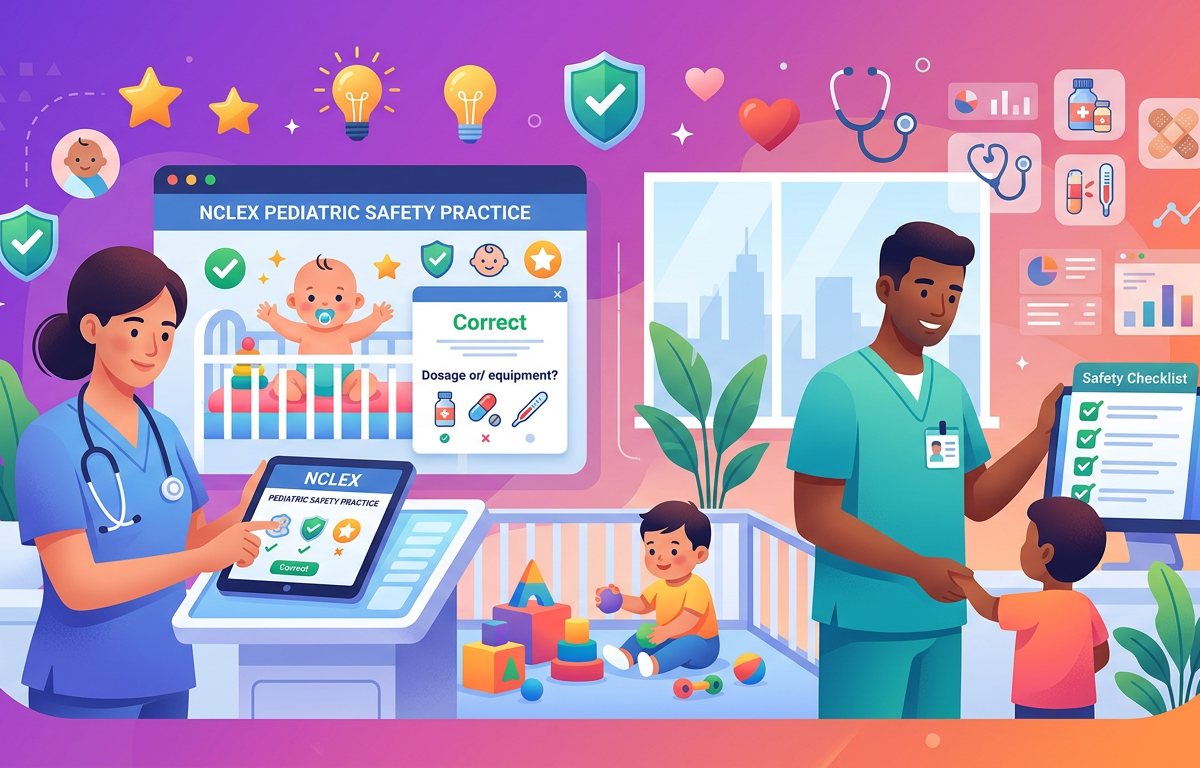
Mastering pediatric safety is a fundamental requirement for any aspiring nurse, as children possess unique physiological and developmental vulnerabilities that necessitate specialized care. These Easy NCLEX Pediatric Safety Practice Questions are designed to help you identify common environmental hazards, understand developmental milestones related to injury prevention, and apply basic safety interventions in various clinical settings.
Concept Explanation
Pediatric safety is the clinical practice of protecting children from harm by implementing age-appropriate interventions and environmental modifications based on their developmental stage. Because children transition through rapid physical and cognitive changes, safety risks evolve from simple choking hazards in infancy to complex risk-taking behaviors in adolescence. According to the Centers for Disease Control and Prevention (CDC), unintentional injuries are the leading cause of death for children in the United States, making safety a priority for the NCLEX pediatric practice questions you will encounter.
To ensure safety, nurses must assess the child's environment and the caregiver's knowledge. Key focus areas include:
- Aspiration and Choking: Common in infants and toddlers who explore the world with their mouths.
- Fall Prevention: Critical as infants begin to crawl and toddlers begin to climb.
- Poisoning: A major risk for toddlers who can reach cabinets and do not understand the danger of chemicals.
- Water Safety: Essential for preventing drowning, which can occur in as little as one inch of water.
- Safe Sleep: Adhering to the American Academy of Pediatrics (AAP) guidelines to prevent SIDS by placing infants on their backs on firm surfaces.
Understanding these concepts is the first step toward clinical excellence. For a broader overview of safety across all age groups, you may also find our NCLEX safety practice questions beneficial.
Solved Examples
- Scenario: Safe Sleep for an Infant
A nurse is teaching a new mother about safe sleep habits for her 2-month-old infant. Which instruction should the nurse include?
Solution:- Identify the primary risk: SIDS (Sudden Infant Death Syndrome).
- Recall the "Back to Sleep" campaign guidelines.
- Instruct the mother to place the infant in the supine (back) position on a firm mattress without pillows, blankets, or stuffed animals.
- The answer is to always place the baby on their back to sleep.
- Scenario: Toddler Poisoning Prevention
A parent of a 2-year-old asks how to prevent accidental poisoning in the home. What is the most effective intervention?
Solution:- Recognize that toddlers are curious and can often bypass simple barriers.
- The gold standard for prevention is physical separation.
- Advise the parent to lock all medications and cleaning supplies in a high cabinet or a locked box.
- The answer is to keep toxic substances in a locked cabinet.
- Scenario: Choking Hazards
A nurse is reviewing snack options for a group of toddlers in a daycare setting. Which food item should the nurse remove to prevent choking?
Solution:- Assess foods for shape and consistency (round, hard, or sticky).
- Identify that whole grapes and hot dogs are high-risk shapes.
- Recommend cutting grapes into small, lengthwise pieces or removing them entirely.
- The answer is whole grapes or large chunks of meat.
Practice Questions
1. A nurse is providing discharge instructions to the parents of a 6-month-old infant. Which statement by the parents indicates a need for further teaching regarding safety?
2. A nurse is caring for a 4-year-old child hospitalized for a respiratory infection. Which safety measure is most appropriate for this age group?
3. When teaching a class of parents about water safety, the nurse should emphasize that drowning can occur in as little as how much water?
Feel more prepared for exam day.
Strengthen your clinical judgment and retention with AI-powered NCLEX preparation tools.
Start Preparing Free4. Which developmental milestone in an 8-month-old infant requires the parents to move household plants to higher shelves?
5. A nurse is preparing to administer an oral medication to a 3-year-old. Which action by the nurse ensures safety and cooperation?
6. The nurse is assessing a home for fire safety. Which finding represents a significant hazard for a family with young children?
7. A nurse is teaching a community class about car seat safety. At what age or weight should a child typically transition from a rear-facing seat to a forward-facing seat according to the latest safety standards?
8. Which intervention is most important for the nurse to implement when a child is in a high-top crib in the hospital?
9. A parent asks the nurse why it is important to avoid using baby powder on an infant. What is the primary safety concern?
10. What is the most effective way for a nurse to verify the identity of a pediatric patient before performing a procedure?
Answers & Explanations
- Answer: "I will use a walker to help my baby learn to walk faster."
Baby walkers are a significant safety hazard as they allow infants to reach dangerous areas quickly and increase the risk of falling down stairs. Stationary activity centers are a safer alternative. - Answer: Keep the bed in the lowest position with side rails up as per hospital policy.
For preschoolers, maintaining a safe environment involves preventing falls while they are moving in bed. Hospital policy usually dictates the number of rails that can be raised without being considered a restraint. - Answer: 1 to 2 inches (2.5 to 5 cm).
Drowning is a silent killer and can occur very quickly in very small amounts of water, such as in a bathtub, bucket, or toilet. - Answer: The ability to crawl or pull to a standing position.
As infants gain mobility (crawling or pulling up), they can reach items previously out of range, including toxic plants or heavy objects that could fall on them. - Answer: Offering the child a choice between two liquids to wash the medicine down.
Offering simple choices gives the toddler a sense of control, which reduces resistance and ensures the medication is swallowed safely. For more on this, check out NCLEX pediatric medication practice questions. - Answer: Pot handles facing outward on the stove.
Pot handles should always be turned toward the back of the stove to prevent children from grabbing them and causing severe burns. - Answer: When the child reaches the maximum height or weight limit allowed by the car seat manufacturer.
Modern guidelines emphasize keeping children rear-facing for as long as possible, often until age 2 or until they exceed the seat's limits. - Answer: Ensure the side rails are fully raised and locked.
Active infants and toddlers can quickly climb or fall over rails that are not fully secured, leading to serious injury. - Answer: Risk of aspiration and lung irritation.
Small particles of talc or cornstarch can be inhaled by the infant, leading to respiratory distress or chronic lung damage. - Answer: Checking the patient's identification band and asking the parent to state the child's name.
Using two identifiers is the standard for safety. Since young children may not be able to identify themselves, the parent or the ID band must be used.
1. Which position is recommended for an infant to sleep to reduce the risk of SIDS?
Frequently Asked Questions
What is the most common safety risk for infants?
The most common safety risks for infants include suffocation, SIDS, and choking on small objects. Nurses should emphasize safe sleep environments and keeping small parts out of reach as the infant begins to explore.
How does developmental stage influence pediatric safety?
Developmental stages dictate the types of risks a child faces; for example, infants are at risk for falls from changing tables, while toddlers are at risk for poisoning due to increased mobility and curiosity. Nurses use these stages to provide anticipatory guidance to parents. You can learn more about these stages in our NCLEX growth and development practice questions.
What are the "Back to Sleep" guidelines?
The "Back to Sleep" guidelines recommend that infants be placed on their backs for every sleep period on a firm, flat sleep surface. This practice significantly reduces the incidence of Sudden Infant Death Syndrome (SIDS).
When should a child stop using a booster seat?
Children should typically use a booster seat until they are at least 4 feet 9 inches tall and between 8 and 12 years of age. The seat belt must fit properly across the upper thighs and the chest to provide adequate protection during a crash.
Why is it important to use two patient identifiers in pediatrics?
Using two identifiers, such as the patient's name and date of birth on an ID band, prevents medication errors and procedural mistakes. In pediatrics, the parent often serves as the second identifier when the child is too young to communicate. Utilizing an AI Exam Simulator can help you practice these clinical scenarios in a timed environment.
Feel more prepared for exam day.
Strengthen your clinical judgment and retention with AI-powered NCLEX preparation tools.
Start Preparing FreeEnjoyed this article?
Share it with others who might find it helpful.
Related Articles
Hard NCLEX Pediatric Safety Practice Questions
Hard NCLEX Pediatric Safety Practice Questions
May 21, 2026

Medium NCLEX Pediatric Safety Practice Questions
Medium NCLEX Pediatric Safety Practice Questions
May 21, 2026

NCLEX Pediatric Safety Practice Questions with Answers
NCLEX Pediatric Safety Practice Questions with Answers
May 21, 2026

Medium NCLEX Pediatric Practice Questions
Medium NCLEX Pediatric Practice Questions
May 21, 2026

Hard NCLEX Pediatric GI Practice Questions
Hard NCLEX Pediatric GI Practice Questions
May 21, 2026
Hard NCLEX Pediatric Respiratory Practice Questions
Hard NCLEX Pediatric Respiratory Practice Questions
May 21, 2026

Hard NCLEX Pediatric Medication Practice Questions
Hard NCLEX Pediatric Medication Practice Questions
May 21, 2026

Hard NCLEX Pediatric Practice Questions
Master Hard NCLEX Pediatric Practice Questions with our comprehensive guide featuring solved examples, practice questions, and detailed rationales for exam success.
May 21, 2026