Medium Cell Transport Problems Practice Questions
Medium Cell Transport Problems Practice Questions
Understanding how substances move in and out of cells is a fundamental concept in biology. From absorbing nutrients to expelling waste, these processes are vital for survival. Many students find the quantitative aspects, such as calculations involving water potential and tonicity, challenging. This guide provides clear explanations, worked examples, and practice questions to help you master medium-level cell transport problems and build a strong foundation in cellular biology.
Concept Explanation
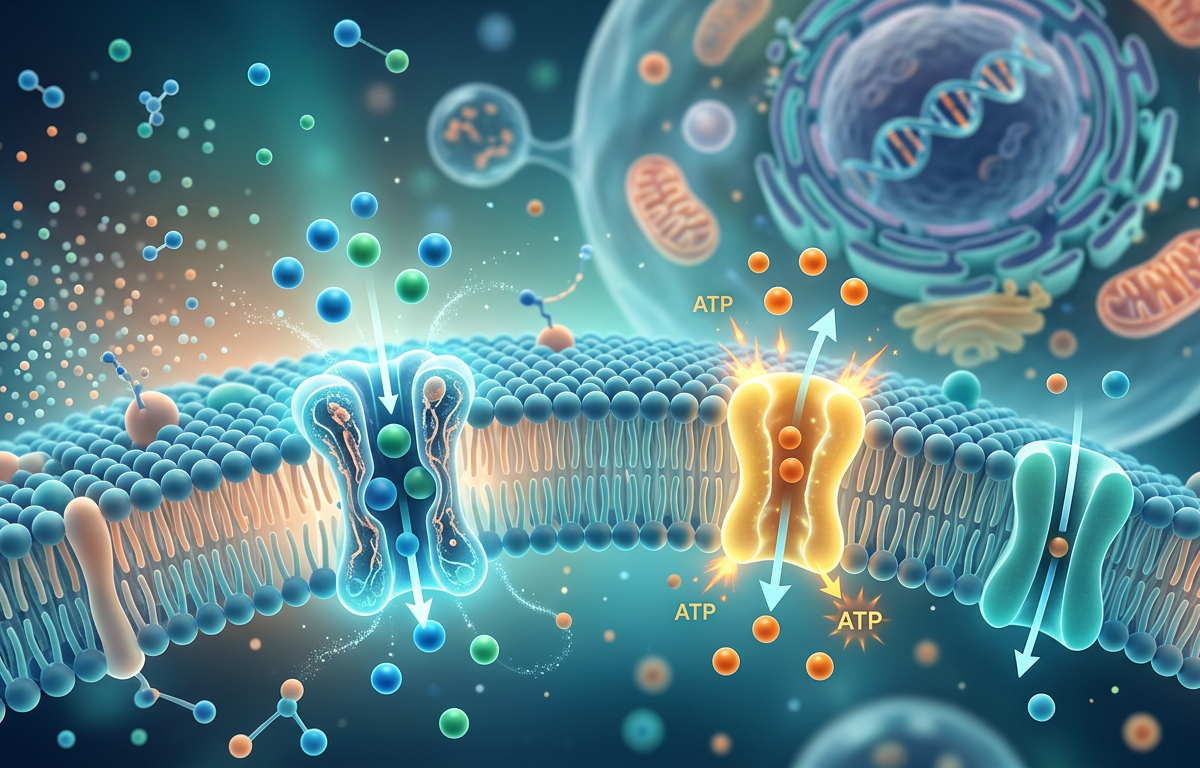
Cell transport is the movement of substances across the cell membrane, either into or out of the cell. This movement is governed by principles of diffusion, osmosis, and energy expenditure. There are two main categories of cell transport: passive transport, which does not require energy, and active transport, which does. Solving cell transport problems often involves determining the direction of substance movement based on concentration gradients and water potential.
Passive Transport
Passive transport relies on the natural tendency of substances to move from an area of higher concentration to an area of lower concentration. This movement down the concentration gradient does not require the cell to expend metabolic energy (ATP).
- Simple Diffusion: The direct movement of small, nonpolar molecules (like O2 and CO2) across the membrane.
- Facilitated Diffusion: The movement of larger or charged molecules (like glucose and ions) across the membrane with the help of transport proteins (channels or carriers).
- Osmosis: The specific case of the diffusion of water across a selectively permeable membrane. Water moves from an area of high water concentration (low solute concentration) to an area of low water concentration (high solute concentration).
Active Transport
Active transport moves substances against their concentration gradient, from an area of lower concentration to an area of higher concentration. This process requires the cell to expend energy, typically in the form of ATP. A classic example is the sodium-potassium pump, which maintains the electrochemical gradient in neurons.
Water Potential (Ψ)
Water potential is a critical concept for solving osmosis problems, especially in plant cells. It is the measure of the potential energy in water and determines the direction of water movement. Water always moves from an area of higher water potential to an area of lower water potential. The formula is:
Ψ = Ψs + Ψp
- Ψ (Water Potential): The total potential energy of water. Pure water in an open container at standard atmospheric pressure has a water potential of 0.
- Ψs (Solute Potential or Osmotic Potential): The effect of dissolved solutes on water potential. Adding solutes always lowers the water potential, so Ψs is always a negative value (or 0 for pure water). The more solute, the more negative the Ψs.
- Ψp (Pressure Potential): The effect of physical pressure on water. In plant cells, this is the turgor pressure exerted by the cell wall. It is usually positive. In an open container, Ψp is 0.
Solved Examples of Cell Transport Problems
The best way to understand how to solve cell transport problems is to work through some examples. Here are a few common scenarios with step-by-step solutions.
Example 1: Predicting Water Movement
A plant cell with a solute potential (Ψs) of -0.7 MPa and a pressure potential (Ψp) of 0.4 MPa is placed in a beaker of sucrose solution with a water potential (Ψ) of -0.5 MPa. In which direction will the net movement of water be?
- Calculate the water potential of the plant cell.
Use the formula Ψ = Ψs + Ψp.
Ψ_cell = -0.7 MPa + 0.4 MPa
Ψ_cell = -0.3 MPa - Compare the water potential of the cell to the solution.
Water potential of the cell (Ψ_cell) = -0.3 MPa
Water potential of the solution (Ψ_solution) = -0.5 MPa - Determine the direction of water movement.
Water moves from a higher water potential to a lower water potential. Since -0.3 is higher (less negative) than -0.5, water will move from the cell into the surrounding sucrose solution.
Example 2: Tonicity and Animal Cells
A red blood cell, which has an internal solute concentration equivalent to 0.9% NaCl, is placed into a beaker of pure, distilled water. What will happen to the cell?
- Identify the tonicity of the solution relative to the cell.
The cell has a 0.9% solute concentration. The pure water has a 0% solute concentration. Therefore, the pure water is a hypotonic solution relative to the cell (hypo = less solute). - Determine the direction of water movement via osmosis.
Water moves from an area of higher water concentration (the pure water) to an area of lower water concentration (inside the cell). Thus, water will rush into the red blood cell. - Predict the outcome for the cell.
Red blood cells are animal cells and lack a rigid cell wall. The influx of water will cause the cell to swell and eventually burst, a process called hemolysis or cytolysis. For more information on osmosis, Khan Academy provides an excellent overview.
Example 3: Finding Equilibrium
A potato core has a solute potential (Ψs) of -0.9 MPa. It is placed in a sucrose solution. If the potato core is at equilibrium with the solution (no net water movement), and the solution is in an open beaker, what is the solute potential of the sucrose solution?
- Understand the condition of equilibrium.
Equilibrium means there is no net movement of water. This occurs when the water potential of the potato core is equal to the water potential of the solution (Ψ_potato = Ψ_solution). - Analyze the potato core's water potential.
At equilibrium in a hypotonic or isotonic context, a plant cell might have some turgor pressure. However, the question states the potato core is at equilibrium with the solution. This implies the potentials must be equal. Let's assume the question implies finding the isotonic point where the cell is flaccid, so pressure potential (Ψp) is 0. In that case, the water potential of the potato core is just its solute potential: Ψ_potato = -0.9 MPa + 0 MPa = -0.9 MPa. - Analyze the solution's water potential.
The sucrose solution is in an open beaker, so its pressure potential (Ψp) is 0 MPa. Therefore, its water potential is equal to its solute potential: Ψ_solution = Ψs_solution + 0 MPa. - Set the potentials equal to solve for the unknown.
At equilibrium, Ψ_potato = Ψ_solution.
-0.9 MPa = Ψs_solution
Therefore, the solute potential of the sucrose solution must be -0.9 MPa.
Practice Questions
Test your understanding with these medium-level cell transport problems. You'll find detailed answers and explanations below.
1. (Easy) An animal cell is placed in a hypertonic solution. What is the most likely outcome?
2. (Easy) The movement of glucose into a cell through a carrier protein, down its concentration gradient, is an example of what type of transport?
3. (Medium) A plant cell has a solute potential of -1.2 MPa and a pressure potential of 0.6 MPa. It is placed in a solution with a water potential of -0.8 MPa. What will happen?
4. (Medium) A dialysis bag containing a 0.5M sucrose solution is placed in a beaker containing a 0.2M sucrose solution. The bag is permeable to water but not to sucrose. What will be the net direction of water movement?
5. (Medium) Calculate the water potential of a solution in an open beaker that has a solute potential of -0.45 MPa.
6. (Medium) A root hair cell absorbs minerals from the soil. The concentration of minerals is much higher inside the cell than in the soil. What process must the cell use to continue absorbing minerals?
7. (Hard) A potato cell is found to be at equilibrium (no net water change) when placed in a 0.3M sucrose solution. The 0.3M sucrose solution has a solute potential (Ψs) of -0.73 MPa. What is the water potential of the potato cell?
8. (Hard) You are conducting an experiment with potato cores. You place one core in a solution with Ψ = -0.4 MPa and another in a solution with Ψ = -0.8 MPa. After 30 minutes, you measure their mass. Which potato core do you expect to have gained mass, and why?
9. (Hard) A plant cell with Ψs = -1.0 MPa is in an open beaker of pure water (Ψ = 0 MPa). The cell swells but does not burst. At the point of maximum turgor, what is the pressure potential (Ψp) of the cell?
10. (Medium) Why is a large surface-area-to-volume ratio important for a cell's ability to transport materials efficiently?
Answers & Explanations
Here are the detailed solutions for the practice cell transport problems.
1. The cell will shrink (crenate).
A hypertonic solution has a higher solute concentration (and thus lower water concentration) than the cell's cytoplasm. Water will move via osmosis from inside the cell out into the solution, causing the cell to lose volume and shrink.
2. Facilitated diffusion.
The movement is down the concentration gradient, so it is a form of passive transport (no energy needed). Because it requires a carrier protein to help the glucose molecule cross the membrane, it is specifically facilitated diffusion.
3. Water will move from the solution into the cell, causing it to become more turgid.
First, calculate the cell's water potential: Ψ_cell = Ψs + Ψp = -1.2 MPa + 0.6 MPa = -0.6 MPa. The solution's water potential is -0.8 MPa. Since -0.6 MPa is higher than -0.8 MPa, water will move from the area of higher potential (the cell) to the area of lower potential (the solution). Oh, wait, I made a calculation error in my reasoning. Let's re-evaluate. Ψ_cell = -0.6 MPa. Ψ_solution = -0.8 MPa. Water moves from HIGH to LOW potential. -0.6 is indeed higher than -0.8. So water moves OUT of the cell. Let me re-read the question and my answer. Ah, the question has Ψ_solution = -0.8 MPa. My calculation of Ψ_cell = -0.6 MPa is correct. Wait, I wrote the wrong answer explanation. Let's correct it. The cell's water potential is Ψ_cell = -1.2 + 0.6 = -0.6 MPa. The solution's water potential is -0.8 MPa. Water moves from high potential to low potential. -0.6 is a higher value than -0.8. Therefore, water will move OUT of the cell and into the solution. The cell will lose turgor and may become flaccid. My initial answer was incorrect. Let's provide the correct one.
Corrected Answer: Water will move out of the cell into the solution.
First, calculate the cell's water potential: Ψ_cell = Ψs + Ψp = -1.2 MPa + 0.6 MPa = -0.6 MPa. The solution's water potential is given as -0.8 MPa. Water always moves from a region of higher water potential to a region of lower water potential. Since -0.6 MPa is a higher value than -0.8 MPa, water will move from the cell into the surrounding solution. This will cause the cell to lose water and turgor pressure.
4. Water will move from the beaker into the dialysis bag.
The solution inside the bag (0.5M) is hypertonic to the solution in the beaker (0.2M). This means the beaker solution has a higher concentration of water. Water will move down its concentration gradient, from the beaker into the dialysis bag, via osmosis.
5. The water potential is -0.45 MPa.
The formula for water potential is Ψ = Ψs + Ψp. For a solution in an open beaker, the pressure potential (Ψp) is 0 MPa. Therefore, the total water potential is equal to the solute potential. Ψ = -0.45 MPa + 0 MPa = -0.45 MPa. For help with similar problems, you might find our page on simplifying expressions practice questions useful.
6. Active transport.
The cell is moving minerals from an area of low concentration (the soil) to an area of high concentration (inside the cell). This movement is against the concentration gradient and requires energy (ATP), which is the definition of active transport.
7. The water potential of the potato cell is -0.73 MPa.
Equilibrium means there is no net water movement, which occurs when the water potential of the cell equals the water potential of the solution. The solution is in an open container, so its Ψp = 0. Thus, its total water potential is its solute potential, Ψ_solution = -0.73 MPa. Since the cell is at equilibrium with this solution, the cell's water potential must also be -0.73 MPa.
8. The potato core in the -0.4 MPa solution will gain mass.
A typical potato cell has a water potential between -0.5 MPa and -1.0 MPa. Let's assume its initial water potential is -0.7 MPa. Water moves from high potential to low potential.
Case 1 (Solution Ψ = -0.4 MPa): The solution has a higher water potential than the potato cell (-0.4 > -0.7). Water will move from the solution into the potato core, causing it to gain mass.
Case 2 (Solution Ψ = -0.8 MPa): The solution has a lower water potential than the potato cell (-0.8 < -0.7). Water will move from the potato core into the solution, causing it to lose mass. Therefore, the core in the -0.4 MPa solution gains mass.
9. The pressure potential (Ψp) will be +1.0 MPa.
The cell is in pure water (Ψ_solution = 0). Water will enter the cell until the cell's internal water potential equals the external water potential. At this point of maximum turgor (equilibrium), Ψ_cell = 0. We know Ψ_cell = Ψs + Ψp. We are given Ψs = -1.0 MPa. So, we can set up the equation: 0 = -1.0 MPa + Ψp. Solving for Ψp gives Ψp = +1.0 MPa. This positive pressure from the cell wall counteracts the negative solute potential. Solving this is like working through linear equations.
10. A large surface-area-to-volume ratio maximizes the area available for transport relative to the metabolic needs of the cell's volume.
A cell's needs (nutrients, waste removal) are proportional to its volume, while its ability to transport substances is proportional to its surface area. As a cell gets larger, its volume increases much faster than its surface area. A high surface-area-to-volume ratio ensures that the membrane can service the entire volume of the cell efficiently. This is why most cells are microscopic.
1. A plant cell with Ψ = -0.5 bar is placed in a solution with Ψ = -0.2 bar. Which statement is true?
Frequently Asked Questions
What is the main difference between active and passive transport?
The main difference is the requirement of energy. Passive transport (diffusion, osmosis) does not require metabolic energy (ATP) as substances move down their concentration gradient. Active transport requires ATP to move substances against their concentration gradient.
How is water potential calculated?
Water potential (Ψ) is calculated by adding the solute potential (Ψs) and the pressure potential (Ψp), using the formula Ψ = Ψs + Ψp. Solute potential is determined by the concentration of solutes, while pressure potential is the physical pressure being exerted on the water.
Why do plant cells not burst in a hypotonic solution?
Plant cells have a rigid cell wall outside the cell membrane. When water rushes into the cell in a hypotonic solution, the cell swells, but the cell wall pushes back, creating positive pressure potential (turgor pressure). This pressure counteracts the influx of water, preventing the cell from bursting.
What does it mean for a membrane to be selectively permeable?
A selectively permeable (or semipermeable) membrane allows certain molecules or ions to pass through it by means of active or passive transport, while preventing others from passing. As explained by the National Human Genome Research Institute, this property is fundamental to the cell's ability to maintain a stable internal environment. This selectivity is based on factors like size, charge, and polarity of the molecules.
What is the difference between simple and facilitated diffusion?
Both are types of passive transport. Simple diffusion is the movement of small, nonpolar molecules directly across the lipid bilayer. Facilitated diffusion is the movement of larger or charged molecules that cannot easily cross the membrane on their own; it requires the help of a specific membrane protein (a channel or a carrier).
Why are the units for water potential, like MPa or bars, important?
Using consistent units like megapascals (MPa) or bars is crucial for accurate calculations. When comparing the water potential of a cell and its environment, both must be in the same units to determine the correct direction of water flow. If you need a refresher, check out our guide on unit conversion practice questions.
Enjoyed this article?
Share it with others who might find it helpful.
Related Articles
Easy Cell Transport Problems Practice Questions
Master the fundamentals of cell biology with our easy cell transport problems. This guide includes clear explanations, solved examples, and practice questions on osmosis and tonicity.
Apr 25, 2026
Cell Transport Problems Practice Questions with Answers
Cell Transport Problems Practice Questions with Answers
Apr 25, 2026
Medium Cell Membrane Questions Practice Questions
Medium Cell Membrane Questions Practice Questions
Apr 25, 2026
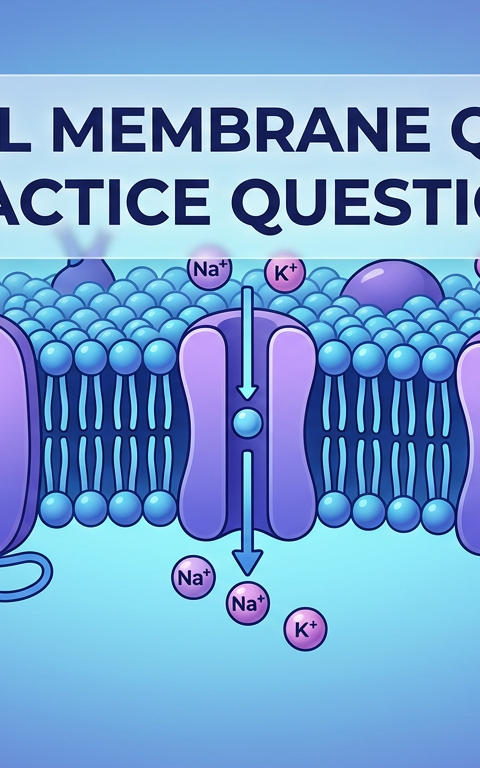
Hard Cell Membrane Questions Practice Questions
Master advanced cell biology with our hard cell membrane practice questions. Test your knowledge on electrochemical gradients, transport mechanisms, and more.
Apr 25, 2026

Hard Cell Structure Practice Questions Practice Questions
Challenge your understanding of cell biology with these hard cell structure practice questions, complete with solved examples, detailed answers, and a quick quiz.
Apr 25, 2026

Medium Cell Structure Practice Questions Practice Questions
Master cell biology with these medium cell structure practice questions. Get detailed explanations and solved examples to boost your understanding.
Apr 25, 2026
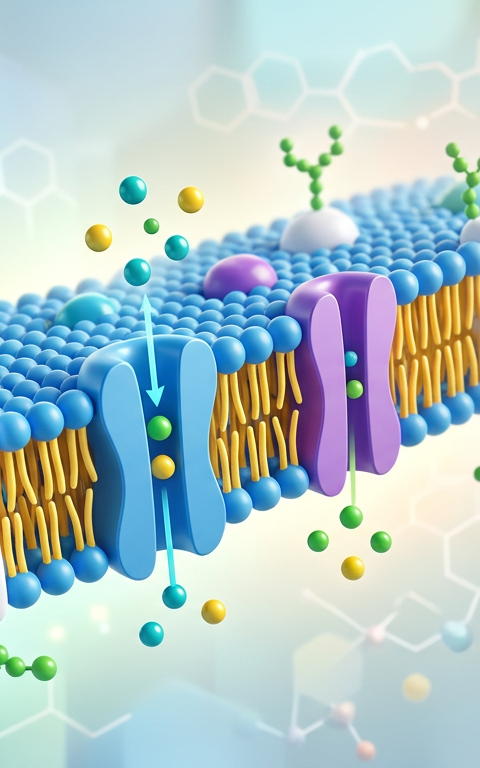
Easy Cell Membrane Questions Practice Questions
Master the basics of the cell membrane with our easy practice questions. Learn about the phospholipid bilayer, membrane proteins, and selective permeability with worked examples.
Apr 25, 2026

Easy Cell Structure Practice Questions Practice Questions
Master the basics of biology with our easy cell structure practice questions. This guide includes clear explanations, solved examples, and a quiz to test your knowledge.
Apr 25, 2026