Hard Immune System Questions Practice Questions
Concept Explanation
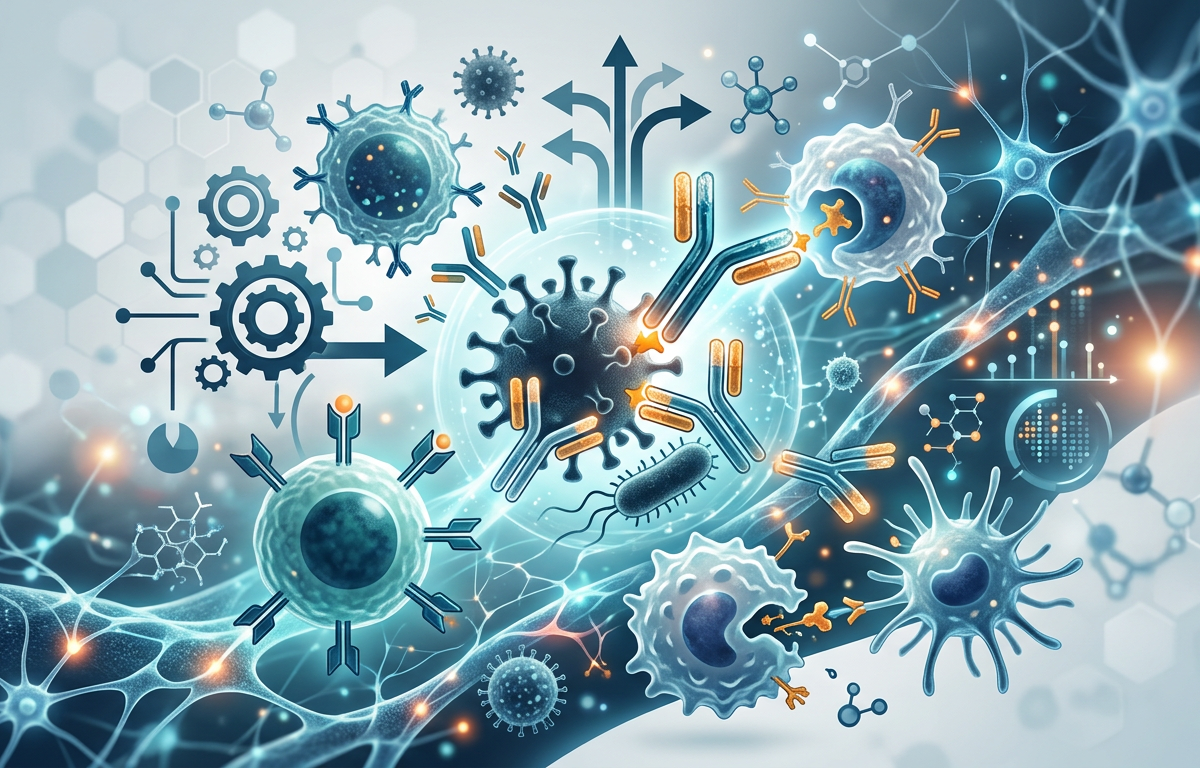
The immune system is a sophisticated network of cells, tissues, and organs that coordinate to defend the body against pathogens through innate and adaptive responses. This complex biological system distinguishes "self" from "non-self" using molecular markers like the Major Histocompatibility Complex (MHC). Understanding Hard Immune System Questions requires a deep grasp of how the innate system provides immediate, non-specific defense while the adaptive system develops long-term, specific memory through B-cells and T-cells. Just as the nervous system transmits signals for rapid bodily coordination, the immune system utilizes cytokines and chemokines to communicate across various physiological barriers.
To master advanced immunology, you must understand the following core pillars:
Antigen Presentation: Professional antigen-presenting cells (APCs) like dendritic cells process pathogens and display fragments on MHC II molecules to activate Helper T-cells.
Clonal Selection: The process by which a specific lymphocyte that recognizes a particular antigen is stimulated to divide and produce a large population of effector cells.
Humoral vs. Cell-Mediated Immunity: Humoral immunity involves B-cell production of antibodies to neutralize extracellular threats, whereas cell-mediated immunity involves Cytotoxic T-cells destroying infected or cancerous host cells.
Immune Tolerance: The mechanism by which the immune system prevents itself from attacking the body's own healthy tissues, a failure of which leads to autoimmune diseases.
Advanced study often overlaps with other biological disciplines. For instance, understanding how immune cells divide rapidly during an infection relates to the principles found in hard DNA replication questions, as genomic integrity is vital during the massive proliferation of lymphocytes.
Solved Examples
Review these detailed solutions to understand the logic required for Hard Immune System Questions.
Example: Antigenic Drift vs. Shift
Explain why a patient can catch the seasonal flu every year despite having a healthy immune system.Identify the mechanism: Influenza viruses undergo antigenic drift, which involves small mutations in the genes for surface proteins (hemagglutinin and neuraminidase).
Connect to memory cells: The memory B-cells and T-cells generated from previous infections or vaccinations may not recognize the slightly altered shape of the new viral strain.
Conclusion: This lack of recognition prevents a secondary immune response, treating the "new" flu as a primary infection.
Example: MHC Restriction
Why can't a Cytotoxic T-cell (CD8+) recognize a virus floating freely in the bloodstream?Analyze T-cell receptors: T-cell receptors (TCRs) are designed to recognize antigens only when they are bound to MHC molecules on a cell surface.
Differentiate MHC types: CD8+ cells specifically interact with MHC Class I, which is found on almost all nucleated cells and presents endogenous (internal) antigens.
Conclusion: Since free-floating viruses are not presented on MHC I, the CD8+ cell remains inactive until the virus infects a cell and its proteins are processed and displayed.
Example: The Role of Helper T-cells in HIV
How does the depletion of CD4+ T-cells lead to the collapse of both humoral and cell-mediated immunity?Identify the role of CD4+: Helper T-cells act as the "command center," secreting cytokines like IL-2 and IFN-gamma.
Link to B-cells: Without CD4+ help, B-cells cannot efficiently undergo class switching or affinity maturation to produce high-quality antibodies.
Link to CD8+ cells: Without CD4+ cytokines, Cytotoxic T-cells do not receive the necessary signals to proliferate into a robust effector population.
Conclusion: The loss of this central coordinator halts the entire adaptive immune response.
Practice Questions
A patient is born with a genetic defect that prevents the expression of MHC Class II molecules. Which immune cell population will be most directly affected by this deficiency?
Explain the process of V(D)J recombination and why it is essential for the diversity of the adaptive immune system.
During an inflammatory response, neutrophils migrate from the blood into the tissues. Name the four-step process of this migration and the specific molecules involved in "tethering."
Compare and contrast the functions of IgM and IgG antibodies in terms of structure, timing of appearance, and ability to cross the placenta.
What is the "Complement System," and how does the Membrane Attack Complex (MAC) physically destroy a bacterium?
Describe the mechanism of Negative Selection in the thymus and explain its importance in preventing autoimmunity.
A specific pathogen has evolved to inhibit the fusion of phagosomes with lysosomes. How does this strategy help the pathogen evade the immune system?
In the context of the organ system, explain how the lymphatic system serves as the primary site for the initiation of the adaptive immune response.
Explain the "Two-Signal Hypothesis" for T-cell activation. What happens to a T-cell if it receives Signal 1 (antigen recognition) but not Signal 2 (co-stimulation)?
Distinguish between Type I Hypersensitivity (Allergy) and Type IV Hypersensitivity (Delayed-type) in terms of the primary immune mediators involved.
Answers & Explanations
Answer: CD4+ Helper T-cells. MHC Class II is used exclusively by professional antigen-presenting cells to present exogenous antigens to CD4+ T-cells. Without MHC II, these cells cannot be activated, leading to a failure in coordinating the rest of the immune response.
Answer: V(D)J recombination is a process of genetic recombination that occurs in developing lymphocytes. It involves the random joining of Variable (V), Diversity (D), and Joining (J) gene segments. This creates millions of unique antigen receptors from a limited number of genes, ensuring the body can recognize almost any possible pathogen.
Answer: Rolling, Activation, Adhesion, and Diapedesis (Transmigration). Tethering and rolling are primarily mediated by selectins on the endothelial wall interacting with carbohydrate ligands on the neutrophil.
Answer: IgM is a pentamer (5 units), is the first antibody produced in a primary response, and cannot cross the placenta. IgG is a monomer, is the most abundant in the secondary response, and can cross the placenta to provide passive immunity to the fetus.
Answer: The Complement System is a cascade of plasma proteins that enhance the ability of antibodies and phagocytic cells. The MAC (formed by C5b-C9) creates a pore in the pathogen's plasma membrane, leading to osmotic lysis and cell death.
Answer: Negative selection occurs when developing T-cells in the thymus are exposed to self-antigens. If a T-cell binds too strongly to a self-antigen, it is induced to undergo apoptosis. This ensures that surviving T-cells do not attack the body's own tissues.
Answer: By preventing phagosome-lysosome fusion, the pathogen avoids exposure to digestive enzymes and reactive oxygen species. This allows the pathogen to survive and even replicate inside the phagocyte, hidden from antibodies and other immune components.
Answer: The lymphatic system collects interstitial fluid (lymph) containing antigens from tissues. This lymph is filtered through lymph nodes, where high concentrations of B and T cells reside, increasing the probability that a lymphocyte will encounter its specific matching antigen.
Answer: Signal 1 is the TCR binding to the MHC-antigen complex. Signal 2 is co-stimulation (e.g., B7 on the APC binding to CD28 on the T-cell). If a T-cell receives Signal 1 without Signal 2, it enters a state of anergy (functional unresponsiveness), which is a safeguard against self-reactivity.
Answer: Type I Hypersensitivity is mediated by IgE antibodies and mast cell degranulation (histamine release). Type IV is cell-mediated, involving sensitized T-cells and macrophages, typically taking 24-72 hours to manifest.
1. Which cell type is responsible for producing large quantities of soluble antibodies?
Frequently Asked Questions
What is the difference between innate and adaptive immunity?
Innate immunity is the body's first line of defense, providing rapid but non-specific responses like physical barriers and phagocytosis. Adaptive immunity is slower to develop but highly specific, involving B and T cells that create long-lasting immunological memory.
How do vaccines work to prevent disease?
Vaccines introduce a harmless version or fragment of a pathogen to trigger a primary immune response without causing illness. This creates memory B and T cells that can mount a rapid, powerful secondary response if the actual pathogen is encountered later.
What are autoimmune diseases?
Autoimmune diseases occur when the immune system's self-tolerance mechanisms fail, causing it to misidentify the body's own cells as foreign. This leads to the destruction of healthy tissues, as seen in conditions like Rheumatoid Arthritis or Type 1 Diabetes.
Why is the MHC molecule important in organ transplants?
MHC molecules are unique to every individual (except identical twins) and serve as "ID badges" for cells. If the MHC molecules on a transplanted organ do not closely match the recipient's, the recipient's T-cells will recognize the organ as foreign and launch an immune attack, leading to rejection.
What role do cytokines play in the immune system?
Cytokines are small signaling proteins that act as chemical messengers to coordinate the immune response. they regulate the intensity and duration of immune activity by signaling cells to move, divide, or change their functional state during an infection.
Enjoyed this article?
Share it with others who might find it helpful.
Related Articles
Hard Le Chatelier’s Principle Practice Questions
Master Hard Le Chatelier’s Principle Practice Questions with our comprehensive guide featuring solved examples, practice problems, and detailed explanations.
Mar 30, 2026
Hard Reaction Quotient (Q) Practice Questions
Hard Reaction Quotient (Q) Practice Questions
Mar 30, 2026

Grams to Moles Practice Questions with Answers
Master grams to moles conversions with our comprehensive guide. Includes step-by-step examples, practice questions, and detailed answers for chemistry students.
Mar 26, 2026
Avogadro’s Number Practice Questions with Answers
Master the mole concept with our Avogadro’s Number practice questions. Includes step-by-step solved examples, a quick quiz, and detailed explanations.
Mar 26, 2026
Empirical Formulas: Solving Ratios from Mass and Percent Data
Master empirical formula calculations with 10 practice questions, worked answers, and a free step-by-step calculator for mass, percentage, and combustion problems.
Mar 26, 2026